

What Causes Warped Brake Rotors?
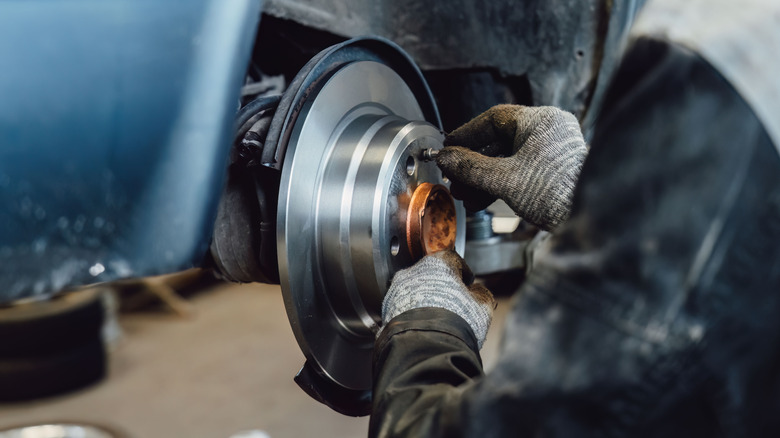
When the brake rotors of your car are warped, it doesn't necessarily mean that the circular discs are bent out of shape. It might feel that way with all the shuddering and vibration when braking, but those alarming sensations have more to do with uneven rotor surface — and you can thank your brake pads for that. In short, a warped rotor means there's brake pad residue buildup on the disc, and those many peaks and valleys are the root cause of vibrations that might otherwise be blamed on warped rotors.
You probably know how your car's brakes work: pressing the brake pedal engages the calipers and brake pads to stick to the rotors, and the car stops. Easy, right? However, there's more at play. The friction material in different types of brake pads contains fibers, resins, and other materials that bond to the rotor face. After installing new pads and bedding the brakes, those fibers and resins leave a somewhat sticky residue on the rotors, which provides what's called stiction braking in addition to the friction generated by grinding the brake pads against the rotors.
When you step hard on the brakes, the intense heat and friction remove some of the residual fibers sticking on the rotors, creating a high spot — an uneven area — on the rotor face. One high spot will turn into many as you brake, drive, and stop abruptly to avoid that stray kitten on the road. In turn, those numerous high spots cause the pulsing sensations and juddering associated with warped rotors.
How to avoid warping your brake discs
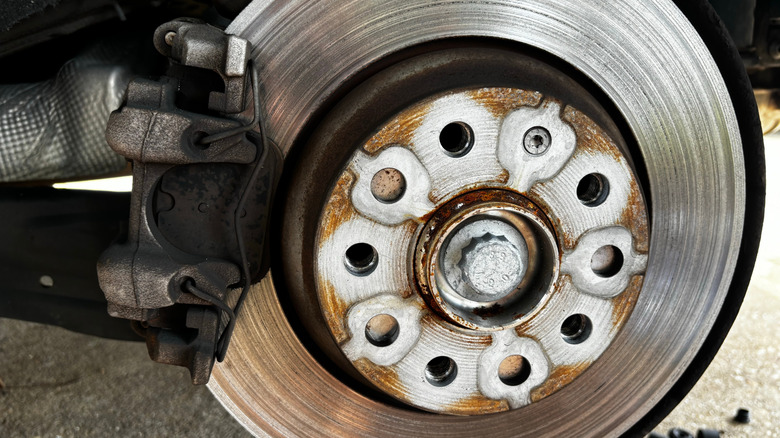
If you encounter vibrations or shuddering when applying the brakes, it may not be too late to save the rotors from totally warping. In most cases, rebedding the brakes will restore the braking feel and get rid of those nasty vibrations. Rebedding is essentially accelerating to about 50 mph and slowing down to 10 mph repeatedly to heat the brakes — without coming to a full stop. After five to seven stops, drive normally without hard stopping for a few miles to cool the brakes, and you're done.
Another good practice is to avoid pressing and holding the brake pedal when at stoplights, especially if the brakes are scorching hot. This prevents the pads from leaving high spots on the rotor. Of course, gentle braking habits will go a long way in extending the life of your car's brake rotors, as will making sure that the wheel nuts are tightened and torqued to the proper specs. Loose or overtightened wheel nuts can cause the rotor to rest unevenly and create pressure points, which will inevitably warp the rotors.
Much like how frequent oil changes will prevent sludge buildup, periodic inspection and brake servicing can help detect warping early and prevent costlier damage. For reference, the brake pads in a mostly city-driven car can last 30,000 to 35,000 miles, while vehicles driven mostly on the highway will have pads that can last 80,000 miles or more. Meanwhile, the brake rotors can last even longer before needing resurfacing or replacement.
Should I replace or resurface warped brake rotors?
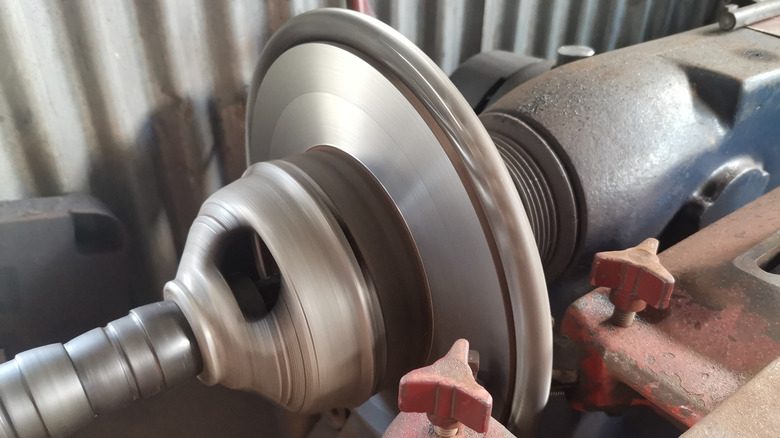
Warped brake rotors can be resurfaced, but not all old rotors are ideal candidates for doing so. Brake rotors have discard levels stamped on the hub, which specify the minimum thickness for safer operation. If the thickness after resurfacing falls below the discard level, replacing the rotor is preferable to resurfacing. As a general rule, it's safe to resurface the brake rotor if the thickness is at least .050 inches greater than the discard level.
Resurfacing is not an option if there's heavy corrosion on the edges of the rotor, if the contact surface has deep grooves or scarring, or if there are multiple bluish stains on the rotors. Depending on the make and model of your vehicle, replacement brake rotors typically cost $50 to $80, while resurfacing would cost about half as much. Experts recommend new rotors whenever you're replacing the brake pads, but it's safe to reuse the old rotors if the contact surfaces are still relatively flat and smooth.