

Here's How Much A 2021 Chevy Camaro Has Depreciated In 5 Years
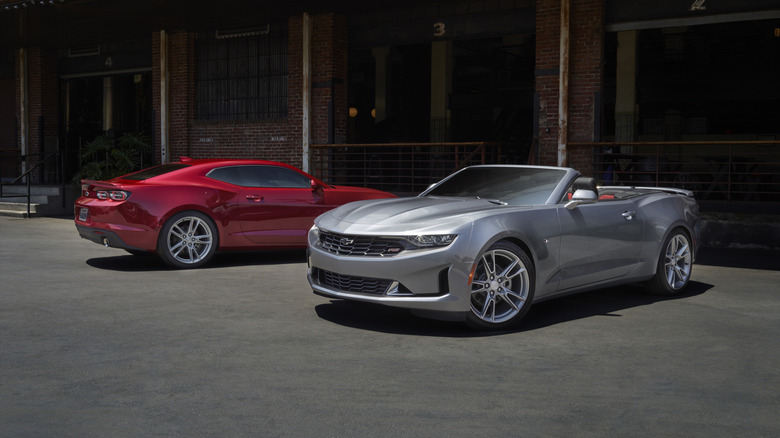
If you've got your heart set on putting a Chevrolet Camaro in your driveway, then your main option is buying a used model, as General Motors axed it after 2024. There are a few oddball new Camaros out there, but none are from the 2021 model year. For shoppers wanting a bowtie-adorned sports car, the 2021 Camaro provides a balanced mix of technology (with higher trims also including advanced driver-assistance features) and lower resale prices. Plus, as that model year was one from the sixth-generation Camaro, it gets good reliability ratings from J.D. Power.
Some of its appeal also lies in a 28%-38% drop in value over five years. The greater the depreciation, the less you'll pay to take one home. Of course, that means you'll put less money in the bank if you're the seller. For a complete look at how depreciation affects the 2021 Chevrolet Camaro, we assessed data from CarEdge and iSeeCars. Because we live in the real world, we also analyzed depreciation estimates against various dealer listings. You'll also see how the Camaro compares against its Detroit archrivals, the Ford Mustang and Dodge Challenger.
Five-year depreciation for the Chevrolet Camaro
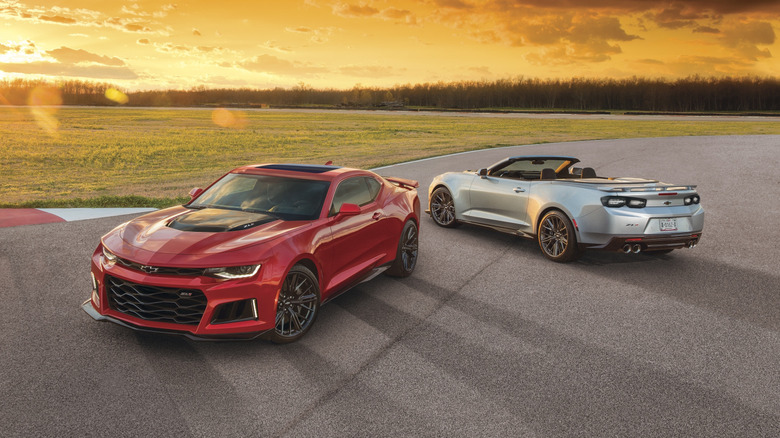
The 2021 Chevrolet Camaro's highest depreciation is estimated to be 38.11% after five years. Based on its original baseline MSRP of $26,195, buyers should expect an average resale value of around $16,200, assuming it's a clean example (having suffered from no accidents or title issues) with no more than 67,500 miles on the clock. The lowest estimates show a 28% depreciation rate for the 2021 Camaro, which is better than the average of 33.2% for all sports cars. Keep in mind that these averages are a compilation of all Camaro coupe trims for this model year, based on the company's marketplace listings.
Autotrader shows 2021 Camaro examples with similar parameters starting a little under $20,000 for the base LS coupe trim with a turbocharged four-cylinder engine. Stepping up to a V6-equipped LT adds 10%-25% to the bottom line. The cost of entry for V8 power (the 6.2-liter unit) starts closer to $28,000. Prices head north of there for the higher-performance ZL1, with minimum prices starting at around $55,000. Don't expect that price to come with much security, either, as the Camaro ZL1 is 39 times more likely to be stolen than the average car.
How Chevrolet Camaro depreciation compares against the Ford Mustang and Dodge Challenger
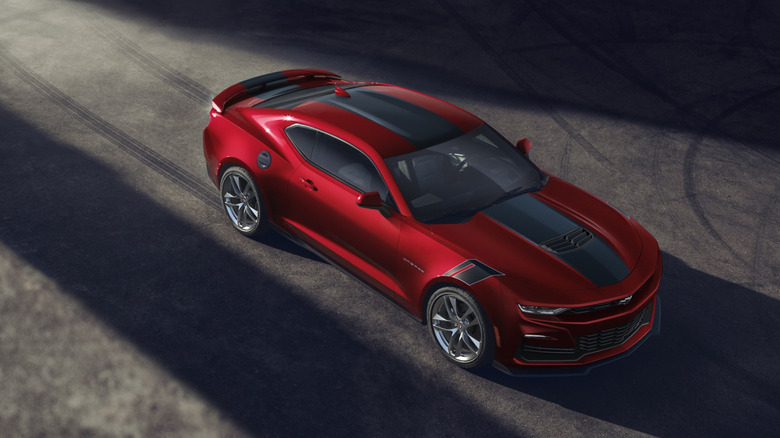
When comparing the higher depreciation of 38.11% to its competitors, the 2021 Camaro has held onto its original cost very well. The Ford Mustang takes a much harder value hit than the Chevy with a same-term depreciation rate of 56.76%. That difference is apparent in numerous listings for 2021 Mustangs priced between $18,000 and $20,000, making it around 10% less expensive than the cheaper Camaro counterparts. These least-costly Mustangs come with EcoBoost power plants instead of V8 power, giving them some noteworthy pros and cons — like all four-cylinder engines.
You won't necessarily find much when it comes to Challenger-only depreciation, but five-year value-loss projections for the Dodge brand as a whole stand at 60.3%. For the 2021 model year, the lineup consisted of the Challenger, Charger, and Durango. The Challenger's potentially lower residual value doesn't necessarily translate into lower used-car prices, though. Several V6-powered examples (in good condition with moderate mileage) have been listed for sale between $18,000 and $20,000, putting it about on par with the Mustang. Either the market assigns greater value to the Challenger's base V6 power train over a turbocharged four-cylinder engine, or its actual depreciation is better than the brand-only average. Either way, though, its resale price doesn't manage to reach the 2021 Camaro's.