

How To Tell The Difference Between Cracked Heads And Blown Head Gaskets

Cylinder heads get a lot of credit when it comes to engine power. Here at Jalopnik, we've touted the Chevy double hump heads' ability to shape small block V8 power and late-90s Vortec heads' status as a small block secret weapon. With such high-level contributions to an engine's performance, it makes sense that any failure associated with cylinder heads — such as a cracked head or a blown head gasket — should be cause for immediate concern.
Those two faults are especially notorious, as it can be difficult to tell the difference between a cracked cylinder head and a blown head gasket without taking the head (or heads) off of the engine to check them up-close. Ultimately, no matter which problem you're suffering from, fixing it will require removal of the cylinder head.
With the cylinder head removed, you can inspect it and the head gasket for signs of failure. Sometimes a cylinder head crack is visible to the naked eye, but testing for them often requires specialized methods. These methods include magnetic particle inspections for cast iron heads, dye penetrant inspections for aluminum varieties, or pressure tests. Blown head gaskets, on the other hand, are identified by missing or frayed sections of gasket material between cylinders, coolant passages, and oil passages.
Some symptoms point to either blown gaskets or cracked heads
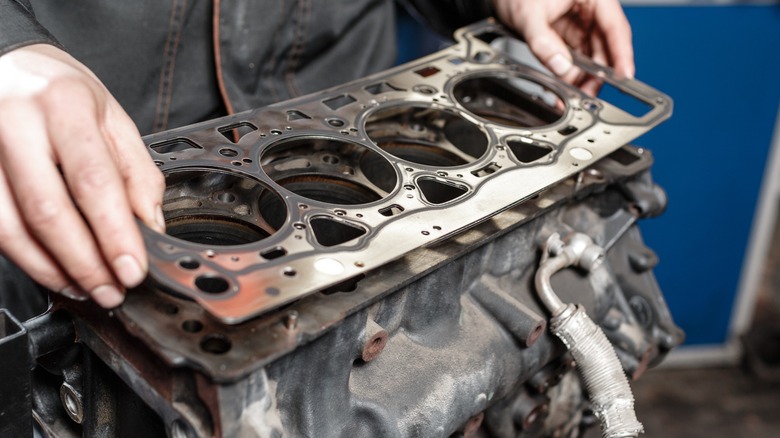
Many of the symptoms presented by engines with blown head gaskets and cracked cylinder heads are also consistent with a number of other automotive-related problems. If your car is burning oil, has oil and coolant mixed, or is emitting white smoke from the exhaust, it could be either a failed head gasket or cracked head. On the other hand, a car that was running fine and suddenly loses compression, especially in two cylinders next to each other, it's likely a blown head gasket on its own.
The upside of having "just" a blown head gasket is that you may not need a new cylinder head. You still might need to send your old cylinder head to the machine shop to check its flatness or to get it resurfaced, which should hopefully repair any damage associated with the blown gasket. It's also not a bad idea to have the cylinder checked for cracks if you suspect (or know) it overheated. It'd be a shame to replace the head with a new gasket only to have the same problems continue due to an unseen crack.