

Common Mistakes To Avoid When Cleaning Your Engine Bay
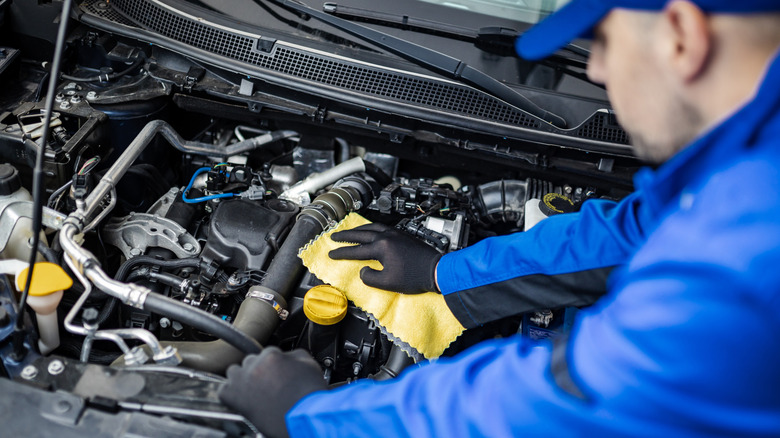
We are moving on from the shortest days and coldest weather now. So, while we're still a far cry away from long summer nights and toasty temperatures, it is starting to become a little more comfortable to get outside and start cleaning your car again. We've posted numerous articles in the past about how to sharpen up your vehicle's appearance, such as how to revive faded black plastics and how to clean a particularly greasy engine bay. However, to ensure we cover all the bases, this article is going to focus on what you should not be doing while shining things up under the hood.
To keep things simple, this piece breaks the advice up into two halves: mistakes that can cause damage to your car and mistakes that can dull your detailing results. The long and short of it is that detailing your vehicle's engine should be a fun and therapeutic experience, not daunting, and not something you'll regret later. So, heed the advice given below, and you'll be sure to get the best result possible.
Carelessness could easily damage your under-hood health
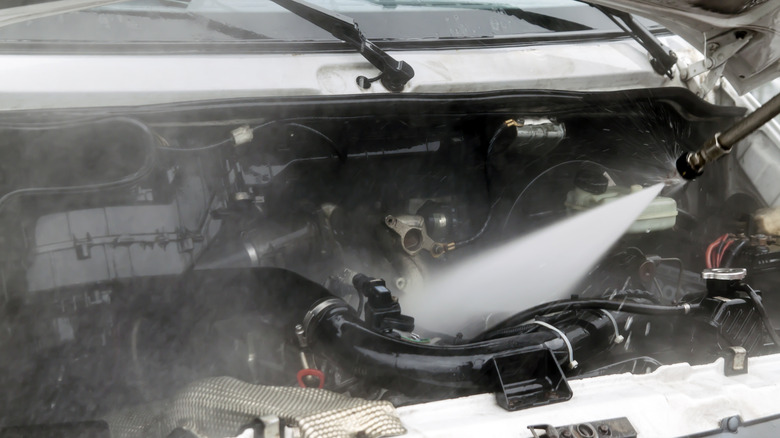
The most important tips we can point out in terms of cleaning under the hood are related to safety and reliability. We don't mean personal safety, but rather your car's safety — although wearing some protective goggles is always a good idea. For instance, you should never wash a hot engine. Not only do you risk burning yourself by accidentally leaning on scalding parts, but blasting cold water onto a hot engine can lead to the warping and cracking of components. So, pop the hood, and let your engine cool down before moving on.
Next, be mindful about how you use a pressure washer. It's best to use an attachment that disperses the water gently, rather than a high-pressure nozzle. A high-pressure attachment, especially when focused directly on electrical components like your fuse box, is an almost sure-fire way to give yourself post-wash electrical headaches. If you are concerned about causing electrical damage, wrap a plastic bag around these items before cleaning, and secure the bag with something like an elastic band or a zip tie.
In the same vein, take a minute to ensure all electrical connectors and plugs are actually connected and not loose, as this is an easy way for water to creep into your electrical system and wreak havoc. If you're working on an older car or a modified vehicle, be aware of other ways that water can cause reliability issues. It's not unusual for classics and upgraded performance cars to have exposed air filters. If you're unsure, cover up any sensitive components before adding water into the mix.
Mistakes that will dull your under-hood finish
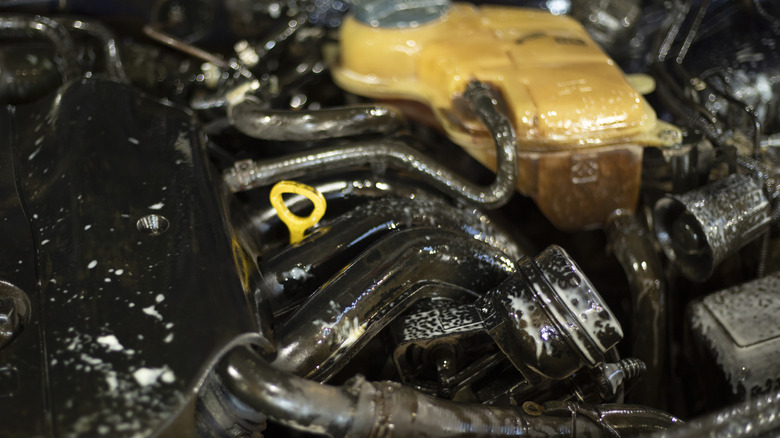
Another common mistake is skipping the presoak. This process allows the soapy mixture to begin tackling dirt and grime under the hood, saving you time and effort. Jumping straight in with harsher products and scrubbing away with your brush is just adding extra work.
When you do get to the actual physical cleaning, it can be tempting to reach for a strong engine degreaser. Products like these will make light work of almost all stains, regardless of how old or stubborn they are. However, they should really be your last port of call, used only for extremely greasy and oily stains. When used lavishly across the entire engine bay, they can cause staining to plastics, in addition to drying out rubber components. You may even find that strong degreasers cause lasting damage to painted areas.
After cleaning the engine and dressing your plastics, you may be tempted to call it a day and let the engine air-dry. This is a mistake, though, as water spots will ruin your otherwise perfect finish. If possible, use compressed air to blast any remaining water out from all crevices, and then use a drying towel to follow up if necessary. The final piece of advice is to simply take your time. Cleaning your engine bay isn't something to do every week, so allot yourself a sensible amount of time and don't rush. If you try to speed-run your way through the process, you may end up missing areas, and the finish won't be what you had in mind.