

The Pros, Cons, And Risks Of Underbody Coating For Your Car
We may receive a commission on purchases made from links.
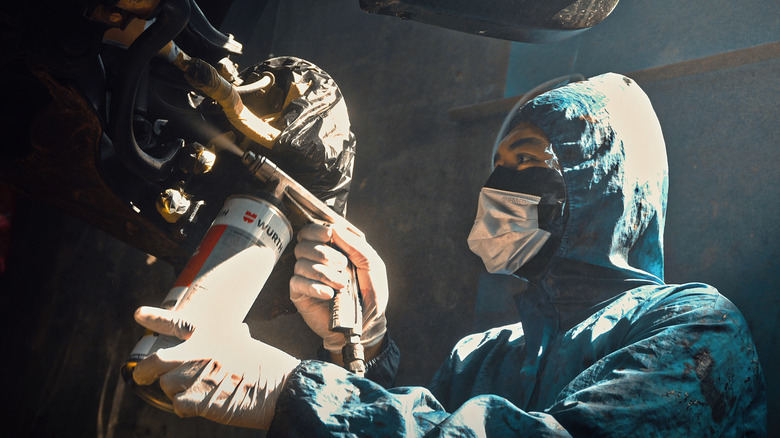
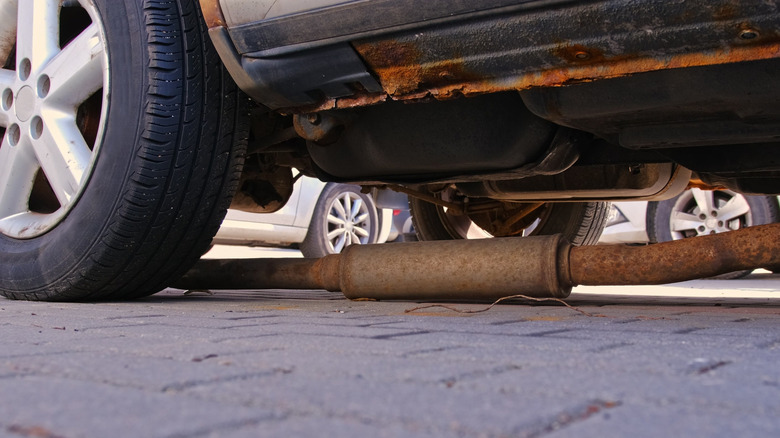
You might think that an aftermarket undercoating is redundant and unnecessary since new cars already come with rustproofing and corrosion protection from the factory. However, it all depends on where you live and the purported driving conditions of the vehicle. Cars or trucks driven predominantly in cold weather or salt-prone areas will benefit greatly from additional undercoating treatments to safeguard the frame, chassis, and other metal parts from rust and corrosion.
According to a 2017 report by the American Automobile Association (AAA), U.S. drivers spent close to $3 billion annually to repair their vehicles due to rust damage. Although liquid de-icers work faster in melting ice and are more economical in the long run, they're one of the potential causes of that rust. They're able to wreak more havoc on the underbody of your car while easily contaminating the many cracks, crevices, and metal surfaces underneath.
Car lovers spend big money on ceramic coatings and tedious exterior detailing to keep the paint looking new, but few pay attention to the undercarriage, which often faces the most salt, dirt, and corrosion. Besides the obvious benefit of having added protection against rust, getting an underbody coating for your car will significantly make the cabin quieter while preserving its resale value in the long run.
Rustproofing is also a stellar idea if your ride belongs to our list of trucks that are notoriously prone to rusting. Though underbody coating is best applied to brand-new or relatively new vehicles, your old jalopy can still benefit from rustproofing — but there are inherent drawbacks to consider before taking the plunge.
There are many types of vehicle undercoatings
Perhaps the biggest risk of underbody coating is the sheer variety of formulas to consider, with each having its own set of merits and demerits. Asphalt-based undercoatings are ideal for heavy-duty trucks and are the best for warding off rust caused by road salts and off-road driving. Meanwhile, rubberized coatings offer better sound isolation, and deliver a strong barrier against corrosion from liquids. When it comes to durability that can stand up to inclement weather conditions or icy climates, asphalt and rubberized coatings are your best bet.
A wax undercoating can last for around a year or two, but it's also a decently cheap option while still being effective. Oil undercoatings are able to handle especially deep-seated rust, though they also need to be reapplied annually. Resting in the middle ground is polyurethane undercoating, which offers up to four years of shielding against abrasion, chemicals, and road salts.
Which underbody coating is best for my ride?
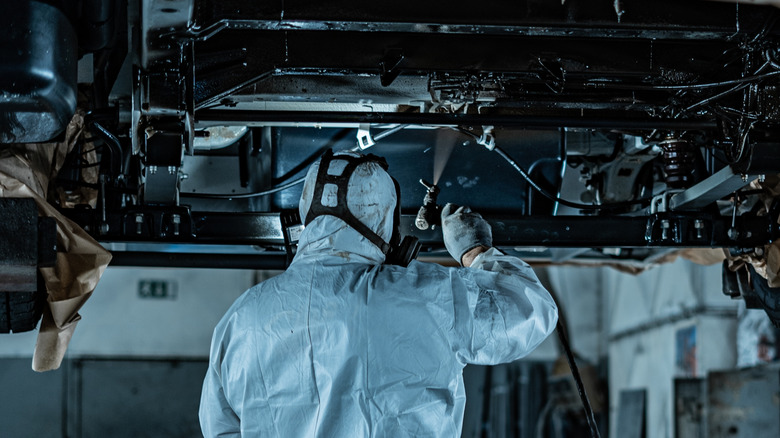
The best undercoating for you will depend on your car, driving conditions, and budget. Some professionals would typically charge around $300-$800 for oil-based undercoating and $150-$200 for yearly reapplications. If you frown at the thought of taking your car in every year, rubberized coatings are more durable and possibly cheaper if you take the DIY route. A six-pack spray can of Rust-Oleum Rubberized Undercoating costs around $36, and that's enough to cover the underbody of an SUV or large sedan. Then again, rubberized and asphalt undercoating demand extensive prep work before applying. Without enough care, the coating may crack and trap moisture, which can lead to more rust and corrosion.
You can expect to pay $800-$1,000 for underbody coating at a dealership, while a body shop would typically charge around $170-$300. Again, price variations depend on vehicle size and the type of undercoating. What's definite is that underbody coatings and rustproofing are still worth the extra cash for modern cars, especially if your vehicle has to deal with harsh weather or icy climates daily.
Will underbody coatings void my vehicle warranty?
While certain mods can void your car's warranty, the circumstances surrounding underbody coatings aren't quite as clear. The Magnuson-Moss Warranty Act of 1975 essentially states that it's illegal for carmakers and dealerships to deny warranty claims if the maintenance or repairs were performed by third parties. Presumably, this includes underbody coatings, but it's not as simple as it seems.
If the undercoating isn't applied correctly — either by your hand or an independent shop — it could negatively affect your warranty. For instance, some cars and SUVs leave the factory with five years of rust-through coverage. If you paid a body shop for underbody coating in your third year of ownership and the dealer found rust during inspection, your vehicle's manufacturer could stop honoring the remaining warranty if that rust was proven to be caused by inadequate prep work before applying the coating. In some cases, owners had their warranties denied due to the undercoating damaging other parts of the car.
If your car or truck is still under warranty, it's best to consult the dealer or the terms of the warranty before paying a professional for undercoating services. But for older cars that live in salty or icy climates, underbody coating is cheap insurance against turning your steed into a veritable rust bucket.