

10 Reliable Volvos That Have Withstood The Test Of Time

Ahh, Volvo, everyone's favorite Chinese-owned Swedish company that builds cars in Ridgeville, South Carolina. It pioneered safety with the first three-point safety belt and proved that Swedish automotive sensibilities really can hold their own against Japan, the United States, and other European manufacturers. Despite this, the brand's current reputation has Consumer Reports ranking Volvo firmly in the middle of the pack in terms of reliability. This puts it right between Mazda and Volkswagen, a bit above Chevy, and a few slots below Hyundai and Kia.
But if you wanted to squint at a bunch of charts, you wouldn't be here. This list focuses on the Volvo models (and, in some cases, specific generations of models) that proved to be not just reliable workhorses going back as far as the 1970s, but culturally enduring such that they still hold a space in automotive hearts and minds today. Even if you don't think of Volvo as a paradigm of stout reliability, your grandfather just might, and these rankings may illuminate why.
Volvo 240 (1974–1993)
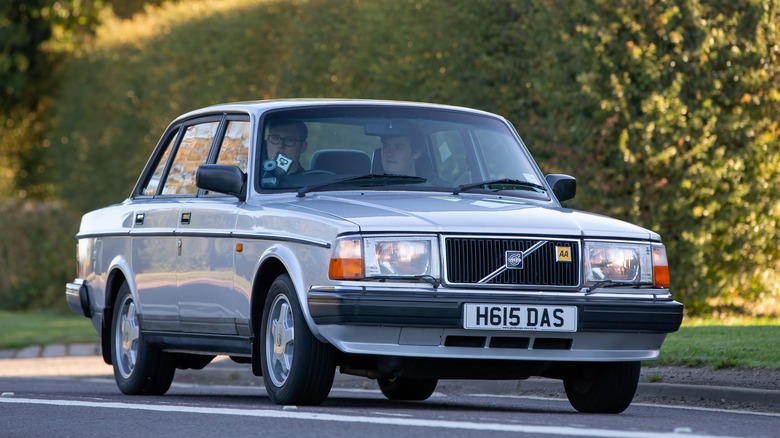
If reliability had a physical form, it would probably look like a Volvo 240. Produced for nearly twenty years with relatively few fundamental changes, the 240 earned its reputation not through innovation or performance, but stubborn longevity. Its boxy shape wasn't just an aesthetic choice. It made for a structure perfectly designed to absorb real-world abuse without losing integrity. Most 240s were also powered by versions of Volvo's Redblock four-cylinder engine, an engine famous for being overbuilt and incredibly long-lasting.
Long after the aesthetic stopped being fashionable, the 240 kept doing exactly what it was designed to do, cementing its role as the foundation of Volvo's reputation for reliability. Volvo die-hards might make distinctions based on the rear emblem, which might say 242, 244, or 245 on older models. Starting in '83, they all just said 240. In any case, the 240 takes us from the unrepentant practicality of the early '70s right up to the beautiful simplicity of driving a Volvo performance wagon from the '90s, and that's something special all on its own. It's probably why the enthusiast market sees these as anything but boring old cars, with various iterations of the 240 earning strong interest across enthusiast platforms like Cars and Bids and even an undeniably charming "BaT Auction Success Story" over on Bring a Trailer.
Volvo 740 (1984–1992)
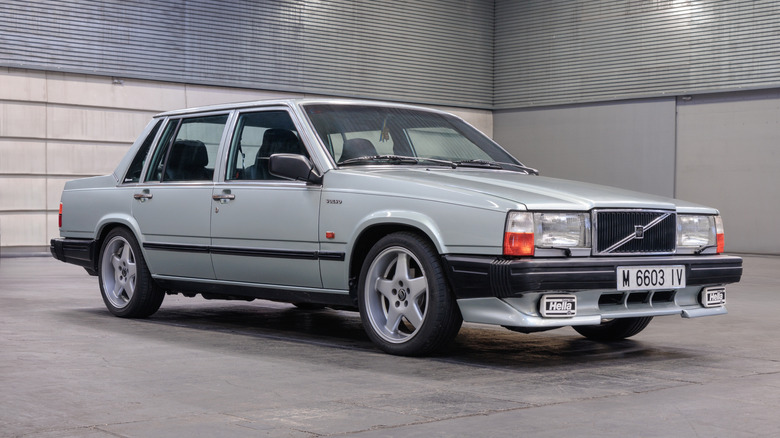
The Volvo 740 took the proven durability of the 240 and translated it into a slightly more modern form. While it introduced additional comfort features and optional turbocharging, the underlying engineering philosophy remained largely unchanged. Rear-wheel drive, robust suspension geometry, and familiar engines meant the 740 stayed firmly rooted in a formula Volvo already knew worked. Like the 240, many 740s relied on Redblock four-cylinder engines, which continued to demonstrate an impressive tolerance for mileage and imperfect maintenance. Turbocharged variants added complexity, but even those proved long-lived when serviced properly.
The 740 also benefited from Volvo's ongoing emphasis on safety and structural strength.Strong roof pillars and conservative body engineering helped these cars age gracefully. Mechanically, the 740 earned a reputation as a vehicle that would keep going as long as its owner didn't actively try to kill it. Today, especially in parts of the U.S. (or the world) that are a little more forgiving in terms of rust, you can actually catch these out on the road with reasonable regularity. Besides, the real takeaway here is that they're cool enough for Paul Newman to have a wild Volvo 740 with a V6 from a Buick GNX, so there is clear evidence that nobody reading this (ourselves included) is in danger of being too cool for the 740.
Volvo 940 (1992–1995)
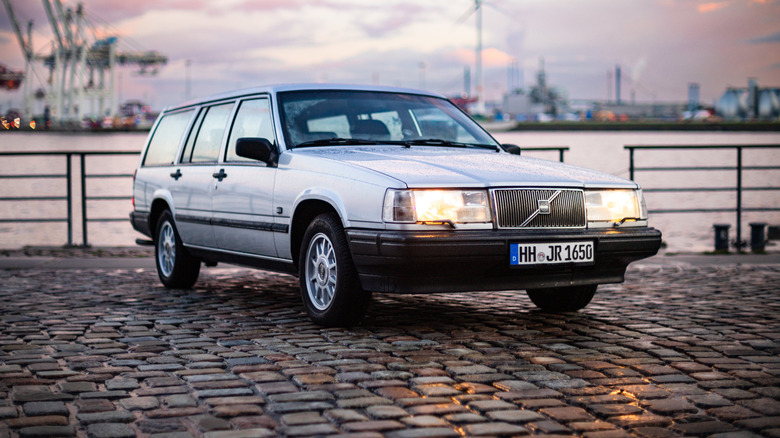
The final and most refined expression of Volvo's rear-wheel-drive brick era, the 940 benefited from years of incremental improvement. By the time it arrived, Volvo had already identified and addressed many weak points in its earlier models, making critical upgrades during a time when the mid-priced sedan market was getting spicy from several directions.
Mechanically, the 940 leaned heavily on familiar components. Engine options were well-understood, parts availability was excellent, and common issues had already been documented by owners and mechanics alike. This familiarity reduced long-term ownership risk at a time when many competitors were introducing increasingly complex electronics and untested systems.
In hindsight, the 940 represents Volvo at its most confident: A company comfortable enough with its engineering approach to avoid unnecessary reinvention. And some of the car journalism responses of the time proved prescient. A Car and Driver review back in 1991 even called out "Volvo's staid styling" as a means to actually stand out, as similar vehicles were evolving towards what we now know would become a lame automotive design homogeneity that would bore us all to death over the years to come.
Volvo 960 / S90 / V90 (1992–1997)
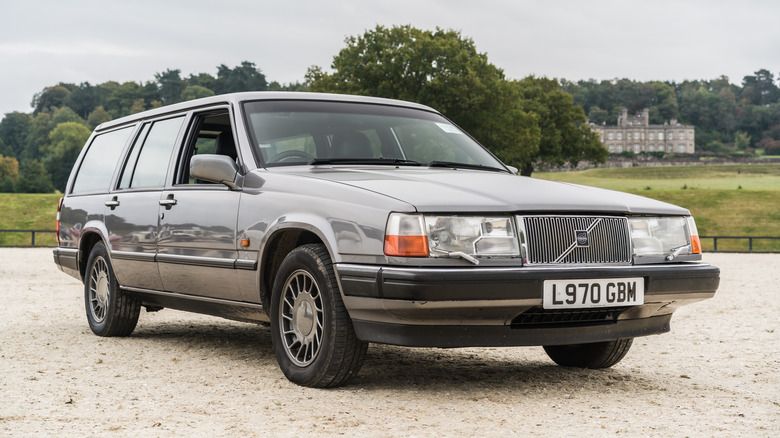
Remember the sweet simplicity we shared when Volvo collapsed multiple variants into the crisp and clean "240" rear badge? That's not what happened here. The Volvo 960 was joined by its later S90 and V90 variants to offer a more refined alternative to the brand's four-cylinder offerings without abandoning durability. There are enough naming variations to make your eyes cross, but these are each accurate reflections of Volvo's conservative engineering ethos at the time, regardless of what numbers were glued to the back.
These models never achieved the cult following of Volvo's simpler four-cylinder cars, but they earned deep respect among owners and mechanics. They proved that Volvo could build a comfortable, near-luxury vehicle that still prioritized durability. Decades later, well-maintained examples continue to serve as reliable daily drivers, offering a quieter, more refined version of the same dependability that made Volvo famous. Even as Volvo iterated through the naming conventions, it played things safe with the engineering, and the longevity of these models proves the effectiveness of this approach. Sure, it's boring, but it's boring in the way that captures hearts and minds a generation later. If you can't feel that in your automotive soul already, it should at least become apparent while you watch Jerry Seinfeld drive David Letterman around in a 1995 960 Wagon on Comedians in Cars Getting Coffee. (This was another Paul Newman car, by the way.)
Volvo 850 (1991–1997)
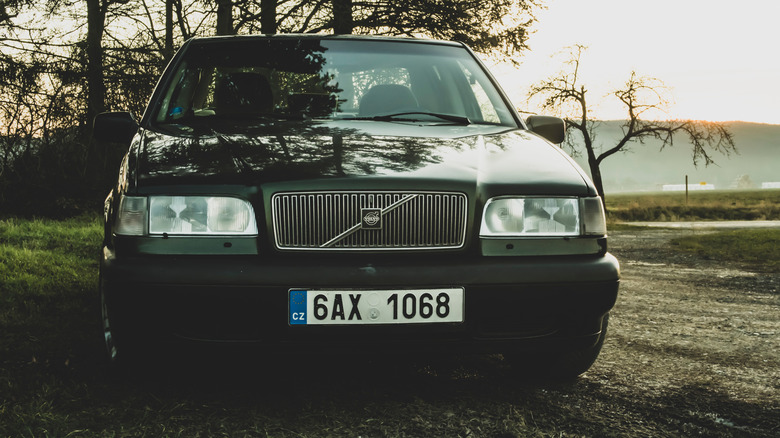
If some of the previous reliability champions got there by conservative iterative engineering, the Volvo 850 represented a proper leap (at least by Volvo standards). It introduced front-wheel drive and five-cylinder engines, which were changes that could have easily undermined Volvo's hard-earned reputation for reliability. Instead, the 850 largely succeeded, proving that modernization didn't have to come at the cost of longevity. This is also the model that picked up a remarkable Delta-link rear axle that delivered unique dynamics, a very Volvo side-impact protection system, and a self-adjusting front seat belt.
The 850 continued to maintain Volvo's emphasis on safety and structural integrity, helping it feel solid long after its contemporaries began to feel worn out. Its success laid the groundwork for future Volvo platforms, demonstrating that the brand could evolve without abandoning its core values. Even so, some say that the Volvo 850 is forgettable – and those people are wrong.
Volvo S70 / V70 (First Generation, 1996–2000)
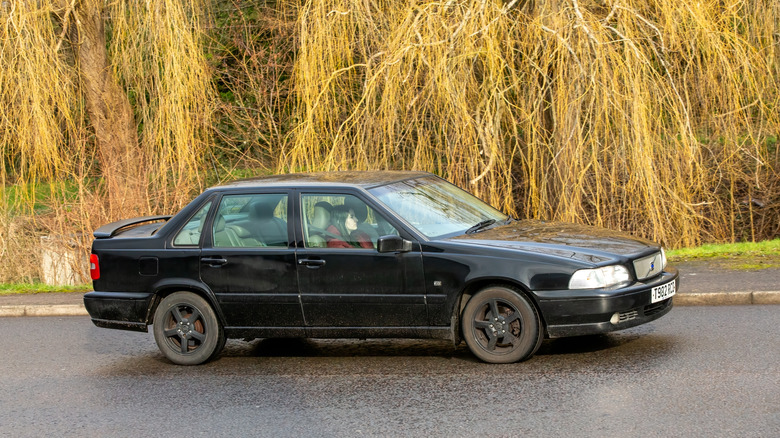
After going out on a limb with the leapfrogging release of the 850, Volvo did what it does best by taking more baby steps and sticking largely with what works. The first-generation iterations of the S70 and V70 were the result, once again representing refinement rather than reinvention. Built directly on the foundation laid by the 850, these cars benefited from several years of real-world feedback that helped Volvo smooth out early issues without fundamentally changing what already worked. Because of this, these cars retained the durable five-cylinder engines and solid chassis of the 850 while feeling slightly more resolved in daily use.
Owners frequently describe these cars as sweet spots in the Volvo lineup. They're modern enough to feel usable today, yet simple enough to avoid the expensive electronic issues that would become more common in later models. That balance has allowed many S70s and V70s to remain on the road long after their peers disappeared, reinforcing their reputation as genuinely time-tested vehicles. Plus, we'd be remiss if we didn't acknowledge that when we asked which cars had the best seats, around half of our readers chose the S70. And, yeah, the V70 is what Gus Fring drove in "Breaking Bad." There was even a decidedly non-Fringian performance sedan, the Europe-only S70 R, which has enough enthusiast cachet to have the car blogs counting down to import eligibility.
Volvo XC70 (First Generation, 1996–2000)
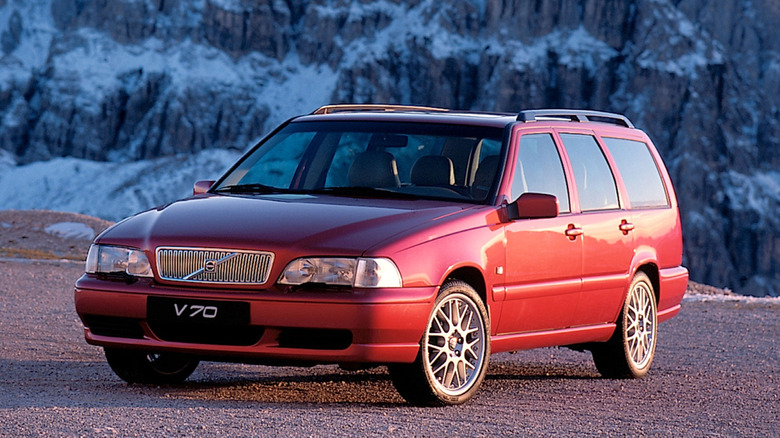
Originally sold as the V70 Cross Country, the first XC70 helped establish a segment that barely existed at the time — and no, we don't mean Volvo's puzzling attempt at an SUV-ified sedan. By combining wagon practicality with increased ground clearance and available all-wheel drive, Volvo created a vehicle that appealed to drivers who needed year-round capability without moving to a full-size SUV.
Crucially, the XC70 did this without abandoning the durability of the standard V70. The engines and drivetrains were familiar and proven, and the added hardware was relatively simple compared to modern crossover systems. That simplicity played a major role in the model's long-term reliability, as Volvo focused most of its enhancements and improvements on lower-stakes comfort items like a new dashboard and a refined interior. (Granted, these changes didn't cause too much customer uproar in the past — unlike today when an infotainment refresh or ill-executed haptic buttons can even send brand loyalists looking for their pitchforks.)
In hindsight, the first XC70 wasn't just an early crossover experiment. It was a durable and practical car that earned its reputation through years of real-world use. Its historical impact reverberates today, as China's New Volvo XC70 SUV is a handsome extended-range plug-in hybrid that hopefully previews PHEWs we'll actually get.
Volvo V70 (Second Generation, P2 Platform, 2001–2007)
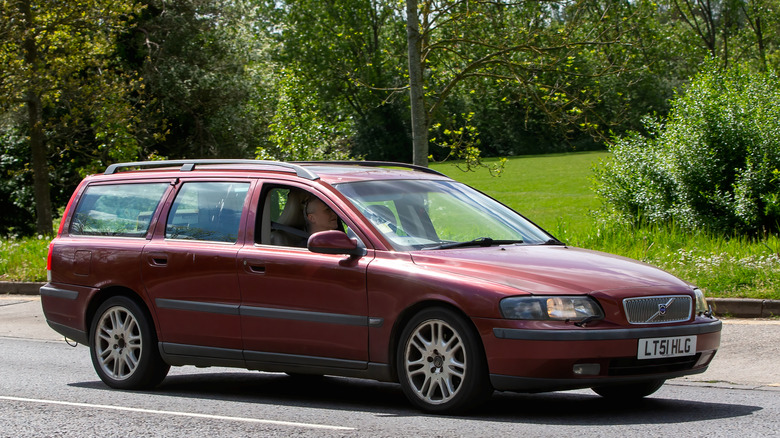
The second-generation V70 marked Volvo's transition into a more modern era, introducing the P2 platform with improved safety systems, increased comfort, and more complex electronics. While this added complexity carried some risk, Volvo largely managed to preserve the durability that had defined earlier wagons. This one evolved with a 2.4-liter naturally aspirated engine available with a five-speed manual, serving as a gentle reminder that car enthusiasts of the era didn't even realize how good they had it.
The P2 V70 also benefited from Volvo's continued focus on structural integrity and safety, which helped the car feel solid even as mileage accumulated. While it lacks the mechanical simplicity of earlier bricks, the second-generation V70 demonstrated that Volvo could modernize without completely sacrificing longevity. You might even consider this the optimal balance between early-21st-century technology and today's hyper-complex engineering that so often disappoints, as evidenced by the fact that the more recently introduced equivalents haven't quite lived up to their heritage. For example, the 2019 Volvo V60 is not the ideal family wagon it seems to be in theory, which might explain why, even though we're talking about a typical wagon, you'll see nice examples of the second generation going for solid money (and generating tons of interest), even on the enthusiast auction sites.
Volvo XC70 (Second Generation, 2004–2007)
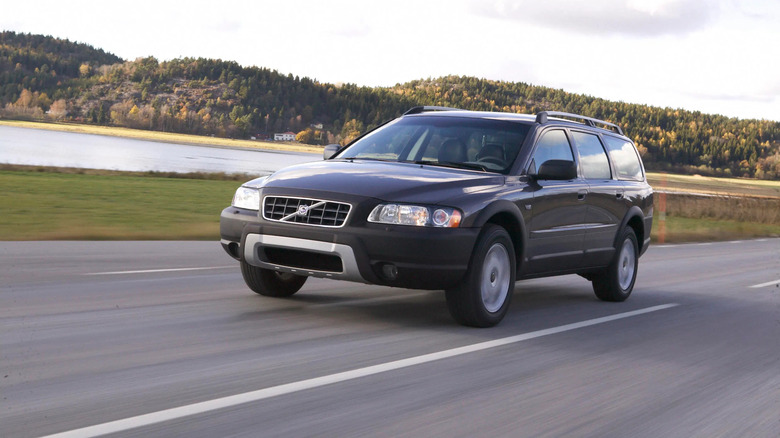
The second-generation XC70 refined the lifted-wagon concept introduced by its predecessor, improving ride quality, interior comfort, and overall polish. Importantly, Volvo also addressed many of the early issues that could undermine long-term ownership, resulting in a more dependable package overall. The combination of all-wheel drive, solid chassis tuning, and familiar Volvo engines made these models well-suited to the harsh conditions that quickly expose weaknesses in less robust vehicles.
Over time, owners began to view the XC70 as a long-term companion rather than a short-term lease vehicle, thanks to a compelling blend of comfort and utility. This generation is also where Volvo rolled out some semi-iconic design notes, including those cool jewel headlights and tail lamps, plus some beefy front and rear bumpers. They also got dual skidplates and the then-new egg crate grille that became part of Volvo's design aesthetic, even if you'd be hard-pressed to come up with that name for it. Oh, and the seats got a whole bunch of attention, sitting taller and becoming more precisely adjustable, further blurring the lines between comfort, utility, and luxury.
Volvo XC90 (First Generation, 2003–2006)
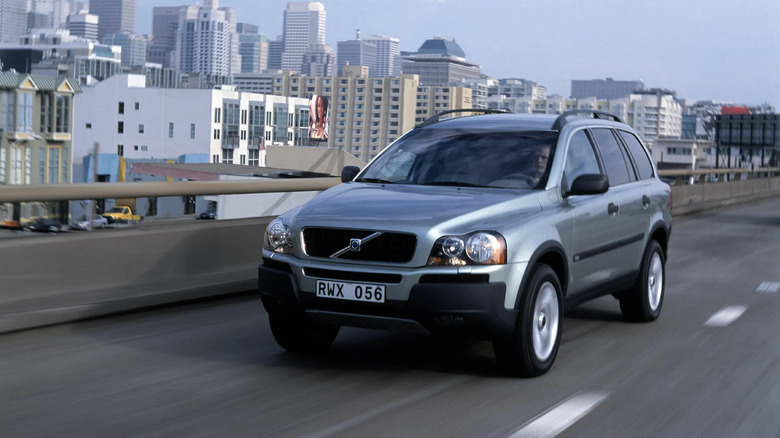
The first-generation XC90 marked Volvo's entry into the three-row SUV market, a space dominated by manufacturers with far more experience building large family vehicles. Early examples had their share of issues, but Volvo steadily improved the XC90 through incremental updates rather than wholesale redesigns. Even so, the brand also brought its unique flavor of Scandinavian heat to the segment, with industry-wide firsts including a roll-over protection system, inflatable side curtain airbags for all three rows, seat belts with pretensioners across the board, and an integrated sliding child seat.
The XC90 even landed North American Car of the Year in 2003, edging out mainstream players like the Honda Element and (apparently) the Hummer H2. While it is the newest model here, it has accumulated enough real-world mileage to establish a credible reliability record. Its continued presence on the road suggests that Volvo successfully translated its traditional durability into a larger, more complex vehicle, making the first-generation XC90 a legitimate part of the brand's long-term reliability story and paving the way for the second generation, which sits at the center of Volvo's lineup today.