

5 Small Mistakes That Can Cause Big Damage To Your Wheels
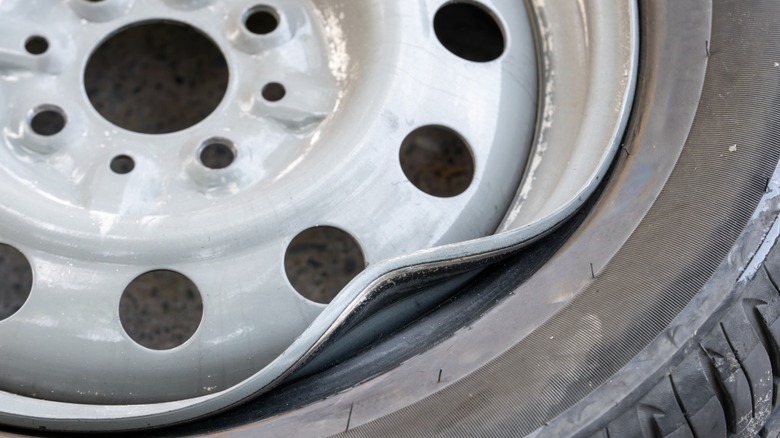
You might be wondering who would need to read a post about avoiding damaging one's wheels. "How hard could it be?" you might be thinking. "Just don't drive on a flat tire so you don't drive on a rim. Duh!" But there's more to it than that. There are small things you could be doing right now that might be slowly damaging your car's rims.
For example, how careful are you to avoid potholes? Most drivers probably do their best to avoid them. But hitting the wrong hole or bump could cause some serious damage. How regularly do you check the tire pressure? Do you use a tire gauge or just check them visually? It makes a difference. What about your tire and wheel maintenance? Do you rotate your tires on schedule? Do you get your alignment checked regularly? How about washing the wheels to make sure they're free of brake dust, dirt, and road salt? All of those maintenance items make a difference. When you change a tire, do you use a torque wrench to make sure you don't overtighten the lug nuts? If not, you could be damaging your wheels. How's your parking technique? Do you occasionally scrape the curb? That's not good for your wheels or tires. And what about how you drive? Do you tend to hard brake a lot or take curves a little too fast? If so, you're not doing your wheels any favors.
Protecting your wheels isn't that hard. It just takes keeping up with maintenance and driving responsibly. Wheels and tires are actually two of the parts we recommend saving before salvaging your vehicle, if you can make them last.
Not watching out for potholes, speed bumps, and other gnarly things on the road
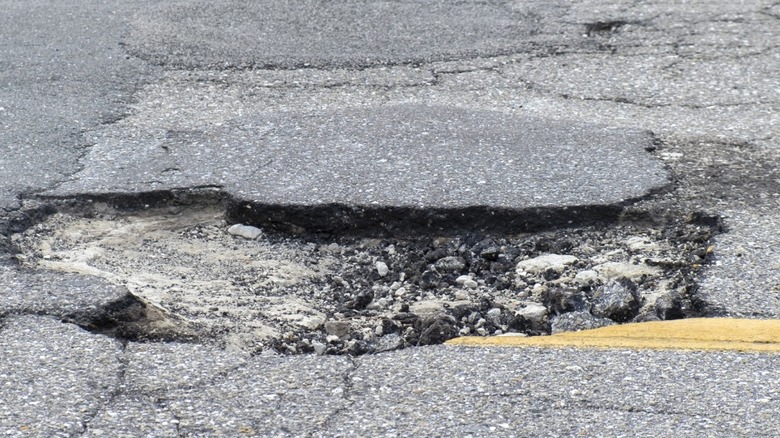
Maybe you're driving around in a full-size pickup or SUV, unconcerned about small potholes and bumps in the road. "Ha, ha!" you might think as you cruise along. "My truck laughs at your so-called speed bump!"
Well, your tires and wheels may not be laughing, and your wallet won't find it funny, either, if you ignore too many potholes. According to the AAA, Americans spend an average of about $406 on each pothole-related repair. Running into a pothole cost one Cybertruck owner a $34,000 in repairs. Hitting potholes, especially at high speeds, is hard on both tires and wheels, potentially causing even the hardest of rims to bend. Cracks in your wheels can also occur, which is especially hazardous. Even if none of those things happen, a good smack by a pothole or bump could cause a misalignment, which could lead to even more damage to your tires and suspension. Watch out for potholes, and avoid them as best you can. Drive slowly over bumpy roads and try to avoid hazards altogether.
But there are other things some folks do while driving that can cause damage to their wheels. For example, whipping around corners at high speed can be hard on your wheels if it's done repeatedly. The best way to take a curve is to slow down before you get there, then accelerate gently into the curve. Even driving too fast can cause rim damage. Why? Because every little bump or hole gets hit that much harder. So, basically all of those cool things you've seen Vin Diesel do in the movies — don't do them.
Not keeping your tires properly inflated
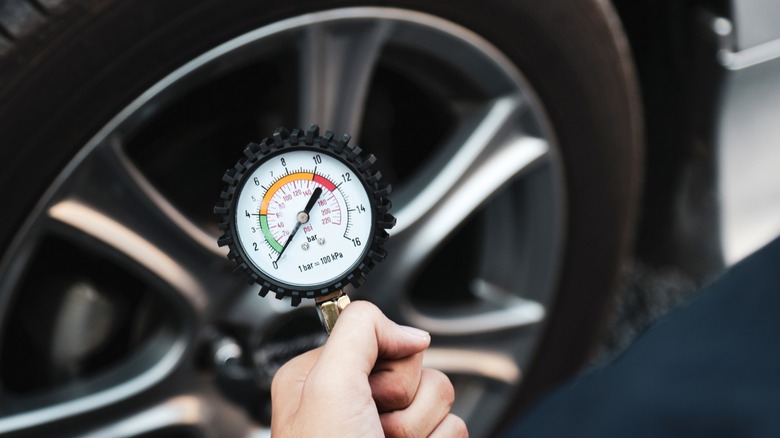
We don't expect to blow your mind when we say that keeping tires inflated to the correct air pressure is important. Most people know that, but not everyone checks their tires on a regular basis. Many drivers don't give it any mind unless their tires are almost flat or the little TPMS dash light comes on. By the way, that light doesn't typically illuminate until your tires are at least 25% underinflated. But riding on underinflated tires can mess up your rims. Underinflated tires don't protect the wheels from bumps and potholes the way they should. In fact, if you hit a hole hard enough, an underinflated tire can partially separate from the rim. Underinflated tires also run hotter, causing them to wear sooner, rendering them less able to protect the rims.
So, check your tires regularly. We're not talking about just giving them a quick glance in the morning before you leave for work. Tires can very gradually deflate, so underinflation can be hard to notice. You really need to get out a tire gauge and check the pressure. Tire gauges are cheap to come by at AutoZone or any other auto parts store. You'll especially want to check after changes in outdoor temperatures, since that can impact air pressure.
How do you know what the correct pressure for your tires is? Check the label on your door jamb or your car's owner's manual for the correct pressure. Do not go by the PSI listed on the sidewall of your tire. That is the maximum PSI that your tire is built to withstand, and it is not recommended to run your tires at that pressure.
Skipping out on regular alignment and tire rotation
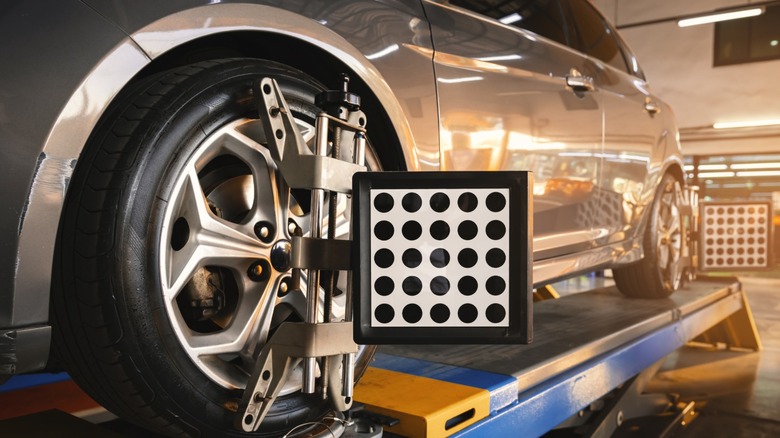
Your wheels could be out of line. That's not to say they're being disrespectful, though we wouldn't take any attitude from them, if we were you. We've already talked about how hitting a pothole or a bump could cause a misalignment. The truth is, since no road is perfectly smooth, your car hits a lot of little bumps all the time. That can gradually cause your wheels to track out of alignment. That's why it's recommended to get your alignment checked every 6,000 miles or so. Just a minor misalignment can cause damage because it makes your wheels undergo abnormal forces and vibrations. It could even cause the wheel assembly to loosen over time. And misalignment often causes uneven wear on tires. That means there could be a worn patch on the inner side of your tire that you don't even see, which could cause a blowout, resulting in damage to your rim.
The other thing that a lot of people forget to do regularly is to rotate their tires. But this can also cause damage to your wheels. How? In much the same way a misalignment can cause damage. Unrotated tires wear unevenly and, as we stated, uneven tires are in danger of blowing out, which could seriously damage the rim. That's why you should get your tires rotated every 5,000 to 8,000 miles.
While we're talking about proper tire and wheel maintenance, it's a good idea to give your wheels a proper cleaning on a regular basis. Brake dust, road salt, and dirt can get into your wheels and cause corrosion and rust. Enough rust can be catastrophic to your wheels.
Overtightening the lug nuts on your tires
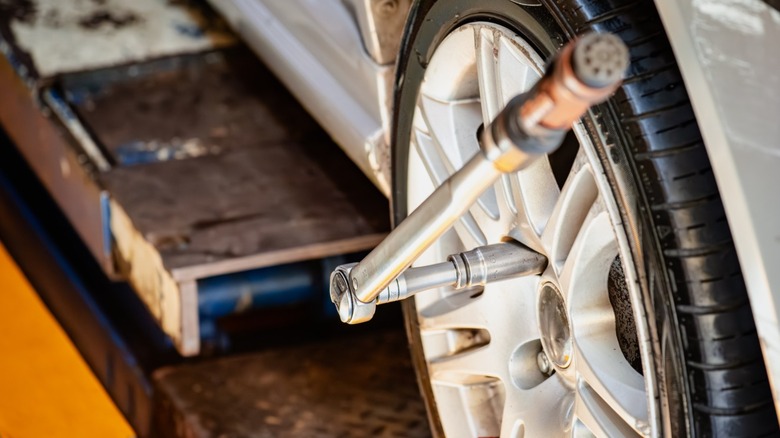
So, you rotated the tires on your car yourself, or maybe you just changed one tire. The last thing you want is for those tires to fall off, so you tighten those lug nuts as much as you can get them without stripping them. After all, the tighter the better, right? No! Overtightening your lug nuts can actually cause damage to your wheels.
How so? If you tighten your lug nuts too much, you can end up warping or even cracking your wheel. You could also strip the threads in your wheel, or stretch or break the studs. That is the last thing you want, considering the pressure the wheels are under during cornering and braking. Of course, lugs that aren't tightened enough are also a hazard. You don't want a wheel to come loose as you're flying down the freeway. So, tighten your lug nuts to the correct torque.
How do you do that? Get a properly calibrated torque wrench. They aren't that expensive and are a necessary tool if you do a lot of your own automotive maintenance. They aren't just for tires, and can save you a lot of headaches caused by snapped-off or stripped bolts, or, uh, so we've heard. It's not like we've ever snapped off or stripped a bolt head. Anyway, you can generally find the correct torque for your lug nuts in your car's owner's manual. It's also a good idea to check the torque on your lug nuts about 50 to 100 miles after a tire installation, which gives the lug nuts time to settle into place.
Giving your wheels a bad case of the curb rash
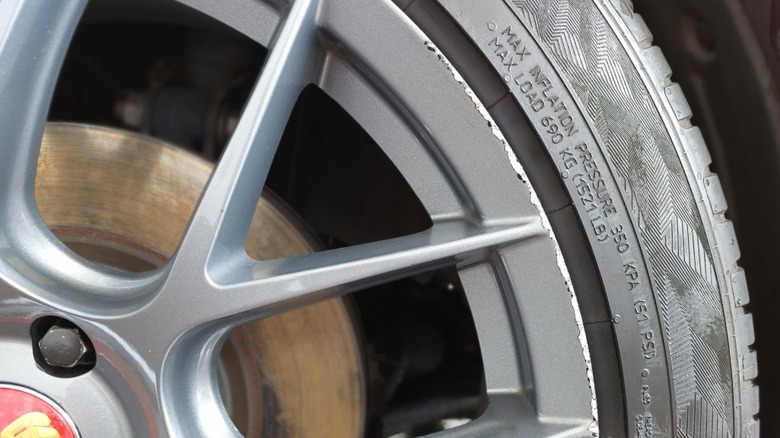
So, you rub against the curb every now and again when you park on the street. Some people do it on purpose. After all, if you feel the curb as you pull up to it, you know that you're far enough over on the side of the road, right? No, stop doing that. For one thing, those scratches on your wheels look ugly. But more important than that, damage from scraping the curb – known as "curb rash" — can lead to much more serious damage down the road.
Thanks to those gouges and scratches, salt, dirt, and moisture have a way to get inside your wheels. We know what that causes — rust — which can weaken your rims. Even small scratches can present a problem. Repeatedly scraping the curb can also bend or warp your wheels, and even damage your tire's sidewalls. That can lead to a blowout, ruining your wheel altogether. And, of course, hitting the curb hard enough can throw your wheels out of alignment, and we've already talked about why that's bad news for your wheels. So, give yourself enough space from the curb. Using your sideview mirrors is good for this. We like to point our mirrors down sometimes when we park so that we can see the curb or lines.
When it comes to avoiding damaging your wheels, there are plenty of other things we could have discussed here. For example, overloading your vehicle can put excessive strain on your wheels. It's also a good idea to check your wheels for signs of cracks or wear so that you can catch problems early. Are there other things we missed? Let us know in the comments.