

You Might Not Think To Use A Clay Bar On These Parts Of Your Car
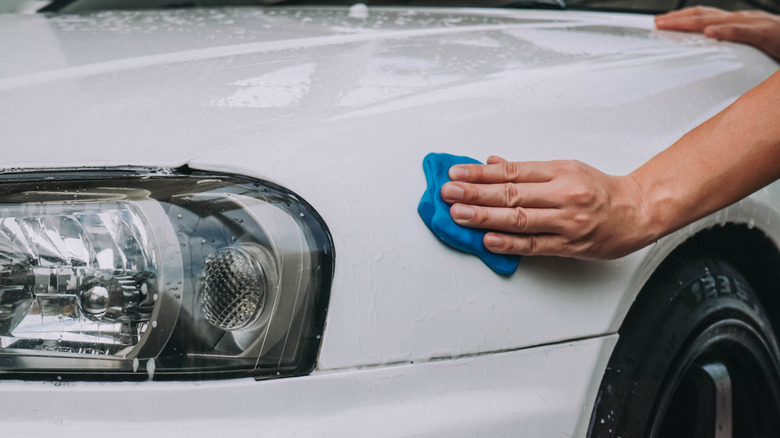
A clay bar is a detailing enthusiast's best friend. Yet many drivers don't know what a clay bar does for a car, where and how to use it, or even what it is. Clay bars for auto detailing are not exactly like Play-Doh, although they look, feel, and knead like the popular modeling compound that some of us used to play with as kids. One thing is for sure, though: Using a clay bar will make your car's paint look new again when done right.
Of course, the primary job of a clay bar is to remove deep-seated dirt, grime, contaminants, and other corrosive substances from the paint surface. When combined with clay lubricant or a mixture of clean water and car shampoo in a spray bottle, clay bars can make already clean vehicles look cleaner without scratching, marring, or leaving swirl marks. You won't dull or damage your car's paint job by washing it often, and using a clay bar once a year or so will make the finish stand out and make polishing and waxing easier afterward.
Windshield and glass surfaces

The best way to determine if your car's paint needs to be treated with a clay bar is to gently run your bare hand over the surface after washing — the paint should be as smooth as glass. If the surface feels rough or has visible contaminants like asphalt, tar, or dried bird droppings, using a clay bar and sealing the surface with wax will restore the gloss, clarity, and glass-like texture of the paint.
It's the same deal with all the glass surfaces of your car. The windshield, in particular, is among the hardest to keep clean, but regular cleaning with a microfiber towel and an ammonia-free glass cleaner is typically enough to maintain a streak-free finish. However, there are times when regular cleaning is not enough since the windshield protects your face from acid rain, brake dust, rail dust, road grime, bug splatters, and environmental fallout.
You can knead a fresh clay bar and use it to remove the same dirt on the paint. Pre-wash the windshield or windows with water and car shampoo, then wipe them dry. Next, grab a clay bar, knead it flat, apply lubricant, and wipe the clay gently along the wet glass using an overlapping, straight-line motion. Wipe off the excess with a towel, and inspect the surface by running your hand over the glass. If the surface doesn't feel smooth, apply more lubricant and repeat.
The clay will get dirty as it removes dirt from the glass, so remind yourself to fold and re-knead the clay before moving to the next surface — this will help prevent micro-scratches on the glass. You can repeat this process on all exterior parts of the windshield and windows.
Headlights, taillamps, and fog lights
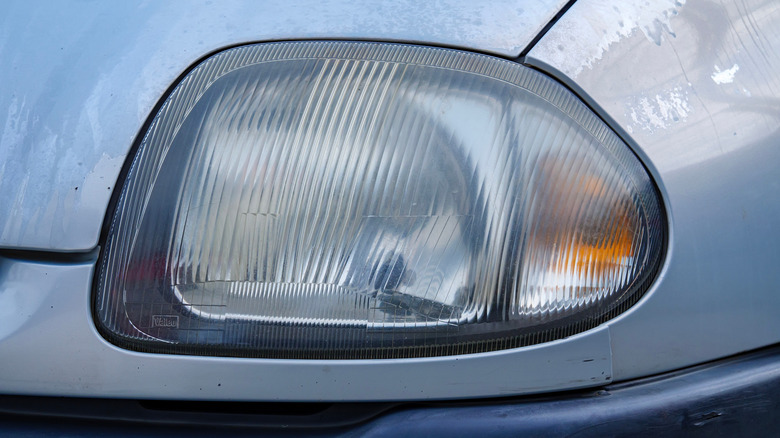
Clay bars are generally beneficial on any clear or glossy exterior part of your car, including headlamps, taillights, and fog lights with glass or plastic lenses. The headlights and fog lights are particularly vulnerable to dirt and contamination, since they're positioned at the front of the vehicle and consistently exposed to wind, sun, and rain.
As you may know, restoring hazy, scratched, or yellowish headlights is not exactly a walk in the park. With that said, you can use a clay bar to pre-clean your car's headlights prior to wet sanding and restoring the clear plastic lenses. You can also use clay to maintain the like-new look of your car's headlights — the process is just as easy as using clay on the windshield. Spray water or clay lubricant on the headlights and gently rub the clay over the lenses to pick up dirt, gunk, and grime. As always, the final step is to wipe dry with a clean towel. You can also do this on the taillights, fog lights, or any lighting accessory.
Metal and chrome trim
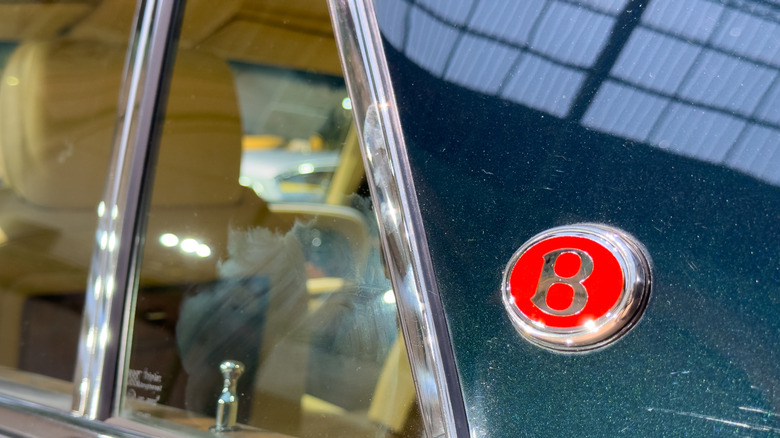
Clay bars are also great for polished metal surfaces, including chrome, aluminum, and stainless steel. Like the paint and glass, exterior metal trim and brightwork should feel smooth to the touch when clean. If it doesn't, the mirror-like finish will give way to a rougher texture with fine scratches, blemishes, and contamination.
However, polishing and restoring your car's stainless steel or chrome trim takes knowledge, patience, and the right materials. You can start right by pre-cleaning exterior metal trim with a clay bar. Doing so will make the surface cleaner, smoother, and ready for polishing or other treatments. Lubricate, clay, and wipe dry. Wet the metal trim with clay lubricant, glide the clay gently over the chrome trim to remove dirt, and wipe it dry with a towel to reveal a smoother, cleaner surface. Repeat as desired.
You should always polish chrome or metal trim after thorough pre-cleaning and claying, as this ensures you're treating the actual metal surface instead of all the surface-level dirt and gunk. What's more, metal or chrome exhaust tips will keep looking new and shiny with frequent clay bar treatments.
Wheels, carbon fiber, and paint protection film (PPF)
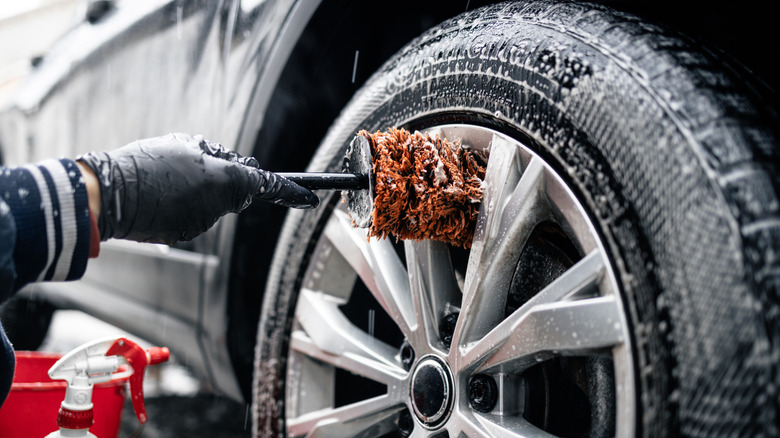
Looking for a way to decontaminate dirty wheels without using chemicals? When soapy water and a soft brush are not enough to remove baked-on asphalt or tar stains from your rims, a clay bar can make this job easier without scratching, fading, or marring the finish. You'll need to knead the clay into a smaller, more rounded shape to get around the corners and spokes of the wheel, but it works just as well in removing stains from chrome, alloy, stainless, or painted wheels.
You can decontaminate clear-coated carbon fiber exterior panels using a clay bar. The carbon fiber hood or roof of your car is just as vulnerable to the elements, and decontaminating it with a clay bar at least once a year will keep it clean and scratch-free.
Finally, a clay bar can be used on exterior surfaces with paint protection film (PPF), but you'll need to be extra careful when claying to prevent fraying at the edges of the film. The trick is to lubricate generously, glide the clay over the surface gently, and wipe away the excess immediately with a clean microfiber cloth.
Avoid using a clay bar on these parts and surfaces
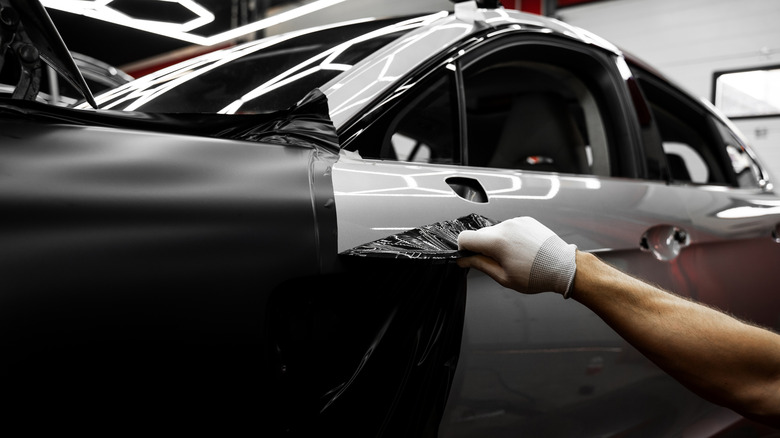
Clay bars are a clean freak's secret weapon, but there are still parts or surfaces on your car that wouldn't benefit from a clay bar. For instance, you should avoid using a clay bar on oxidized paint or paint with existing rust and damage. Moreover, clay bars won't work for cleaning rubber parts like tires or door seals. Remember that clay bars are ideal for clear or glossy surfaces like paint and glass, and tires are not what you'd classify as naturally glossy or clear, right?
It's also not a good idea to use a clay bar on textured plastic trim, vinyl wraps, and matte paint. Vinyl wraps can last longer with proper care, but you shouldn't treat them with a clay bar to avoid fraying, peeling, or tearing the material. The same goes for matte paint, which needs matte-specific paint protection to keep it looking silky. In short, wiping matte paint with a clay bar will cause unrepairable scratches and undesirable shiny parts on the finish.