

2027 Mercedes-Benz CLA220 4Matic Hybrid Is The 'Here, Damn' Of Cars
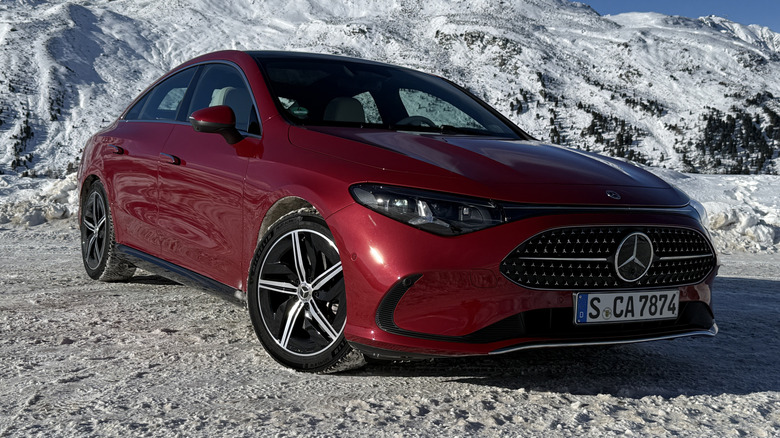
When sitting behind the wheel of Mercedes-Benz's newest entry-level offering, the hybrid CLA220 4Matic, I couldn't shake the feeling that the world's first automaker would rather this car never existed. In an ideal world, Mercedes would sell the third-generation CLA exclusively as an electric vehicle, and there would be no need to add any internal combustion component to it. Unfortunately for Mercedes, it doesn't live in that reality, and neither do we.
Since we all have to share in that misery — a reality where buyers aren't as keen on EVs as automakers once hoped and President Trump's administration is doing everything it can to thwart any headway EVs were making in the U.S. — many of these companies are reworking their lineups to include more diverse motor choices. That's how you end up getting a small gas powerplant shoehorned into the engine bay of ground-up EVs like the CLA. Mercedes needed to adapt to a changing market, quickly. Sadly for us and for the CLA, in the designers' and engineers' haste to do so, powertrain refinement and smoothness seem to have been left on the cutting-room floor.
Full Disclosure: Mercedes-Benz flew me out to Austria and paid for my hotels and meals, all so I could check out the 2027 CLA hybrid and a bunch of other stuff I can't tell you about yet.
The little engine that should
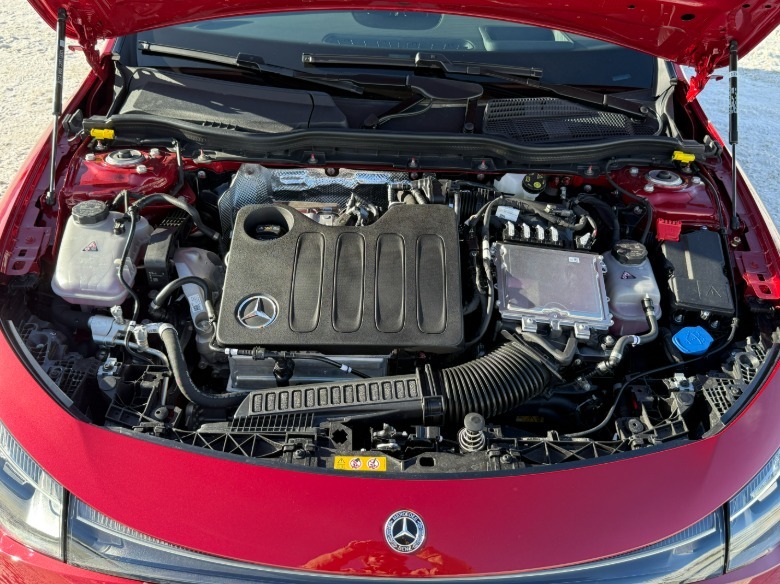
To hybrid-ify the new CLA, Mercedes-Benz decided to throw a brand-new powertrain called the M252 under the car's hood in place of the EV's frunk. What we've got here is a tiny turbocharged 1.5-liter inline-four, which is then mated up to a 48-volt hybrid system with a 30-horsepower electric motor housed within the eight-speed dual-clutch transmission that is fed by a 1.3-kWh battery. All in all, the system puts out 208 hp and 280 pound-feet of torque. These days, that's not a ton, but it's enough to get the entry-level sedan from 0 to 60 mph in a Mercedes-estimated 7.1 seconds in front-wheel-drive guise. Flat out on the Autobahn, the thing will knock up against its 130-mph speed limiter as power is sent to either the front wheels, or all four if buyers opt for 4Matic all-wheel-drive since power stays the same. The powertrain is a very tiny package, and it has to be. The CLA is a tiny car that really shouldn't have an engine in it to begin with.
 Andy Kalmowitz / Jalopnik
This car actually works out to be less powerful and slower than the current gas-powered mild-hybrid CLA it will replace. As it stands, the base 2026 CLA250's turbocharged 2.0-liter inline-four puts out 221 hp and 258 lb-ft of torque, meaning it can make the sprint to 60 mph 0.8 seconds quicker than the new CLA hybrid can. Sure, it'll almost certainly return better fuel economy than the old car, but it is something to note. It also has to deal with significantly less power than the two electric CLAs will be sold with — the rear-drive CLA250+ puts out 269 hp and the dual-motor CLA350 4Matic gets a hefty 349 hp.
Engineers put a big emphasis on this system being able to drive around electrically, especially during city driving. The idea is, if the car needs less than 27 hp to get going and roll down the road, it'll drive completely using electricity. While a dedicated EV mode button would be nice, I understand that 30 hp isn't really enough. The car will also do "electric gliding," which is a process in which the gas drivetrain is decoupled at speeds of up to 60 mph using an electric clutch, so it can run as an EV and save on gas. Of course, the gas motor will fire back to life the second you hit the throttle. When it's time to come to a stop, there is also a bit of regenerative braking built into all eight gears, and it can send up to 25 kW of power back to the battery.
Making the best of a drive
While this all sounds rather promising and run-of-the-mill for a hybrid drivetrain on paper, in practice it's not as good — especially if you hope to do any electric driving. The engineers really made it sound like this thing can make it around on electrons alone in town. Maybe it was my slightly too-thick winter boots on the streets of Innsbruck, but dammit, the second I got on the throttle, the little gas motor jumped to life. It seems that I almost always needed more than 27 hp to get the 3,900-pound sedan going, so it's almost always jumping right into hybrid or gas mode. Not only does this hurt refinement and smoothness, it almost certainly hurts gas mileage, too, though we are still waiting on the EPA to put it through testing.
 Andy Kalmowitz / Jalopnik
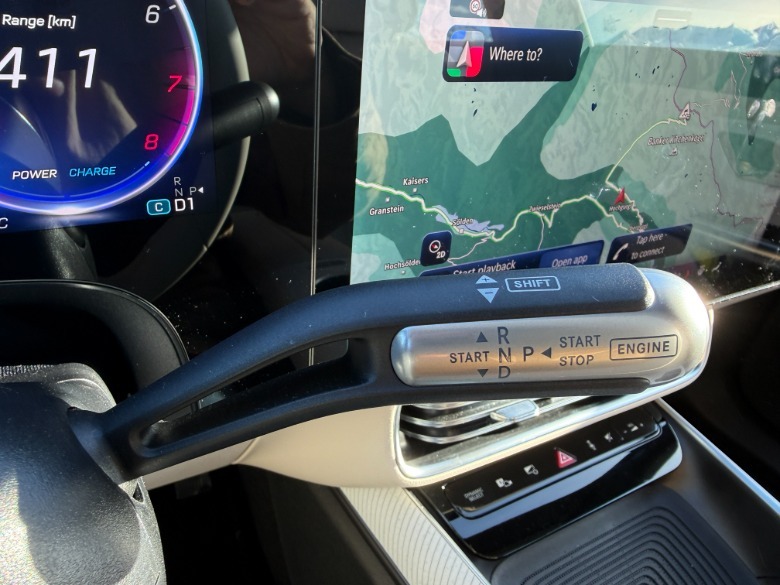
I could forgive a quick-to-act gas engine in a hybrid if it turned on smoothly. Automakers have been building hybrids for a long time, and they've mostly figured out how to make the transition between gas and electric completely seamless. Toyota and Honda will both sell you cars that make the switch between gas and electric far less jerky and noticeable than the Benz will, and they'll also cost a damn slight less. I was acutely aware every time the gas motor kicked on, and not just because the ruddy little thing made a less-than-premium gurgle as the revs rose. The eight-speed dual-clutch transmission shares a lot of blame. While it provided crisp-ish gear changes when I was really getting on it (that were negated by clunky column shifter-mounted gear selector operation, which I'll get to later), at low and medium speeds it was jerky, laggy and altogether not what I or anyone else has come to expect from a Mercedes-Benz. Between that and the noticeable turbo lag, there were ever-present pauses in the drivetrain that left me wondering how anyone could prefer this over the electric CLA.
 Andy Kalmowitz / Jalopnik
Shocking as it may sound, this didn't make much of a recipe for a great car in spirited driving. I mean, it was fine, but the CLA was hardly inspiring when the going got twisty. For the most part, the on-center steering was incredibly vague, and matters didn't improve much when I got deeper into corners. While the suspension was fairly good over crappy pavement and potholes, it's definitely on the softer side, and the CLA220 had a decent amount of body roll for a car this small.
 Andy Kalmowitz / Jalopnik
Where it's really at home is on the highway, cruising. Just because the drivetrain is a bit poo doesn't mean the bones of the CLA (and its excellent MMA architecture) have been diluted at all. Hoofing it down a German or Austrian Autobahn is a breeze in this thing thanks to a quiet and comfy cabin, a bangin' Burmester sound system, and a fantastic suite of driver-assist systems that put cars that cost two or three times as much to shame.
A strong baseline helps
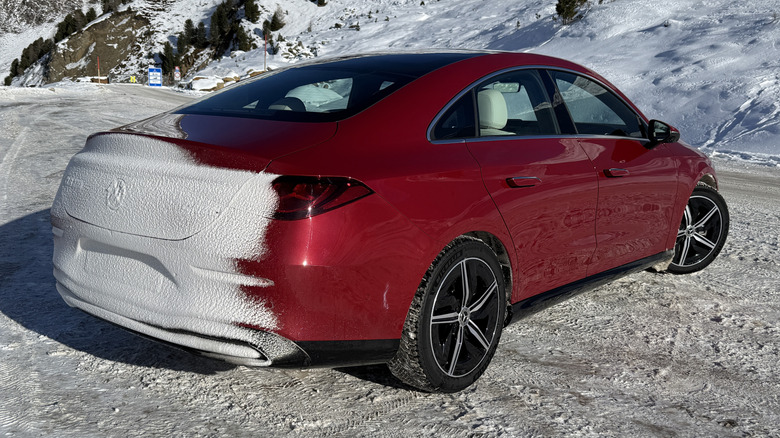
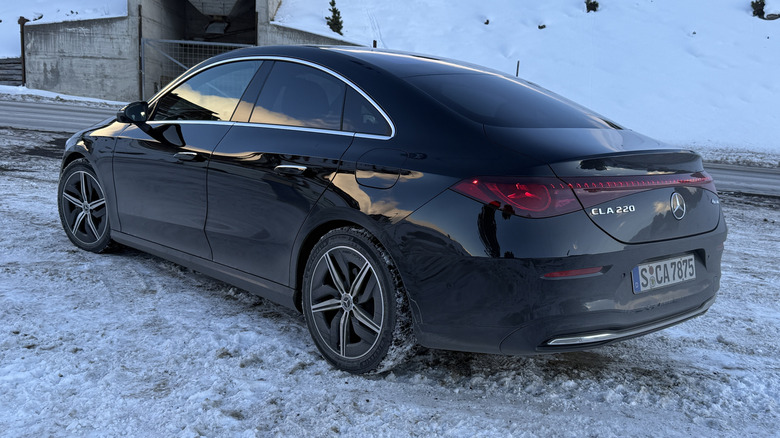
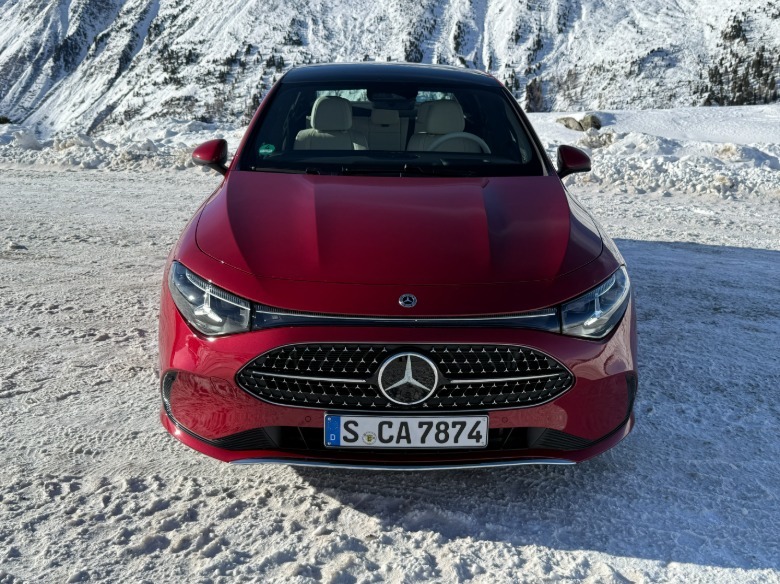
That's sort of the rub with the CLA220. Mercedes really made a great car with the electric CLA. It's handsome, efficient, the right size, and has plenty of tech and some of the best specs in its class. The issues I have with the CLA220 4Matic are reserved almost exclusively for the mechanical bits you won't find on the electric version. I especially like the CLA220's looks, both inside and out, because they're nearly identical to the EV's. Other than a different grille up front and a slightly reworked rear bumper, you'd be hard-pressed to tell the two cars apart. We've come a long way from Mercedes having two separate gas and EV lineups.
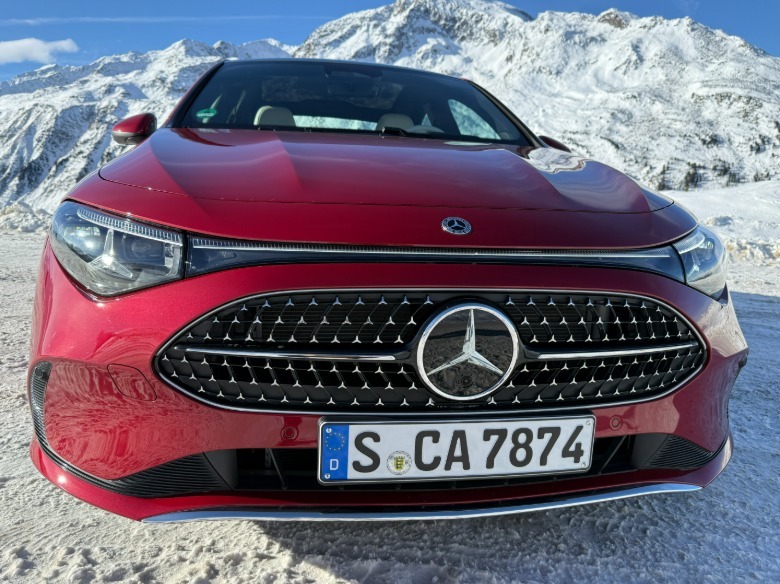
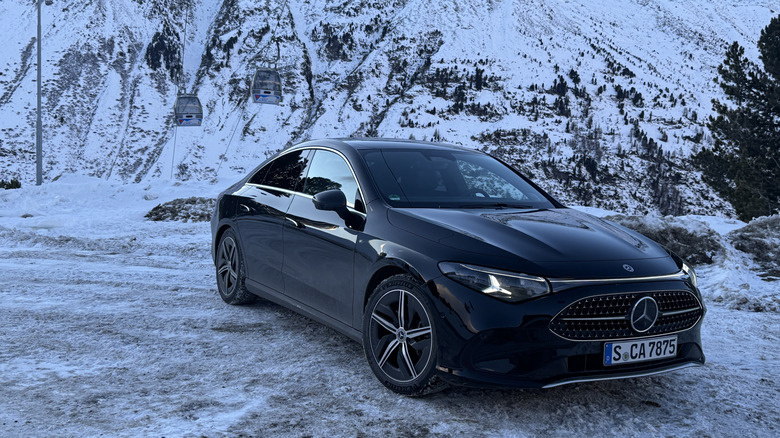
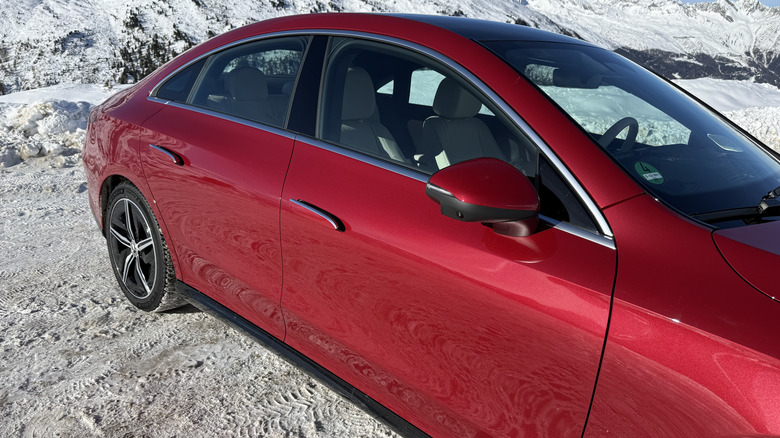
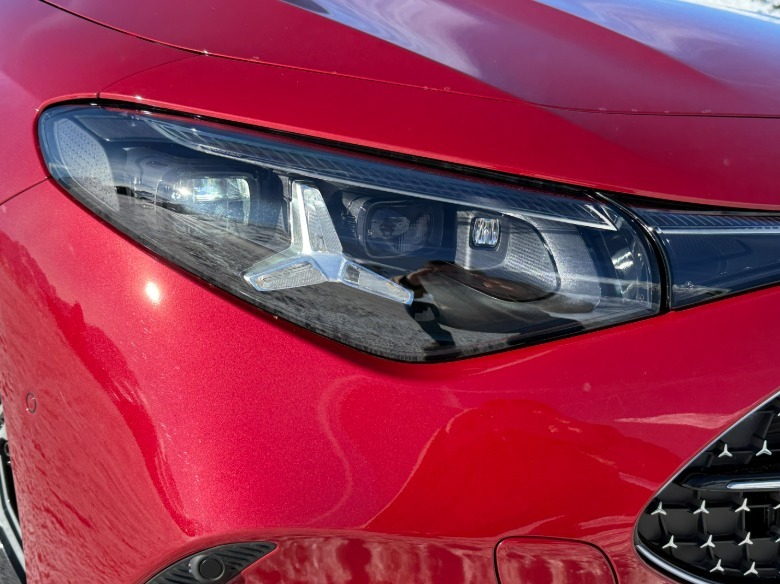
On the outside, the hybrid CLA220 keeps all of the little design elements I love from the EV, like the front and rear light bars, one trillion three-pointed stars in the grille (I don't care what you think, I like them), and the three-pointed stars in the headlights and taillights that don't let anyone doubt what car it is. And, of course, the overall four-door coupe look I've been into since Mercedes invented it with the first-generation CLS in 2003.
 Andy Kalmowitz / Jalopnik
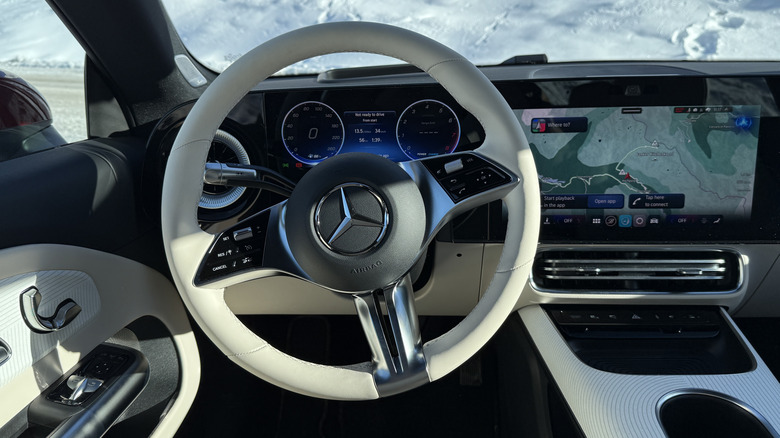
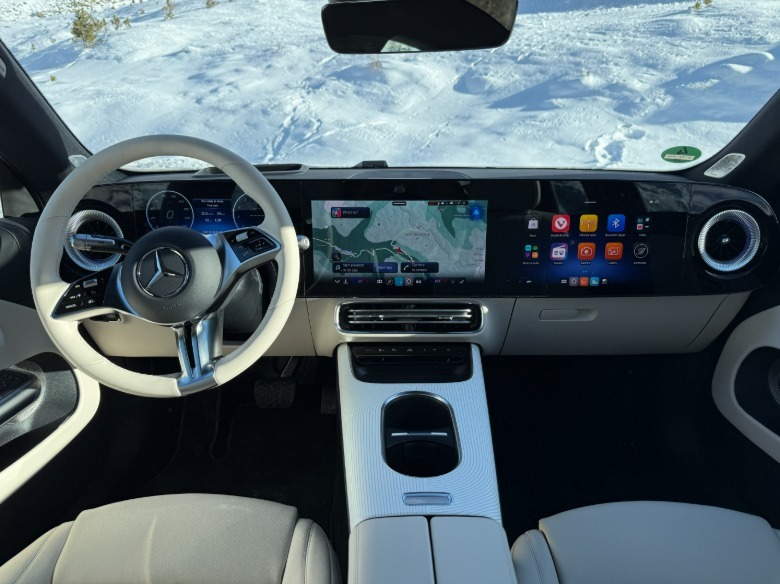
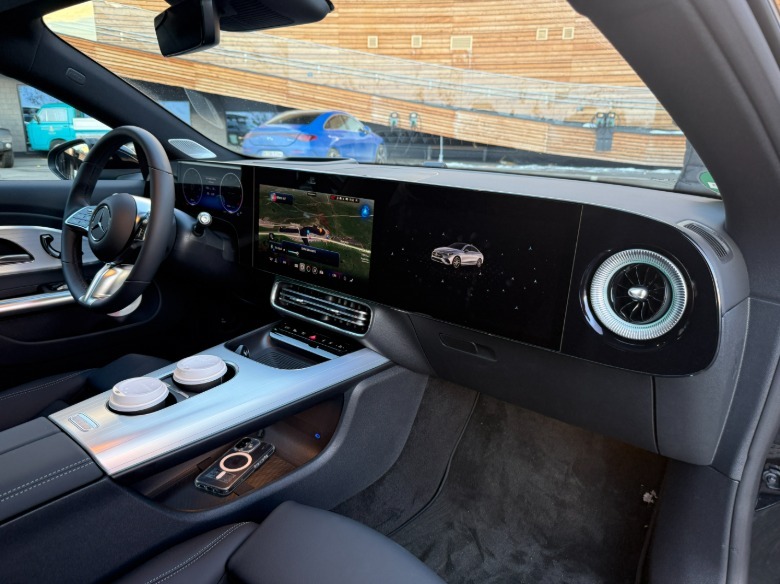
It's a very similar story when it comes to the interior, where the two cars are nearly indistinguishable from each other (and basically the same as the new GLB). As far as I can tell, the only difference between the two of them is a tachometer on the right half of the 10.25-inch gauge cluster instead of the power meter in the EV. It's fairly customizable, but there's a bit too much lag in the refresh rate for my liking.
In the middle of the dashboard is the same 14-inch infotainment screen that is found in the EV, and if buyers want to complete the MBUX Superscreen, they can also go for a second 14-inch passenger display. I've used a lot of passenger screens in my day, and this is one of the best — super useful and super functional. While it's not as cool as the seamless Superscreen in the new GLC, it's still a pretty sick look.
 Andy Kalmowitz / Jalopnik
Sure, these three big screens running Mercedes' in-house developed MB.OS system might seem a bit intimidating at first, but even the biggest simpleton will be able to use the system with ease in just a few minutes. And while it's annoying to admit, the voice-activated assistant does actually work very well. So, if you don't feel like looking for an option or setting, the car will do it for you.
Don't mess with a good thing
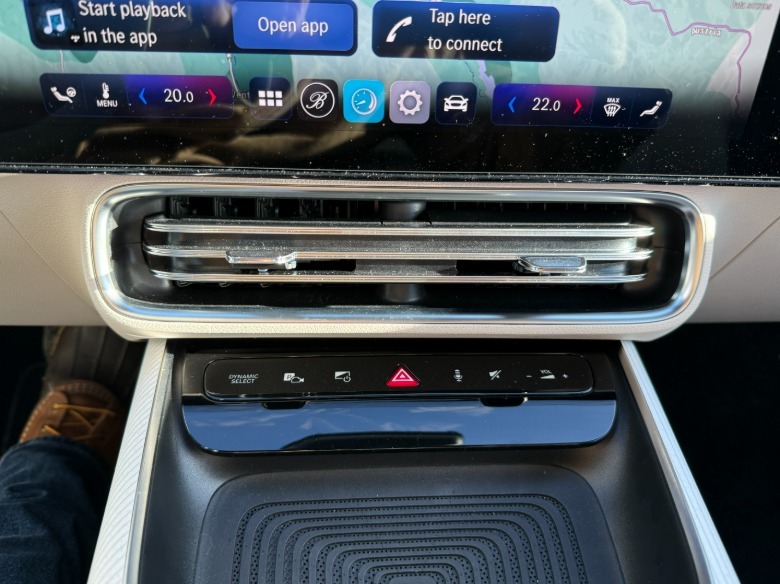
I know that you all like to complain about screens, though, so I'm here to tell you that there are still quite a few buttons. Hell, there are actually more than there used to be, including a few rocker switches added back to the steering wheel that control the following distance for your adaptive cruise control and the stereo volume. Like the EV, the CLA220's floating center console has hard buttons for drive modes, camera activation, turning the screen off, hazard lights, voice commands, mute and volume.
Ergonomically, the car is set up rather well — except for one thing. I don't know who in the name of Christ thought this was a good idea, but Mercedes dropped the paddle shifters for the CLA. However, it kept the car's manual shifting mode. It's operated by pushing forward and back on the column-mounted shift lever. I know most CLA hybrid owners aren't going to manually shift their cars, but this is a diabolical setup.
 Andy Kalmowitz / Jalopnik
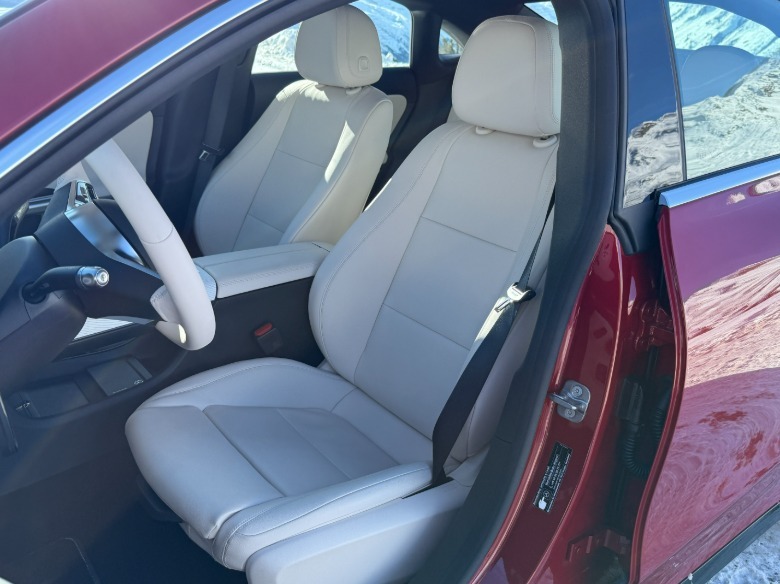
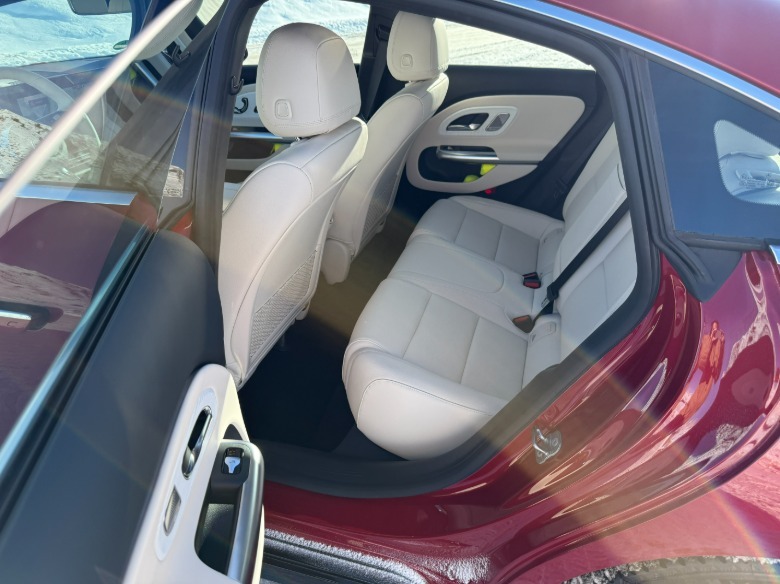
That small gripe aside, there's still a lot to like about the CLA's interior — especially how well packaged it is when you consider the car's overall size. The CLA220 is just 185.9 inches long with a tiny-by-today's-standards 109.8-inch wheelbase, yet there's still more than enough room for four adult-ish people and 14.3 cubic feet of luggage. At 6-foot-1, I can pretty much sit behind myself in the second row, though it is admittedly not the most comfortable place to be. Mercedes hasn't told us any of the exact measurements for the rear seats, but it's a bit tight. My head presses up against the panoramic glass roof, and my knees are in intimate contact with the seatback in front of me, but for shorter trips, it's completely doable.
Overall, it's just a nice place to be, and it feels far more premium than its hypothetical starting price would suggest. Depending on your trim level and options, there's plenty of real leather, metal and wood to go around, and Mercedes' designers did their best to stay away from piano black plastic, though it still shows up around the screens.
What you may pay

Right now, we still don't have U.S. pricing nailed down for the CLA220 hybrid, but we can make some educated guesses. We already know the electric CLA250+ and CLA350 4Matic start at $48,500 and $51,050, respectively (both including destination), and we've got European pricing for the hybrid. Granted, the Germans get cheaper (enshittened) versions of the car with even less power, but their CLA220 starts at the U.S. dollar equivalent of about $49,000 using December 7th's conversion rate, once you get rid of the 19% tax they've got to pay. The 4Matic starts at the equivalent of about $51,150. I'd expect U.S. buyers to pay something around that, meaning the hybrid and electric CLAs may have very similar prices. I suppose we'll know more soon, as the car is expected to go on sale stateside sometime in the second half of 2026.
If that does end up being the pricing for the hybrid CLA, it's going to represent a fairly large jump from the current mild-hybrid CLA that is on sale. The front-wheel drive CLA250 starts at $44,000, including destination, and adding 4Matic sets buyers back an additional two grand.
 Andy Kalmowitz / Jalopnik
While that does sound like a pretty sizable chunk of change for a compact car that is, without a doubt, the entry point to an entire brand, buyers will get a fairly decent amount of kit right off the bat. All CLA220 hybrids come standard with a panoramic roof, an illuminated grille surround, 18-inch wheels, seven years of built-in navigation, wireless Apple CarPlay and Android Auto, and even a selfie camera. No, I'm not joking.
Other luxury niceties come as standard, like a leather-wrapped steering wheel, heated front seats, automatic climate control, rain-sensing wipers, LED headlights, radar cruise control and a whole slew of other safety features. In an era where automakers are giving buyers less and less for their money, the CLA220 seems like a nice change of pace.
Obviously, there are plenty of options to choose from as well, especially design packages like the Night Package, AMG Line, and AMG Line Plus with Night Package — any guesses what that might be? They all do various things to make the car look darker or more AMG-ified, as if the 208 horsepower didn't speak for itself.
 Andy Kalmowitz / Jalopnik
The Exclusive Line adds power door handles, dual-zone climate control, a wireless phone charger, 64 ambient lighting colors, a rear armrest and parking assist. Above that is the Pinnacle Line, the top dog. It gets you all sorts of neat stuff like a more advanced exterior lighting system, the passenger display, more safety equipment, a head-up display, a power-closing trunk and illuminated door sills.
Separate from those packages are some standalones like 19-inch wheels (I'm impressed Mercedes was able to stay away from the temptations of 20s), Sky Control for the pano roof that lets you mess with its opacity, a 16-speaker 850-watt Burmester sound system with Dolby Atmos that sounds tremendous, a 360-camera, and even more advanced driver-assist features. As of right now, we don't know how much these packages or options will cost for U.S. customers, but they certainly won't be free.
How do you solve a problem like CLA hybrid?
Clearly, Mercedes executives in Stuttgart saw the world — and especially the U.S. — turn its collective nose up at EVs, so it needed to act fast to make sure its entry-level model remained competitive. That's how we ended up with a car like the CLA hybrid. Mercedes almost certainly is saying, "Here, damn, take your worse car and leave us alone." The automaker surely knows this half-hearted hybrid isn't as good as the electric version it'll run alongside, but I really don't think it's too concerned.
 Andy Kalmowitz / Jalopnik
The electric CLA is undoubtedly a better car than the hybrid, but because of the smooth-brained minds of the general car-buying public in the U.S., the hybrid is probably going to outsell the EV pretty handily. Because of that, I doubt Mercedes is very worried that there's a bit too much slack in the transmission and the motor sounds gruff. The people of Bergen County, New Jersey and Orange County, California, who buy (read: lease) CLAs won't care, so why should Mercedes? It knows which one is actually the good car people should be buying, and it's your fault for choosing incorrectly.