

Using An OBD-II Scanner: What It Can And Can't Tell You
The world of car diagnostics has changed a lot over the last 50 years. Back in the '70s and earlier, a mechanic's most valuable diagnostic tools were usually their eyes and ears. You could figure out various issues with a few simple tools and a little bit of know-how, but if you didn't know what you were doing, it was best to leave it up to the professionals.
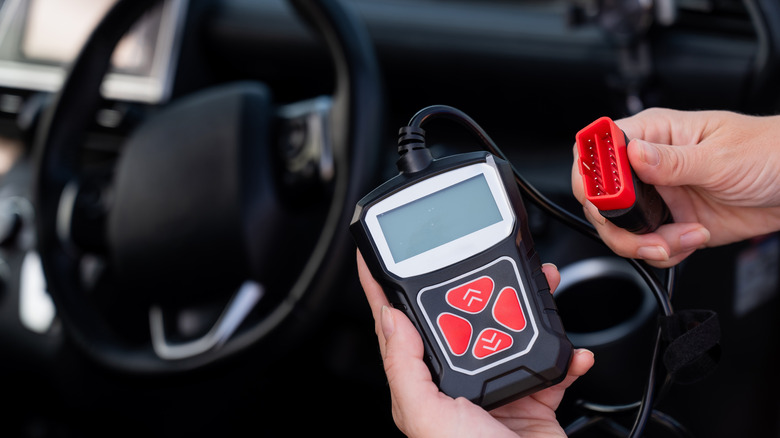
However, fast forward to the modern day, and pretty much anyone can have a go at diagnosing issues on their car, without running the risk of making everything a whole lot worse. This is where the OBD-II scanner comes into play. An OBD-II scanner is an advanced diagnostic tool that can make you a wrenching superhero. In short, it's a handy device that simply plugs into your vehicle's onboard diagnostics (OBD) port, reads any codes that are currently stored, and throws them back at you. You can then inform your mechanic of the codes and ask them about the next steps, or you can research the codes yourself and plan from there.
Diagnosing is very different from actually fixing, mind you. Just reading the codes won't repair the issue, but it won't make things any worse, either. Doing so enables you to have a clearer idea of why that pesky warning light is on your dash, but there are limitations to what an OBD-II scanner can do and tell you. Here are some more ins and outs of these very useful but often misunderstood devices.
OBD-II scanners won't fix your car for you
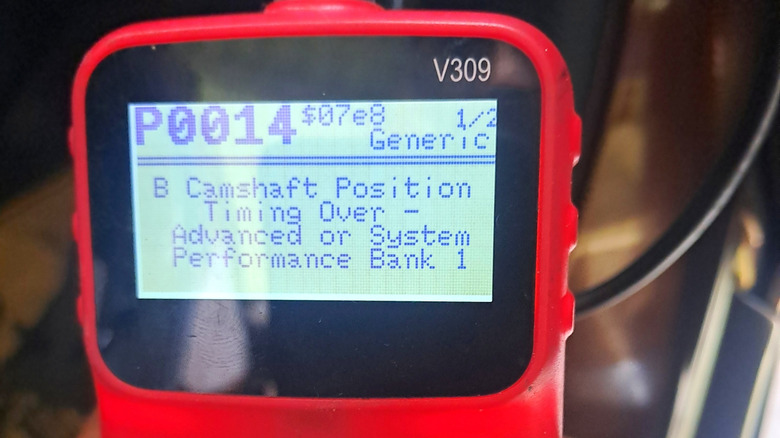
For the uninitiated, let's clear this up first of all. It's quite probable that the reason you're reaching for an OBD-II scanner is because a check engine light has popped up on your dashboard. It's natural that you want to understand why it's there, and that you want it gone as soon as possible. The check engine light has many probable causes, and so it may not be immediately clear as to why it's all of a sudden illuminated. An OBD-II scanner can help you by reading the exact code — P0101, for example, which indicates that your car's MAF sensor may have gone bad.
Another common code is P0420, which relates to the catalyst system and, more specifically, that oxygen levels are lower than they need to be on bank 1. That can sound a little confusing if you're not familiar with codes or your catalyst system, but at least the scanner can provide you with a starting point to your problem. It will also provide you with an option to clear the code, removing the check engine light. Simply hit the button, wait for the scanner to do its thing, and voila, no more problem. Right?
Wrong. The scanner only told the car that the problem is gone. When you turn the vehicle back on and drive it for a few minutes, the sensors will likely detect low oxygen levels again and send the data back to your car's ECU, triggering the check engine light. The scanner just reads the code and removes it, the problem itself still remains, and so that warning light will continue to come back on until you fix the issue.
Mechanical faults aren't always detectable using an OBD-II scanner
As useful as an OBD-II scanner is, it's far from being the only tool a diagnostician needs at their disposal. Scan tools are useful for diagnosing dashboard warning lights. The lights suggest that a sensor has detected a fault somewhere, and the scanner allows you to read the associated fault codes. Brilliant, however, not all components of your vehicle are hooked up to sensors, especially if you drive an older vehicle. OBD-II ports were only introduced as a mandatory measure on cars produced from 1996 onward. OBD-I ports did exist prior to this, but not all scanners are compatible with these older ports. Furthermore, not all OBD-II scanners are capable of reading all types of fault codes — many basic scan tools can only read check engine light codes, not ABS or SRS codes.
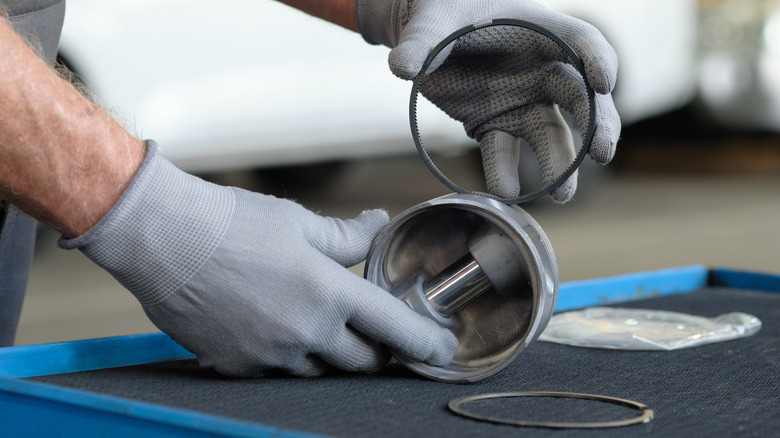
For example, imagine that your brake rotors are heavily warped, have a fat lip on them, and need replacing. There is no sensor here, and no matter how clever it may be, no OBD-II scanner is going to tell you that your rotors need swapping out. This is unlikely to be an issue, though, as a quick visual inspection is usually all that's needed to diagnose brake rotor problems. However, in other instances, it can be more of a headache. Your car may be burning oil, which can be tricky to diagnose, especially if it's due to something like failed piston rings. An issue like this could spell huge trouble for your engine's health, and yet, your trusty scanner may have nothing to say about it.
OBD-II scanners point you in the right direction
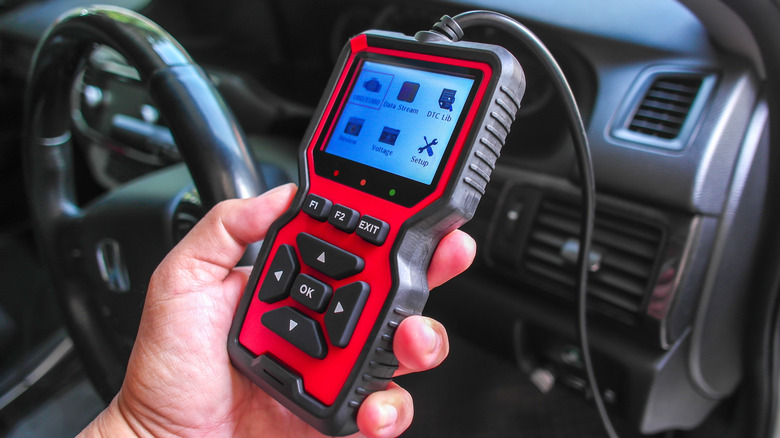
So, while your scanner won't say that your piston rings are shot, it may throw up a few codes that can certainly help clue you in to what's going on. For instance, if your piston rings are bad, then you will likely experience rough running, in addition to having unwanted fumes pouring out of your tailpipe.
When you connect a scan tool and ask it to check for codes, the OBD-II device may throw out codes that highlight misfires in certain cylinders, in addition to faulty O2 sensor codes, as these can easily be damaged by oil contamination from piston ring failure. These codes alone do not indicate that your piston rings have gone bad, but couple them with blue smoke from of your exhaust, and it's certainly reason enough to consider that they may be the culprit.
In this case, the OBD-II scanner can point you in the right direction, but a full diagnostic appraisal is still necessary. In order to determine whether or not the piston rings have failed, you should perform a compression test. If the psi is lower than it should be following the test, this can indicate that the piston rings have failed. So, while the compression test can reveal the actual fault, the scanner's information can point you in the right direction.
Advanced scanners can give you information on a car's history
Buying a used vehicle comes with all sorts of risks, as proven by your worst used car buying experiences. That's especially true if you're buying from a private seller, as you won't have any warranty to fall back on. An OBD-II scanner can be your best friend when figuring out whether the seller is hiding any nasty issues in order to get the sale. Sure, if the check engine light is lit, you'll probably walk away anyway, but what if the code was deleted just prior to your arrival? Even worse, the seller could have simply placed electrical tape over the bulb to hide the fact that it's illuminated.
If it's the latter, a scanner will read the diagnostic trouble code (DTC), and you'll know something is being hidden. Now, if the code was deleted, it can be a little trickier, as a simple scanner may not detect the code until the light comes back on. This can happen immediately, although sometimes, it may take a while, by which time you may have already purchased the car.
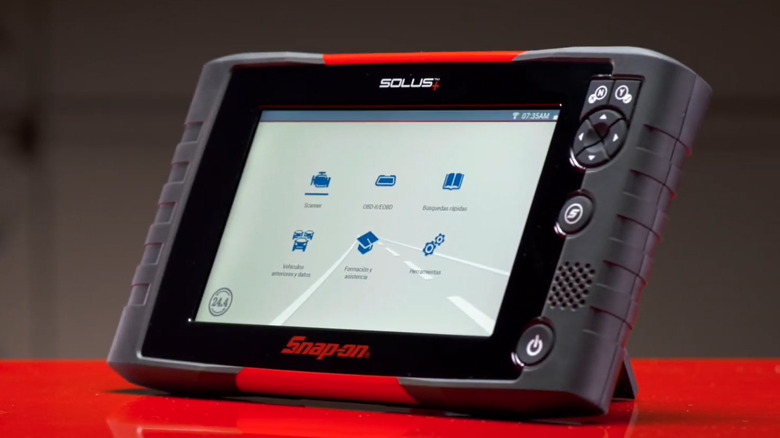
More advanced scanners can help you out here. They are more expensive, but some are able to read historic and even cleared codes, giving you a better understanding of the car's history and health. Not only can these scanners show you if a code was recently deleted, but many can also show you older codes. So, if you see historic emissions-related codes, you can ask the seller what the problem was and how they overcame the issue. They may be able to provide receipts for O2 sensors or a new catalytic converter to back up whatever answers they give. Ultimately, when buying a used car, the more information you can get your hands on, the better.
Understanding DTCs will help you get the most from your scanner
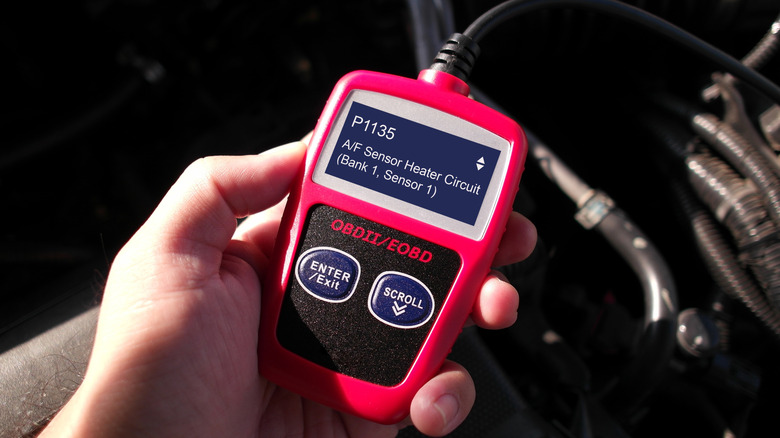
Saving money by diagnosing your car yourself is all well and good, but it can be confusing at times. So, it's best to familiarize yourself with what these DTCs actually mean beforehand. The codes are typically written in a uniform fashion of a letter followed by four numbers. These codes are not random, and you can easily decipher them.
The letter will always come first, and it will either be C, B, P or U. B stands for body, C for chassis, P for powertrain, and U for network communication. So, this immediately tells you which part of the car is throwing the trouble code. Following this will be either a 0 or a 1 — the former means it's a generic code, while a 1 means it's manufacturer specific. Knowing this should help you to track down exactly what the code is telling you. For example, if the code includes a 1 here and you drive a Ford, it's no use reading up on what someone with a Honda did to cure the code in their car.
The following number indicates the affected system. Examples include 2 for the fuel system and 7 or 8 for the transmission. Finally, the last two numbers indicate the exact problem. For instance, a misfire code can be P0301, suggesting a misfire in cylinder one, or P0304, which tells us that the misfire can be found in the fourth cylinder. Remember, while it's great to try and diagnose and perhaps even repair your car yourself, if it gets confusing or overwhelming, consulting a professional may be the best option. Misdiagnosing a code from your OBD-II scanner is relatively easy, so a second opinion is always useful.