

Why The Corvette Switched From A Front-Engine To Mid-Engine Layout
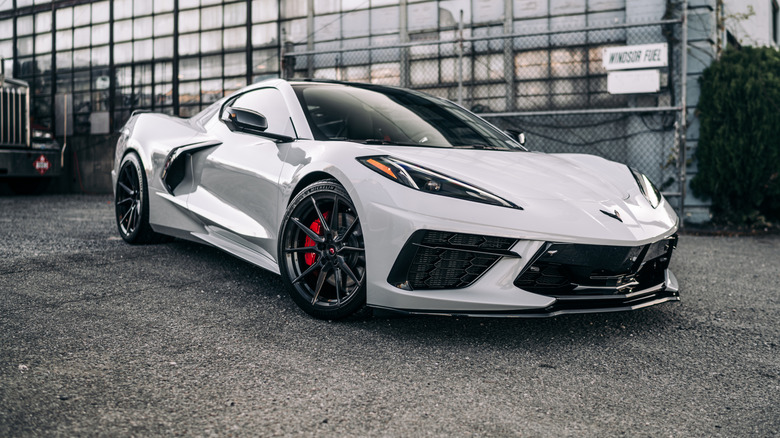
When Chevrolet launched the C8 Corvette in 2019, it represented a significant shift from previous versions of the iconic model, moving its engine from the front to the rear for the first time in the car's history — a layout long considered the traditional format for a supercar. The decision to go mid-engine had been in the making for over five decades, with Chevy engineers designing the gorgeous-looking XP-882 way back in 1970, and later the XP-895 Reynolds Aluminum Corvette. They even tried to reignite the idea of a mid-engined Corvette with the C7, but the 2008 financial crisis put the plans on hold.
The company finally committed to the mid-engine layout with the C8 Corvette, a move it considered key for the model's future – sticking the engine in the back provided improved weight distribution, which in turn delivered quicker straight-line performance. It also placed the driver closer to the front axle, giving them a better feel of the road — something that wasn't possible in previous generations. The front-engine layout of previous Corvettes had limited their performance on the race track, particularly in high-performance models like the ZR1, which put out over 700 horsepower.
A mid-engine layout also gave the car a more proportionate design since it no longer needed to fit a large engine up front, but the project's goal was driven purely by performance, not looks. Another benefit came from the improved visibility provided by the lower hood, while the absence of an engine in the front also freed up space for a frunk, making the car more practical as a daily driver.
The C8 Corvette introduced several key upgrades
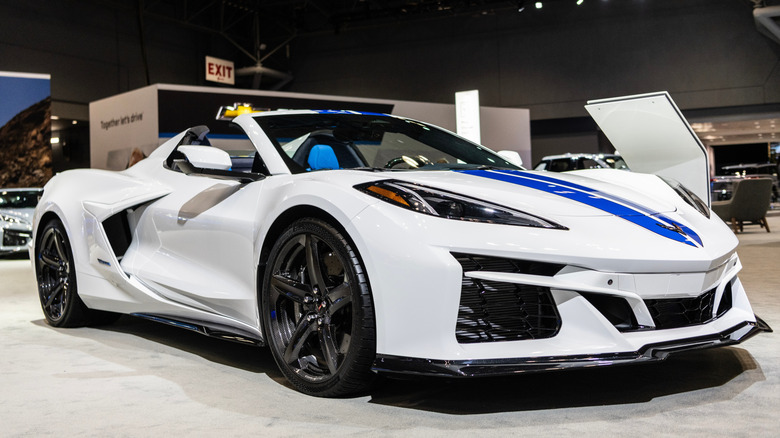
The frunk and the mid-engine layout weren't the only firsts for the Corvette in its 60-plus-year history. The automaker also decided to ditch the traditional automatic for an eight-speed dual-clutch transmission, in an effort to deliver better performance on the track with its close ratios and lightning-quick shifts, while still cruising comfortably at highway speeds with its long seventh and eighth gears.
But there was also a downside for Corvette fans, as Chevrolet did away with the manual gearbox — another first in the car's long lineage. Transmission manufacturers were unwilling to invest the huge sums required to engineer the manual from the ground up. However, five years on, there may be positive news, as there's speculation that Tremec could design a manual gearbox for the Corvette.
Right off the bat, the C8 Corvette became the first entry-level Corvette to do the 0-60 mph dash in under three seconds when equipped with the Z51 package. Chevy engineers further raised the bar on performance with the introduction of the ZR1, which became the first Corvette to cross the 1,000‑horsepower mark thanks to its twin‑turbocharged 5.5-liter LT7 V8 engine, entering supercar power territory. The staggering power figures continue with the latest ZR1X, which combines an electric motor — first introduced to the Corvette lineup with the E-Ray — with the V8, propelling the car from 0 to 60 mph in a mind-numbing sub-two-second time.