

11 Car Models With The Longest Production Runs

Ford, Chevrolet, Volkswagen, Toyota — these are some of the auto brands that have proven they have what it takes to make it in the auto industry. And while not every car from these automakers is a gem, they've produced many of the cars with the longest production runs in history, along with a few other big names, of course. But why have these major auto brands, and the popular cars they produce, endured where others fade?
When it comes to making a car that's loved by consumers, not only in its first generation, but in every generation, automakers have to innovate and update. To keep a vehicle relevant through the years requires tuning in to what the masses desire as tastes and technology change. This means much of the credit for a car's long production run goes to its designers and company CEOs. Having the ability to make an iconic car seem new while sticking to its roots is a challenge not just anyone in the industry can accomplish.
On this list, you'll find vehicles that have hit a nerve with consumers, with most having been in production for 60 years or more. Many of the models are still selling today, but whether they can continue to find their way into driveways around the country and the world is something only time will tell.
Toyota Corolla —1966 to Present
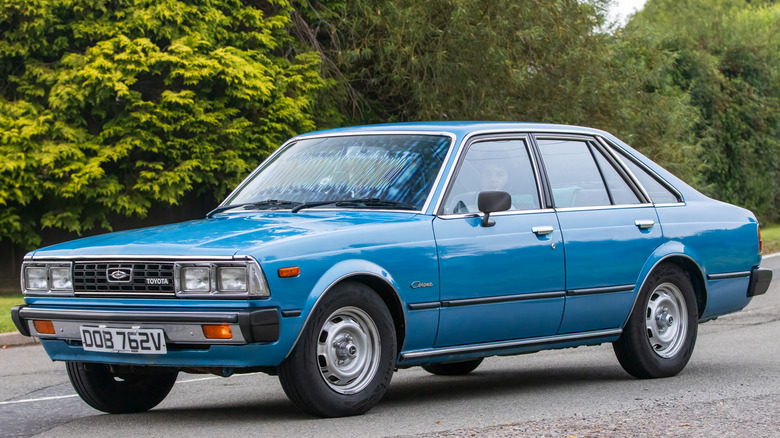
Toyota introduced the compact Corolla way back in 1966, but it wouldn't make its way to the States until 1968. Regardless of where it was sold, the model quickly took off, and by 1974, it was the best-selling car worldwide. Originally, the Toyota Corolla was a two-door, five-passenger coupe with a dinky 1.1-liter engine that could only produce 60 horsepower. This simplicity, though, is part of what made the car great. With nothing much to it, there was very little that could go wrong.
Over time, regular engine upgrades and changing up the car's body style options have been key to ensuring the Corolla lives on. In its fifth generation, the Corolla switched from rear- to front-wheel drive and offered a 1.6-liter engine paired with a four-speed automatic transmission for the first time. It was in 2006, the car's 10th generation, that modern infotainment features became the norm, as did pairing the engine choices with a CVT. By the 11th gen, the Corolla was offered with a hybrid powertrain, which now dominates the car's sales in Europe.
Now in its 12th generation, the Corolla is slightly more complex. However, it's somehow been able to retain its position as the best-selling car globally, out-ranking rivals like Ford's F-Series and Tesla's Model Y. Because Toyota constantly updates the Corolla to align with market trends, the car has maintained its place at the top in the auto industry.
Ford Mustang — 1964 to Present
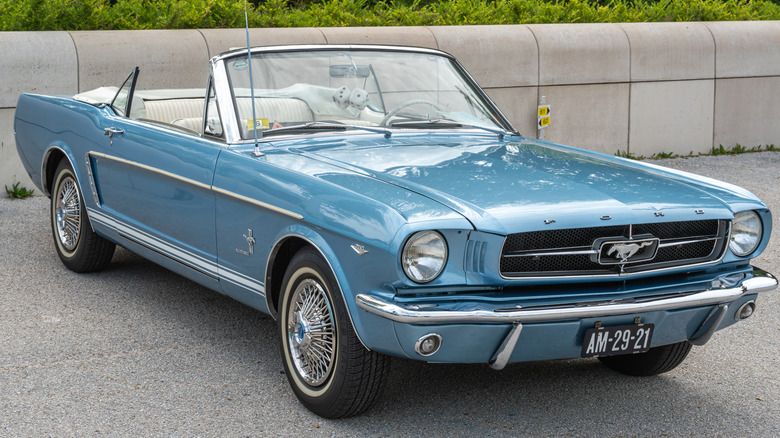
At the 1964 New York World's Fair, the country would meet the beloved Ford Mustang for the first time. Lee Iacocca, Ford's vice president at the time, was the driving force behind the Mustang and its exceptional marketing strategy. His brilliance in predicting what the American public wanted to drive in the 1960s and how to sell it to them has made the Mustang one of the most successful cars to ever come off the production line in the U.S. Within its first year, sales exceeded a mind-boggling 400,000, which went well beyond the estimated 150,000 Mustangs the company expected to sell.
The Mustang was the first-ever pony car, a designation that came from not just its nameplate but also its impressive horsepower. There have always been a variety of engines available for the Mustang, but a powerful V8 block is typically the most popular option. Changes in the car's design over the years, from convertibles and coupes to hood scoops and fastbacks, continue to make this sporty set of wheels desirable.
Ford has somehow kept the spirit of the Mustang alive for more than 60 years. The recent addition of the Mustang Mach-E, Ford's fully electric version of the pony car, in 2021, comes with mixed feelings. The EV version has shown strong sales growth in its short time in the Ford lineup, but some feel the car doesn't hold true to the Mustang of old. We'll have to wait and see if the Mach-E can hold up to the lasting reputation of its ICE kin.
Porsche 911 — 1963 to Present
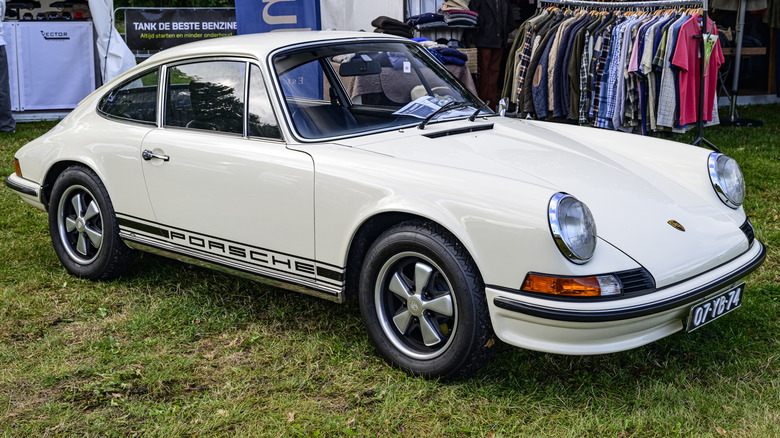
Would the now-infamous Porsche 911 have been as well received if the automaker had stuck with its original plan to call it the 901? Thanks to Peugeot's claim on that number, we'll never know, but what we do know is that the first Porsche 911 was introduced in 1963, with full production going forward in 1964. And ever since, the 911 has been a sports car icon that just about everyone knows. Part of what makes it so recognizable is its consistency in design throughout its extensive 60-plus-year production run.
Sure, the car has had some exterior design changes over the years, but it's always maintained the sleek curves and rounded headlights that make it a Porsche 911. Inside is a different story. Early models were quite basic in the cockpit, while other renditions have been outfitted with luxuries like leather seats and modern tech. Of course, with a sports car like the 911, it's all about performance. And from its humble air-cooled flat-six beginnings to its track-ready, turbocharged, electric-motor-assisted powertrain option of recent years, the Porsche 911 continues to innovate so it always delivers.
Nissan Skyline (GT-R) — 1957 to 2025
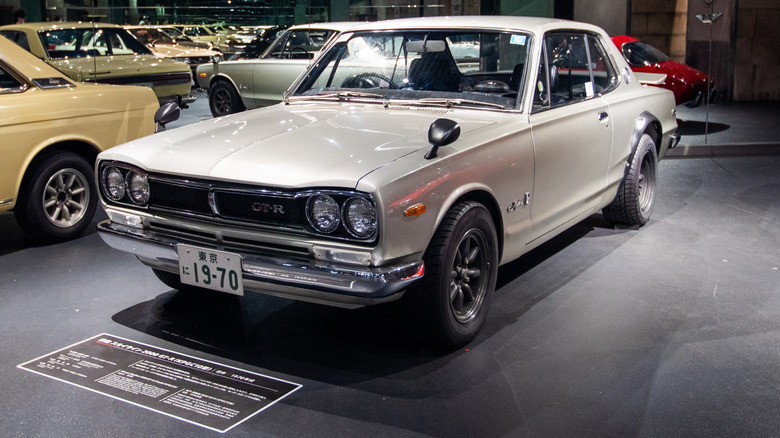
Let's set things straight right away: The legendary Nissan Skyline didn't begin life as a Nissan at all. The sporty car was initially released in 1957 by the Japanese Prince Motor Company and wouldn't take on the Nissan label until the two companies merged in 1966. Not much changed with the car at first, but then, in 1969, Nissan added the well-recognized GT-R designation to the Skyline. This is when the car transformed from a luxury-oriented sedan to a true performance sports car built to race. Obviously, it wasn't just about the name (which means Gran Turismo Racer, by the way). The GT-R got a 160-horsepower inline-six engine under the hood, which was impressive for a Japanese automobile in its day.
During its nearly 70-year production run, the Nissan Skyline has received many upgrades to its powertrain, but part of its allure likely comes from the fact that the car won its very first race and continued to win 49 consecutive times before its first loss. In 2008, when the car finally made it to America, it dropped Skyline from the name. This didn't make the car any less capable, as Nissan GT-Rs of this generation came with a 473-hp twin-turbo V6, putting it in direct competition with American muscle cars. Then, the 2020 version of the Nissan GT-R got a power boost, jumping horses to 600.
Sadly, Nissan has announced it will no longer produce GT-R models. The final car was made for the Japanese market in August 2025. That being said, Nissan has alluded that the legendary model may make a return, but for now, we can only appreciate what has been an epoch performance car with an extensive production run.
Volkswagen Beetle — 1938 to 2003

So, the Volkswagen Beetle is probably the most recognizable car of all time, thanks to its distinct rounded shape, being an icon in pop culture, and having one of the longest production runs ever. The German car started life in 1938 and lasted until the final Type I car came off the production line in 2003. Volkswagen attempted a reboot in the late '90s, but the "New Beetle" failed to generate the dedicated following that early models enjoyed, causing production to end in 2019.
Although the first VW Beetle hit the streets of Germany in 1938, the car wouldn't make its way to the U.S. until after WWII, for obvious reasons. At first, the car's sales didn't take off, but as the counterculture movement grew in the '60s and '70s, so did the Beetle's fan base. The two-door car came as a hardtop or soft-top convertible, but its power was never impressive. The engine, however, was simple and easy to work on, making the car durable. Its affordable price also made it attractive, but by the late '70s, sales fell off. In 1976, the last of the original Beetle models was sold in the U.S.
Minor changes to things like the Beetle's windows and bumpers over the years, and slight engine enhancements to increase power, didn't seem to hurt the VW Beetle's popularity. Even today, the car is sought after, especially certain year models, like the 1968 version that was featured in the Disney film "The Love Bug." There have been rumors of a future Beetle; Perhaps an EV model, but nothing's official yet. It's hard to know if an EV version would please the masses or fill the void left after VW officially discontinued the Beetle.
Mercedes-Benz S-Class — 1954 to Present
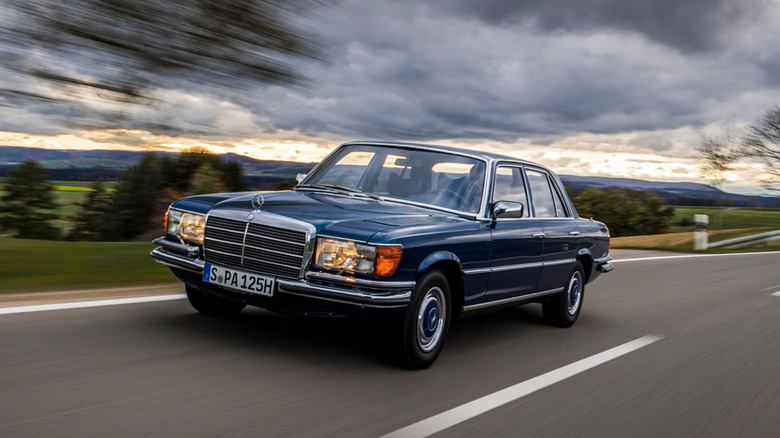
Mercedes-Benz is the oldest car manufacturer in the world, with nearly 150 years of experience in the auto industry under its belt. So, it's not all that surprising to learn the company makes one of the car models with the longest production runs ever. The Mercedes-Benz S-Class is an elegant sedan that's been in the automaker's lineup for decades, but Mercedes didn't officially attach the S-Class name to the car until 1972. However, the S-Class designation was first applied to the car in some form starting as far back as 1954, although some debate it was 1951.
The "S" refers to special, and what made the luxurious sedan a cut above in the 1950s was its six-cylinder engine and spacious "pontoon" body style. As the Mercedes-Benz S-Class developed, safety and technology innovations kept it a desirable option for wealthy elites. By 1972, when the S-Class label was official, the car had modern antilock brakes, which were unique at the time. Developments through the 1980s brought airbags, a lightweight alloy V8 engine, and deformable plastic bumpers.
Today, the S-Class continues to be a pioneer in the automotive world, helping to set the standards for luxury and safety across the industry. Mercedes-Benz is likely to continue the S-Class long into the future. With updates to styling and technology, the luxury sedan should easily maintain its reputation as one of the best cars in the world.
Chevrolet Corvette — 1953 to Present
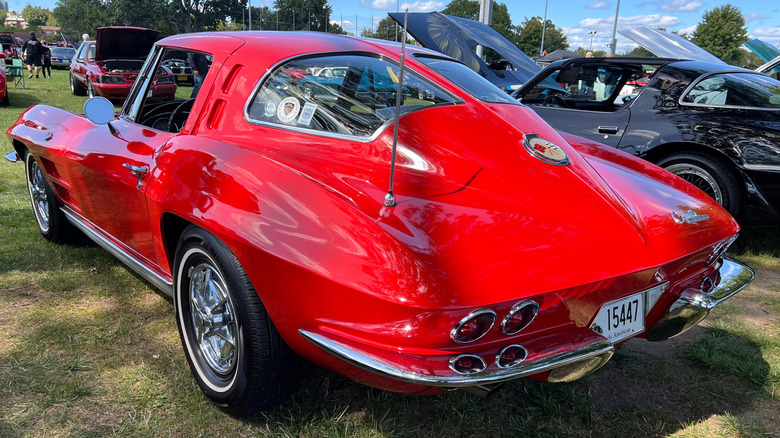
Chevy wanted a car that could compete with the popular British sports cars of the 1950s, so the automaker introduced the Chevrolet Corvette in 1953. That year, every model manufactured was white with a red interior. Perhaps that's what contributed to the less-than-impressive sales numbers. It took the Corvette a few years, but eventually, styling and engine changes helped launch the sports car to the well-known ride it is today.
Upgrading the engine in 1955 made the Corvette more attractive to sports car lovers. The powertrain went from the original six-cylinder 150-hp block to a V8 with 195 ponies in those first couple of years. Obviously, the car's had a range of engines since its early days, with V8s producing more than 360 hp in the early '60s and jumping to the 500 hp range later in the decade. In the early 2000s, the Corvette was offered with a supercharged 6.2-liter powerplant that could deliver a whopping 638 hp.
But power isn't the only reason the Corvette has made it this long in the Chevy family. The car has gone through many style changes throughout its long history, helping it keep its eye-catching appeal. While the split-window design of 1963 is sought after for its rarity, aerodynamic improvements during the '70s and '80s and the sharp, aggressive angles of the mid-2000s are also popular. The future of the Corvette will depend on consumer interest and Chevy's ability to revolutionize the sports car.
Toyota Land Cruiser — 1951 to Present
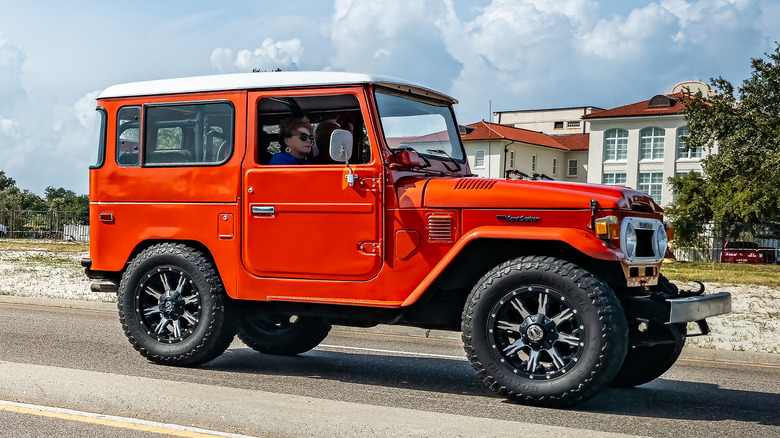
Since 1951, the Toyota Land Cruiser has been an icon in the off-road community, thanks to its extremely competent capability on just about any terrain. This SUV is also reliable and able to traverse some of the most extreme landscapes in the world, not to mention being one of Toyota's longest-running vehicles.
It began life as the Toyota Jeep BJ and was originally used only as a military vehicle during the Korean War. Civilians had access to the Land Cruiser starting in 1955, and while this version looked a little different from the original, it was no less capable. During Toyota's early years in the U.S., the Land Cruiser quickly ramped up to become the company's best-selling model, taking this prestige by the early '60s.
The 1980s saw the Land Cruiser as a four-door SUV for the first, but not the last, time. While its minimalistic interior kept the focus on the Land Cruiser's off-road ability, the vehicle's combination of utility and comfort made it a popular option for a vast consumer base. Over the years, the Land Cruiser SUV's exterior design hasn't changed too much. While improvements in technology, versatility, and comfort have been key to the vehicle's success, its looks are only slightly different today from the original model of the early '50s. Part of what keeps the Land Cruiser relevant is its durability. This, combined with the SUV's rugged capability, is why it's remained an iconic vehicle despite its short production pause after 2021. The model should be able to continue as long as it offers the same durability and off-road capability consumers have come to expect.
Volkswagen Transporter — 1950 to Present
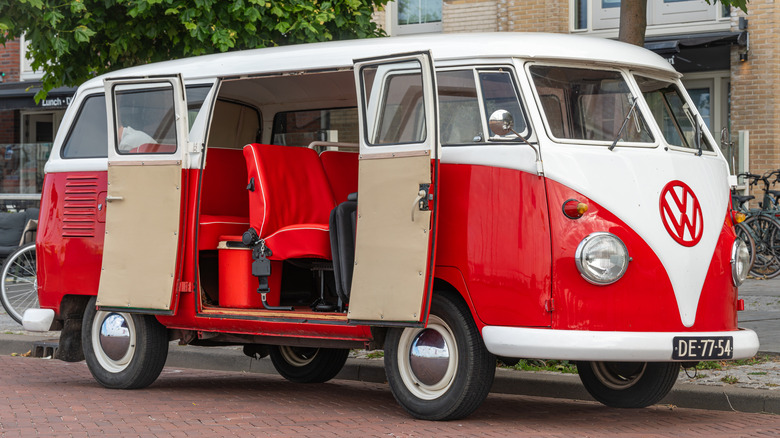
When it comes to cars with long production runs, the Volkswagen Transporter takes the top spot for European-made automobiles, and it's third overall. Since the first model came off the line in 1950, the van has been a staple on roadways all over the world for more than 70 years. Fondly referred to as the T1 in its first generation, the Transporter originally had a basic design, with no windows in the rear compartment, and the same engine as the VW Beetle mounted in the rear.
It didn't take long, though, before more design options came along. Adding rear windows and a passenger van with room for nine people gave the Transporter a wider target market. Within 10 years, production of the Transporter went from 8,000 to 151,000 units. The introduction of the Samba bus in 1951 helped make the Transporter the icon it is now. That version featured windows all the way around and a sunroof. The second-generation VW Transporter, or T2, came out in 1967 with minor updates to its looks. This generation had larger windows and improved safety features, and in 1970, VW sold 287,000 units.
After U.S. sales declined in the '70s, VW no longer sold the Transporter in the country, but it's still available in other parts of the world to this day. In fact, the current generation, T7, is built in conjunction with Ford on the Transit Van platform. For now, it seems as though nothing can stop this impressive machine from moving forward.
Ford F-Series —1948 to Present
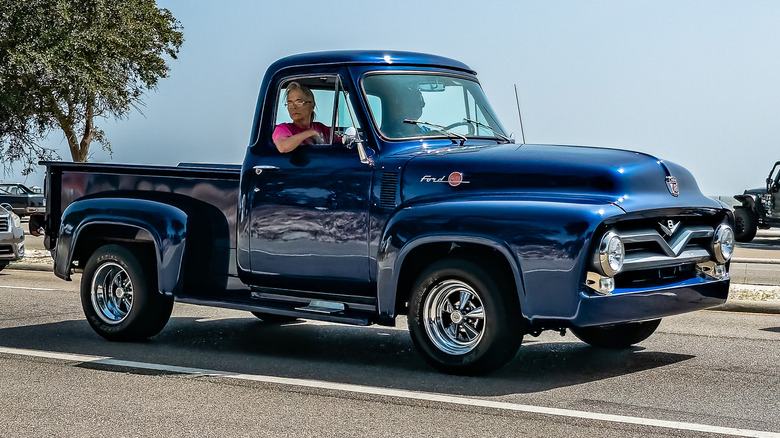
Ford makes the vehicle with the second-longest production run, and it's the F-Series. You can't really drive anywhere in America without seeing at least one of these trucks out and about. The Ford F-Series consistently outsells all of its competitors, and it's been a part of the Blue Oval family since 1948. While Ford was selling personal trucks long before 1948, it was the first F-Series that laid the foundation for the company's future success. This was the year Ford offered more size options, with the F-1 half-ton pickup being the smallest version and the big F-8 offered for commercial purposes.
The second-gen F-Series was introduced in 1953, which is when the F-100, F-250, and F-350 designations were first attached to the truck lineup. This was also the year Ford gave the truck a whole new look, one that's considered vintage today. From the third generation on, the F-Series began to morph into the truck we know now, with a squared-off shape and longer bed. The F-150 model came around in 1975, but wouldn't fully replace the F-100 until 1983. In 1986, Ford put a fuel-injected 5.0-liter V8 under the hood of the F-Series, which was an industry first that later became the norm for trucks.
Ford continues to update and improve its best-selling vehicle, making changes that enhance driver experience both on and off the pavement. While the Ford Lightning EV pickup attempts to make a name for itself, for now, nothing seems able to take the place of the well-loved Ford F-Series.
Chevrolet Suburban — 1935 to Present
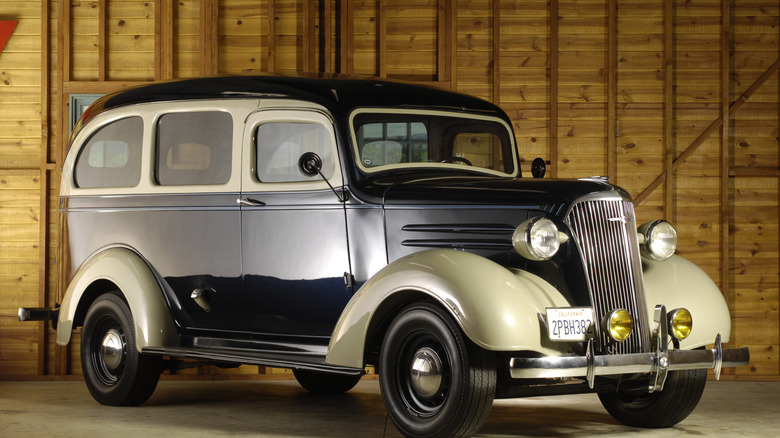
And the winner of the car model with the longest production run in history goes to the Chevrolet Suburban, the only car with a star on the Hollywood Walk of Fame. This SUV has been in continuous production since 1935, aside from a brief pause in civilian production during WWII, and it's been popular for many years. Yes, Suburban was a generic term used by several automakers up until the late 1970s, but then, Chevrolet was officially able to trademark the name. It's been a legend in the making since Chevy first introduced it in 1935 as a two-door wagon with lots of passenger space.
During the '50s and '60s, Chevy did a lot to improve the Suburban's ride comfort and make it better at handling off-road conditions. By the '90s, as SUVs began to take over the roads, the Suburban was already well-established. Over the years, Chevy has worked to improve fuel economy for the long-running SUV by making it more aerodynamic and upgrading the engine and transmission options.
Sales of the Suburban are unfortunately declining, with just over 44,000 units sold in 2024. Keeping the Chevy Suburban in the lineup might take more than lower gas prices at this point. Although it's been around for almost a century, the SUV may need a significant redesign to keep it relevant in today's world of compact crossovers and smaller yet still capable midsize SUVs.