

The Best And Worst EV Charging Networks In America (According To Consumer Reports)
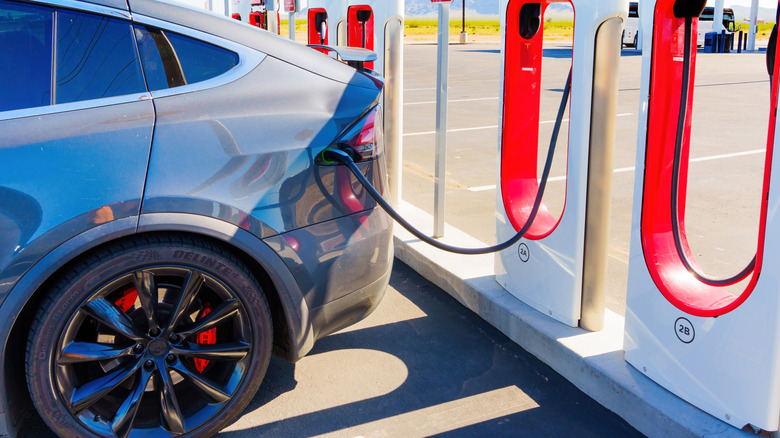
Sure, Tesla Cybertruck sales are in the toilet, and investors didn't like Tesla's cheaper Model 3, and MotorTrend hated every second of living with a Model Y. But when it comes to EV charging networks, Tesla remains No. 1. That's according to a recent study by Consumer Reports (CR), which also looked at the overall charging experience people encountered at public charging outlets.
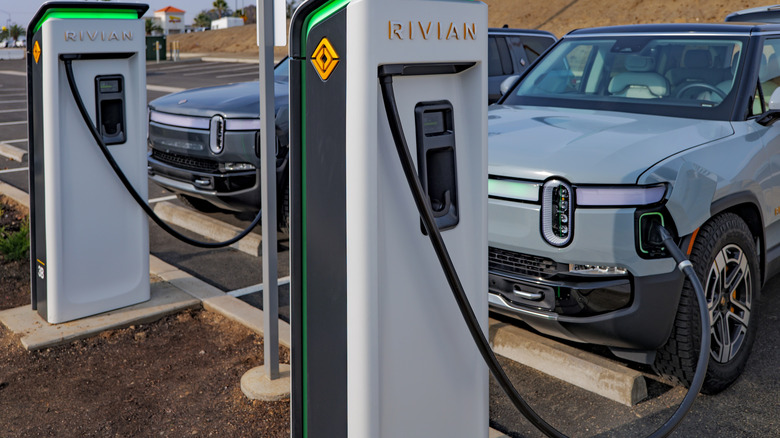
Tesla has approximately 33,660 charging ports across a little over 2,800 Supercharger locations in the United States, according to the Motley Fool. Only 4% of respondents in CR's survey noted problems when using the Tesla Supercharger Network. This is pretty good, but it's also worth noting that 5% of the drivers using the Rivian Adventure Network of chargers — with more than 120 locations and 780-plus chargers in 37 states — reported problems.
On the other side of the spectrum from Tesla and Rivian sits a trio of charging networks that all saw more than 40% of their drivers have problems filling up. By far the worst was the Shell Recharge Network at 48% — it's probably just a coincidence that the lowest score in EV charging came from the company formerly known as Shell Oil. The results for the EVgo and Blink networks were not quite as bad, with 43% and 41% of their drivers, respectively, reporting issues with charging.
The biggest problems with EV charging networks (according to Consumer Reports)
Before we dive into the details here, let's first acknowledge that nearly 80% of all charging events in the CR study had no problems reported at all. When drivers did experience problems, 15% involved issues with charging speed, and 23% were related to payment. Drilling down deeper, 25% of respondents with payment problems couldn't initiate charging and had to go elsewhere, while 19% indicated their payments were accepted but the charger still didn't work.
Consumer Reports also categorized another large chunk of problems (36%) as hardware issues. These include complaints that the charging cords were too short (5%) or that other physical problems — such as a damaged plug or cable (19%) — prevented connecting. The biggest complaint, however, was reserved for the chargers' touchscreens: 76% of drivers complained about issues ranging from broken screens to unfixable error messages.
Beyond those concerns, Consumer Reports grouped together miscellaneous reports into one category for "less frequent problems that prevented the driver from charging the car." Another 25% of reported issues were accounted for by this group. That could include cases where the charging cable was missing entirely, such as during a 2024 run of charger vandalism in Canada. But don't worry: EV charging cables really aren't worth stealing, so that shouldn't be a long-term concern.
How to avoid problems with EV chargers (according to Consumer Reports)
If you want to get the most out of your EV charging experience, Consumer Reports has some recommendations — apps are a good place to start. This includes popular payment apps, and third-party apps that can tell you how many charge ports are operational at a given location. The former can, in some cases, allow you to pay for and use a charger even if its screen is broken, which was a common issue in the Consumer Reports survey.
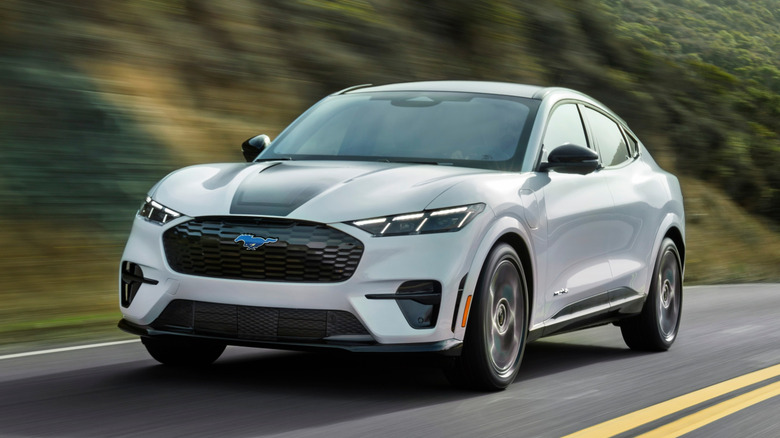
Preconditioning your batteries can help you enjoy faster and more efficient charging as well. The goal here is to make sure your battery's temperature is at the sweet spot for charging –- neither too hot nor too cold — by adjusting it on the fly. Truth be told, it happens automatically in cars like the Ford Mustang Mach-E (available with the California Special treatment for 2026) — the preconditioning process starts as soon as you enter the address of a charging station into the navigation system.
You can also speed things up by not trying to fill your battery pack completely. In fact, many experts, including those at Consumer Reports, advise drivers to only use 80% or so of their battery's overall capacity. After all, charging speed slows down drastically after that point, so you can spend more time filling up that final 20% than you do getting to 80% capacity in the first place.