

5 Of The Rarest Antique Engines Ever Built
In 2025, most automakers are pretty much doing the same thing. Everybody builds crossovers, the majority of them have at least experimented with electrification, and, with exception only to the most extravagant and unattainable models, everyone is doing the same as each other under the hood. Wind the clock back a few years though, like 100 years or so, and the automotive world was a very different place. With respect to the automakers of old, it was sort of as if nobody really knew what they were doing, and so engineers would experiment with wild new ideas, looking to find brilliant new ways in which to do things. This was a time which pre-dated the standard three-pedal arrangement — a time in which just starting a car was something you'd have to get psyched up for.
As a result, we were gifted with some pretty wild and wacky engines during this time. Engines which were produced in tiny numbers too, as experimental models, and it's these engines which are now extremely rare and cherished possessions. While there are countless examples of interesting engines from the antique car world, this article shines a spotlight on just five of the most brilliant and curious.
1914 GN JA Prestwich V8
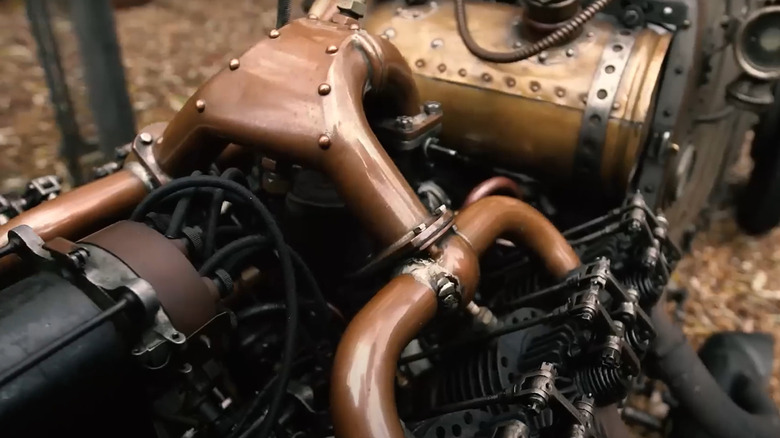
This obscure little car is a GN — a now defunct automaker which produced cyclecars in the prewar era and beyond. While most of them were motivated by V-twin motorcycle engines, this particular example uses a prototype airplane V8 engine from 1908. It's air-cooled, and unlike with more modern engines, everything is exposed on this over a century old V8. As such, it looks both unusual and utterly fascinating.
In terms of rarity, this is the only example of its kind that runs and operates. That fact refers to the engine, not just the car — all other known examples of the JA Prestwich V8 are sitting in museums, collecting dust. This example gets very little opportunity to collect any dust, as the current custodian enjoys putting it through its paces on European road trips down to the South of France. Despite the unique and unusual powerplant, he finds it to be the perfect touring car — plenty responsive and utterly enjoyable on the road. Other quirks of the 1914 GN JA Prestwich V8 car include a singular headlight and a wooden chassis — GNs which came after the war would sport a metal chassis; how modern.
1910 Fiat S76 - The Beast Of Turin
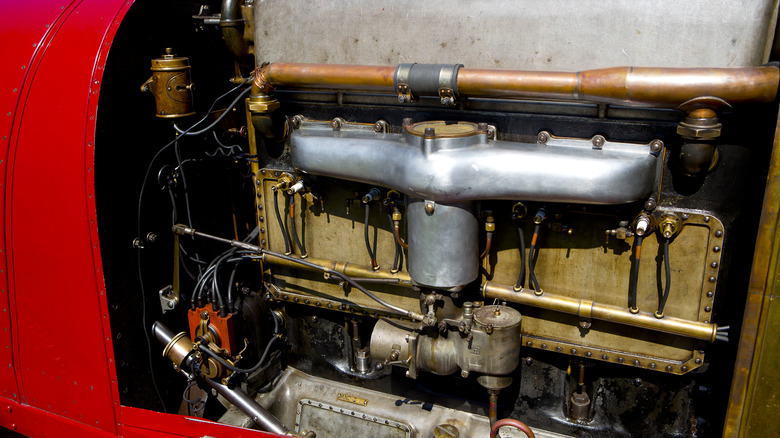
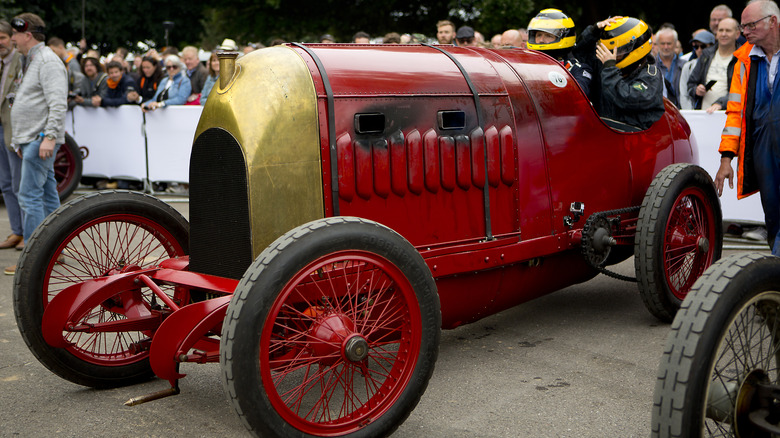
Fans of the Goodwood Revival will no doubt be familiar with this car, which is really more engine than it is car. The Fiat S76, doesn't sound all that impressive when you read that it's motivated by an inline-four. However, when you learn that the inline-four in question sports a 28.4-liter capacity, it's nickname, "The Beast of Turin" starts to make more sense.
Much like the JA Prestwich V8, the Fiat's engine too is airplane-derived. Notable features include four valves and two spark plugs per cylinder, and a power output of 290 horses. That's pretty peppy for a modern inline-four, although the power-per-liter is a little out of whack in comparison to more modern efforts. When it comes to rarity, the S76's humongous 'four' is up there as one of the most obscure. While two were originally built, only one survives, but fortunately for lovers of old-school engineering, it's regularly put through its paces at prestigious historic motoring events. Just don't stand too close, as this four-pot likes to spit flames.
1914 Aston Martin A1 'Coal Scuttle'
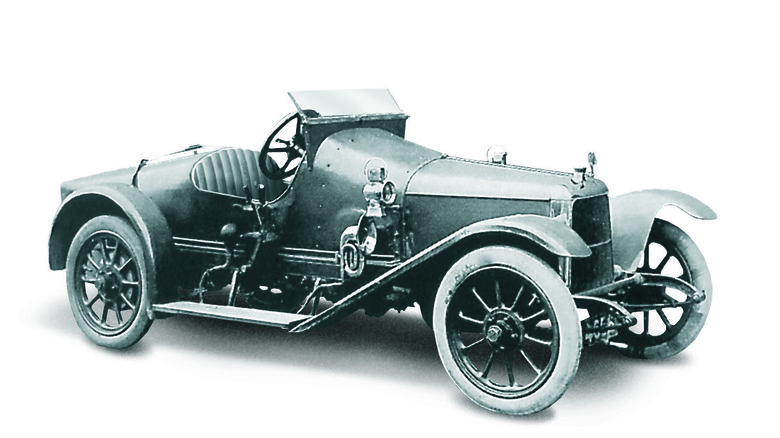
This is where it all started for storied British automaker Aston Martin. In 1915, the very first model was registered. Officially, it was dubbed the A1, but unofficially it went by 'Coal Scuttle,' as it looked just like one. The Coal Scuttle proved successful in motorsport during its known life, achieving the firm its very first award, and impressing on rough tracks and hillclimbs for the first very busy decade of its life.
Powering the Aston Martin was a Coventry-Simplex 1,389cc four-cylinder engine. While this isn't particularly rare, the Coal Scuttle's version was, as Aston Martin immediately stripped and improved it for its uses. As such, it was a complete one-of-one.
Despite efforts from the Aston Martin Heritage Trust, the whereabouts of this unique engine and car remain totally unknown. In fact, its last whereabouts were documented in 1924, when it was sold at auction for just £50. Adjusted for inflation, that's just under $3,600 in today's money, possibly making it the cheapest Aston Martin ever sold.
1916 Packard Twin Six
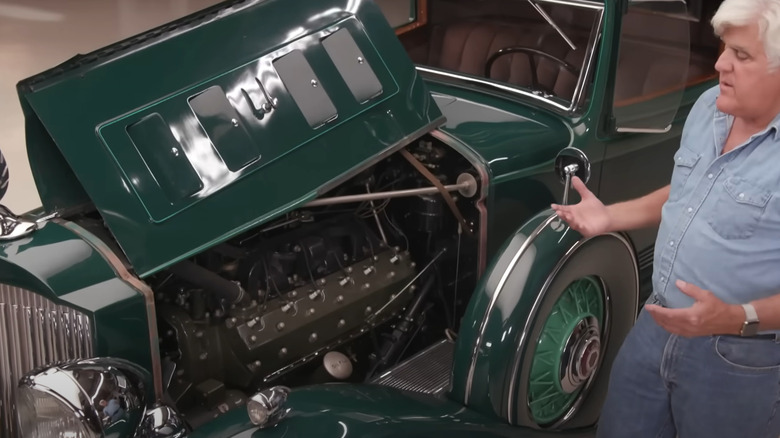
Back to big engines, for now. While the other examples have been fairly unique in their construction, the engine powering Packard's Twin Six was not. For, sitting up front of this elegant tourer was a mighty V12 engine, in fact, the first to ever see what you might consider to be 'mass' production. While other automakers sought to make do with V8, or straight-six engines, Packard went chasing perfection.
According to HowStuffWorks, Jesse Vincent, Packard's chief engineer, stated that the all-new V12 was "50 percent better than it would have been with a V-8, and 100 percent better than the Packard Six. Six impulses per crankshaft revolution blend together so closely as to make it absolutely impossible to distinguish any pause between impulses, even at very low engine speeds." The early V12 produced 88 horsepower at 3,000 rpm, sported a capacity of 424 cubic inches, returned 11 MPG, and the two banks of cylinders were set at 60 degrees, which allowed for excellent packaging of the ancillaries beneath.
The model enjoyed a lengthy production run that finally expired in 1923, after an impressive 35,000 units or-so found new homes. So, while not as obscure as the other engines featured here, Packard's V12 is still a gem of its era and highly prized today, with some V12-wielding Packards now commanding in the region of $1 million. There is the possibility that Packard could be making a revival, but for now, enthusiasts must make-do with these mechanical marvels from the brand's better days.
1924 Bugatti Type 35
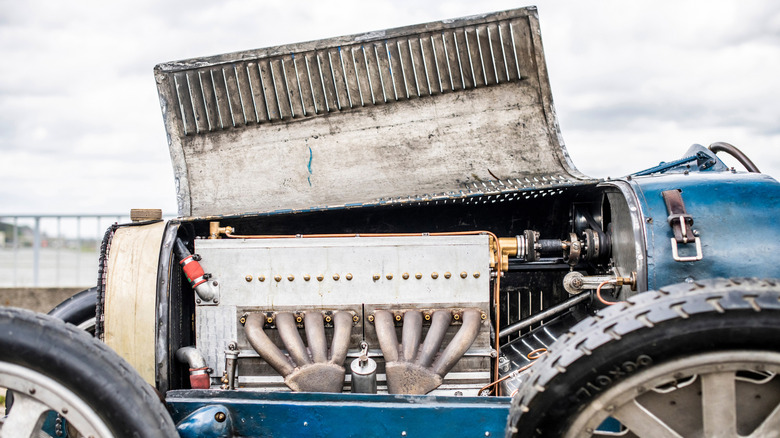
Released in 1924, the Bugatti Type 35 is the last and latest entry into our list of rare antique engines. It's also arguably the most important, and quite possibly one of the most successful engines of all time. The stunning '20s racer is propelled along by a 1,991cc inline-eight, It kicked out just 89 horsepower, although in '26 the output was enlarged to 2,262cc, so presumably later cars boast a bit more bite, too.
Bugatti claims the Type 35 to be the most successful race car of all time, and with more than 2,500 victories to its name, who are we to argue? As time progressed, Bugatti worked hard to ensure the T35 was quick enough to keep the competition at bay. The addition of a supercharger, twin cams, and various other mechanical tweaks saw the French fancy kick out in the region of 135 horsepower. Top speed was roughly 150 mph — mind-blowing for the time, considering the top speed of a Ford Model T was around a third of that. Around 340 examples were built, making this an extremely rare specimen indeed. Buying an original will set you back around $1.4 million, but not to worry, as you could always get a Type 35 replica for $48,500 instead.