

Your Car's Cabin Is A Hotspot For Microplastics
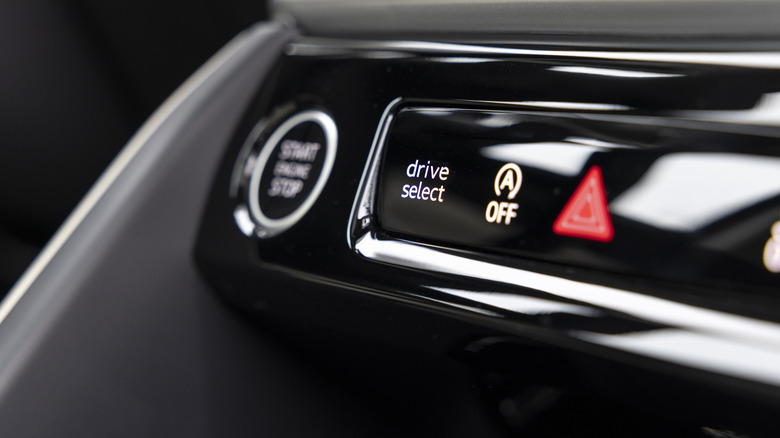
One of the biggest complaints reviewers have with car interiors is the overuse of hard, ugly plastic. The 2025 Audi Q5 and SQ5 are pretty, and pretty good, our Andy Kalmowitz wrote, but Piano Black plastic is "all over the center console, screen bezels, and even a smattering of control switches on the driver's door." He added that the 2025 Chevrolet Blazer SS is a normal family crossover with supercar speed that has "far too much hard plastic in common touchpoints." If you look carefully, you can even find plastic inside the 2025 Mercedes-Maybach GLS 600.
But it turns out comfort and aesthetics aren't the only issues: All that plastic sheds tiny, tiny particles — microplastics — and they remain trapped in the cabin with you and your passengers on every drive. The problem, of course, is that breathing in those microplastics can be exceedingly dangerous to human health. The Center for International Environmental Law points to a long list of problems associated with microplastics, including lung inflammation, chronic bronchitis, chronic pneumonia, pulmonary emphysema, and more.
Scientists began studying how microplastics affect humans relatively recently, so there's still a lot to learn about their ultimate effects. Yet now there's some clear proof regarding just how high your risk of exposure is when you're stuck in the enclosed confines of a car's cockpit.
There can be many more microplastics in a car than a house
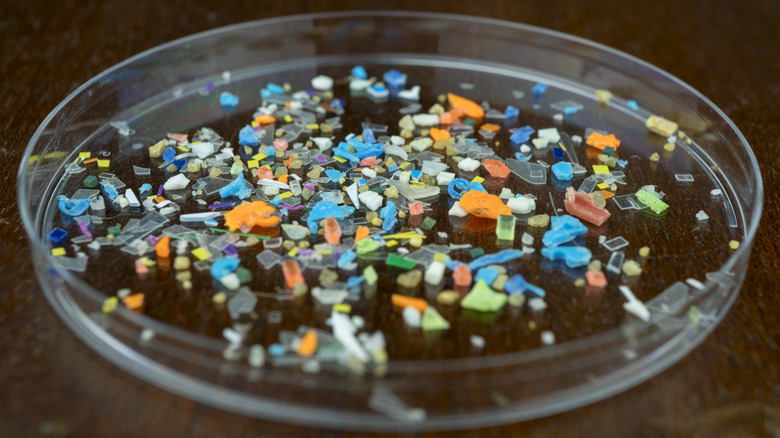
Scientists in France recently conducted a study that involved sampling the air for microplastics both in residences and in car interiors, and they used actual in-vehicle testing, not just computer modeling. They write in the peer-reviewed jounal Plos One that air was checked while the cars were driven on long and short trips, on highways and in town, "with the windows closed, and a medium flow of outside air into the car via frontal vents."
The result? On average, there were approximately 2,238 particles of microplastics in every cubic meter of air tested in the vehicle cabins — which doesn't tell you much until you compare it with the scientists' findings inside homes and apartments. There, about 528 particles were discovered per cubic meter of air. In other words, there were more than four times the amount of microplastic particles floating around your car's interior than were found in the same volume of air sampled from residences.
At the same time, folks are in their cars — along with all that microplastic — for an average of a bit more than an hour a day according to a survey conducted by AAA. And that's only the average. According to information analyzed by AutoInsurance.com, in 2024 3% of drivers faced commute times of two hours or more per day, and another 5% had commutes between one and two hours. Nor is the cabin your car's only source of microplastics.
Where else is plastic used in a car?
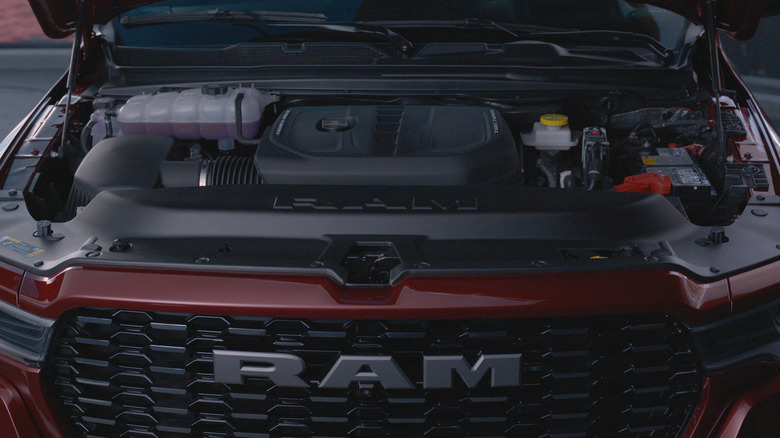
Selling cars is sometimes called moving the metal, but that's not exactly accurate nowadays. New cars are currently about 50% plastic by volume (and roughly 10% plastic by weight). After all, your car's engine bay is a plastic mess, car manufacturers have switched to plastic oil pans, and Ram's plastic control arms are in the news as well.
It's car tires, however, that are responsible for nearly 30% of all microplastics found in the environment as a whole. A big part of the issue is that more than half of the "rubber" in car tires — 60% — is now synthetic, meaning it comes from oil-based hydrocarbons instead of rubber trees, meaning it's made from the same stuff as plastic. A little is lost with every rotation of every tire, and the heavier your vehicle, the quicker tires tend to wear out.
Needless to say, with so many relatively weighty vehicles on the road — like SUVs, trucks, and EVs — the potential for increased tire pollution is on the rise. Electric vehicles, for example, can weigh 20% more than their gas-engined counterparts and go through their tires about 20% faster. The fact that EVs are generally quicker than gas models makes things even worse, at least in terms of shedding microplastics. So maybe there's something to this kid's incredible wooden EV after all.