

Why Almost All Chrysler Turbine Cars Were Destroyed, And Where The Rest Are Today
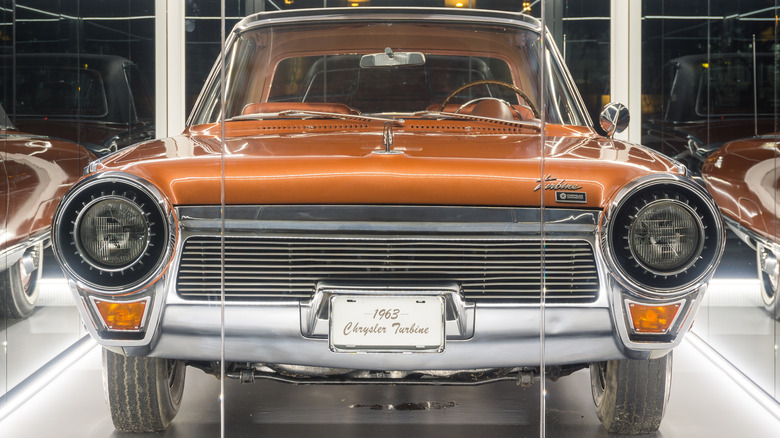
Jet-powered automobiles were once the future, and none captured the public's imagination quite like the Chrysler Turbine Car of the 1960s. Where many cars of the era mimicked jets with their tailfins, this one used a jet engine. Sort of. After over a decade in development, hundreds of members of the public were allowed to drive the gas-turbine-powered wonder and most of them loved the stylish bronze sedan, but it came with huge development costs, never mind all the engineering hurdles in the way of mass production. The project was ultimately canned, but what to do with the fifty-five prototype vehicles?
A small number still exist in museums to this day, some of them still running, and Jay Leno even has one in his collection, but most were unceremoniously destroyed by their maker. It seems like a travesty today, but Chrysler had good reason. Here then is the full story of the ill-fated Chrysler Turbine Car, with a bonus look at other carmakers' attempts at using the same technology.
It was cosplaying as a Plymouth for a while

The Chrysler Corporation began work on a turbine in 1945 as part of a contract for the U.S. Navy, though it didn't start automotive development until 1949. In fall of 1953, employees got to see and hear the gas turbine-powered car on the move for the first time at the company's Highland Park complex in Michigan, but it wasn't a Chrysler, as the turbine was installed in a two-door Plymouth Belvedere.
This was demonstrated to the public in 1954, tested on the road -– in another Plymouth body -– the year after, and finally sent on a 3,020-mile cross-country endurance test in 1956 to prove its worth. The first generation of the gas turbine produced 100 horsepower and managed only 13 miles per gallon.
Significant improvements were made for the second generation, making 200 hp as fitted to the 1959 Plymouth Turbine Special. Then Chrysler's marketing department went into overdrive, resulting in the glorious Chrysler Turboflite concept car with its massive rear wing and canopied roof. This was never actually fitted with an engine of any kind, but it certainly drew public attention with its futuristic design.
The turbine did make its way into several Dodge experimental trucks, while in 1962, the Plymouth Turbo Fury and Dodge Turbo Dart sedans went on a 90-city tour of the United States powered by the latest development of the gas turbine. It met with considerable approval, convincing the powers that be to take the project further. The Chrysler Turbine Car that we know and love was next.
Can you stand behind the car without getting fried by the jet engine?
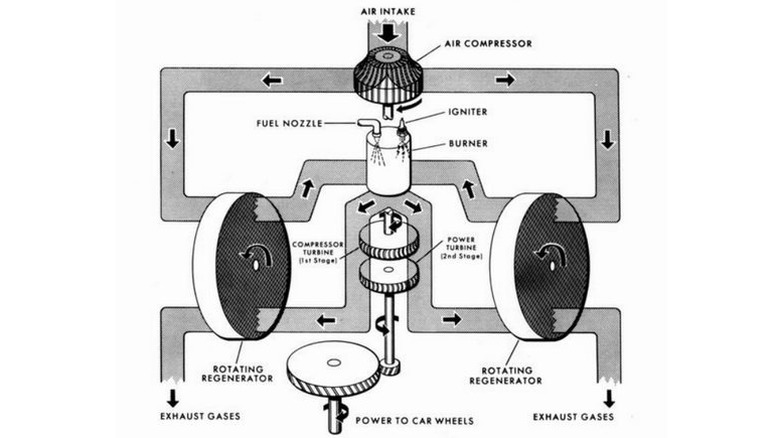
If you're picturing a modern-day jet engine and the prospect of standing behind a car powered by one when it's running is giving you the heebie-jeebies, rest assured that the Chrysler Turbine Car was safe to use in public. However, it certainly took some clever engineering to make it so. The exhaust gases at full power would have hit 1200 degrees Fahrenheit if left unchecked.
This is probably a good time to explain how the gas turbine works. The fuel is injected into hot compressed air and ignited by a spark plug of sorts. The burning of this mixture results in a flow of high-pressure gases that turn both the compressor turbine (to compress the air at the start) and, when required, the power turbine, which is on the output shaft connected to the gearbox to drive the wheels.
In its most basic format, a huge amount of fuel is needed to heat up the gases sufficiently to drive the turbine wheels, while there's a lot of heat left over in the exhaust to deal with. So why not join the intake and outlet? This is where something called the regenerator comes in. It's a rotating heat exchanger using the excess exhaust heat to increase the temperature of the air going into the combustion chamber.
This reduces the amount of fuel needed, while bringing the exhaust gases down to a more manageable 170 degrees F at idle — ensuring you don't fry your neighbor's dog if he gets too close to the car.
Any color you like, so long as it's bronze
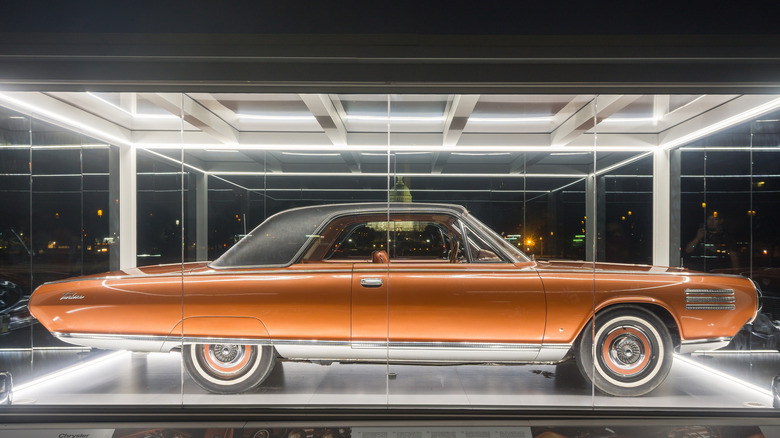
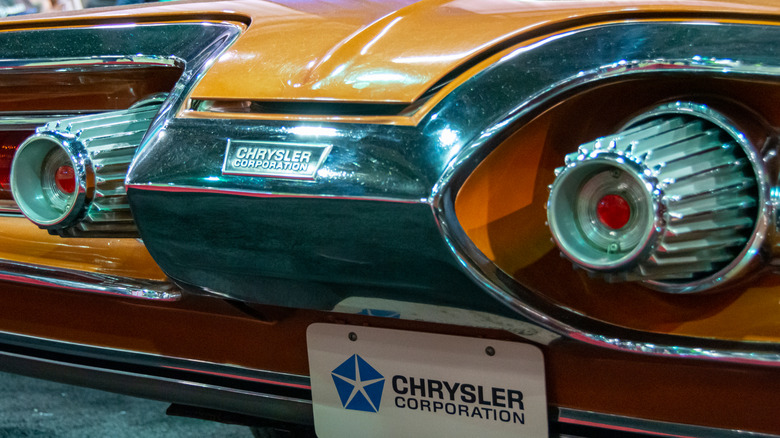
Every example of the Chrysler Turbine Car was to the same color and specification. A total of 55 cars were made, all painted a distinctive shade of bronze with a black vinyl top and bronze-leather interior. While there were hints at the turbine engine in the style of the headlights and the vents in the front fenders — not to mention the extravagant rear lights and the unusual center console — the overall shape of the two-door sedan was remarkably restrained for the time.
You can thank Elwood Engel for that. Just as the presidential Lincoln Continental he designed hit the market in 1961, Engel joined Chrysler as its chief stylist and immediately set about simplifying Chrysler's design language, starting with the Turbine Car. He doesn't lay claim to having done all the styling work, but he did lead the design office, a studio that included one Chuck Mashigan.
It is Mashigan who is ultimately credited with penning the gorgeous Chrysler Typhoon and then reworking that roadster design into the more practical Turbine. If you always thought it was the work of an Italian designer, that's probably because Ghia in Italy was contracted to fabricate the body of the Chrysler Turbine Car before it was finished in Detroit.
Does it sound like a fighter jet?
Check out a recent road test of the Chrysler Turbine Car shared by TFLclassics to get a feel for how loud it was in a modern context. It was louder outside than within, thankfully, which explains why it was generally liked by those that drove it. In an unexpected move, Chrysler made 50 prototypes specifically to give to members of the public for extended test drives.
From a pool of some 30,000 applicants — including one 12-year-old boy asking for a car for his father — Chrysler selected 203 people to use the car for a three-month period each. They only had to pay for their own gas and agree to give feedback to Chrysler as required. Over a million miles were driven in total, in 48 states, by a wide range of people.
Chrysler summarized the findings, saying the performance and low vibration were seen as real plus points, along with the potential for minimal maintenance. Understandably, the drivers weren't impressed with having to use diesel or unleaded gasoline, which could be scarce in some areas, while Chrysler seemed to dismiss the public's findings on poor fuel consumption, putting it down to irregular use.
And what did everyone think of the sound? It divided opinion. According to Chrysler, "For every person who complained about the noise level of the engine, there were three or four who liked the sound of turbine power. The car was described as immensely more quiet, especially at high speeds, than the conventional piston-powered automobile."
If it was so loved, why are we still driving piston engines?
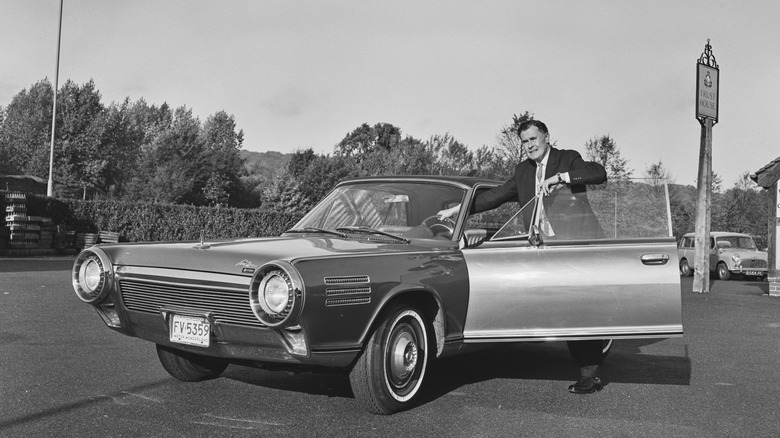
During the early days of its research into gas turbine use in cars, Chrysler identified a long list of potential advantages. For starters, in comparison to a piston engine of equivalent performance, the turbine had 80 percent fewer components, meaning much less maintenance and a longer life expectancy. The inherent design of the turbine makes it vibration-free, and the turbine is unaffected by low temperatures. It can't stall, it's light and can operate on a wide variety of fuels.
The disadvantages seem less numerous, with a requirement for exotic materials in the turbine's construction perhaps a hurdle too high when it comes to mass production. Fuel consumption remains a potential issue, especially at low speeds.
Chrysler quotes a throttle lag time improved to 1.5 seconds (the time between the driver putting their foot down and maximum power being made available), but that just wasn't acceptable given the almost-instant response of a good piston engine. Turbines work at their best at a constant speed, which is at odds with how we drive our cars for the most part. Research and development budgets — along with the appetite to extend them — eventually ran out.
You may want to look away for this part: 'crushing' disappointment incoming
Out of the fifty-five Chrysler Turbine Cars produced -– consisting of five engineering vehicles and the 50 cars made available to the public -– only nine survived.
One of these cars was used in a simulated head-on collision to assess the effect it would have on the gas turbine, while the other 45 were destroyed by Chrysler. Reportedly, this took place at the Airport scrapyard near Detroit and was videoed to prove to the higher ups and the government that the prototypes were indeed destroyed.
A heartbreaking video captures the scene where an example of the Turbine Car — sitting with others on a car transporter awaiting their fate — is unceremoniously skewered by a forklift before having its turbine and fluids removed. Then it appears to be crushed and burned for good effect.
Chrysler initially kept three cars, allowing six others to go to various museums. The National Museum of Transportation in Missouri still has one, for example, as does the Henry Ford Museum of American Innovation in Michigan. The Smithsonian has another, but it's not in public at the time of writing. Beyond that, Stahl's Automotive Collection ended up with one that was initially privately owned, while a final example is at the Detroit Historical Society Museum.
Why did Chrysler commit this heinous act?
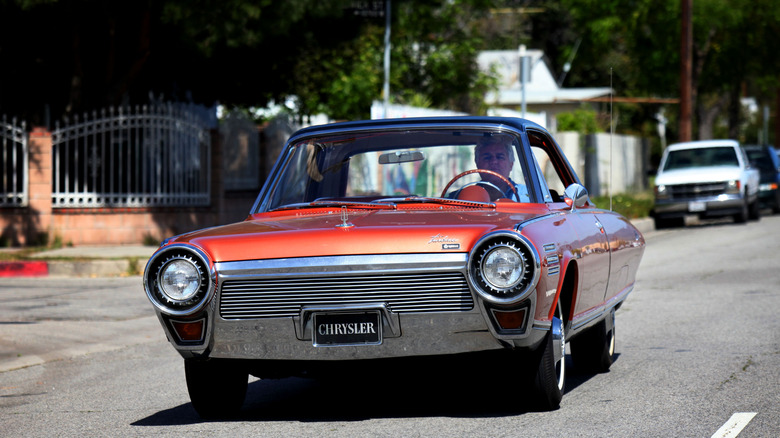
Do a very quick search of the internet to find out why Chrysler obliterated so many of the prototypes and you're likely to find references to unpaid duties on the car bodies that were imported from Ghia in Italy to the US. However, Bill Carry, who worked on the Turbine Car for Chrysler, told Hemmings, "By the time the disposition of the bodies was being determined, this duty had decreased to next to nothing." Further, "The decision to destroy the Turbine cars was pragmatic."
In other words, Chrysler didn't want to have to worry about how 40 or so special prototypes were being used by the general public in an unsupported manner. It couldn't very well provide parts and service backup, and yet it could be a PR disaster if anything happened to anyone at the wheel of one of these vehicles.
The Turbine Car may be an icon now, but in the 1960s it was just another engineering prototype. To look at it from a more contemporary angle, do you think Cadillac would allow the pre-production versions of its concept cars into the public realm today?
Of course Jay Leno has one
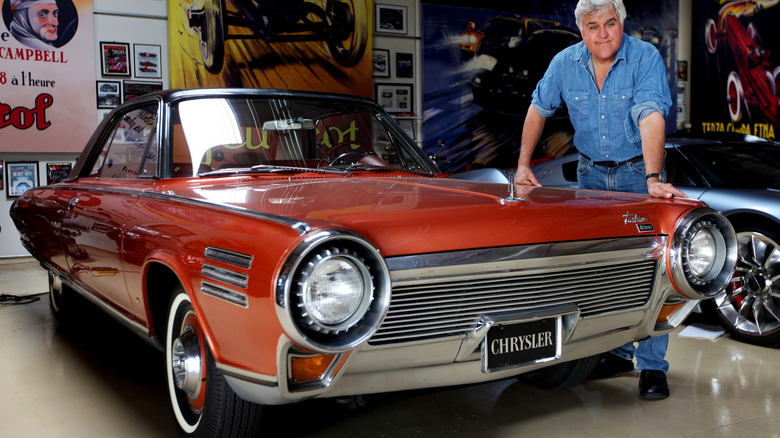
In a special edition of the Jay Leno's Garage video series, Leno tells us that as a 14-year-old in 1964 he went to the World's Fair in New York specifically to see the Chrysler Turbine Car. He then glosses over how he is one of just two private individuals to obtain a car directly from Chrysler. Being in the right place at the right time is alluded to.
Despite the fact that Leno has more than 180 cars and 160 bikes in his collection, the video clearly reveals how special he sees the Chrysler Turbine Car. He even states, "I think it's probably one of the most important post-war American cars of all time."
It's worth watching the video to see some rare footage of the Turbine Car's production line in Detroit, but also to fully appreciate the noise the car produces, very much sounding like a passenger jet engine, particularly on startup. Leno points out how quiet it is in the car, however, and he easily talks to the camera while driving. It also appears remarkably normal to drive, despite the quirky switchgear in the cabin.
We like how Leno points out that "you never really own a car such as this" but merely act as a "custodian" for the next person. There's no doubt it's in very good hands.
The founder of Domino's pizza got the other
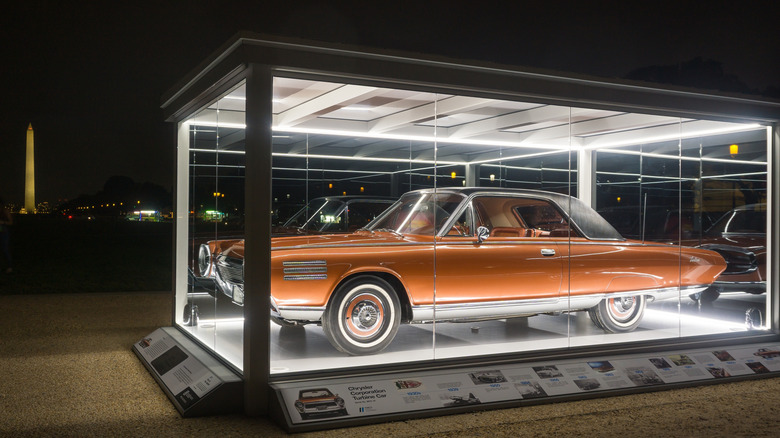
Thomas Monaghan of Detroit opened his first pizza shop in 1960 called DomiNick's, which was the start of the success story you may know as Domino's Pizza. Using a very small part of his millions, Monaghan bought an example of the Chrysler Turbine Car from the Harrah Automobile Collection, which once held the world's largest collection of classic cars.
Before the test program was complete, Bill Harrah approached Chrysler about obtaining an example of the car and the story goes that he paid the equivalent of the duty owed on the imported Ghia body. His example was based in Los Angeles originally and, following the public testing, was loaned out to various VIPs associated with Chrysler.
Private collector Frank Kleptz bought it from Monaghan and when he died the Stahls Automotive Collection bought the Chrysler Turbine from his family. You can still see it on display -– and sometimes with the turbine running –- in Chesterfield, Michigan.
So that was the end of Chrysler's research into turbine power?
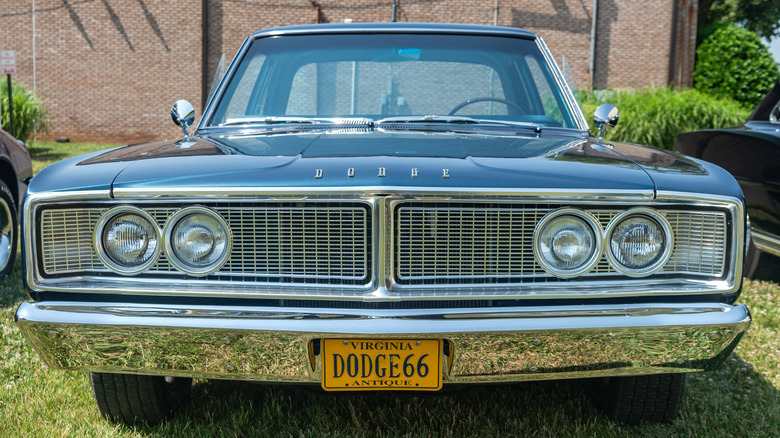
The Turbine Car may be the famous face of this turbine-research era, but there was plenty more happening behind closed doors. Its test program led to the development of a fifth-generation gas turbine, and there were plans to produce a 1966 Dodge Charger in limited numbers using this. Unfortunately, it never delivered on promises and was soon replaced by the sixth iteration of the turbine engine.
That was tested in a Dodge Coronet for a few more years and was significantly better than its predecessors in terms of performance – said to be equivalent to a 380-cubic-inch V8 of the day – while remaining lightweight.
The EPA awarded Chrysler with a contract to demonstrate the potential of the gas-turbine-powered car in 1972 to reduce fuel consumption and emissions, and it spent that money on advancing the technology into the seventh-generation turbine, even creating an aerodynamic interpretation of the 1977 LeBaron to drop the engine into.
An end to turbine research at Chrysler coincided with the company's need for a massive government bailout in 1979 and many challenges for the technology yet unanswered.
The British got there first, actually
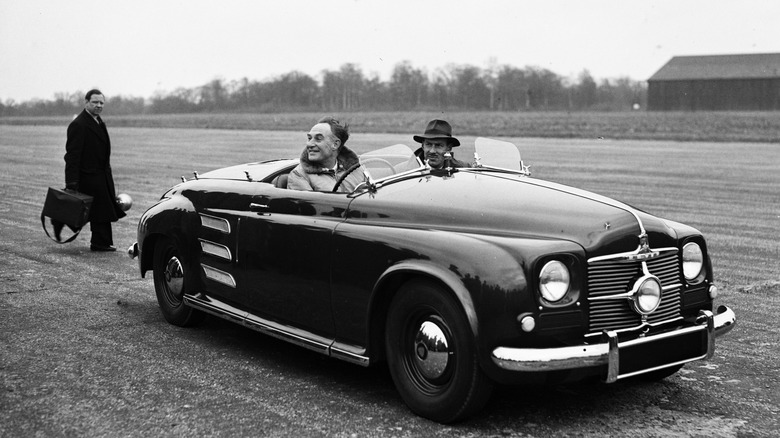
Chrysler may have spent more money on turbine research than any other car maker, but it wasn't the first to make a car powered by a gas turbine. That honor goes to Rover in England. In 1950, at the Silverstone race circuit, Rover demonstrated its JET 1 to the press, grabbing attention with its streamlined open design. The massive air intakes on the side were clearly visible, as were large exhaust vents behind the two-seat cabin.
Rover began work on the gas turbine in 1946 and continued with it until 1965. However, it came up against the same problems Chrysler did, such as notably high fuel consumption and poor drivability. Even so, Rover managed a world land speed record in 1952 –- for gas turbine cars -– of 152 mph. A BBC video from its first public outing reveals that it was an easy car to drive despite the jet-like noise from the turbine.
General Motors did it cooler
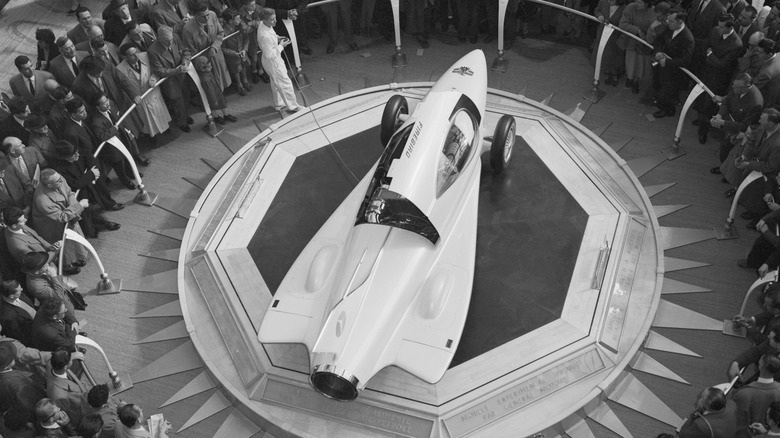
GM began its research into the use of turbines in cars in the 1940s as well, extending to the 1970s, but the efforts of its engineers were overshadowed somewhat by the design of the extravagant concept cars General Motors created to publicize the technology. After all, who really cares what's under the hood when a car looks like an actual jet fighter, as did the 1954 XP-21 Firebird? Penned by Harley Earl no less -– yes, the same designer that brought us the C1 Corvette.
GM gave its turbine engine a catchy name, too, and the Whirlfire Turbo-Power apparently produced up to 370 horsepower (we're dubious about that number), while the aeronautical-like design of the Firebird was shaped in part by the California Institute of Technology wind tunnel. An even more advanced turbine was used in the 1956 Firebird II, though the Firebird III of 1958 was more about a new era in design than what powered it.
We reckon GM's coolest turbine concept was the twin-engined Bison truck of 1964. It looks just as futuristic today, but the 1,000-horsepower output was a fantasy, even if gas turbines were better suited for use in trucks than they were in cars. That was taken a little more seriously in the 1965 Chevrolet Turbo Titan III, but even so, GM at the time said that the technology was "too costly to produce in quantity."
Turbine cars even made it to Le Mans
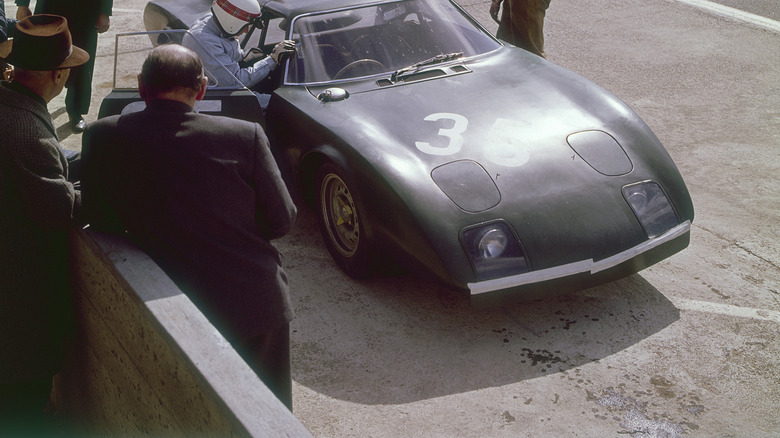
The inherent disadvantages of a gas turbine when used in a passenger car -– i.e. cost, fuel consumption and drivability –- aren't such important considerations in motorsport. The organizers of Le Mans, ACO (Automobile Club de l'Ouest), have always encouraged innovation and in the early 1960s offered 25,000 French Francs (adjusted to roughly $53,000 today) to anybody that could drive a turbine-driven car for more than 2,237 miles during racing conditions.
Rover worked with BRM to do just that in 1963, but it required two massive fuel tanks due to the high consumption, meaning it ran in the Experimental class, not under official classification system. It still finished in the top ten, unofficially. Rover came back with improvements a couple of years later, but it wasn't as successful. Something called the Howmet TX, an American creation powered by a 330-hp turbine, competed in 1968, but didn't make it past the ninth hour.
That could be a metaphor for gas turbine use in cars, but at least we'll always have the Chrysler Turbine car to look fondly back on. Be grateful so many of them survived the crusher.