

5 Reasons Why Your Steering Wheel Might Vibrate At Highway Speeds

There are a few sounds and sensations inside the car that can be annoying, such as rattling from the dashboard or door panels, or squealing brakes. Some, however, can be a bit more concerning if left unchecked, like a harsh vibration you might feel through the steering wheel. The steering wheel can be a pleasure to hold while driving down a winding road, as you imagine yourself in the shoes of a Verstappen or Hamilton, but it can also reveal potential issues with your car.
It's not uncommon to feel some vibration through the steering wheel, which could be caused by issues with the tires or suspension components, and may sometimes be resolved with a basic tune-up or alignment. But if it becomes harsher, there's a good chance it could indicate a serious issue, one that may be expensive to fix, or worse, could lead to an accident. Let's take a look at some problems or issues in your car that could cause your steering wheel to vibrate at higher speeds.
Wheel bearing issue
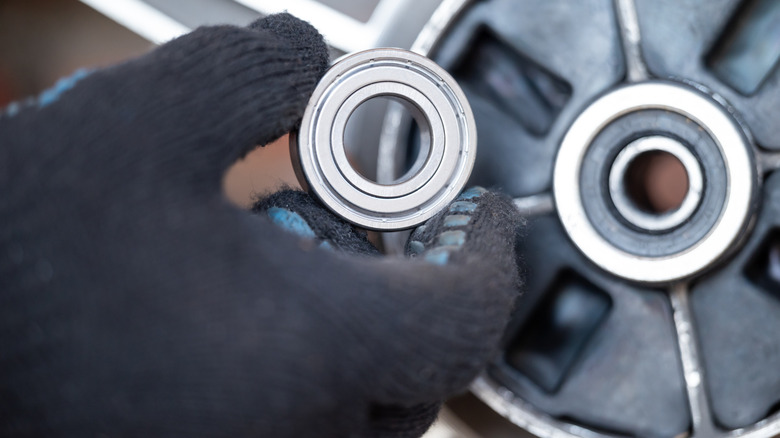
The wheel bearing may look like a rather simple component, but it does the important job of smoothly rotating the wheel hub and reducing friction between the axle and wheel. A worn-out wheel bearing could cause a loud, grinding or humming noise, while also resulting in tire wear, and even, at times, vibrations through the wheel. If it is worn out, replacing it is the only option, while wheel bearings could also cause vibrations if they are not lubricated properly, which is an easier fix.
You may also be able to tell if a wheel bearing is worn out when the steering wheel shakes or hums while taking a turn. Wheel bearings usually last between 85,000 and 100,000 miles, with their lifespan depending on driving style and road conditions. Bad wheel bearings can also affect the braking performance of a vehicle, causing the vehicle to pull to one side on braking or cause excessive rotor or brake pad wear.
Warped brake rotors or worn-out pads
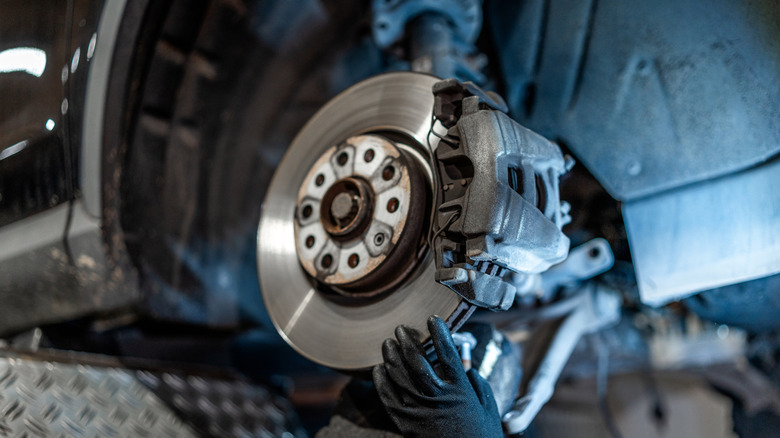
Bad brakes can not only cause your steering wheel — and the car — to shake while braking, but can also be deadly, especially at highway speeds. Warped rotors can result in an uncomfortable vibration that can be felt in the steering wheel and the brake pedal when braking, as the brake pad struggles to find an even surface to grip and slow down the vehicle. High spots or thickness variations on the rotor, which are usually caused by overheating or hard braking, can lead to brake judder, which translates into vibrations in the steering wheel.
The brake pad, another key component in slowing you down, could also be the culprit behind that unsolicited hand massage. Bad rotors can cause pads to wear out quickly, and uneven wear on the brake pads can result in a juddering feeling in the wheel as well. The only solution for brake-related steering vibrations is to replace both the rotor and pad together.
Worn-out tires
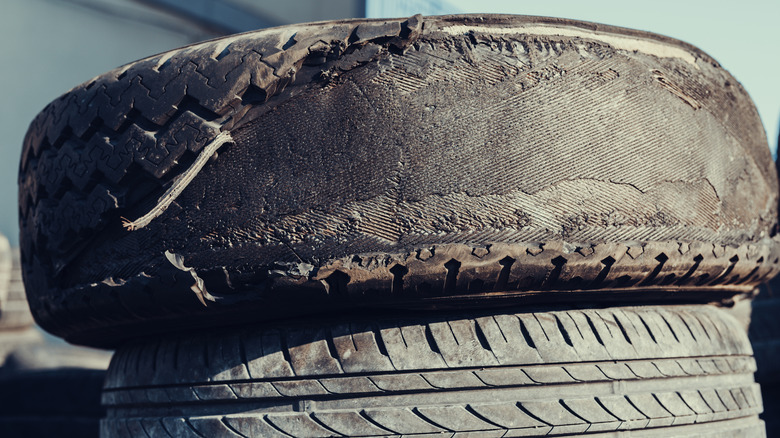
Tires, unsurprisingly, play a major part in the comfort of a vehicle, and tires that are either worn out or underinflated can cause vibrations in the steering wheel. As tires age, the tread wears down, and uneven wear patterns can develop, which could cause the tire to become slightly out of round, leading to vibrations. While modern cars seldom flat spot — i.e., uneven wear in one part of the tire due to emergency braking — thanks to the presence of anti-lock braking systems, older vehicles run the risk of it, which can also lead to vibrations.
Damage to the sidewall or bulges in a tire, especially on the front wheels, can not only cause vibrations but also pose a serious risk of a blowout, which can be deadly. It's also wise to run the manufacturer-recommended tire pressure, as low tire pressure can result in the car becoming wobbly, while higher tire pressure can make it bouncy, in turn affecting tire wear, as well as the handling of the vehicle. An average tire lasts 40,000 to 60,000 miles, and here's a quick guide to tell you when you need to change them.
Wheel alignment and tire balancing
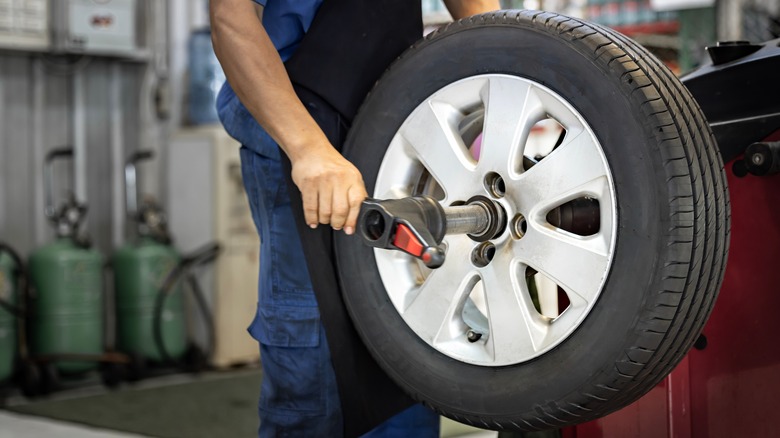
One of the most common reasons for your car's steering to shake is due to the wheels being out of balance. Tires can wear unevenly, and even new tires and wheels can have slight differences in how weight is distributed. Simply put, not all tires are perfectly balanced. When they are out of balance, vibrations and shakiness become more noticeable as vehicle speed increases. In wheel balancing, small weights are added to the rim to evenly distribute the weight, ensuring a smoother ride. Unbalanced wheels also reduce the lifespan of the tire — hurts your wallet and your hands.
Wheel alignment, often confused with wheel balancing, can also affect your driving experience, though in a different way. Misaligned wheels can cause uneven tread wear, which over time, may lead to steering vibrations. Misalignment also results in the driver having to constantly make wheel corrections, impacting the life of suspension components, while also causing as much as a 10% decline in fuel efficiency. A damaged or bent rim may also be the cause of the vibrations that you may experience in the steering wheel as it affects the smooth rotation of the tire and wheel.
Worn out suspension and steering components
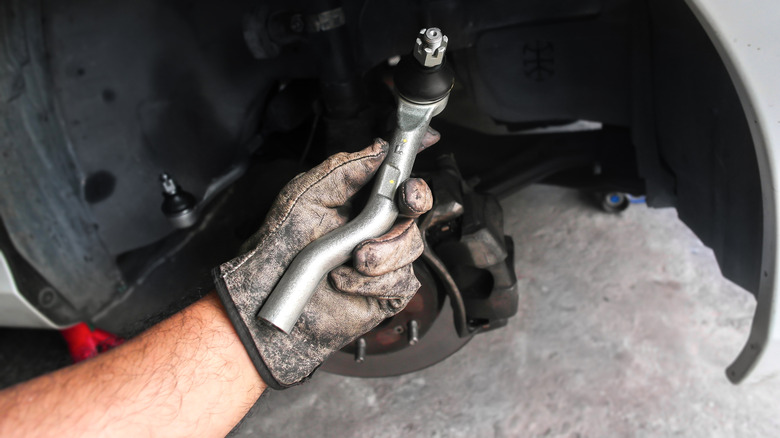
Some components, over time — or thanks to abuse and rough roads — can cause vibrations to creep into the cabin and the steering wheel. Tie rod ends, which connect the steering rack to the wheels and enable you to steer, and ball joints, which link the steering knuckle to the suspension, are especially prone to wear. If not replaced in time, they can cause vibrations and even clunking noises. These issues usually first show up as noises from the suspension or steering when driving over rough roads and bumps, before progressing into vibrations and even causing uneven tire wear.
Suspension components like springs, struts, and shock mounts can also cause vibrations when they're worn or damaged, while worn-out bushings and loose bolts are other likely causes. A broken or damaged axle or half-shaft/driveshaft can also cause shaking and vibration, although this is usually felt throughout the entire car and not just through the steering wheel. These are serious problems that should be addressed immediately, as leaving them unchecked can lead to severe damage.