

Here's How Much AAA Says It Costs To Own A Car In 2026
When we consider whether we can afford a car, so much of the focus tends to be on the sticker price that we often forget that the costs don't stop once we've made our purchase. Small, everyday expenses that come alongside, like fuel, servicing, finance interest, depreciation, insurance, and tax, aren't always obvious, but the true cost of car ownership adds up over time.
With that in mind, the car valuation experts at AAA performed a study to investigate car ownership costs in 2026. It turns out that drivers are facing ongoing price increases, with the AAA 2026 Your Driving Costs study revealing that the annual cost of owning and running a new car has soared to $12,863, or $1,071.92 per month this year. That's up from an average of $11,577 or $964.78 per month in 2025.
At that rate, ownership costs can add 32.67% on top of the $39,376 sales-weighted average MSRP of new vehicles. The larger bills have been linked to surging fuel prices, faster depreciation, and higher finance interest rates. Still, your specific costs can vary greatly, depending on your car's fuel type.
There's a notable cost gap between EVs and gas-powered models
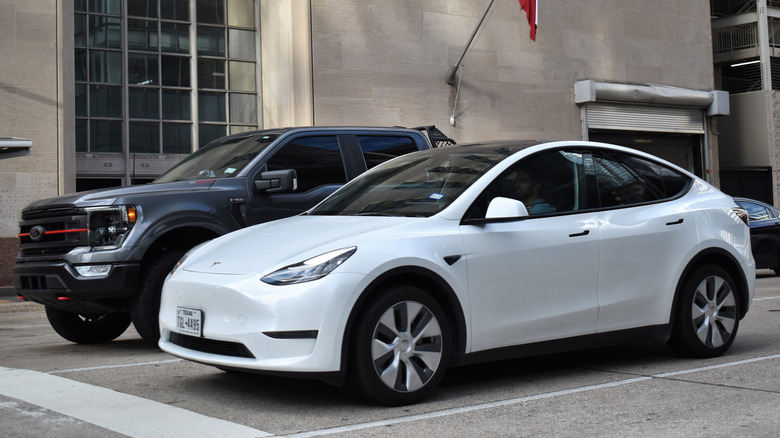
Owning any car at all is getting more expensive, but the AAA study revealed something more fundamental: Electric cars cost more to own than their traditional fuel-powered and hybrid counterparts. That's largely because depreciation on EVs is worse than gas or hybrid cars. On top of that, those who drive electric cars face higher fees and finance costs. Where EVs tend to do better is in fuel expenses, as they typically cost 66% to 70% less to run than gasoline cars.
Looking at a set of average consumption figures, AAA found that regular-grade gasoline costs $4.152 per gallon on average, while electric cars charged at home averaged as little as 18 cents per kilowatt hour. EVs have seen smaller electricity rate increases, too. The AAA data shows electricity prices have jumped 7.8% since 2025, while gas costs have increased a shocking 31.8%.
Even so, owning and running EVs costs more than gas-powered models, due to higher fees, finance costs, and depreciation, with certain EVs said to depreciate about twice as fast as their gas-powered counterparts. That contributed to pushing EV ownership costs above gas-powered models across the medium sedan, compact SUV, and pickup truck segments.
Nowhere is that gap more pronounced than in the medium sedan segment, where gas-powered medium sedans cost $3,080 less to own (at $10,582 per year) than comparable EV medium sedans ($13,662). Hybrids are even cheaper (at $10,204) and cost the least to own in every category, including the medium SUV class, where EVs win back some ground against gas-powered models, costing $14,332 versus $14,431 for gasoline SUVs.
Ways to cut car ownership costs
As a car owner, every mile you drive costs money, but it is entirely possible to keep costs down. One way to do this is to shop around for cheaper insurance. Compare quotes from providers, or even consider buying a car from one of the cheapest brands to insure.
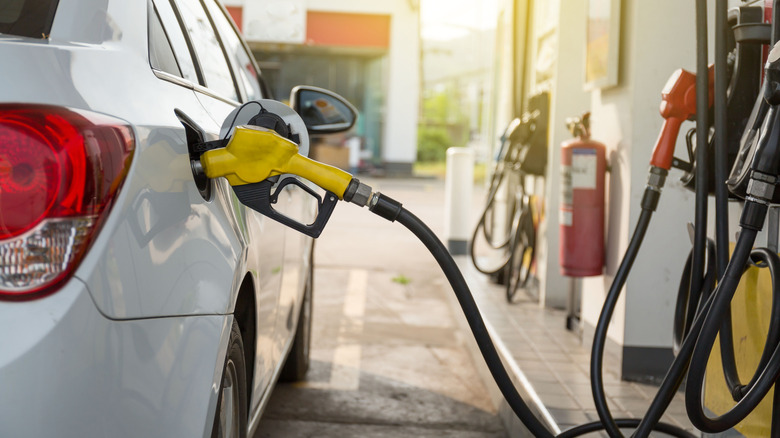
If you are team gas-powered cars, getting a model with great fuel efficiency is just as important. It should be easy enough, seeing as gasoline cars are now much more efficient than they used to be, with some of the most fuel-efficient models released over the years rated to return as high as 58 mpg.
You'll also want to consider depreciation. It is one of the single largest ownership costs and can add a weighted average of $4,422 per year to the cost of running some popular models, according to the AAA study. Toyota, Subaru, and Honda are some of the best brands for value retention, but if you're after something more premium, there's always Lexus. It's the luxury car brand with the best resale value, according to CarEdge.
However, maintenance and spare parts are usually more expensive for luxury marques than mainstream brands like Toyota or Honda. Speaking of which, staying on top maintenance is yet another important part of vehicle ownership that can help keep costs low. Not only does it help prevent larger bills down the road, keeping up with car maintenance also provides a strong service history that supports resale value when it comes time to sell.