

9 Of The Most Popular Japanese Performance Cars To Import (And Why Enthusiasts Love Them)
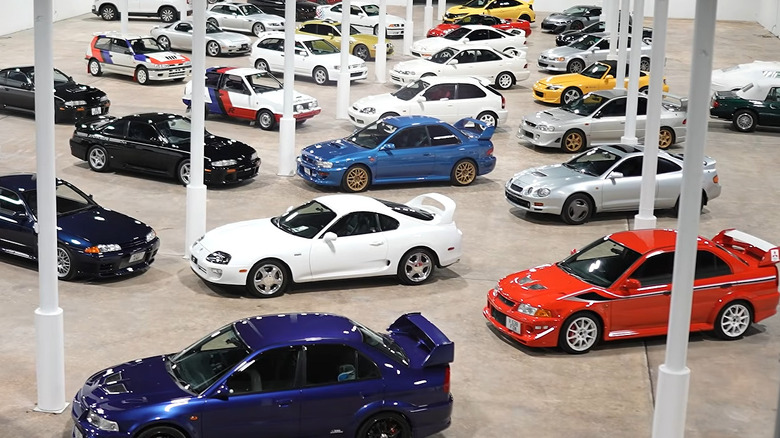
A certain breed of American car enthusiast is very good at taking any year in the late 20th century and adding 25. It's like "Rain Man," but for extremely simple arithmetic. They're determining whether a vehicle sold abroad has reached 25 years old, thus exempting it from Federal Motor Vehicle Safety Standards in the U.S., and making it fair game for American import. It's the mechanism by which countless Skylines, Evo variants, and performance Hondas — not to mention the occasional kei car — have found their way stateside, and you really just need to know how to import a Japanese car to America without making your head explode if you want to pull it off yourself.
Right now, that 25-year math is opening the door on a whole new batch of turn-of-the-millennium vehicles: What's up, Japanese Domestic Market Honda Integra Type R from 2001? But that 25-year window has been rolling for a while now, and some clear favorites have emerged. Japanese import marketplace JDMBuySell maintains a ranking of the most-watched JDM vehicles, combining buyer inquiries on its site with American Google search activity to gauge demand. Those aren't import totals, but they offer a pretty good indication of what enthusiasts are shopping for. Here are nine of the most popular choices, and why people want them.
Nissan Skyline GT-R (R32, R33, and R34)
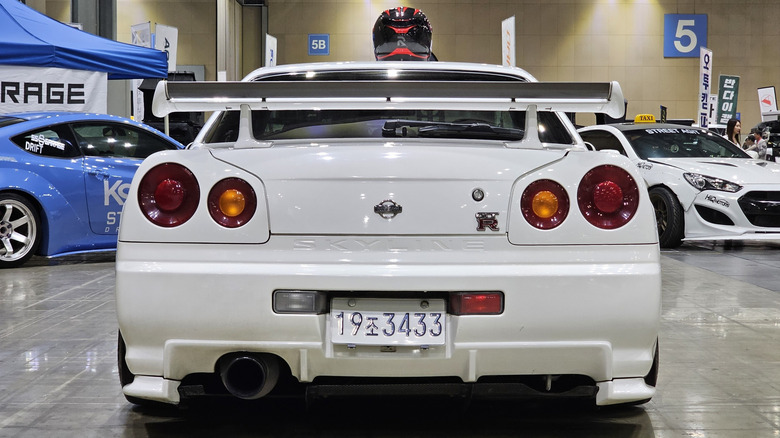
The Nissan Skyline GT-R is arguably Nissan's most famous performance car and the Skyline family commands an extraordinary share of enthusiast import attention. On the JDMBuySell top 10 ranking of what JDM buyers are watching, the Skyline holds not just the top spot, but three of the top four. The R34 leads the pack as number one, the R32 is number three, and the R33 takes fourth.
There's plenty of substance behind the Skyline's mythological status. When Nissan revived the GT-R with the R32 in 1989, it did so with a 2.6-liter twin-turbocharged inline-6 with electronically controlled four-wheel drive and four-wheel multilink suspension. The R33 and R34 followed, iterating on the formula, and eventually giving enthusiasts three generations of increasingly sophisticated performance machinery to choose from.
Yet one of the biggest reasons the GT-R holds a special place in so many enthusiasts' hearts is that Americans got a taste of the legend long before they could legally import one. It was a GT-R on the cover of the original Gran Turismo video game for PlayStation in 1997. Considering that the Gran Turismo franchise has sold more than 90 million copies globally, a whole lot of kids grew up experiencing the car digitally decades before they could even consider getting their hands on the real thing.
Back to that "add 25" math: As of 2024, each of these three generations had at the least begun qualifying for import, with later examples becoming eligible every year. Being allowed to buy one is one thing, though, and paying for one is quite another.
Mazda RX-7 FD (JDM-spec)
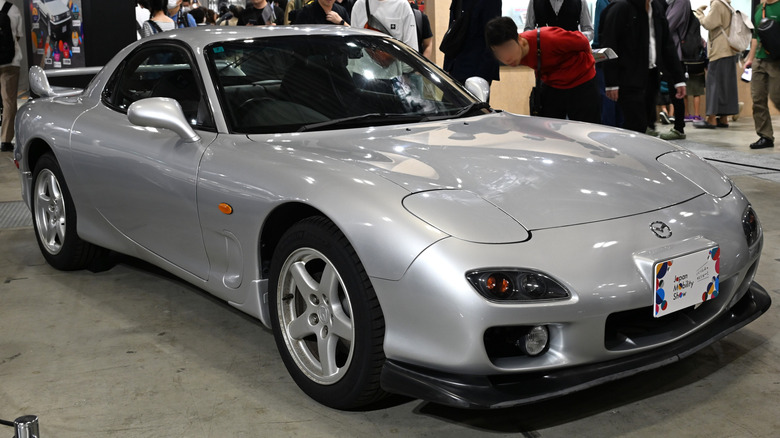
The history of Mazda's most famous rotary powered car is full of nuance and enthusiast nerdery. This specific case, the JDM-spec RX-7 FD, is a perfect example of that, holding sixth place in those JDMBuySell popularity rankings. But it's also the one car on this list where the unfamiliar might rightfully ask, "Wait a minute, couldn't you buy these in the United States?" The answer is ... sort of.
That's because American RX-7 sales ended after the 1995 model year, while the Japanese market continued having access to new examples all the way through 2002. That opens up the possibility not just of a half-decade-newer car, but one that reflects years of additional refinement and development. In fact, a major update in 1999 included a turbocharger upgrade, better cooling, and updates to the suspension, plus revisions to the aero that included a rad rear wing.
This was already a car praised for exceptional driving dynamics, and Mazda continued improving it after it disappeared from the U.S. market. Couple that with a divisive but inarguably interesting rotary motor and you start to see why buyers are willing to both pay a premium and sit on the wrong side of the car to get a car that was ostensibly sitting on Mazda lots in your town back in the day.
Nissan Silvia S15 Spec-R
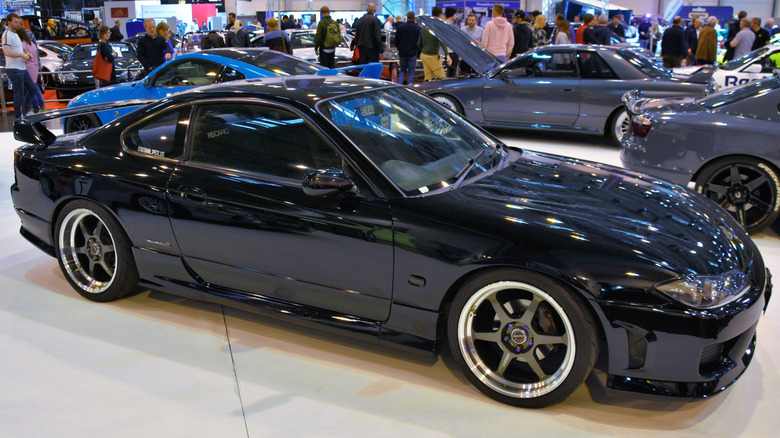
Americans developed a taste for Nissan's rear-wheel-drive S-chassis cars, but the relationship ended perhaps prematurely. The 240SX disappeared in the U.S. after 1998, but Japan got one more generation of the car called the Silvia there beginning in '99, and would you look at that, here we are just over 25 years later. The generation we're talking about is the S15 and the turbocharged Spec-R was the hands-down enthusiast choice.
It had a 2.0-liter SR20DET four-cylinder making 247 horsepower, sending power to the rear wheels with a six-speed manual, a limited-slip differential, and a real flair for going sideways. The drifting culture in Japan took a particular liking to the car, and the S-chassis lineup was among the community's favorites. The S15 represented the final iteration of that beloved formula, the Spec-R was the fast one, and Americans who had taken the 240SX as far as it could go are now finally getting a crack at the real deal. It's why the new Nissan CEO's dream to build a new Silvia can only be good for enthusiasts.
Signs are pointing to buyers being willing to put their money where their mouths are. A 1999 Spec-R imported from Japan in 2024 sold in April on Bring a Trailer for $44,490, with more than 500 watchers on the auction. That's not exactly an import census, but it's a pretty strong indication that American enthusiasm for the platform didn't disappear when the 240SX did.
Mitsubishi Lancer Evolution V and VI
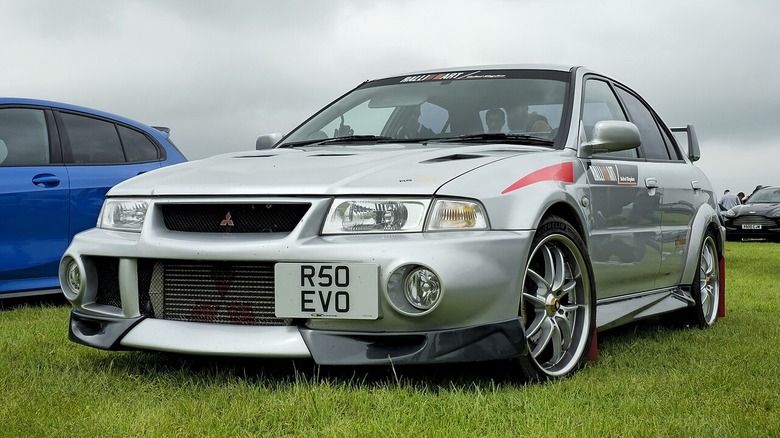
It's hard to overstate just how hot the Mitsubishi Lancer Evolution was for a few years in the early 2000s (and it does make you wonder where all the Mitsubishi Lancer Evolution Xs have gone; you never see them anymore). In 2003, Paul Walker's character Brian O'Conner was rocking an Evo VII in "2 Fast 2 Furious," and that same year the car finally landed in the United States for the first time. It was an instant hit, immediately earning Automobile of the Year honors and taking its place alongside the Subaru WRX in the turbocharged all-wheel-drive performance wars.
The U.S. cars were outstanding, but like discovering that your new favorite band has an extensive back catalog, many enthusiasts started going back in time to see what they'd been missing out on. The Evolution V (1998) and VI (1999) were among the most desirable of the older Evos. Both used Mitsubishi's turbocharged 2.0-liter 4G63 four-cylinder, and an Evo VI tested by Car and Driver in 2000 put up a 5.1-second 0-60 time and a 13.9-second quarter-mile, a remarkable result for a car that from a distance looked pretty much like an economy sedan given a rear wing as a prank.
Then there's the rally pedigree. Mitsubishi took home the 1998 World Rally Championship manufacturer's title and four consecutive World Drivers' Championship titles between 1996 and 1999, with the accomplishment marked by the Evo VI Tommi Mäkinen Edition, named for the driver who won all four. Now Americans can finally score the cars that helped build the Evo's reputation before it became a sensation over here.
Subaru Impreza WRX STI (GC8)
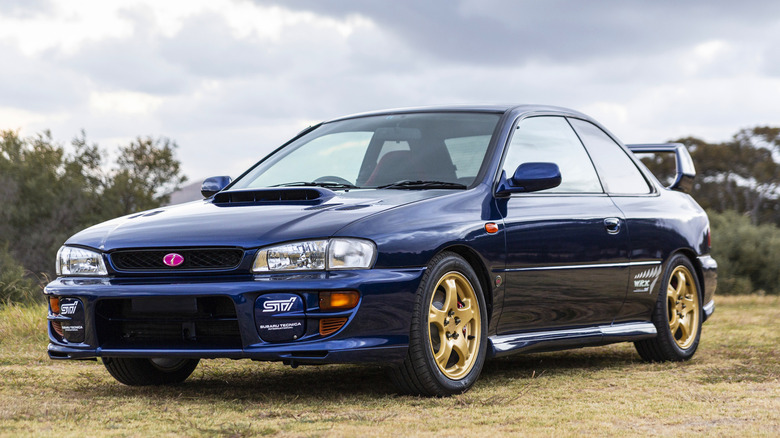
When the Evo arrived on American shores, it was immediately obvious that its biggest rival would be the Subaru Impreza WRX, another Japanese rally hero. It's a car so popular with the aftermarket that it's now rare to find an unmodified Subaru WRX STI in the wild. But Americans hadn't always been able to buy the STI. At first, they had to settle for something of a consolation prize. The 1998 Impreza 2.5 RS had given American drivers an unexpected taste of what a rally-inspired Subaru could be, but it wasn't until 2002 that the WRX would arrive and the STI didn't show up until 2004.
But before there was any of that, there was the first-generation WRX. It was available from 1992 to 2000, just not in the States. Over in Japan, this GC8 generation was iterating through a variety of improvements and performance variants, beginning with the first STI in 1994. The Version III Type RA STI added a more powerful engine putting out around 300 horsepower, plus Subaru's Driver Controlled Center Differential, and the Type R finally put buzzy Subaru excitement into a two-door package.
These original GC cars were smaller, lighter, and more visceral than their STI successors that would later be available next to a B9 Tribeca at a Subaru dealership in your hometown. So it's no surprise that enthusiasts chasing that old-school experience might take a pass on the newer Subarus you could buy in America in favor of the old ones that you couldn't.
Honda Civic Type R (EK9)
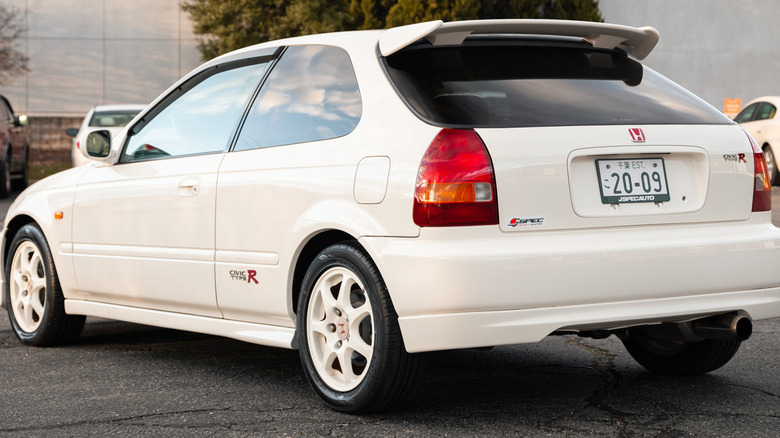
Long before Americans could buy a Civic Type R with heated seats and a $49,990 pricetag from their local Honda dealership, it was a Japanese-market forbidden fruit with a VTEC scream. The three-door hatch arrived in Japan in 1997 with a hand-ported, 182-horsepower four-cylinder engine and a close-ratio manual, but the Type R went further than that. It had a limited-slip differential and a seam-welded chassis to improve rigidity, plus touches of Type R red throughout the cabin. So it was certainly an exercise in throwing performance bits on an existing car — there was a titanium shift knob plus Recaro seats — but it was also a lot more than that.
The driving experience itself is a part of enthusiast history, with the scrappy 1.595-liter four-cylinder being the very epitome of a "when the VTEC kicks in" meme, borderline sedative low in the revs and downright exhilarating after crossing 6,000 rpm. It's the kind of car that'll make you work for the power, so it's all the more satisfying when you get in the groove, a sharp contrast to modernity where, for the most part, achieving maximum speed is a matter of pressing down one foot firmly and keeping it there.
Buyers are into it, and imported EK9s continue to cross the block in the mid-$30,000 range. That's still cheaper than a modern Type R, but they're also nearly three decades old, so this definitely still counts as paying a premium for the experience.
Toyota Chaser Tourer V (JZX100)
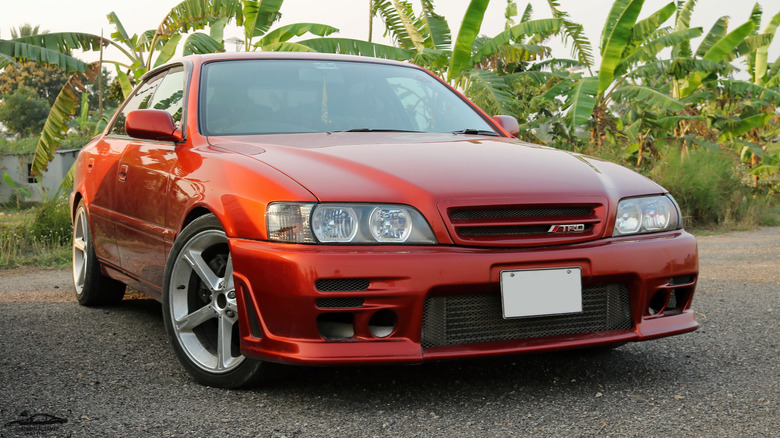
Okay, let's get away from familiar-enough nameplates that eventually found their way to the U.S. later anyway and talk about something likely to make you the only one at the car meet with one of any generation. The Toyota Chaser Tourer V doesn't look like something that'd be hanging on a bedroom poster, but it actually ranks seventh on JDMBuySell's 10 most-watched JDM chassis.
To say why, we'll need to look at what's underneath. The sixth-generation Chaser debuted in Japan in 1996 and the Tourer V was the standout performance variant. It was rear-wheel drive, with a turbocharged 2.5-liter 1JZ-GTE inline-6 making about 276 horsepower, the kind of thing that makes for spirited performance coming from an otherwise unassuming family sedan that only gets a second look in traffic because people aren't quite sure what it is. Except it's more than a grocery-getter that can also go fast — the Chaser has the performance underpinnings to make for a legitimate drift car, and that community has embraced it thanks to its JZ engine and rear-wheel drive.
It's a compelling package, the kind of thing that might not get noticed in Japan at this point but will stand out in the U.S., leading to publications like Road & Track celebrating the import eligibility of an earlier Chaser generation back in 2019. The JZX100 followed beginning in 2021.
Honda Beat
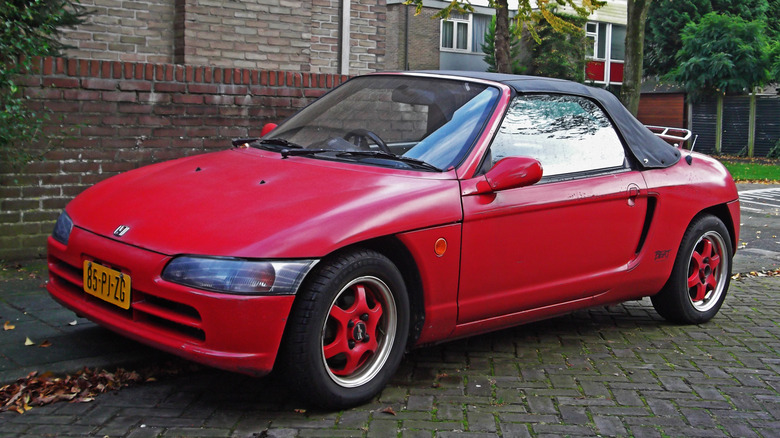
Given how uncommon they are in the United States, you'd be forgiven for not knowing what a kei car is or how you pronounce it. (It's "kay," by the way.) This is all the more reason why we're going to step away from the Japanese performance icons above and their varying degrees of menace, shifting instead to a couple of adorable little runabouts.
The Honda Beat hit the Japanese market in 1991 with a 656-cubic-centimeter naturally aspirated three-cylinder putting out around 64 horsepower. Yet in true early-'90s Honda fashion, there was a little more going on here. The Beat was mid-engine and rear-wheel drive, with individual throttle bodies and an 8,700-rpm redline. Just to be clear, some of this language seems consistent with how one might describe a car that's fast. The Beat is not. It has a 0-60 time that reads like a quarter-mile time and tops out at a likely white-knuckled 85 miles per hour. But it's a tiny, fun little car that makes it easy to see the appeal for enthusiasts looking to get around in something more interesting than a Prius.
As for the import demand, there's enough of it that if you're interested in a Beat you probably don't even need to import one yourself. They show up on the auction sites from time to time, but are also simply stocked by stateside importers, ready to be picked up and driven (slowly) off the lot.
Suzuki Cappuccino
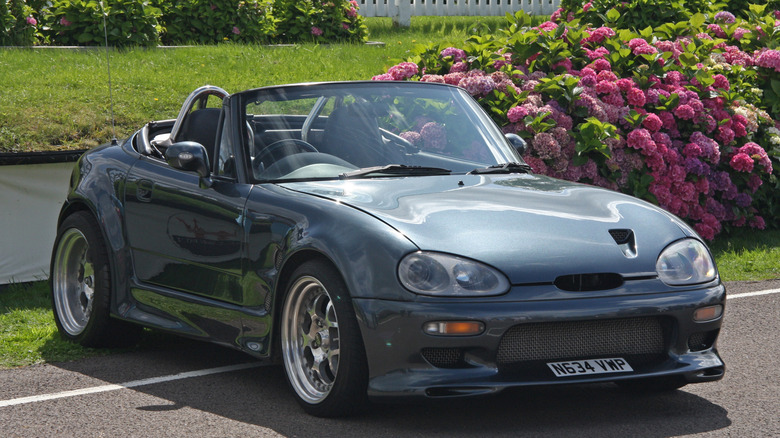
If the Honda Beat was Japan's idea of a tiny mid-engine sports car, the Suzuki Cappuccino takes a more traditional front-engine sports-car formula and shrinks it down about as far as possible without forcing the driver to walk along next to it instead of sitting inside. Available in Japan beginning in 1991, the Cappuccino meets kei car requirements with a 657-cc three-cylinder engine, turbocharged and intercooled, putting out around 63 horsepower.
It also has tricks. The removable roof comes off in five panels, allowing a variety of configurations ranging from a fully closed hardtop to a targa to a full convertible. All the pieces even fit in the trunk, provided you don't want to put much else in there.
People dig it. JDMBuySell currently has more than 100 Cappuccino listings, many of which benefit from having had someone else already do the work to get them over here (though most are still in Japan). You don't need Skyline money to get your hands on one, nor more than a trivial amount of garage space, making it a great offbeat alternative, especially for someone not into Beats.
And that's probably the best thing about the 25-year rule. The calendar doesn't discriminate, and eligibility arrives for performance legends, unfamiliar sedans, and charming little kei cars alike. The possibilities are endless, as long as you're willing to have a really annoying time at the drive-through.