

7 V8s With A Reputation For Being Nearly Indestructible
Who doesn't like the raw power offered by a V8, if you can afford the gas, that is? But it's not just the horsepower that draws so many of us to these engines. Some V8s are among the longest-lasting engines on the road today. There are multiple examples of drivers taking their V8-equipped vehicles, especially pickups, over a million miles. That's quite the feat.
Some examples of these million-mile accomplishments include a 1UZ-FE 4.0-equipped Lexus LS 400 that already had nearly 900,000 miles on the odometer when it was bought by a Road & Track writer for the express purpose of taking over a million. There are a couple of examples of owners driving another Toyota V8 engine, the 2UZ-FE 4.7, past the million-mile mark. Other examples include Frank Oresnik who drove his 1991 Chevy Silverado, which featured a small-block Chevy 350, over a million miles. David Mueller did the same thing with his 2002 F-350 Super Duty.
An engine doesn't have to go a million miles to demonstrate its durability, though. The Ford 4.6-liter Modular 2-valve took all kinds of use and abuse as the standard engine used in Crown Victoria Police Interceptors during the 1990s and 2000s, and could still go for hundreds of thousands of miles. Then there's GM's Vortec 8100, an engine so rugged that it was not only put in Chevy and GMC trucks, but also in boats and RVs. There was also the versatile Chrysler LA 318, which earned the reputation of being "bulletproof."
Toyota/Lexus 1UZ-FE 4.0
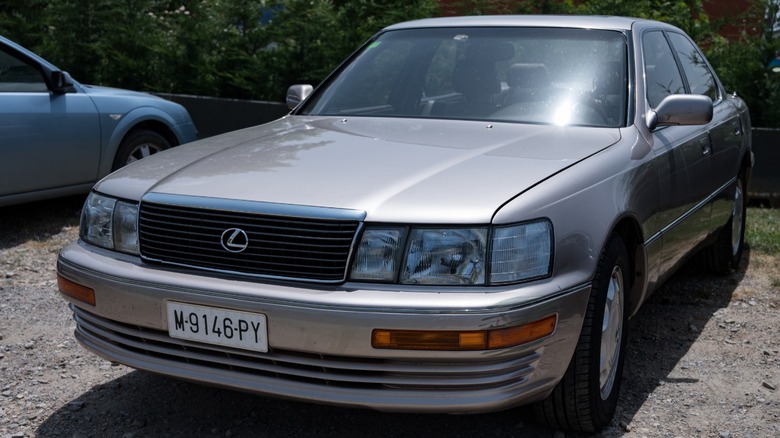
Lexus debuted its first model in 1989, and no doubt wanted its relatively new luxury brand to be associated with sophistication and comfort, but that would require worthy engines with high-end performance. Enter the 1UZ-FE 4.0, an aluminum block, oversquare 4.0-liter V8, with four camshafts and 32 valves. The 1UZ displaced 3,969 cc, with an 87.5 x 82.5 mm bore and stroke. It made around 250 horsepower and 260 lb-ft of torque, not exactly earth-shattering in our modern turbocharged era, but not too shabby for 1989. In fact, this engine is often described as "overengineered".
The vehicle it would be matched with, the Lexus LS 400, had its own share of overengineering. Born from a billion-dollar secret project at Toyota, it spent six years in development and went through eight proposals for its final design. There were 50 clay models, about 450 vehicle prototypes, and 1.67 million miles of testing.
All of that testing and engineering paid off. One person who could bear witness to the near indestructibility of this engine is Matt Farah from Road & Track. He was presented with the opportunity to buy a 1996 Lexus LS 400 with 897,000 miles on it. Farah acquired it with the goal of taking it over 1,000,000 miles. After four years of driving it himself, as well as lending it out to friends, acquaintances, and people he didn't even know, he reached the goal of putting seven digits on the original engine.
Toyota 2UZ-FE 4.7
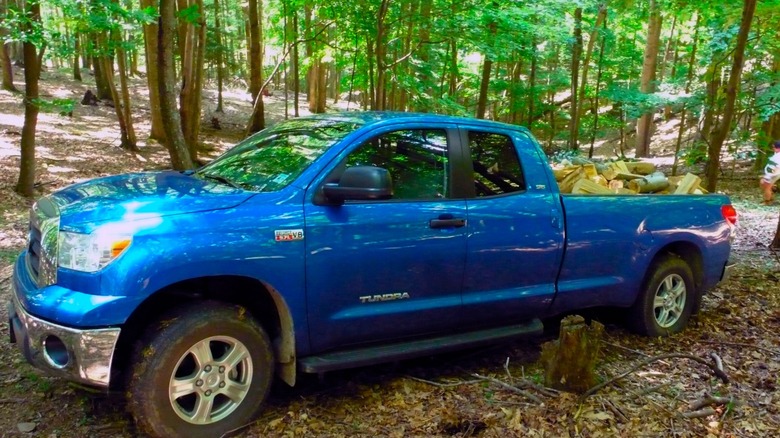
Toyota followed up the 1UZ with the 2UZ-FE 4.7, but this engine wasn't to be put into a luxury sedan. Built with a rugged cast-iron block, it was meant to last through wear and abuse as it powered large SUVs and pickup trucks. A 2003 Land Cruiser Amazon equipped with this engine could crank out 235 hp and 320 lb-ft of torque with a 9:6:1 compression ratio. It wasn't breaking any records in the power department, but it was a good engine, nonetheless. The 2UZ-FE 4.7 would go on to be featured in the Tundra, Sequoia, LX 470, and GX 470.
Several years ago, Louisiana man Aaron Morvant drove his 2UZ-FE-equipped 2007 Toyota Tundra past the million-mile mark. In fact, he had bought the truck to use as a contract hot shot driver, specifically because of Toyota's reputation for reliability. (Toyotas make up the majority of our list of vehicles you can expect to drive for 300,000 miles.) The truck as still running great after a million miles, in spite of being banged up.
Earlier that same year, another Louisiana driver, Vic Sheppard, drove his Tundra past the million-mile mark. His truck was in much better shape, and still had the same transmission and paint job. Toyota traded him a brand-new Tundra for his old truck so that its engineers could study it. When they hooked the engine up to a dyno, they discovered it ran better than some of Toyota's new engines. Making the story even more interesting, Vic and Aaron are friends.
Ford 4.6-liter Modular 2-valve
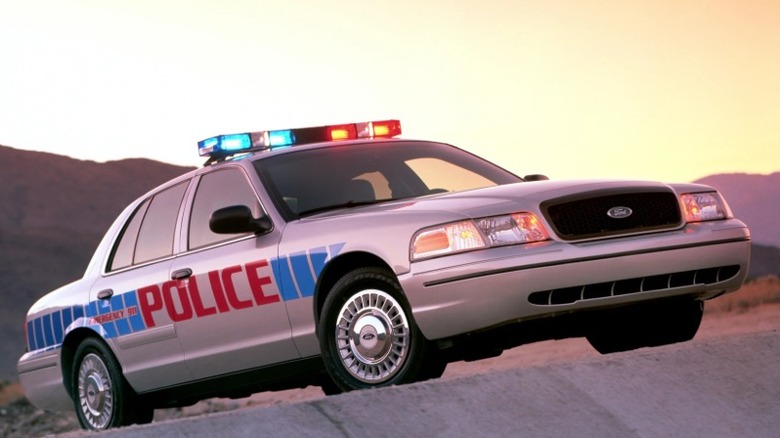
If you lived in the U.S. during the 1990s and 2000s, it may have seemed to you that every police vehicle in the country was a Ford Crown Vic. It certainly seemed that way to us. Well, we weren't imagining things. At one point, up to 85% of police cars in the country were Crown Victoria Police Interceptors. If there's a type of car that will put an engine through extensive use and abuse, it is a police car. Further testifying to this engine's durability, there were plenty of taxi cabs at the time that were Crown Vics as well. Taxi cabs, with their short trips, frequent idling, and starts and stops, aren't kind to engines either.
This was another hearty engine with a cast iron block, on its original version at least, along with a nodular iron crankshaft and steel camshafts. Ford says that "the Modular engine design focuses on low friction, best-in-class sealing, long-term durability, and increased bottom-end stiffness."
The 4.6 would also show up in the Mercury Grand Marquis, Lincoln Town Car, and certain Mustangs. It was even put into the F-150, starting in 1996. One Hagerty writer who frequents junk yards noted that he normally finds former Police Interceptors with 100,000 to 200,000 on the odometer and even found a former Crown Vic taxi cab with 400,000 miles on it.
GM Vortec 8100 L18
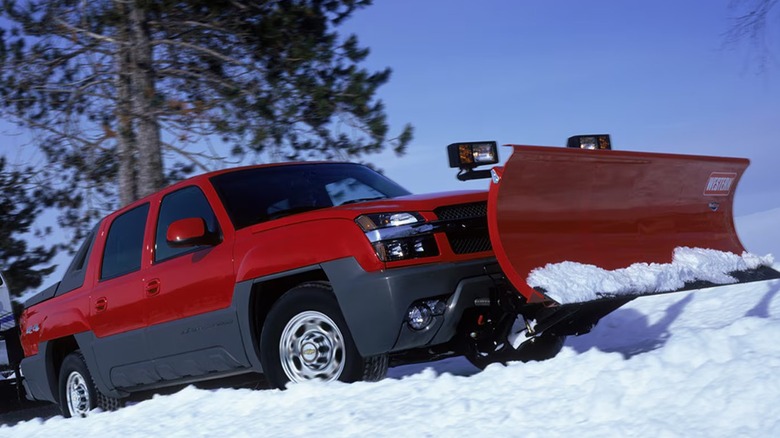
In the early 2000s, GM apparently looked at big block V8s and decided they just weren't big enough. This might have had something to do with the times and the fact that other truck makers like Ford and Dodge were developing V10s, but whatever the motivation, GM's mission was to create a majorly overbuilt V8. The Vortec 8100, also known as the RPO L18, was 496 cubic inches of raw power. It had a 4.25-inch bore x 4.37-inch stroke. It had a cast iron block, 4-bolt main caps, and 18-bolt cast iron cylinder heads, each of which weighed 78 pounds. It could produce 340 hp and 455 lb-ft of torque.
This beast was made for full-size trucks, SUVs, motorhomes, and boats. Its 761-pound bulk was not intended for a coupe or any other passenger car, for that matter. So it went into Silverado and Sierra 2500/3500s, heavy Suburbans, and vans, along with the aforementioned RVs and boats. That hasn't stopped people from retrofitting them into their Camaros, Corvettes, and Novas. Of course, in doing so, they have had to swap out the original cast iron parts with lighter ones. That includes replacing those huge heads with CNC aluminum heads.
The durability of this engine has a lot to do with the rigors it went through in development and production. Because it was intended to be used in boats, GM tested it by running it for 55 minutes at full throttle, then five minutes at idle, 300 times.
Chrysler LA 318
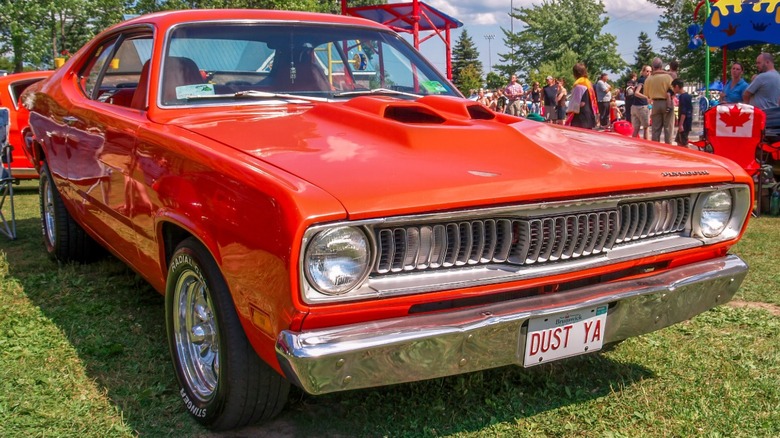
Reliability doesn't always come from striving for glory or trying to be the most powerful, or interesting, for that matter. Sometimes it's just a matter of being built to do the job. That was the case with the Chrysler LA 318, introduced in 1967. When it came to V8 engines, the 318 was the little engine that could. It was a modest 318-cubic-inch small block with an even more modestly-sized 3.91-inch bore and 3.31-inch stroke. The first engines cranked out a respectable 230 horses, which eventually fell to 145-155 hp during the 1970s — definitely not striving to be the most powerful, but that's all right.
What stood out about the LA 318 was its durability. Its uncomplicated design gave it the reputation for being bulletproof. So it turned up in everything from commuter vehicles to light trucks, and even cop cars. Models that held this engine included the Dodge D100 pickup, Plymouth Duster, and Dodge Dart.
A writer at Hot Rod tells their story of taking a 318 out of a Diplomat police car that had 120,000 miles on it, and putting it into an A-body without machining it at all — they just replaced the rings and bearings. The engine ran for another 100,000 miles when the writer opted to replace it with a bigger engine. Upon inspection, it was in such good shape that they decided it didn't need a rebuild.
Chevrolet small-block
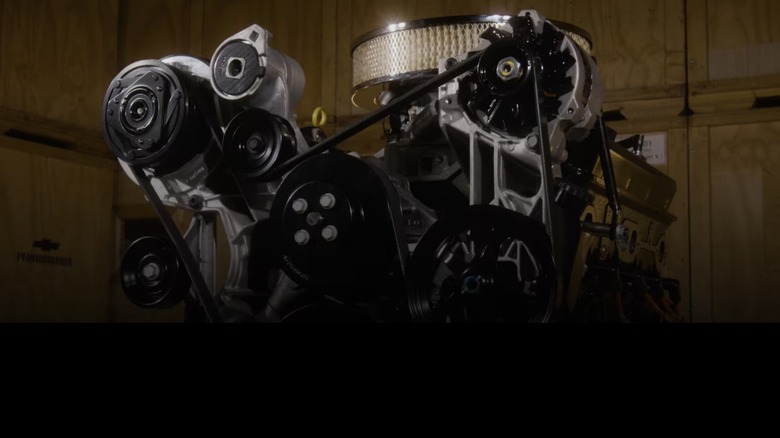
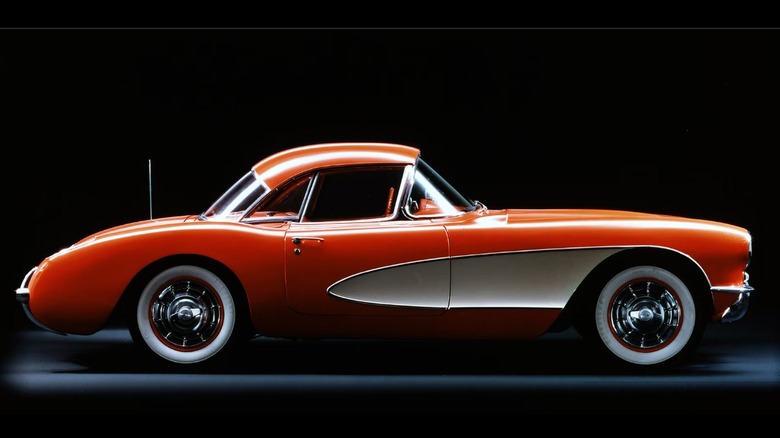
Did you know that from 1929-1955, Chevy only produced 6-cylinder engines? That all changed in 1955, when the automaker introduced its small block V8. It was a 90-degree V8 with overhead valves and a pushrod valvetrain — a design that would influence generations of Chevy small blocks to come. The Gen I small block, though, wasn't the most powerful engine ever built. It could crank out 198 horsepower, that is if you opted for the four-barrel carburetor. That power output would gradually improve, especially with the addition of fuel injection just two years later, upping the horsepower to 283.
The first small-block V8 from Chevy would be installed in the 1955 Corvette. As it evolved, various versions of the small block would find their way into the Camaro, the Firebird, and a number of other GM products. It would also become an engine option for Chevy pickups. One example would be the 5.7L V8, also known as the "Chevy 350."
In 1996, Wisconsin man Frank Oresnik bought a 1991 Silverado with a Chevy 350 in it, and 41,000 miles on the odometer. He would go on to put about 85,000 miles on it per year delivering seafood. By 2008, he had driven it past the million-mile mark. At that point, he put the truck up for sale on eBay with a minimum bid set at $30,000, and was later surprised no one bid on it. Come on, Frank, it's a Silverado with a million miles on it. Maybe he was among the "I know what I got" crowd.
Ford/Navistar 7.3L Power Stroke diesel V8
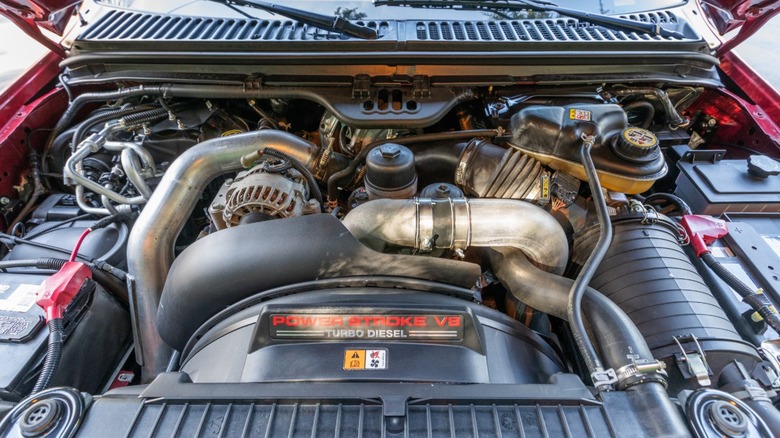
If you're not up to date on in-depth Ford history, you might be surprised to find out that one of the best-known Ford truck engines isn't technically a Ford engine. Ford collaborated with International Harvester in the 1990s to come up with a V8 diesel to replace the 7.3L IDI, which had also been built by International. The result of the collaboration was the 7.3L Power Stroke, first offered in 1994 for the F-250, F-350, and F-Super Duty. Early versions of the 7.3 had just 210 hp, but later models offered as much as 275 hp and 525 lb-ft of torque. By 1999, Ford had sold one million trucks that housed the big diesel, and that number would double by 2002.
The 7.3L Power Stroke featured a cast iron block, as well as forged steel connecting rods and aluminum pistons in earlier engines. Ford eventually discontinued the engine in 2003 to comply with emissions standards, but you can find plenty of them still on the road today.
Some credit the engine's durability to its simple design and the fact that it wasn't quite powerful enough to be dangerous. And with that legendary durability, we have another million-mile engine story. David Mueller bought his 2002 F-350 Super Duty new and started using it to deliver heavy RVs, some of which weighed over 11,000 pounds. He averaged 600 to 800 miles per day, and by 2011, he had put 1,020,000 miles on the truck.