

8 Classic Coupes That Look Sick With Window Louvers
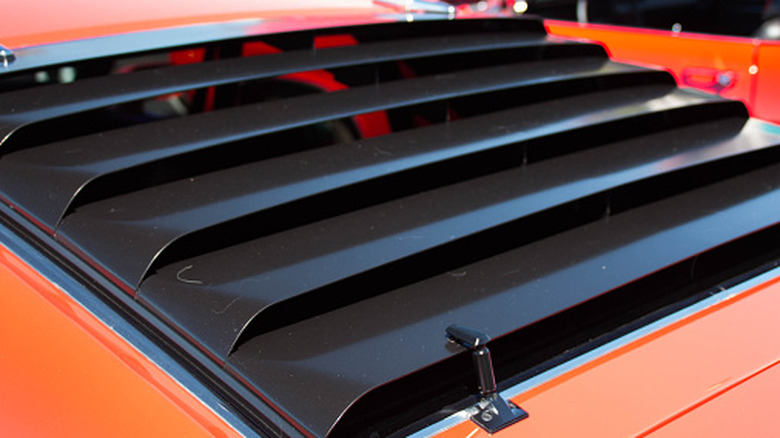
Window louvers used to be a big deal on muscle cars for a reason that was actually two reasons: the cool factor. They made the car aesthetically cooler on the outside, and they also made it literally cooler on the inside, blocking some of the sun from coming in from those sweeping rear windows during a time when air conditioning was less universal. Those little side quarter louvers over the rear windows count, too, by the way. On top of the visual factor, they were good at decreasing the amount of sun hitting the rear passengers in exchange for increasing blind spots.
But we're not here to try and convince anyone of the practical benefits of window louvers. Every car we're talking about today has been out of production for decades, and you're not here for the finer points of louver functionality. You're here for classic coupes that look awesome and are really hard to see out the back of. From muscle car royalty like the Plymouth 'Cuda through poster cars like the Datsun 280Z and multiple generations of Mustangs, we've got the goods. Here are eight cars that best wore those sick horizontal slats.
1969-1970 Ford Mustang Mach 1
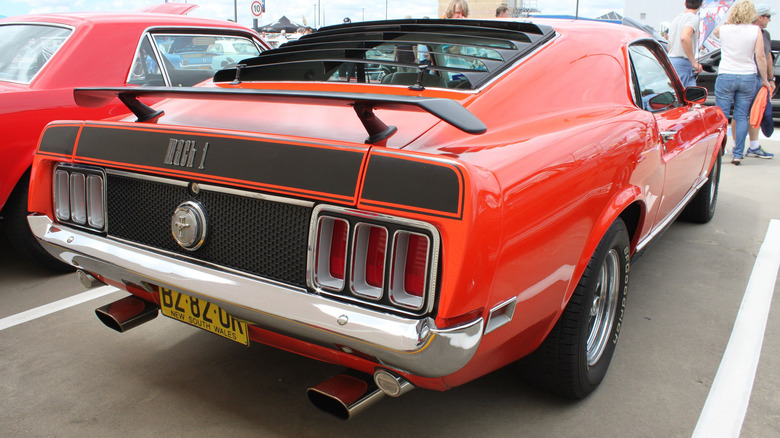
The first generation of the Ford Mustang Mach 1 arrived for the 1969 model year with its long, sloping roof and muscular proportions that looked fast when standing still. This was the first time that the Mach 1 moniker had shown up on a production car –- previously it was used on a fastback concept that Ford had been showing off at car shows, but now it had landed as a new Mustang variant with a wildly aggressive aesthetic. That first Mach 1 leaned hard into the visual excess, with enough graphics, stripes, exposed hood pins, and scoops to make an AutoZone cashier blush, and you'd better believe that included rear louvers.
Those louvers were called "Sport Slats," and they were a Ford factory option that promised to deliver a fast, sporty look to the back of the car and indeed did exactly that. Ford claimed at the time that the slats would keep sun glare and precipitation off of the rear glass, in fact improving rearward visibility, which feels like a stretch for something essentially styled off of half-closed venetian blinds. Regardless, they were a perfect finishing touch for a car that was already rocking more than its share of visual attitude and, while technically optional, they're an option you probably unconsciously select when you picture a first-gen Mach 1 in your head.
1970-1974 Plymouth 'Cuda
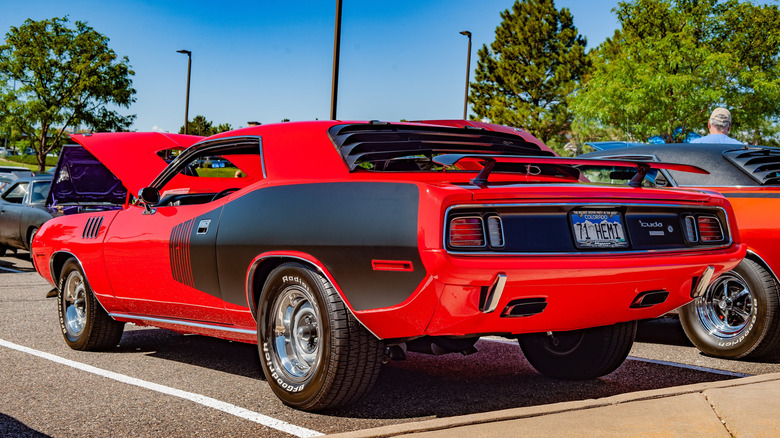
Far more than just an old-school pony car that isn't the Ford Mustang, the Plymouth Barracuda was one of the defining muscle cars of its era, specifically the now-iconic third-generation redesign that landed in 1970 and ran through 1974. The 'Cuda looked great, and there was plenty of performance underneath the styling, from the base 335-horsepower 383-cubic-inch V8 to the now-legendary 425-hp 426 big-block Hemi. It was a serious machine.
However, it also featured some arguably unserious styling choices, with Chrysler offering what they called "High Impact" paint colors like an alarming green and bold orange, along with graphics and additional options like a shaker hood. And yes, window louvers were on the menu, too. For example, the factory-installed Backlight Louver Package for 1971 matched a black vinyl roof with rear-window trim and racing mirrors, with a strange catch for unlucky buyers in exactly one state: The package was prohibited on cars registered in Pennsylvania. Pennsylvania's regulations explicitly prohibit "louvered materials" that obstruct visibility by more than 50% (told you so, Ford). However, we'd like to think they thought it should be illegal to look so cool.
1970 AMC Javelin SST
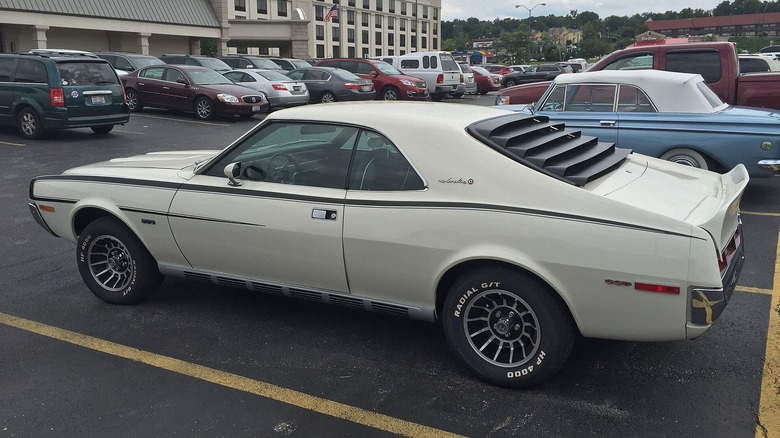
If you wanted a pony car in 1970, Detroit's Big Three offered no shortage of options, but America's kookiest car company, AMC, was also in the mix, offering buyers a distinctive alternative despite being an automaker better known at the time for uninspired commuters. The AMC Javelin represented a serious effort to earn a place within the segment. AMC had poached racing legends Mark Donohue and Roger Penske away from Chevrolet, and Donohue determined that for the Javelin to compete on the high-speed Trans-Am racing series tracks, it would need a lot more downforce.
We point this out not because of a commitment to aerodynamic engineering in early-'70s racing, but because their solution –- a fat ducktail spoiler later available on the production car –- helped the Javelin look awesome. And while the spoiler landed in consumer showrooms for homologation reasons, there was nothing regulatory or even particularly useful about another exterior element that could help make the Javelin look as mean as its name: killer rear-window louvers. AMC never offered these as an option, but owners who decided to add them found that they give the already distinctive coupe an even more aggressive look through the back end, for an appearance that makes it look ready to pick a fight with anything wearing a Mustang badge.
1977 AMC Hornet AMX
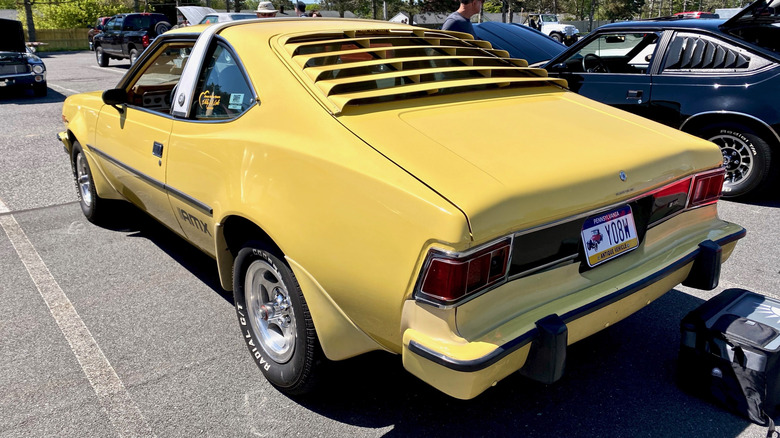
The "AMX" designation that appeared on several AMC models over the years stood for "American Motors eXperimental," and the name itself feels like an experiment in stretching the limits of acronym construction. The 1977 Hornet AMX fit the implied ethos perfectly, with a modestly interesting powertrain punctuated by an appearance package that stood out like a capital X in eXperimental.
Buyers who opted for the AMX package got flared fenders, a front air dam, over-the-top AMX graphics (think store-brand Firebird emblem), and a brushed aluminum targa band. Four paint colors were available, including Sunshine Yellow and the gloriously-named Firecracker Red. And of course, because AMC clearly had its priorities with this one, you also got the rear-window louvers –- and color-matched, no less.
With the AMX bits equipped, passersby were in no danger of mistaking this for a standard-issue hatchback, but the louvers are an essential part of the formula, even if they were often topping off the look of a car limping to the party with a 110-hp inline-6 and an automatic transmission. Is it sacrilege to say in retrospect that the louvers might have done more for the car than the available 150-hp 5.0-liter V8?
1976-1978 Ford Mustang II Cobra II
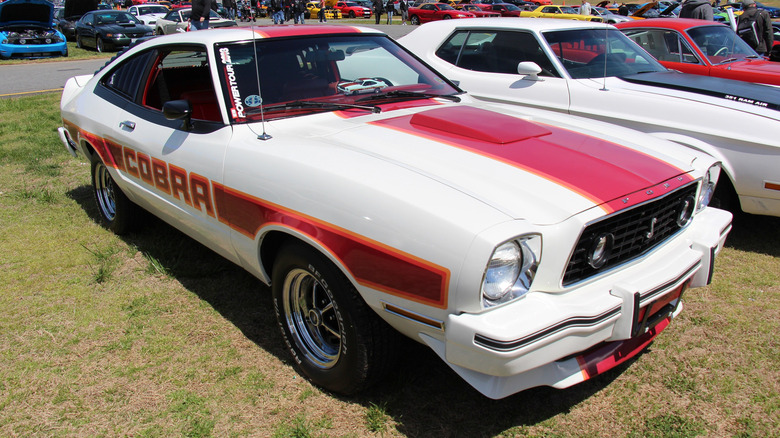
The Mustang II gets more than its share of hate from enthusiasts, but it represented an earnest effort to keep something of a performance ethos alive during the American automotive malaise — as well as the Mustang brand itself. It arrived during a period when overwhelming buyers with horsepower was simply not an option, but that didn't mean it couldn't look the part.
One way to nail the aesthetic more or less right out of the box was with a Cobra II upgrade, which was first a third-party aftermarket upgrade before becoming a factory-available option. The package included race-inspired striping, spoilers, and a patently nonfunctional hood scoop. The third-party package offered by Motortown Corporation in 1976 included window louvers on the rear quarter windows only, but the Cobra II hardware installed at the factory in 1977 and 1978 delivered full rear-glass louver goodness at last. It's a borderline non-optional upgrade, if we're being honest. At potentially 93 hp, if you're going to drive a Mustang II, it better look good parked.
1978 Datsun 280Z Black Pearl
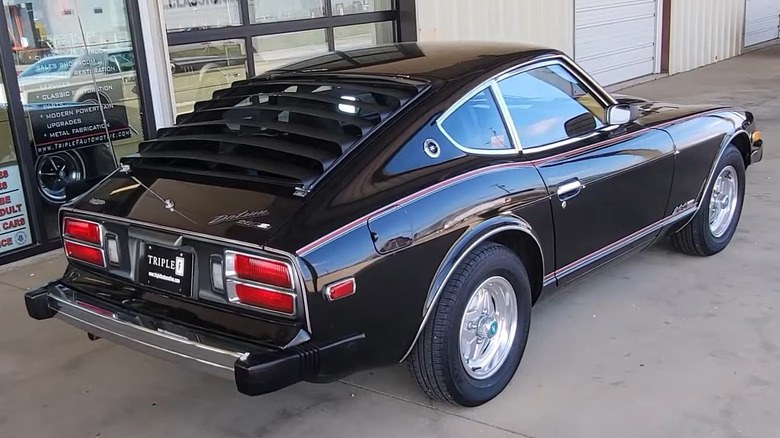
At this point, we've established that in the 1970s, American automakers were sprinkling louvers, scoops, and graphics on cars like salt on steaks, but for the 1978 model year, Datsun took a distinctly deliberate approach and absolutely nailed it. The Datsun 280Z Black Pearl Edition was a single-year offering that came to the U.S. market with almost a singular mission: to determine if the Americans would buy a Z car in black. The answer was clear enough that the incoming 280ZX did indeed include black as an available color, but one might argue that Nissan put its thumb on the scale a bit because, paint aside, the Black Pearl 280Z looked simply awesome.
The Black Pearl's monochromatic look wasn't quite as restrained as its name suggested. Buyers could add contrasting stripes and racing mirrors, but the real finishing touch was a set of louvers stretching across the rear glass, implicitly answering the question of whether the back window could also be as black as possible. The louvers look as much at home across the long, sloping rear glass as the deep black does on the rest of the car, and beneath all the visual drama was a 2.8-liter inline-6 with an available five-speed manual. So maybe you can have it all, in a very Japanese sort of way, if only for one year.
1982-1992 Chevrolet Camaro Z28/IROC-Z
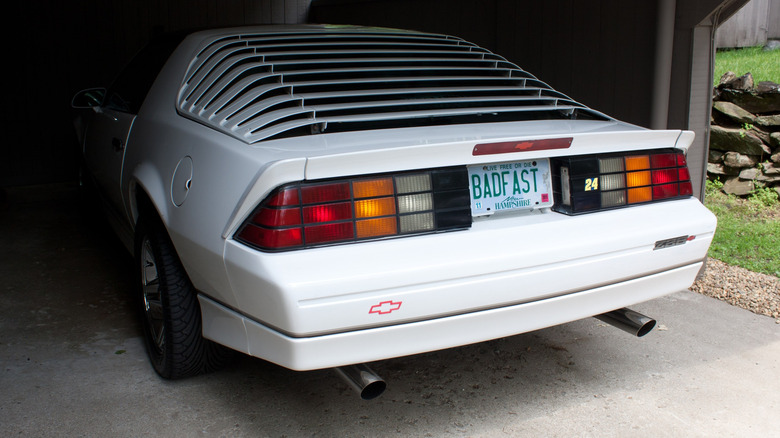
Here we turn the corner from the 1970s into the 1980s, and nothing says '80s like an IROC-Z. When the third-generation Camaro landed for 1982, it wasn't a foregone conclusion that sports cars were even going to remain a thing, but a 1985 facelift accompanied by the IROC-Z package elevated the Z28 into the icon of an era that it is today. The car sat lower on an upgraded suspension with aluminum wheels and no shortage of stickers, all powered by Chevy's 305 cubic-inch High Output V8 or an optional TPI 305 V8 that delivered 215 hp and 275 pound-feet of torque.
As much as the Platonic ideal of the IROC-Z has sweet louvers across the rear glass, they were absent from the early cars, leaving aftermarket companies more than happy to fill the obvious gap. For 1986, Chevy acknowledged the miss and made them available from the factory. At that point, you had proper IROCs available at your local dealer, complete with louvers, ground effects, and T-tops, completing the look of the Camaro IROC-Z that became the absolute icon of the '80s that the era deserved.
1979-1993 Ford Mustang Fox Body
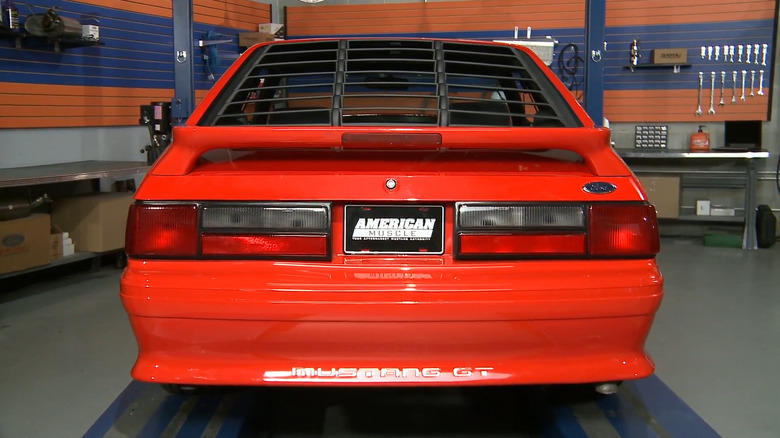
We already established that Ford had a soft spot for window louvers, but the Fox Body might be the Mustang that benefited the most from having them. The Fox Body represented something of a return to form, even if that form was a bit boxier than the pre-Mustang II models that were still seared into the memories of fans. And no, Ford's "Fox Platform" wasn't named after the Audi Fox. On top of moving on from the Pinto chassis, the Fox Body also opened the door to real performance again, with a parade of hopped-up variants including the SVO, GT and Cobra.
Just like back in the day, Ford had the good sense to help its buyers meet their louver needs from the factory, at least eventually. Black liftgate louvers were a factory option in 1982 and by 1987 they could be ordered from dealers for the hatchbacks. The aftermarket, of course, remained happy to oblige as well, because even if it's just shielding the cargo area, all that rear glass was just too tempting to ignore.
At the end of the day, every louver we've talked about today has been a set of horizontal slats stuck onto the rear of a car, but clearly louvers can be so much more than that. They don't add horsepower, and they aren't going to transform the aerodynamics. They may cut down the glare, and they definitely cut down on rear visibility. But man, can they look sick on the right American coupe.