

What Are Your Top Wet Weather Driving Tips To Prepare For Super El Niño?
U.S. President Donald Trump repealed the EPA's 2009 endangerment finding that showed how greenhouse gas emissions endanger the public earlier this year, then he lowered average fuel economy standards for automakers, and even said emissions standards, "don't mean a damn bit of difference for the environment."
In totally unrelated news, the Earth is getting hotter each year, weather events are getting more extreme, and the planet is now staring down the barrel of a winter season with a super El Niño that's expected to be the most severe one ever in recorded history. According to the National Oceanic and Atmospheric Administration or NOAA, the U.S. can expect warmer-than-average temperatures across northern states, and wetter-than-average conditions across the southern states.
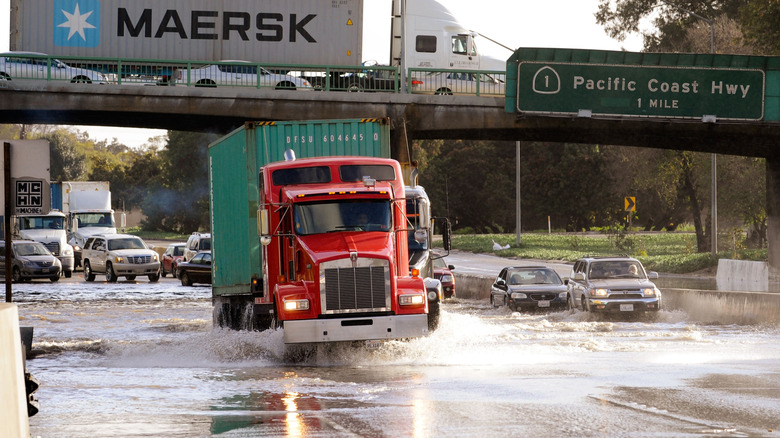
As a native Angeleno, I'm well aware of my region's notorious lack of wet-weather driving experience; as soon as a light sprinkle descends upon my city, the freeways practically screech to a halt. The thought of a wetter-than-average LA winter that could result in floods and mudslides has me worried, and surely many other arid-climate dwellers, too, so do us all a favor and share your hottest wet weather driving tips in the comments below.
I think having reasonable tread left on your tires is the most important tip
Since LA seldom gets enough rain to cause standing water buildup on our roads, it can be easy for Angelenos to get away with driving on bald tires, but that is a surefire way to end up pointing the wrong direction on the 405 when things go all El Niño-y. I often peek at the amount of tread on the tires of parked cars around my neighborhood, and find a genuinely alarming amount of cars running rubber so devoid of tread that they would beat a racing slick in a smoothness contest, which is not only dumb, it's also technically illegal.
The tread on your tires is designed to evacuate water from underneath the tire as you drive on wet roads so the raised bits can remain safely in contact with the solid road surface beneath the water. Slick tires that lack sufficient tread cannot evacuate water from underneath the tire, which means your car loses contact with the road, potentially leading to hydroplaning, a total loss of control, a spinout, or a full-blown crash.
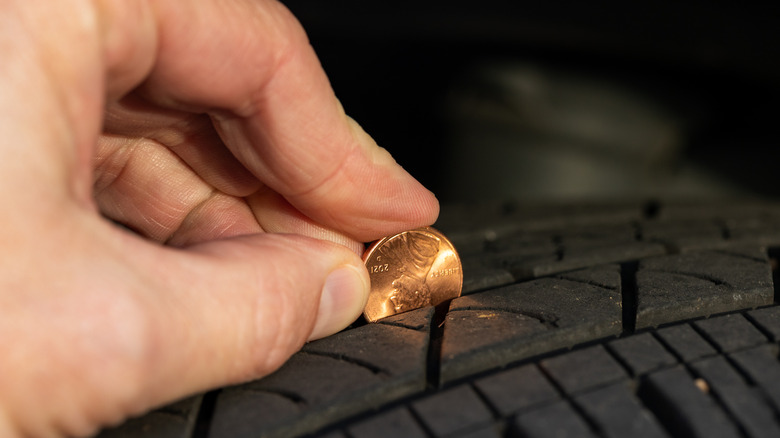
So, to my fellow arid-climate dwellers: please make sure your tires have enough tread on them to make it through a wet winter. It's illegal to drive on tires with tread that's less than 2/32 of an inch deep, which is easily measured by sticking a penny (with Lincoln's head down) in the deepest part of your tire tread. If you can see the entire top of his head, unobstructed by tread, your tires are officially bald and need to be replaced to keep you safe. What are your best wet-weather driving tips for us desert folk?