

Wide Vs Narrow Tires: Is One Better For Off-Road Performance?
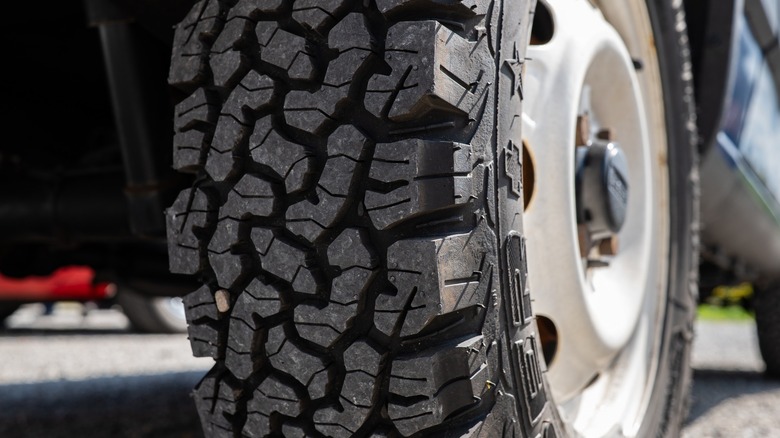
If you're looking to maximize the off-road performance of your rock-crawler for capability as well as Instagram likes, you might head straight for the tallest, fattest tire you can stuff under your rig. Now some of you may be having flashbacks to previous botched, over the top "upgrades," and asking: "in the name of off-road performance, how big is too big?"
The spectrum of an off-roader's tire diameter choice may range from "manufacturer's recommendation" to "what will physically fit and not break anything in its current setup?" Sure, a larger diameter or taller tire will offer increased ground clearance, approach, departure, breakover angles, better tire attack angles (ease at rolling over obstacles), and make the vehicle look less like it's en pointe. When choosing a tire width, bigger is better too, right? Well, not exactly.
Against common perception, increasing tire width does not always increase grip off road. The contact patch (area of tire physically on the ground) does not change when increasing width, only the shape. Short and wide (hamburger-shaped) for a wide tire vs long & thin (hotdog-shaped) for a narrower tire. The contact patch shape from a wide vs narrow tire is a product of tire width yields better performance in specific conditions. Choosing the best performing tire width will depend on your use case.
Wide Vs Narrow
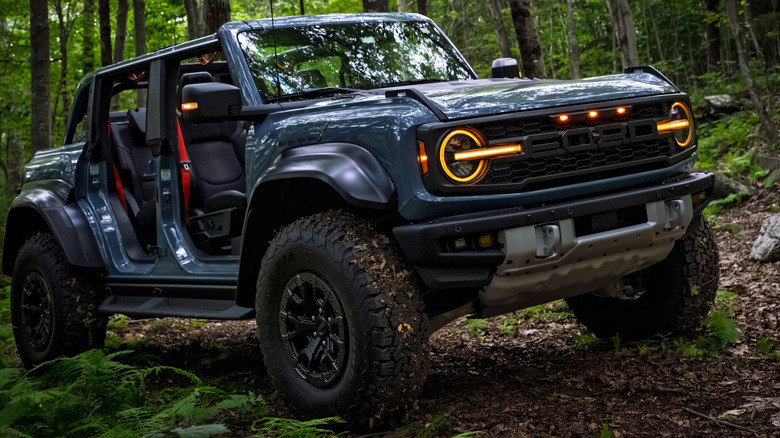
Wider tires aren't just for doing an impression of your favorite predator themed off-roader. Wide tires perform well on terrain you'd want to "float" on: loose surfaces with no hard-packed terrain below such as loose sand and deep, deep mud. Running a wider tire can also offer protection for your precious rims by protruding from the rim and keeping rocks a little farther from the wheels. Remember that "hamburger" contact patch? That wider contact patch provides increased lateral grip for higher horsepower vehicles, maintaining stability during heavy acceleration both on and off-road. Ultimately, in a lot of cases, wider tires are chosen for their beefier looks and improved aesthetics.
On the other hand, narrow tires outperform wide tires in shallow, loose, wet surfaces with hard terrain underneath. Think snow, shallow mud, and rain. The "hotdog" narrow and long contact patch's leading edge (the first part of the contact patch that hits the road as the tire spins) acts like a knife cutting through loose surfaces so the rest of the contact patch can grip to the solid terrain below. The longer contact patch also can act like a caterpillar or tank track over uneven terrain when aired down.
Narrower tires also offer several quality of life improvements for both on and off the trail. When compared to the equivalent wider tire, the narrower tire will be lighter. Lighter is good! With less rotational inertia, less engine power is required to get them rolling and less brakes are required to get them stopping. This equates to better mpg and more range for your excursions. Less unsprung weight will allow the suspension to do its job easier giving you a smoother, potentially quieter ride. Less physical tire size is easier to install and less likely to hit body or suspension components without adding a lift or other modifications. The cherry on top of choosing a slimmer tire: less money! The lighter tires put less wear and tear on your vehicle and are generally cheaper to purchase.
Alternate Ways To Improve Off-Road Performance, It's Not Just About Size
Tire size will, in part, dictate your rig's ability to get through your chosen trail, but tread and sidewall design are equally important. A tire with a more flexible composition or ability to conform around objects allows the tire to mold around terrain. This effectively increases the contact patch around objects instead of just on top of them like on flat pavement. Specialized, softer tires with increased capabilities come at the cost of on road stability, quietness, & tread life as compared to a more rigid on-road or all-terrain tire.
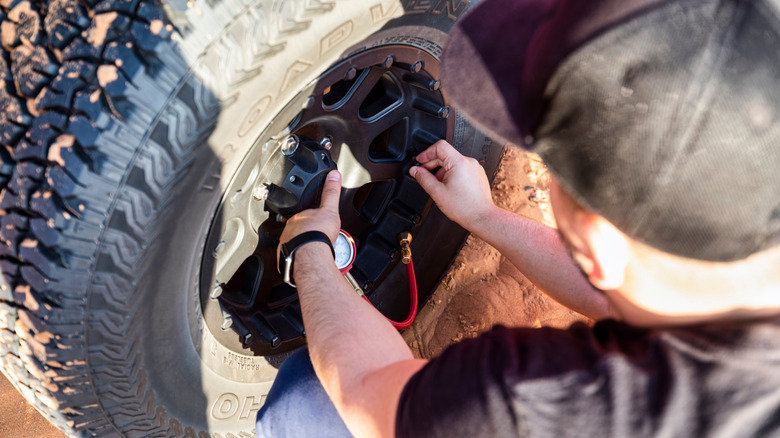
Two free tricks that can be used on your current set of tires are airing down and adding load. Airing down is when a driver purposely lets out 10-15 psi from their tires to deflate and soften the tires. Without getting into the math, a lower tire pressure inversely increases the contact patch of the tire. This means more tire on the ground, and more grip over that obstacle. Pair this with a softer, more flexible tire design for maximum off-road performance. Added bonuses from the lower tire pressure: smoother ride quality over the rough stuff and you're less likely to get a flat as the tire can conform better to rocks.
Adding load increases downward force on a tire, increasing friction (grip). Tires also compensate for the increased load by spreading the load over an increased contact patch. Picture loading some sand bags over the back of a truck over winter or having your pals jump on your rear bumper to help get over an object (not advised).
In the end, the best performing off-road tire size is going to depend on your use case. Narrower tires offer less compromises both on and off road than wider tires. When faced with this dilemma myself in this economy, I chose a more modest (and factory recommended) 285 mm tire on my Bronco. But man, those wider tires do look so good.