

1977 Continental Coupe With 31,000 Miles For Sale Is Cheap, But Is Its 460 V8 Worth The Fixes It Needs?
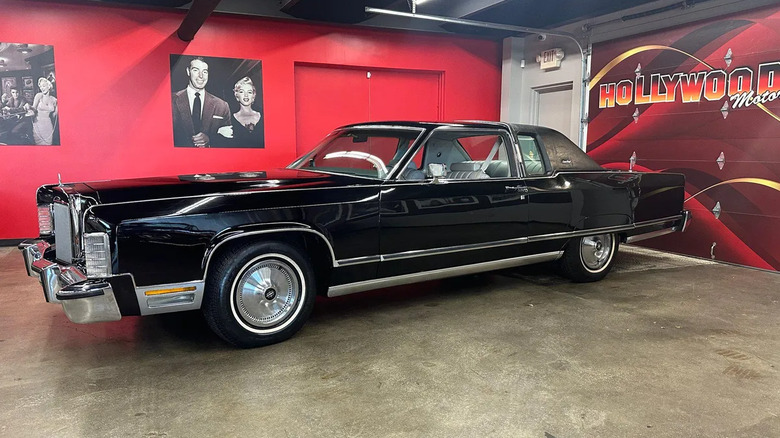
The fifth-generation Lincoln Continental ran from 1970 to 1979. Although it very much remained a luxury land yacht, the 1970 redesign was significant. Exterior updates made the vehicle more imposing, from the lower roofline and full-width front grille to the integrated taillights and beveled fenders. Available in sedan and coupe form, the Continental used body-on-frame construction.
Motivation was sourced from a 460-cubic-inch (7.5-liter) V8 engine that produced 365 horsepower, then calculated as gross power ratings versus net. Also known as a "Lima" engine based on its Lima, Ohio, manufacturing origin, this 385-series big-block V8 is one of the most reliable engines Ford has made. Highly durable, these stout engines easily lasted 200,000 miles, which also made them a favorite for project builds.
However, new emissions standards in the early 1970s set forth by the Environmental Protection Agency (EPA) and sent out to nearly 30 automakers throttled the potency of robust engines like this Ford V8. Eventually, these once-powerful beasts became shadows of themselves, which raises the question of whether a late-decade Lincoln Continental, as original and well-maintained as it might be, is worth the hassle of that sourpuss V8. A Hemmings listing for a 1977 coupe variant is a prime example.
Should you take a chance on a cheap big-block Lincoln?
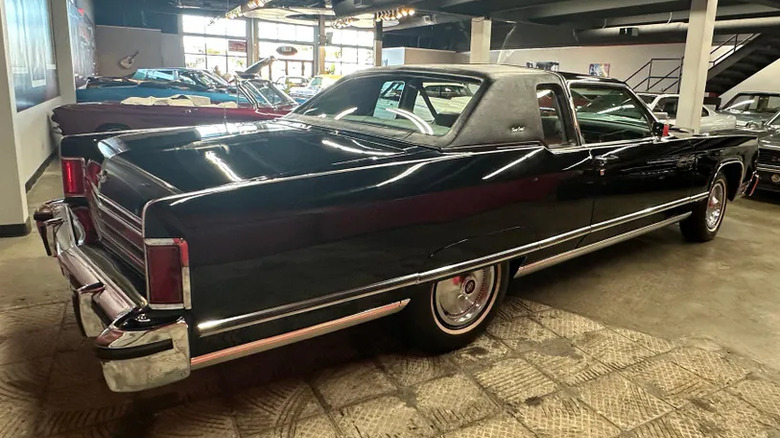
Located on New York's Long Island, the 1977 Lincoln looks to be in decent shape, with few, if any, exterior imperfections. With black paint and a gray leather-appointed interior, the vehicle has just under 31,000 miles on its odometer. Although the car was recently serviced, the seller notes a missing belt for the air conditioning system and power seats that are "partially working," but says the vehicle runs and drives without issue.
As for the factory engine, the 460 V8's sheer size means wiggle room for improvement (i.e., mods). According to Hot Rod, that anemic factory-produced 200-ish horsepower can be punched up to 900 horses using the stock block. The 460's massive spacing between bore centerlines (4.900 inches) allows for big-bore stroker kits. Because a bigger bore lets more air flow into and out of each cylinder, there's room for more power.
But it'll cost you. Even though a Ford big-block lends itself to DIY modifications, the price of your new project might make you reevaluate how you spend your weekends. A 2009 Hot Rod report calculated out-of-pocket expenses of $9,600. Back then, that bought about 775 horsepower (still impressive) using off-the-shelf parts. Want more? Pay more.
The Ford 460 V8 isn't invincible, though. Even as one of the most steadfast large engines with little power, it's not without its faults. Notable issues include warping exhaust manifolds and worn-down timing chains. Oil and coolant leaks have been reported as well due to the timing cover cracking or developing holes over time. Overheating, ignition failures, and exhaust system issues are other known owner concerns.
What happened to the Ford 385-series 460 V8?
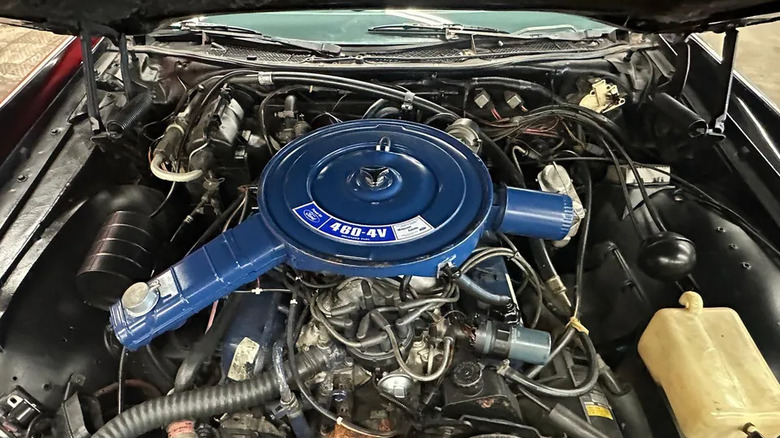
When the 1970 amendments to the Clean Air Act came along, they reset air quality and pollution standards, including some specifically targeting the automotive industry. The amendments required 1975 models to emit 90% less carbon monoxide and hydrocarbons than 1970 models. Nitrogen oxides had to drop by the same amount from 1971 levels by the 1976 model year.
As a result, that big, beautiful 460 V8 took a nosedive. By 1973, its output in the Continental was rated a mere 219 horsepower (net). By 1977, the Ford V8 produced just 208 horsepower. That's less power than many modern hot hatches make. And keep in mind that the Continental itself didn't change much and was still a titan weighing in at nearly 5,000 pounds, depending on body style. Your yacht was now a rowboat.
Despite its precipitous dive in power, the 460 V8 isn't the worst choice among low-powered big-block engines to work with. The engine will reliably run for hundreds of thousands of miles. There's a reason production of the big-block 460 continued well into the 1990s.