

DIY Vs Professional Windshield Crack Repair: What To Know About Your Options
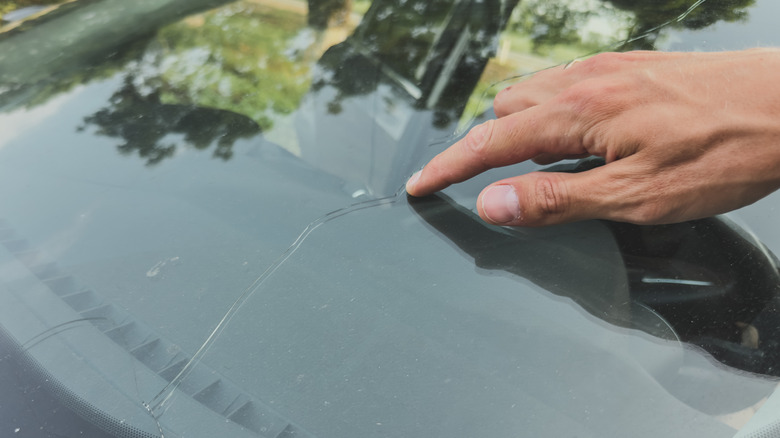
Death and taxes might be guarantees in life, but if you're a car owner, windshield damage is another inevitability you'll need to worry about. Thwacks happen, and they can be unnerving as you play wait-and-see on whether a chip — or worse, a crack — appears on that mighty expanse of front glass. If you're lucky, that flying road debris will merely result in a chip, and it might be tiny enough that it doesn't even have to be filled in. But if it's larger than a quarter or spreading across the windshield, it's best to repair that windshield chip.
Like a bad cavity, that glass nick could develop into a first-rate fissure. Road vibrations while driving can put stress on the glass, and ambient temperature changes can also cause the glass to expand and contract. That's part of why you should avoid an unassuming car wash; not only will the hot/cold water cycle create issues, but so will the pressurized jets pushing water into the crack, further expanding the existing damage. That good news is, similar to a chip, a windshield crack is repairable — and you can even fix it yourself, saving the hassle of scheduling and spending on a professional.
But deciding to DIY doesn't mean you can. With windshields in particular, this won't be a simple duct-tape-and-zip-tie patch up. Repairing one yourself is only best if the damage is negligible, doesn't interfere with driving, and definitely isn't compromising the structural integrity of the glass. Otherwise, that cost-effective DIY project might turn out to be the opposite as you spend more money on higher-end repair kits. And if you mess up, insurance won't be there to help you recoup the costs.
When does DIY windshield crack repair make sense?
The pros for any DIY project generally ring true: it's cheap, convenient, and able to be completed on your timetable. On the other hand, there can be a learning curve. If you're not up for the challenge, the finished job might be unsatisfactory and less durable than expected. With windshields, specifically, the quality of repair materials are as important as the size and location of the glass breakage.
Like chips, cracks need to be relatively small and in an innocuous part of the glass for replacement to be viable. But if it's longer than six inches, passing through multiple layers of laminate glass, and located at the edge, then the windshield should be replaced. Also, damage that obstructs a driver's sightlines is considered illegal in some states and can result in failed vehicle safety inspection tests. By the way, contrary to any viral meme-praising hack, using super glue on a cracked or chipped windshield is not the answer. The sticky substance won't last, which is why windshield repair kits utilize resin instead.
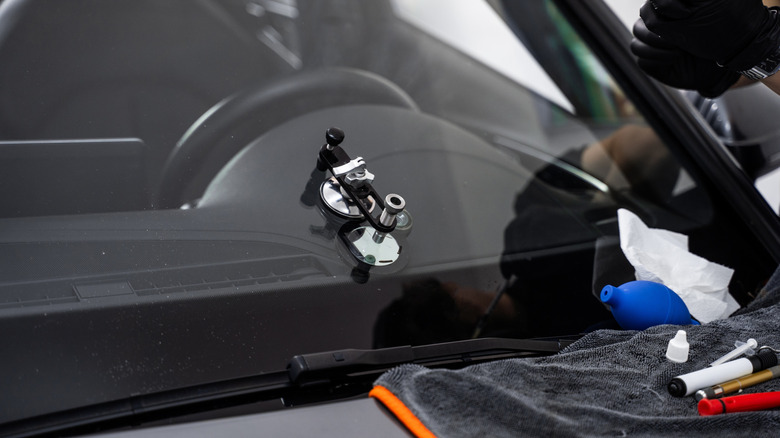
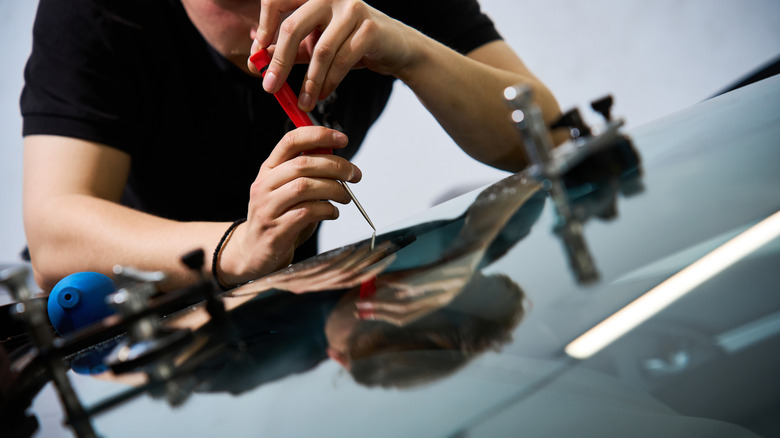
For minor fixes, over-the-counter kits sell for less than $20. They'll often come with a syringe for the resin injection, as well as supplies to clean the area around the broken glass, such as wipes and buffing materials. For larger repairs, professional windshield repair kits are available, though these may tend to set you back a few hundred dollars. Some are specially made for repairing cracks — and they can cost more than $1,000, at which point you might as well go for a pro. Nevertheless, you get what you pay for, as these premium kits come with multiple resins, carving scribes, sealers, bridges, openers, suction cups, stabilizers, and more.
Why using a glass repair shop might be cheaper (or free)
Before you purchase anything, consider whether that crack is worth the greenbacks. If it doesn't look like an easy task from the get-go, then a DIY repair might actually end up costing additional time and money. It could even require additional work from a professional anyway, resulting in a more time-consuming repair than if the specialist handled it from the beginning. Also, the repair costs for a cracked windshield could be taken care of through your insurance. You'll still need to file a claim, but depending on your coverage, not only would the repair be no cost to you, but your deductible might be waived. You might not have a say in which repair shop to use, but if you're unhappy with their work, some insurance companies will handle the outright replacement of the windshield.
Worried about your insurance premium going up? Don't fret about it too much, because glass repair won't make insurers reassess your driving record the way a speeding ticket would. Unlike a collision claim, windshield issues are categorized under comprehensive coverage, which pays for damage and incidents that aren't crash-related. There are also state-level protections that prohibit rate increases for no-fault claims, such as glass breakage. Always check with your insurance provider first, though. And regardless of which path you take, address windshield damage as soon as you can. Even the tiniest ones can eventually grow into a huge headache over time unless you want to replace an entire windshield yourself – but that's no small feat.