

One Of The World's Most Remote Airports Is At Risk Of Closing, Jeopardizing Transpacific Flights
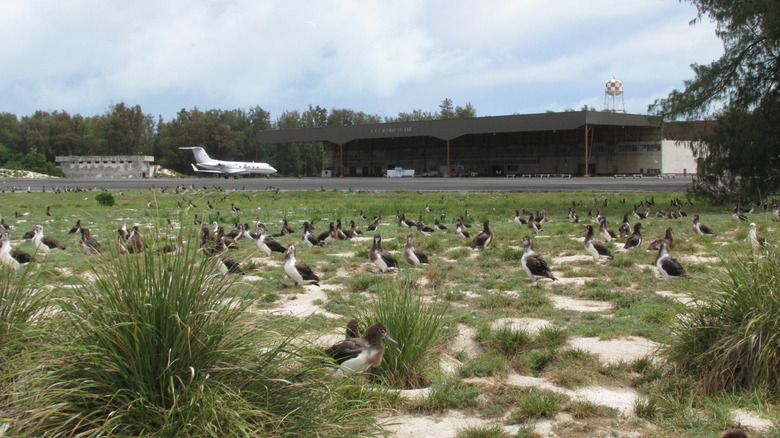
Commercial air travel may be statistically safer than ever, but modern airliners are far from bulletproof. Having a place to land is vital if something goes wrong, especially over the middle of the Pacific Ocean. Henderson Field on Midway Atoll is on the verge of closure unless the FAA undertakes a $100 million upgrade effort. Boeing and several airlines are urging the agency to keep the airport open, as intercontinental air traffic would be denied access to a swath of Pacific Ocean airspace.
Henderson Field was built in 1942 during World War II as a bomber airfield. While the airstrip became available for commercial use, the airport's scheduled services ended in 2002, as a local population of 40 people isn't a viable customer base. Besides charter flights, Henderson Field serves as a vital diversion airport. As its name implies, the Midway Atoll is roughly halfway between Asia and North America.
The FAA grants every twin-engined passenger jet with an Extended-range Twin-engine Operational Performance Standards (ETOPS) rating. The Boeing 737 Max and its rival Airbus A320neo both have an ETOPS 180 rating, meaning they can't fly further than 180 minutes from a diversion airport. For the record, it takes longer than six hours to fly between Honolulu and Tokyo. According to Simple Flying, Midway received at least three mainline airline diversions since 2011.
Henderson Field needs $100 million from the FAA to stay open
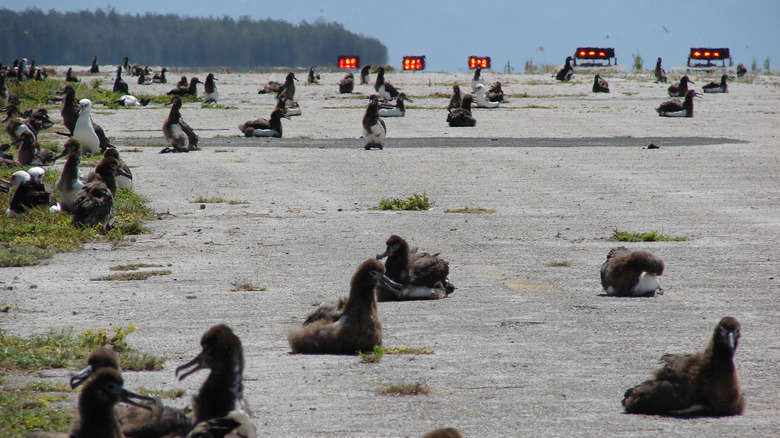
Henderson Field's 7,800-foot runway is reportedly deteriorating at a rate that could lose its FAA certification within five years. At this point, the airport needs $100 million for rehabilitation. The runway needs to be completely milled and repaved. The seawall around the facility needs to be repaired, and the island's harbor needs to be upgraded to even receive the supplies for airport construction. Henderson Field covers nearly all of Midway Atoll's Sand Island and represents over 70% of the atoll's land area.
The decline began after the U.S. Navy transferred the facility to the U.S. Fish and Wildlife Service in 1996. The service maintains Midway Atoll National Wildlife Refuge, featuring a massive nesting colony of albatrosses. For the first seven years afterward, Boeing actually subsidized the airport, providing $5.5 million. In 2003, that stream of annual upkeep funding was replaced by $2.5 million from the FAA and $2.6 million from the FWS. It clearly wasn't enough money to maintain Henderson Field in perpetuity.
Without Midway, it could be an early sunset for Project Sunrise
As the FAA contemplates its nine-figure decision, everyone flying a plane over the Pacific is begging them to just pay for the upgrades. In its official comment to the FAA, Boeing emphasized the added fuel use that would be caused by Henderson Field's closure. The aerospace giant estimated that over 1 million gallons of additional jet fuel would be burned every year on the Honolulu-Tokyo route alone. Japan Airlines stated to the FAA that all its flights to Hawaii designate Henderson Field as its diversion airport.
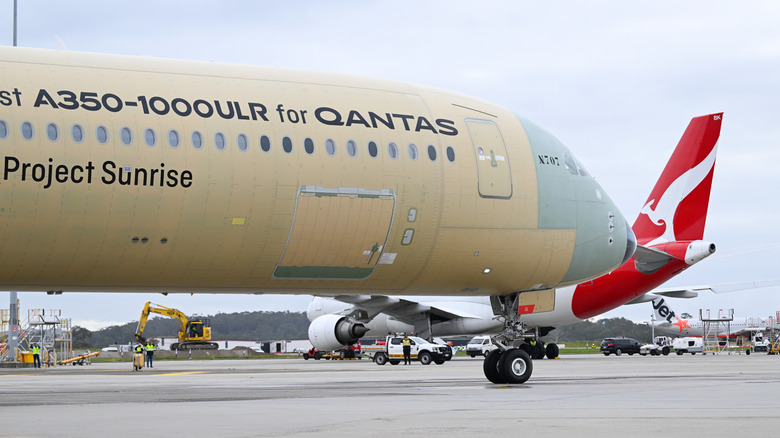
Airlines might eat the extra fuel costs and replot routes around the new dead zone if Midway's airport closed. However, certain routes would be financially unviable. According to One Mile At A Time, Qantas stated that Henderson Field's closure would significantly impact its planned nonstop "Project Sunrise" flights. The bespoke Airbus A350-1000ULR would need to carry 4,850 pounds of fuel for flights between Sydney, Australia and London, England, the future longest flight in the world. To cut weight for the fuel, Australia's flag carrier would rip 20 seats out of each aircraft. Henderson Field's closure and rising fuel prices would be a fatal two-punch combo for Qantas' ambitious project to connect Australia to the world's major cities nonstop.