

6 Popular Used Chevrolet Hybrids Ranked By MPG
If we only focused on new Chevy hybrids, this would be a very short article. The Bowtie brand currently sells only one hybrid vehicle in the United States: the Corvette. However, it is available in two different variants — both blending V8 muscle with electrified hybrid torque. The more fuel-efficient of the two trims is the 2027 Chevrolet Corvette Grand Sport X that the EPA lists at 15 mpg city/24 mpg highway/18 mpg combined, while the brand's hybrid range-topper is the Corvette ZR1X, a tech powerhouse rated at 12 mpg city/19 mpg highway/14 mpg combined. Of course, since these hybrid 'Vettes feature 721 and 1,250 horsepower, respectively, their owners are unlikely to care.
Chevy hasn't been all that invested in hybrids in the past, either. In fact, with the brand only ever selling six nameplates with hybrid power in the U.S., we've got room to touch on them all today — presented from least to most fuel-efficient. We based our rankings on the highest individual EPA grade, whether it's city, highway, or combined, for the Chevrolet Silverado, Chevrolet Tahoe, Chevrolet Corvette, Chevrolet Impala, Chevrolet Malibu, and Chevrolet Bolt. In cases where vehicles have had two different hybrid systems, we picked the one with the highest fuel-economy ratings.
2009-2013 Chevrolet Silverado: 22 mpg highway
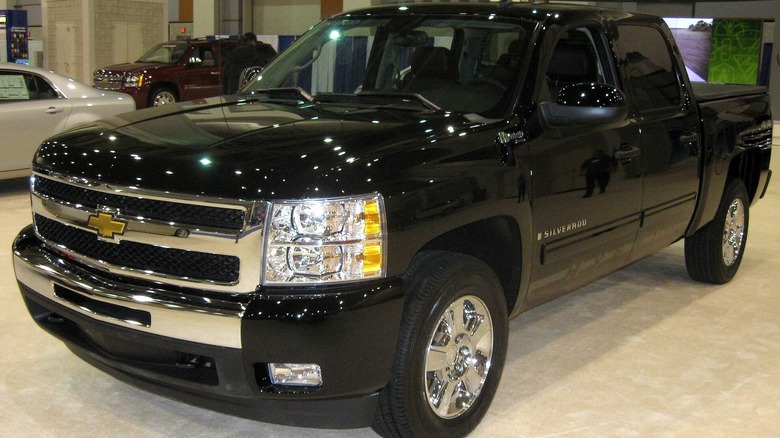
It's history time! General Motors first got into the hybrid game with the 2004 Chevrolet Silverado, but the truck was what we'd now call a mild hybrid. This means very little of the Silverado's 42-volt battery system went to actually driving the vehicle. The setup was primarily for running accessories with the engine off during certain situations — and for powering the truck's four 110-volt outlets for tools and whatnot. In the end, the rear-wheel-drive models with the 5.3-liter V8 scored 17 mpg combined with the hybrid system and 16 mpg without, while the results for the 4X4 model compared at a 16 mpg versus 15 mpg combined. Notably, the hybrid system improved the 4WD Silverado's EPA scores by 15% in the city.
Chevy dropped the Silverado hybrid after the 2007 model year, eventually reviving the truck for 2009 through 2013 with a new, two-mode hybrid system originally developed in concert with BMW and Chrysler. Without getting too deep into the details, the setup integrated two electric motors with the transmission to allow two separate assistance profiles depending on how fast the truck was going. The system could be relatively effective, too. Now relying on a 6.0-liter mill, the two-mode Silverado came in at 21 mpg in the city, 22 on the highway, and 21 combined in RWD and 20 mpg in all categories in 4WD. That's a 40% improvement over the city numbers in the most efficient gas-only truck — which carries the 5.3-liter V8.
2008-2013 Chevrolet Tahoe: 22 mpg highway
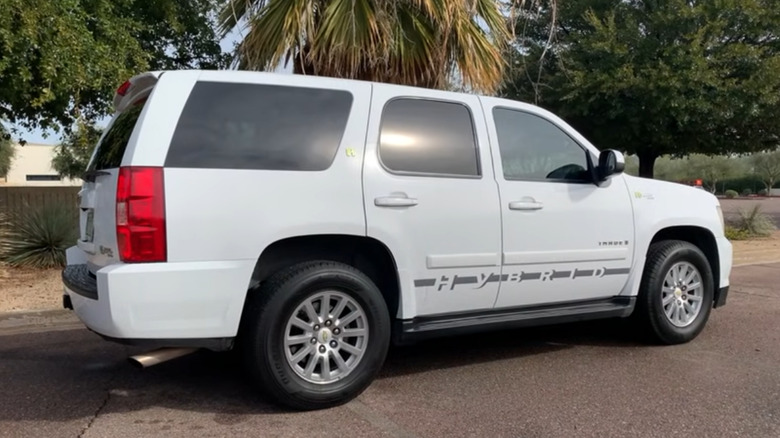
Unsurprisingly, many of the numbers for the Silverado two-mode hybrid transfer over to its Chevrolet Tahoe platform-mate. The 2008-2013 Tahoe hybrid has the same two-mode technology, the same engine, and the same EPA ratings as the 2009 Silverado. And yes, as you can tell by those dates, the Tahoe was actually first to the market.
Chevrolet's full-size body-on-frame SUVs did diverge from the brand's hybrid strategy in other ways. For instance, Chevy never tried out its mild-hybrid setup on the Tahoe or its extended-length variant, the Suburban. The Suburban wasn't configured with the two-mode setup either. GM did, however, follow its usual template with its Professional Grade division. The GMC Sierra had mild and two-mode hybrid systems in parallel with the Silverado, and the Yukon matched the Tahoe with a two-mode hybrid. The Yukon XL, like the Suburban, missed out on any hybrid help during this time.
2024-2026 Chevrolet Corvette E-Ray: 25 mpg highway
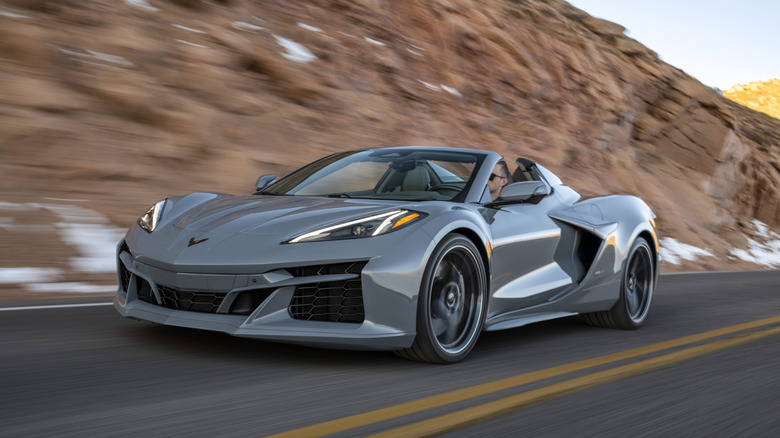
While those 2026 ZR1X models we mentioned at the start are fresh additions to Chevy's lineup, it's already possible to find them on the used-car market. For example, a low-mileage example, boasting the Carbon Fiber Pack and ZTK Performance Track Pack, went for $365,000 on Bring a Trailer in March of 2026. However, you'll have a lot more luck finding a used 2024-2026 Chevrolet Corvette E-Ray. The first editions of the very first electrified Corvette are now three model years old. Moreover, these show a fair amount of depreciation, making them that much more appealing.
From an original price of about $106,595 for the coupe — and $113,595 for the drop-top — the cars have depreciated to an average fair purchase price of $83,500and $88,700, respectively, according to Kelley Blue Book. For that sum, you can get a machine that both scores 16 mpg city, 25 mpg highway, and 19 combined with EPA and was the quickest production Corvette ever when it launched in 2024. Backed by a claimed 655 horsepower and a reputation for being way more powerful than advertised, the E-Ray races to 60 mph in 2.5 seconds. As an FYI, the quickest current 'Vette, the ZR1X, has lowered that 0-60 benchmark to 1.8 seconds, according to Car and Driver's testing
2014 Chevrolet Impala: 35 mpg highway
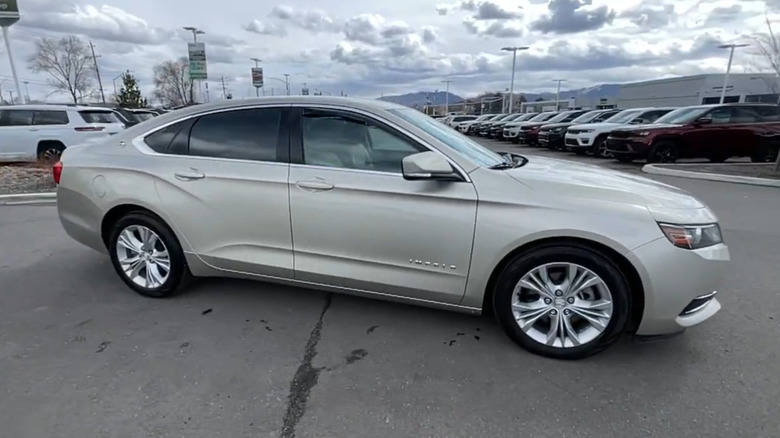
A one-year wonder, the 2014 Chevrolet Impala also welcomed GM's mild-hybrid tech, which provided a noticeable boost to the Impala's fuel economy. The sedan went from 21 mpg city/31 mpg highway/24 mpg combined to 24/35/28 with the EPA. For a little context, the 2014 Toyota Avalon hybrid posted EPA ratings of 40/39/40, and the most efficient Ford Taurus of 2014, with a turbocharged four-cylinder engine, achieved 22/32/26.
Used-car shoppers should further keep in mind another important advantage for the Impala. While readers have begun asking automakers to build more sedans, the Impala is already more sedan than most mass-market passenger cars on the road today. After all, this is a full-size model that represents a significant step up in cabin size from the Malibu, giving you and your passengers more room to spread out. The Impala serves up a lengthy 45.8 inches of front legroom complemented by 39.8 inches in the rear. To top it all off, if we set the Jalopnik Wayback Machine to April 25, 2013, it looks like we thought the 2014 Impala was actually a pretty damn good car when new, too.
2016-2020 Chevrolet Malibu: 47 mpg city
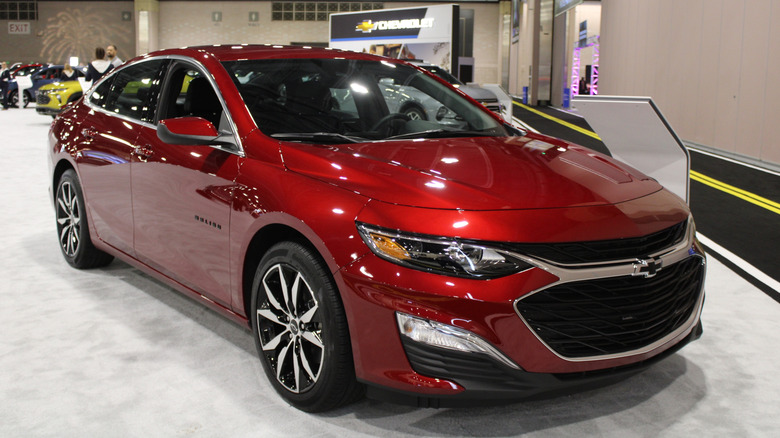
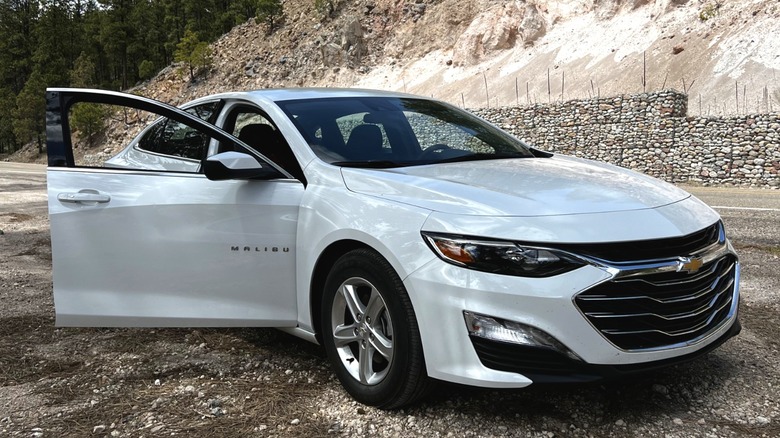
True, the Chevrolet Malibu died in 2024, but not before selling a pair of hybrid versions, in two distinct production runs. The first lasted from 2008 to 2010. These were sort of like the Corvettes, in that the hybrid system didn't do much for the Malibu's fuel-economy ratings. According to the EPA, the 2008 hybrid earned grades of 24 mpg city/32 mpg highway/27 mpg combined. The most efficient non-hybrid Malibu of 2008 has nearly the same EPA rating at 22/32/25. Both of these fall short of the 2010 Ford Fusion Hybrid, which had its fuel economy listed at 41/36/39.
The Malibu Hybrid sat out from 2011 to 2015, although Chevy did sell the Malibu Eco, with a mild-hybrid system, primarily in 2013. It was enough to boost the car's EPA score to 25/36/29, but its ratings ended up being the same as the standard 2014 Malibu's. The full hybrid returned to the lineup for the years 2016 to 2020, during the nameplate's ninth generation, with EPA grades of 47/46/46, besting both the Fusion Hybrid (43/39/41) and Toyota Camry Hybrid (42/38/40) when it debuted.
2016-2019 Chevrolet Volt: 42 mpg combined (gas-hybrid mode)/106 MPGe combined (EV mode)
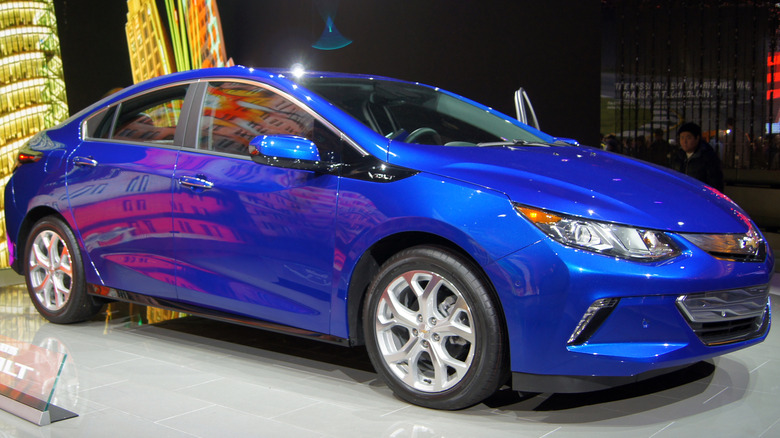
The Chevrolet Volt plug-in hybrid was far ahead of its time when it first went on sale at the tail end of 2010. In fact, it beat the 2012 Toyota Prius plug-in to the U.S. market by more than a year. The Volt's key magic trick was that, at lower speeds, its 1.4-liter inline-4 gas engine didn't power the wheels — it only acted as a generator for the Volt's electric motor. The outcome was that the Volt had a far longer all-electric range than the Prius, since it could go for an EPA-certified 35 miles on a full charge, while the Prius was limited to 11 miles at the time. That said, the Toyota was more efficient, both in EV mode and when using gasoline. It saw an EPA score of 95 MPGe combined versus the Volt's 93 MPGe. Relying on gasoline, the Prius was good for a rating of 50 mpg combined that topped the Volt's 37 mpg by 26%.
Those grades were just for the first-gen Volt, though. Chevy redesigned the car for a second run, between 2016 and 2019 model years. These second-gen Volts raised the efficiency bar even further with an enhanced powertrain that provided up to 53 miles of all-electric driving at 106 MPGe combined, or 42 mpg.