

Can A Lithium Battery Destroy Your Alternator?
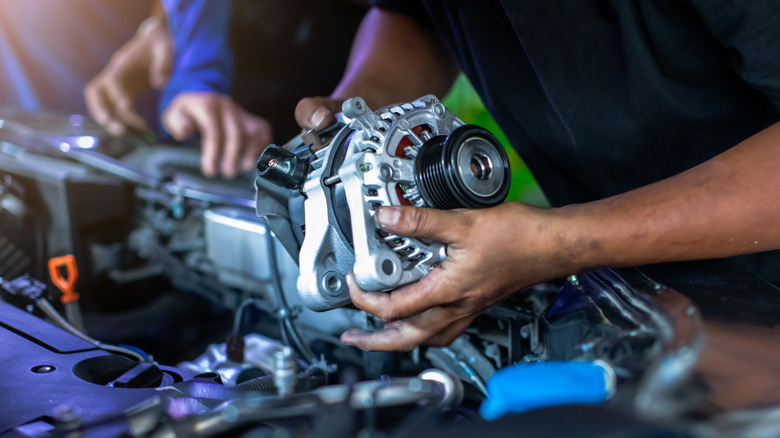
We can answer our own premise for this story very easily. Yes, a lithium-ion battery can destroy your alternator. However, "can" and "will" aren't the same thing, so let's unpack some other questions — like how and why this energy storage brick might fry your alternator in the first place. First, let's set the playing field. There are pros to lithium batteries, and some RVers and boaters want to have a lithium battery in addition to, or in place of, a lead-acid one because they work great for power storage and tend to last longer.
Most mild-hybrids that combine gas engines with 48-volt hybrid systems already come with lithium batteries and alternator-starters. Some of these run a fairly small motor between the engine and transmission directly off the lithium battery, and the motor can provide a little added oomph, in addition to the gas engine. Obviously, those cars are designed to use that lithium battery, and they get what's called a DC-to-DC converter that steps down the 48-volt system to run the car's 12-volt components. This is also why pure EVs have additional small 12-volt batteries.
But if all this has you thinking you might want to run a lithium battery under the hood of a car engineered to charge a lead-acid one, hit pause. A lithium unit has something called a battery management system (BMS), which is designed to prevent anomalous events from harming the battery — but that BMS could also destroy your alternator. Also, lithium bricks have unique charging capabilities and issues you should understand before considering the swap.
The complexity of switching to a lithium-ion battery
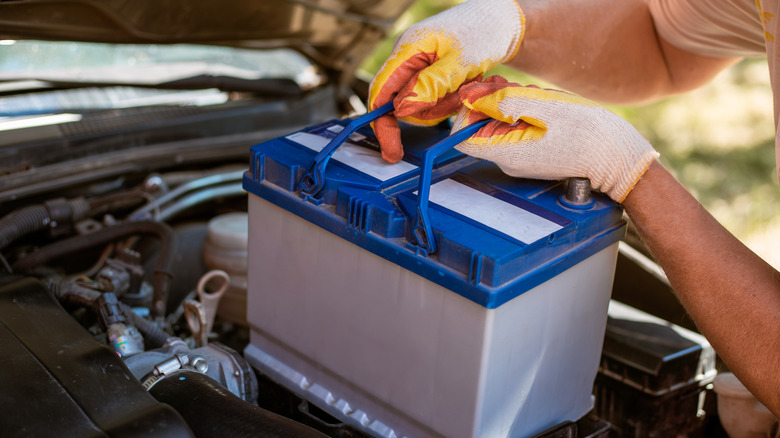
To protect its guts, a lithium-ion battery's BMS acts like a kill switch. If there's a fault in the battery, the temperature gets too low, or the battery voltage spikes too high (known as overvoltage), the BMS will suddenly open its switches to disconnect the battery, causing the voltage in the alternator to briefly spike (load dump), potentially beyond 100 volts, even if the alternator is engineered to push just 14 volts. That spike can cause the diodes in the alternator to fry.
Diodes convert AC current from the alternator to DC current that your car (or boat) uses for its electronics. Diodes are also single-direction; they prevent a battery from being drawn down when the engine is off. A bad diode can be a parasitic drain that kills car batteries. Anyway, we now know how and why the murder has occurred. But is there any way to prevent it? Kind of. We're hedging because not all alternators are the same or of the same quality.
If a BMS fault fries the diodes in the alternator, that's probably because the alternator wasn't able to regulate the sudden voltage spike in time. Aside from going the standard route and hooking up a DC-DC charger, there seem to be other workarounds, too. A company called RELiON, which sells lithium batteries for RVs, boats, and other outdoor usage, recommends using a voltage regulator to backstop the issue.
A modern car's electrical system will probably be protected
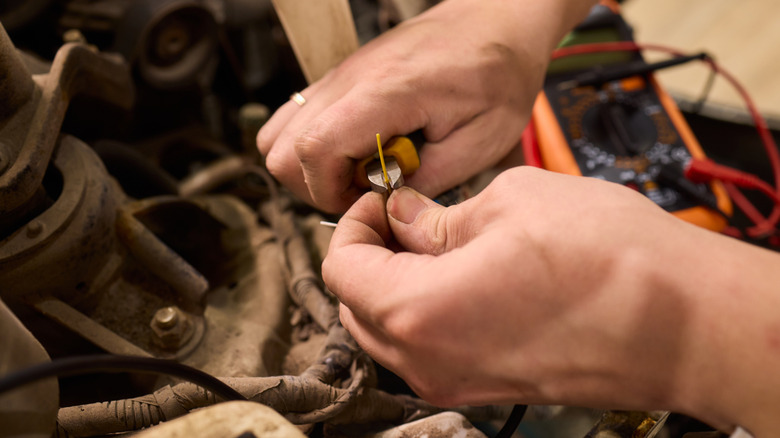
Most late-model cars already have computerized voltage regulation via what's called the powertrain control module. But is that enough? For the sake of your alternator, maybe you'd take RELiON's advice and get a redundant voltage regulator just in case. But again, they make batteries for boats and RVs, which aren't passenger cars, and lithium batteries for those applications are engineered for deep-cycle delivery, not for instant cranking that a lead-acid battery delivers when it starts your car. This becomes an even bigger deal in the cold.
For the sake of argument, let's say you're good with the redundant voltage regulator idea and go with a lithium-ion battery instead of a lead-acid one. In the case of a modern car, its computerized voltage regulation is probably adequate to charge the lithium battery. Also, speaking of modern cars, most of the electronics are going to be protected from a voltage dump in the event that the BMS in the battery leads to the alternator sending massive juice through the car's electrical system. Modern cars will also prevent over-voltage damage caused by, say, connecting your car battery backwards. Further, Ford and GM documentation to suppliers shows that they require circuitry that can handle such over-voltage. But, importantly, there's still no guarantee that your alternator won't die if a lithium battery detects a spike.
Lithium batteries won't charge at below freezing
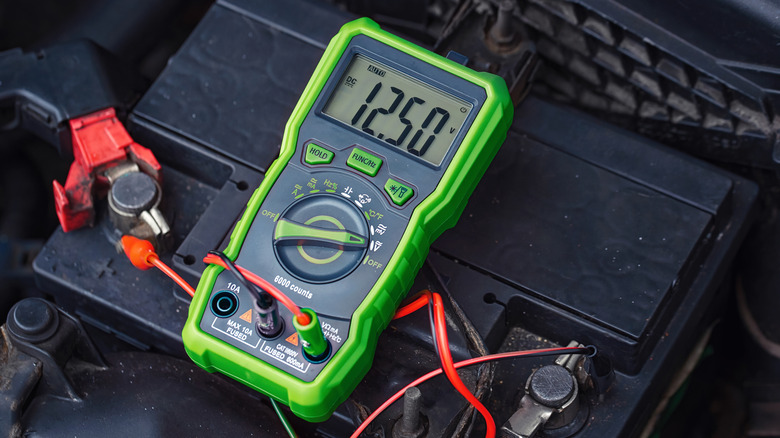
There's a final issue with endangering your alternator and going the lithium route: the cold. Lead-acid batteries are fine delivering juice in freezing temperatures, though anyone who's heard a starter struggling to kick over when it's -5 degrees knows a lead-acid battery will deliver reduced voltage. But, it can still operate and can be charged well below freezing. Meanwhile, lithium batteries will only work down to roughly -4 degrees Fahrenheit, but they are less forgiving on the charging side.
A 2015 study in the Journal of Power Sources found that trying to charge a lithium battery below freezing led to a phenomenon known as lithium plating, which can reduce the battery's maximum capacity, cause short-circuiting, and possibly create a safety hazard. Meanwhile, a separate 2018 study published in the Journal of Energy Storage also showed that trying to charge a lithium battery in the cold damaged the battery's electrolyte and electrode, reducing the battery's charge capacity. Low temperatures drastically increase the internal resistance in a lithium-ion battery, and these batteries have low-temperature cutoffs that prevent them from charging at low temperatures, which can lead to the aforementioned load dump inside the alternator.
The gist is that while a lithium brick might be the right replacement battery for your old Harley-Davidson, and maybe handy as a house battery for your boat or RV, it's not ideal for your car designed for a lead-acid battery. It's just all too likely to assassinate your car's alternator.