

Volkswagen Mission Efficiency Prototype Picks Up Where The XL1 Left Off With Ultra-Low CoD And 500-Mile Electric Range
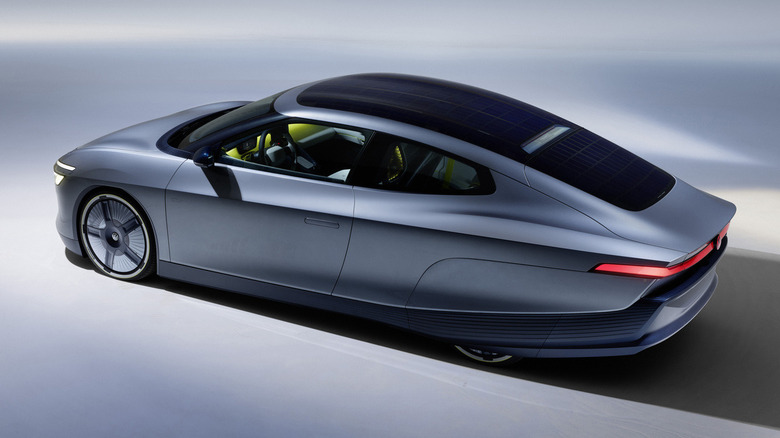
Volkswagen just pulled the covers off its latest creation: the Mission Efficiency, and it can sort of be looked at as the spiritual successor to the XL1 from the mid-2010s. However, while the two may look sort of similar, it gives up the XL1's tiny 1-liter engine for electric motors — something we said it should do over 6 years ago — and an even more slippery body.
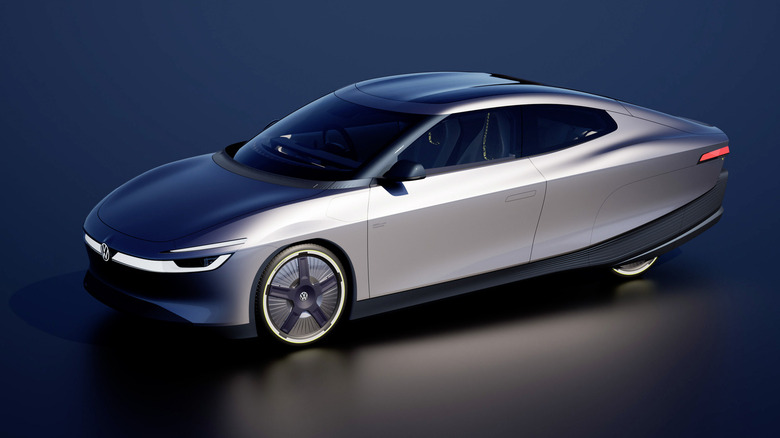
What we've got here is a front-wheel drive electric car, based on the MEB+ platform, that shares its electric motor and battery with the ID Polo hatchback, meaning it has 135 horsepower and 195 pound-feet of torque. There's no exotic powerplant helping VW achieve the astronomical efficiency numbers it achieved; instead, it's all about aerodynamics and as little weight as possible. With a drag coefficient of just 0.158 (the XL1 was 0.189), the Mission Efficiency is one slippery coupe. Volkswagen claims it's the most aerodynamic road-legal automobile ever built — the first of three records the car holds — and that's thanks in no small part to the shockingly small 22.4-square-foot frontal area, which helps give it exceptionally low overall aerodynamic drag.
Record breaker
The second record comes from its incredibly low energy consumption. It comes during "ideal drive" conditions, which are constituted by moving at a constant speed of 42 mph with no gradients, as well as the climate controls and other auxiliary functions turned off. Under those conditions, the Mission Efficiency consumed just 6.48 kWh/100km, which works out to 9.59 miles/kWh. Astonishing.
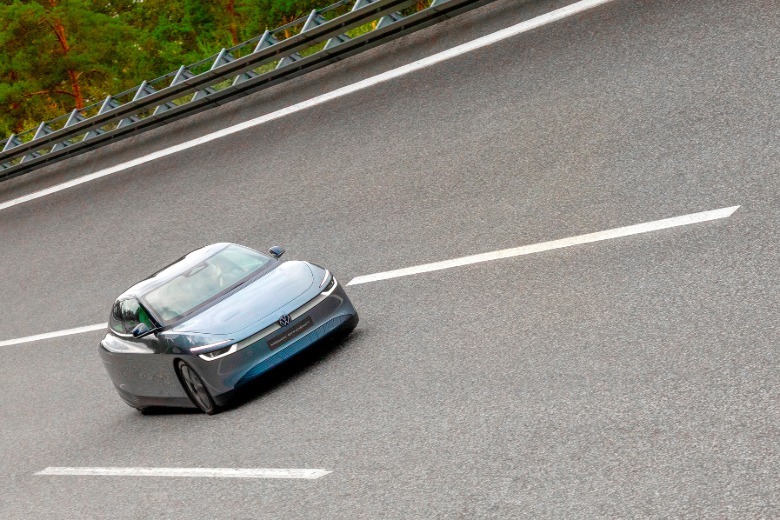
VW drove the little car from its development center in Wolfsburg, through Poland and the Czech Republic, all the way to Vienna. In the process, it covered 794 miles with an average speed of 42 mph, but it topped out at 86 mph. All in all, it achieved 8.27 miles/kWh, including charging losses. Without them, that number was up to 9.02. It was so efficient that the car's 54.9-kWh battery only needed to be recharged once during the entire trip, and it had 102 miles of charge left when it got to Vienna. Theoretically, that puts its possible electric range at around 500 miles, if not a lot more.
 Volkswagen
The third record that the Mission Efficiency set is a bit more, well, convoluted. It's apparently the most efficient "near-production electric car" ever built, which feels oddly specific to me. Still, it was certified by Germany's Record Institute in the category of "near-production, everyday-use four-seat electric vehicle." That's right baby, this thing has four seats. Eat your heart out, two-seat XL1.
Live with it
VW is touting the Mission Efficiency as a somewhat practical vehicle, with a 2+2 coupe layout and a sizable 17-cubic foot trunk. Like most low-slung coupes, rear seat room isn't exactly plentiful, as VW says they're intended for passengers up to about 5-foot-3, but they can also fold down to create a load floor, and they've got storage boxes beneath them for some additional cargo room. There are also apparently some small compartments that sit behind the rear-wheel covers. Clearly, VW wants theoretical buyers to go on some hypermiling grand tours in this thing.
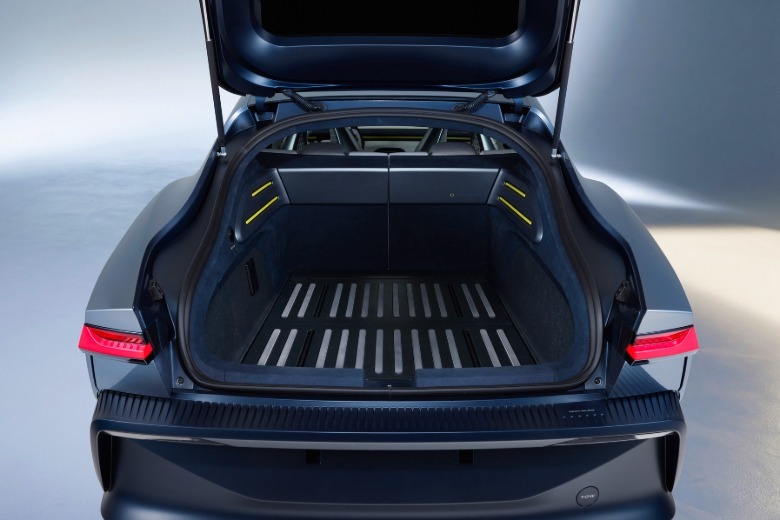 Volkswagen
Clearly, VW's designers and engineers pulled a lot of inspiration from the XL1, though when chasing the ultimate aerodynamic shape, you sort of always get the same teardrop look with fully covered rear wheels and a long, sloping roofline. VW calls it "boat tailing," which is far more elegant. It also has a nearly completely covered underbody and a narrower rear axle (when compared to the ID Polo) to help with airflow underneath the car
One place that it deviates from the XL1 is the side-view mirrors. The XL1 famously used cameras for mirrors, whereas the Mission Efficiency has traditional glass mirrors. During testing, it was found that camera mirrors wouldn't provide enough efficiency advantages to justify the added cost and energy consumption.
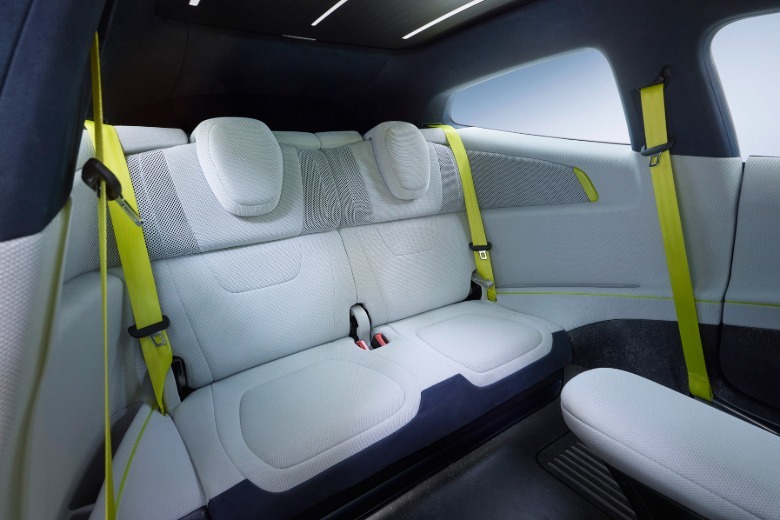 Volkswagen
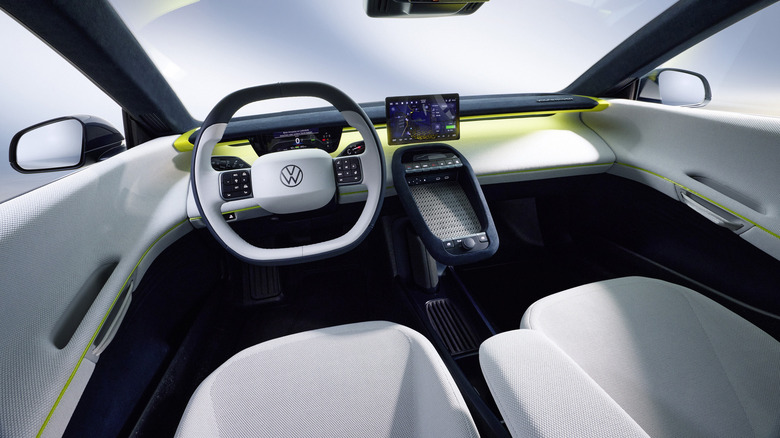
The less-is-more approach continues on the inside, as you won't find any sort of infotainment screen. The driver can instead mount a smartphone or tablet on a rail and wirelessly connect it to the car. There are no permanently installed speakers, either — just a portable Bluetooth unit that is meant to reduce weight.
Volkswagen might not be in the best financial position right now, but that isn't stopping the German automaker from innovating. That's sort of beautiful to see. Like the XL1, I'm not sure if the Mission Efficiency will hit production in any sort of meaningful way, but with how gas prices are going right now, it could be the exact right car and the exact right time.