

Reporter Gets Visit From Cops For Filming Flock Camera Installer At Work
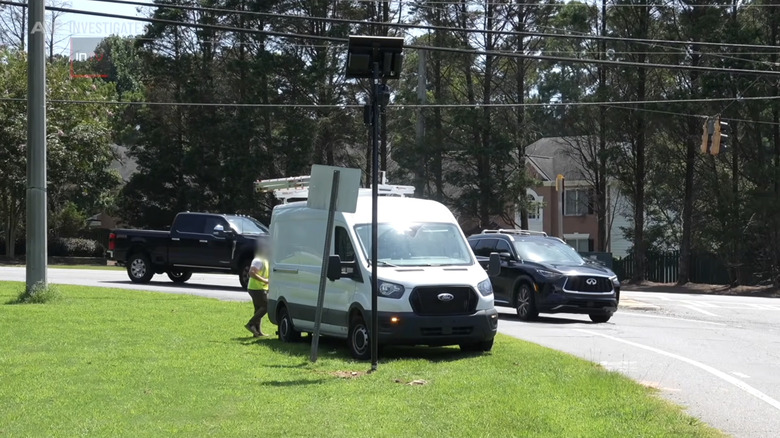
One of Flock's primary arguments behind its network of over 120,000 cameras is that the network isn't an invasion of privacy because all it's doing is taking pictures of your car in public places, where you have no expectation of privacy. Yet InvestigateTV reports that a Flock contractor called the police on one of its reporters for doing exactly the same thing its own cameras do.
Brendan Keefe got a tip from his daughter that someone was working on a Flock camera close to his home near Atlanta, Georgia. Keefe pulled over a distance past the location, put on all his media credentials, and set up a camera to shoot video. He did not speak to the contractor or interact with him in any way. The worker immediately packed up and drove away quickly. Keefe did not chase him, but followed him at a safe distance, hoping to shoot more footage of him working at his next stop.
Instead, Milton police stopped Keefe after the contractor called 911 to report that Keefe was following and harassing him. Keefe was polite and cooperative with police, explaining that he intended no harm and that his actions were protected by the First Amendment. He also pointed out that the contractor felt harassed by Keefe taking pictures of him in public, which is exactly the same thing Flock's cameras do to all of us. After three officers spent 17 minutes investigating the situation, they let Keefe go.
Rules for thee but not for me
This whole situation sounds like a line from an Alanis Morissette song. To some extent, I can understand the contractor's concerns. Some YouTubers have shot somewhat provocative videos about Flock, including one where they showed up unannounced at a secret office and warehouse they discovered. People are also damaging and cutting down Flock cameras, so with the increasing frustration around surveillance, the contractor might be concerned about violence while he's working on one. He was just doing his job, after all, much like the independent contractors building the second Death Star.
Keefe's own dashcam video shows that violence or destruction of property were not his intentions. He kept his distance, wore a yellow safety vest and media credentials to identify himself, and did not interact with the contractor, let alone harass or threaten him.
From a journalist's perspective, I understand the appeal of shooting this footage. There are many pictures of Flock cameras in the stock photo collections I have access to, but none of someone actually working on one. Pictures that include people are more interesting than pictures that don't. The same is true of video, and this would have made great B-roll footage to splice into stories about Flock cameras going up or coming down.
Flock claims the right to take photos of your license plate (and more) every time you pass one of its cameras because they're in public places where you have no expectation of privacy. In the case of a single camera, whether it belongs to Flock or Keefe, they're right, and nobody gets a ticket for that. But the people who wrote the Fourth Amendment for protection "against unreasonable searches and seizures" could not have imagined a system like Flock's that enables customers to track people's movements and travel patterns based on a database of individual photos. That is what people are objecting to, not a single camera on the side of the road. At least, unless you're a reporter shooting video of a Flock contractor at work.