

13 Terms You Should Know If You Ride Motorcycles

Motorcycling has its own vocabulary, but that doesn't mean every bit of jargon deserves a place in your brain. Plenty of motorcycle slang is regional, dated, highly specialized, or mainly useful if you're trying too hard. And just like one might decide they need an American car-terms dictionary to finally fit in here amid the automotive community, motorcycle riders often need a little help, too. We're interested in the terms that ordinary riders are actually likely to encounter, though we promise to throw in a few from across the pond, purely in the interest of international cooperation and peace. (We'll limit those to the end.)
Some of these terms describe techniques you may use every time you ride, like countersteering or rev matching. Others put names to things you definitely want to recognize before they happen, such as target fixation or the dreaded tank slapper. So this isn't an attempt to turn you into a walking motorcycle glossary. These are terms worth knowing because they help you understand your bike, other riders, and the conversations you're reasonably likely to have once you're riding.
Countersteering
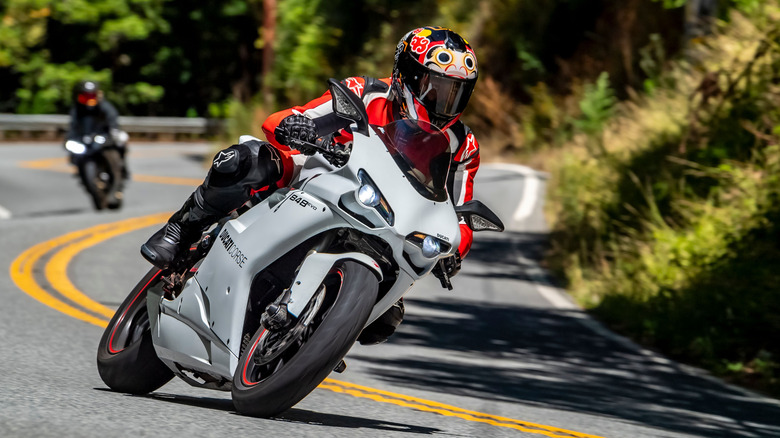
Have you ever wondered how motorcycles lean so far without falling over? The answer is countersteering. To the uninitiated, countersteering sounds like the kind of thing a riding instructor made up just to see whether you were paying attention. Want the motorcycle to go right? Push on the right side of the handlebar. Want it to go left? Push on the left. That sounds backward until you understand what the input is actually doing. Oh, and you'll need to understand how leaning works, too.
The important part is that countersteering is how a rider initiates that lean. A brief steering input in one direction causes the motorcycle to lean and begin turning the other way, which is why the technique can feel so strange when someone first explains it verbally. In practice, riders may already be doing it without consciously thinking about the physics involved. Once you understand what the bike is doing, countersteering stops sounding like a contradiction and starts making sense.
Target fixation
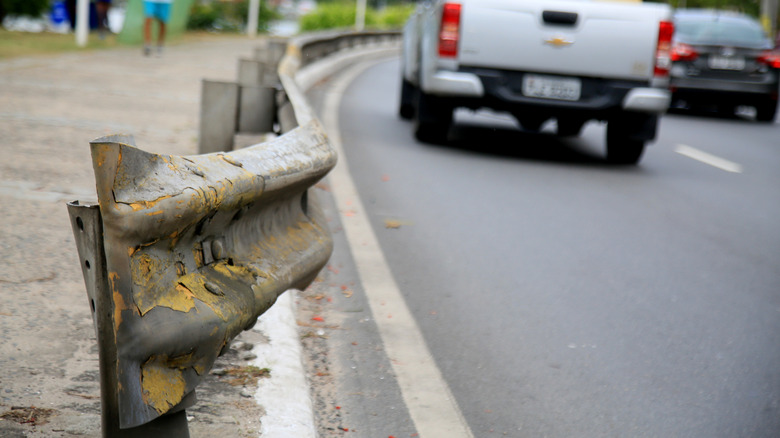
Post a motorcycle crash video online and there's a decent chance someone in the comments will diagnose "target fixation" before they've finished watching it. It's the trigger discipline of the motorcycle world. Post a video of a bike crashing or a finger near a trigger, and you'll hear one term or the other within the top few comments. The term gets tossed around so often that it can sound like armchair-expert shorthand, but it describes a very real problem. Target fixation describes what happens when a rider focuses so singularly on an object that they're keen to avoid that they counterintuitively move towards it instead.
That's not ideal when the thing holding your attention is a guardrail, pothole, stopped car, or anything else you desperately do not want to hit. Plus, this is motorcycle riding and not "Mario Kart," so there are no powerups and a good catch-all for things you don't want to hit is "anything." The basic corrective advice is pretty straightforward, though admittedly easier said than done: look where you want the motorcycle to go, not at the thing you're trying to avoid. That said, you can now be a safer rider or, if you prefer, 25% more annoying on the internet.
Trail braking
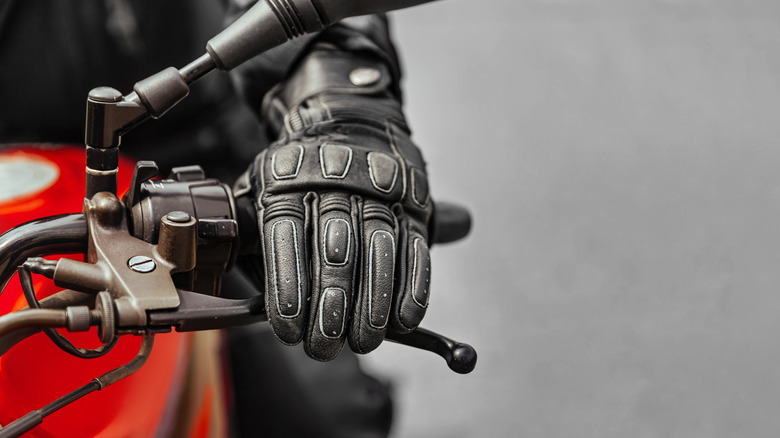
Trail braking is one of those things that a lot of people understand intuitively but can't actually explain why it means what it means. Instead of finishing all your braking before the turn, trail braking means carrying some brake pressure into the corner and gradually releasing it as lean angle increases. That lets the rider keep more weight on the front tire during corner entry and adjust speed deeper into the turn. The name comes from the way brake pressure trails off through the turn, like a thought that doesn't quite... See? You get it.
Regardless, the reason riders talk about it so much is that trail braking sits right at the intersection of speed, grip, and confidence. Done well, it can make corner entry smoother and give the rider more control over line and pace. Done badly, it can also ask too much of the front tire at exactly the wrong moment. So, used properly, it can make you a sharper, more controlled rider. Used poorly, it'll, well...
Rake and trail
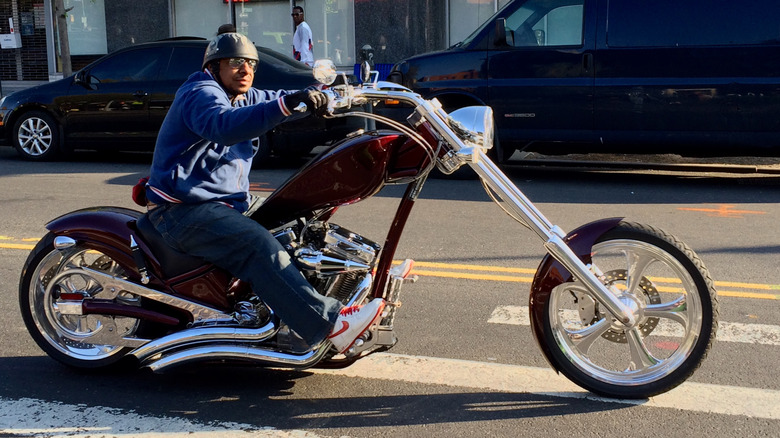
Rake and trail are two measurements that help explain why one motorcycle feels planted and steady while another feels quick to turn. Rake describes how far the steering axis is tilted back from vertical. Sometimes people will call this "fork angle," which isn't technically correct but does give you a general idea of what we're talking about: go-fast sport bikes have a very steep rake angle with the steering running pretty much up and down, while loungey cruisers have a much shallower rake angle. Think Tom Cruise on the S1000RR in that "Mission: Impossible" movie versus Peter Fonda's chopper in "Easy Rider." Aren't you glad you came to Jalopnik for help on this one?
So that's rake. Trail isn't any more complicated, but a lot of explanations you'll see online become painfully geometry-heavy. You can think of it as simply how far behind where that steering axis would meet the ground the front tire actually meets the road, generally shorter if you're Tom Cruise, longer if you're Peter Fonda. Rake is an angle; trail is a distance. Those numbers matter because they influence how willingly a motorcycle changes direction and how stable it feels once it's there. More rake and trail generally favor straight-line stability, while less tends to make steering quicker and more responsive, though suspension, wheel size, and other factors matter too. That's why a long-forked cruiser can feel relaxed and deliberate while a sportbike feels much sharper. You don't need to memorize the measurements, but if riders start talking about a bike's rake and trail, they're talking about basic setup stuff that affects how the bike steers.
Rev matching
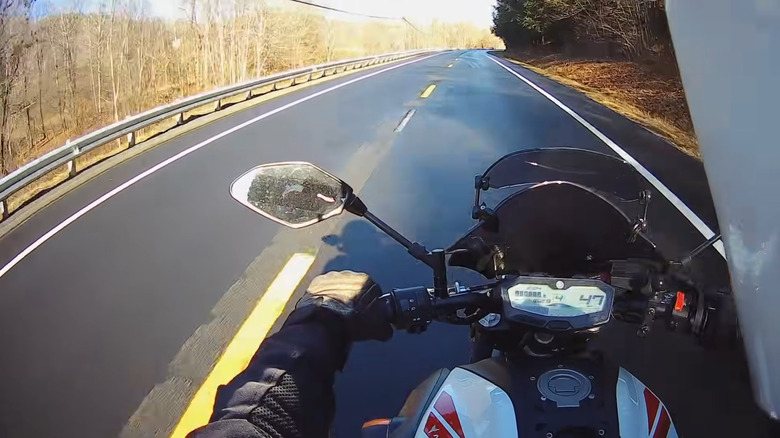
Drivers might argue about whether rev matching is really necessary in modern cars, but your bike, not to mention your nerves, will thank you for doing it. Rev matching is exactly what it sounds like: bringing engine speed into line with the lower gear during a downshift. If you simply drop a gear and dump the clutch, the engine suddenly has to catch up, which can make the bike lurch or unsettle the rear tire. The smoother approach is to briefly raise engine speed with a quick blip of the throttle before re-engaging the clutch. That little throttle input is the "blip" you'll hear riders talking about.
The goal is not to make the motorcycle noisier for dramatic effect, though that is admittedly a pleasant side effect. Matching the revs helps smooth the transition into the lower gear and keeps the bike from getting squirrely underneath you, not to mention cutting your poor clutch some slack. So if somebody says they're "blipping" the throttle on downshifts, they're not just making motorcycle noises; that's called "brrrrrrrrrmmmming." They're rev matching.
Highside and lowside
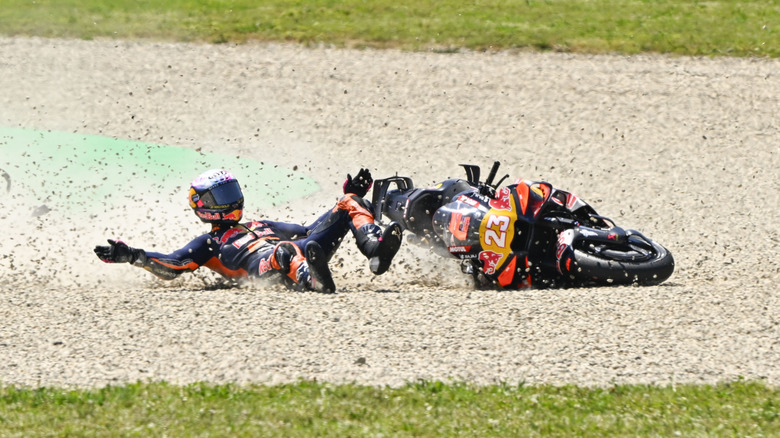
A highside and a lowside are both bad news, but they describe two very different ways a motorcycle can crash. Being able to distinguish between the two afterward is a luxury reserved for riders who came out the other side okay. A lowside crash happens when a motorcycle loses grip and slides out from under the rider, i.e., you find yourself skidding along on the "low side" ("pavement side") of the bike. A highside is when the rear tire loses traction, starts sliding, and then suddenly regains grip, sending you flying on the "high side" of the bike, where the sky is. You'll notice that both scenarios end with the rider on the pavement, but it's how you get there that matters later when you're discussing this on the forums.
That's really all you need to understand the terms. Lowside means the bike slides down onto the side already closest to the pavement. Highside means it snaps back the other way and can launch the rider over the top. Neither is a particularly desirable outcome, but now you know how to effectively describe what happens when you crash your motorcycle.
Tank slapper
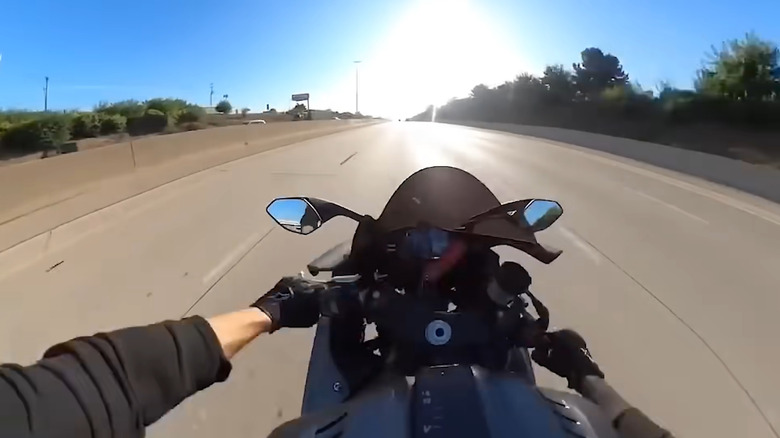
One more terrifying term, and then we can go back to terminology that doesn't conjure images of yourself sliding across asphalt. A tank slapper is a quick and escalating back-and-forth motion reverberating through the handlebars, potentially violently enough that the bars can swing toward the fuel tank (hence the "tank slap"). It's the two-wheeled equivalent of the Dodge death wobble that happens on some SUVs and Ram trucks and, as you might expect, it doesn't become more welcome when you eliminate seat belts and airbags while making the primary crumple zone your ribcage.
You'll also hear riders call the same general phenomenon a speed wobble, head shake, death wobble (insert sympathetic Jeep wave), or even Harley wobble. It can be triggered when the front wheel comes back down out of alignment after a wheelie, or when the bike is accelerating over bumpy pavement, and the resulting oscillation can quickly become violent. Steering dampers are designed to resist those rapid steering movements and help control tank slappers. Basically, if somebody tells you they experienced a tank slapper, they're not describing a mild vibration they noticed on the ride home. They're describing a moment when the handlebars developed a mind of their own, and it's the kind of thing that warrants pulling over and staring into space for a while afterwards.
Lane splitting and lane filtering
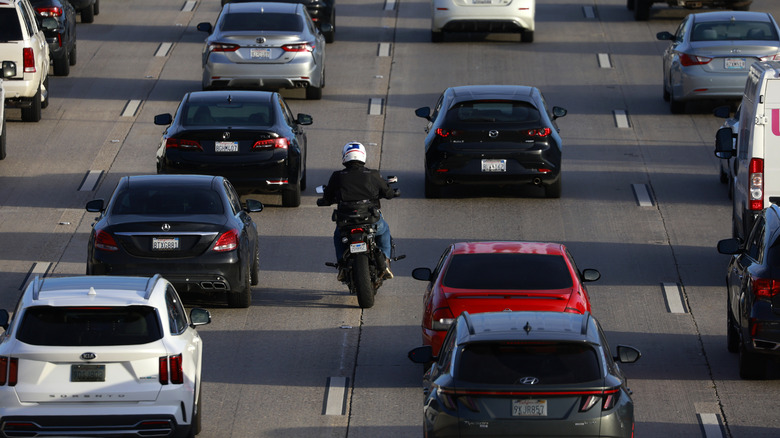
Most people don't know the difference between lane splitting and lane filtering, but you're about to. The terms sound interchangeable, but riders (and, in some places, the laws) use them to describe slightly different things. Lane splitting means riding between lanes of traffic where everyone is flowing in the same direction, while lane filtering means moving between stopped vehicles toward the front of the pack, usually to take your well-deserved spot at the front of the line at a red light. In other words, filtering is the thing you do when everybody else is sitting still; splitting is the broader term for moving between lanes while traffic is flowing.
The distinction matters because states don't always treat the two practices the same way. Lane splitting and filtering are common in many parts of Europe and Asia, while U.S. laws vary by state. So when somebody says "lane splitting" in a discussion about what's legal, it's worth knowing whether they really mean splitting, filtering, or just using one term for both. This is one of those cases where motorcycle vocabulary stops being nerdy and starts becoming potentially useful before you get pulled over. Of course, legality isn't going to keep someone from suddenly changing lanes on you in either situation, so proceed with caution regardless.
ATGATT
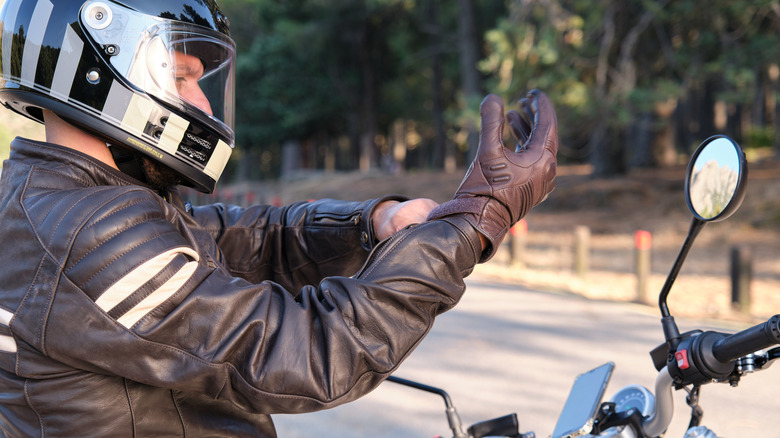
ATGATT is another one you'll see constantly in motorcycle comment sections, but unlike a lot of internet nagging, this is a pretty useful one to know. It stands for "all the gear, all the time," meaning the basic idea is to wear proper protective equipment every time you ride. There's solid evidence behind the evangelical fervor that some apply to the idea. Research published in Accident Analysis & Prevention has found that motorcycle-specific protective clothing is associated with reduced injury and hospitalization risk in crashes.
The National Highway Traffic Safety Administration (NHTSA) recommends protective clothing that covers the arms and legs, along with ankle-covering footwear and gloves, in addition to a compliant helmet. That doesn't mean every rider agrees on exactly what qualifies as enough gear, but it's a nicely clear message that once you have the motorcycle gear you really need, the next step is to freaking wear it every single time you throw a leg over the bike. (All of it. All the time.)
Apex
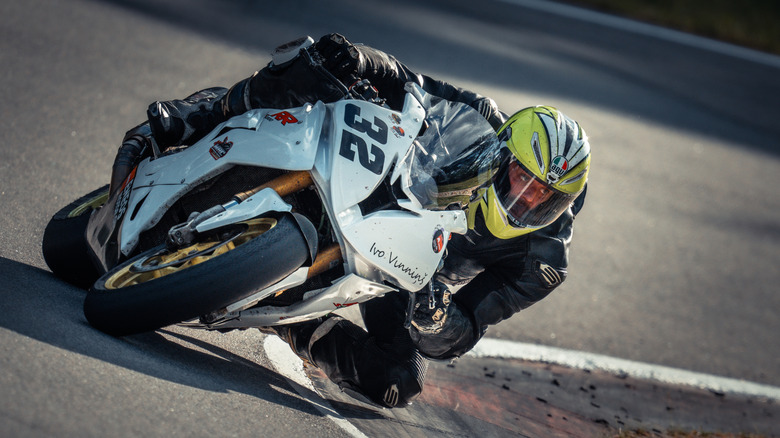
An apex is just the point in a corner where your path comes closest to the inside edge. That's it. No Greek letters, no protractor, no need to summon the ghost of your high school geometry teacher. If you picture the basic path through a turn, you start farther outside, move inward toward the apex, and then let the bike move back toward the outside as you exit. It's where you're trying to put the bike, whether you're any good at figuring out where that lands or not.
When riders talk about "hitting the apex," they mean putting the bike at that inside point where they intended. Missing it can leave the bike poorly positioned for the exit, which is why the term comes up so often when riders talk about cornering technique. There are early apexes, late apexes, and corners with more than one, but for our purposes you only need the elementary version: the apex is the inside point your riding line is aiming for. Keep at it and you'll learn how to cheat the racing line like a champion.
Chicken strips
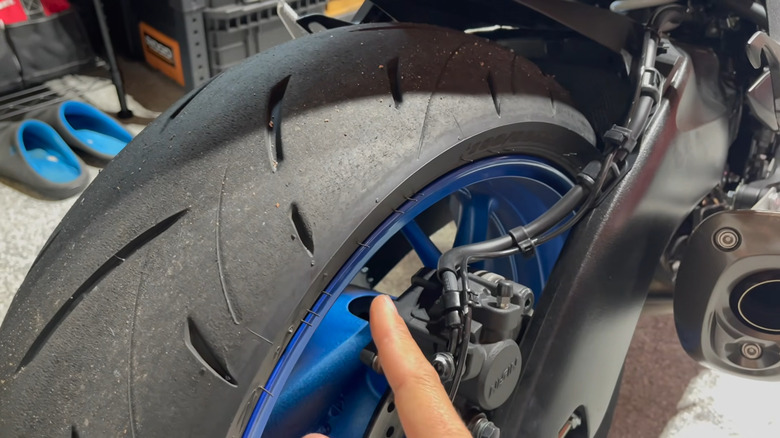
Chicken strips on motorcycle tires are a (pretty crappy) way of talking about the underused rubber along the outer edges of a rear tire. The idea is pretty literal: if you don't lean far enough for that part of the tire to meet the pavement, it stays comparatively smooth. The "chicken" part comes from the assumption that a rider with wide strips must be too timid to lean the bike over very far. Predictably, this has given generations of motorcyclists another completely unnecessary way to judge one another.
The important bit is that chicken strips are not actually a reliable measure of riding ability. Maybe you just don't need to lean over as much to get where you're going, or maybe you're throwing sparks with hard parts of the bike before that bit of tire gets a chance to get involved. So yes, knowing what chicken strips are will help you follow the conversation. Obsessing over eliminating yours or shaming somebody else's just to win that conversation is a different thing.
Pillion
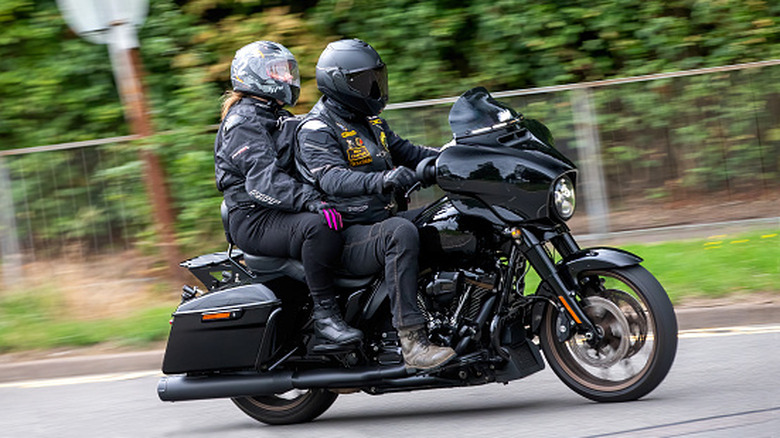
Now that we've covered the terms you're likely to hear from riders on the Freedom Fries side of the Atlantic, it's time to make good on our promise to help with a couple from across the pond. "Pillion" is one of those words that can sound completely foreign to an American rider even though it's commonly used in British motorcycling to mean a passenger or the passenger position on a motorcycle. If someone says they're "riding pillion," they mean they're the one sitting behind the rider, not participating in some obscure English motorsport ritual.
It's worth knowing precisely because Americans don't necessarily use it much. The term is established enough in motorcycle culture that American riders still encounter it in enthusiast media and discussion, even if everybody you ride with at home just says to hop on the back. And sure, carrying a motorcycle passenger for the first time is stressful, but it's worth it and at least now you know a fancy way to describe it.
Doing the ton
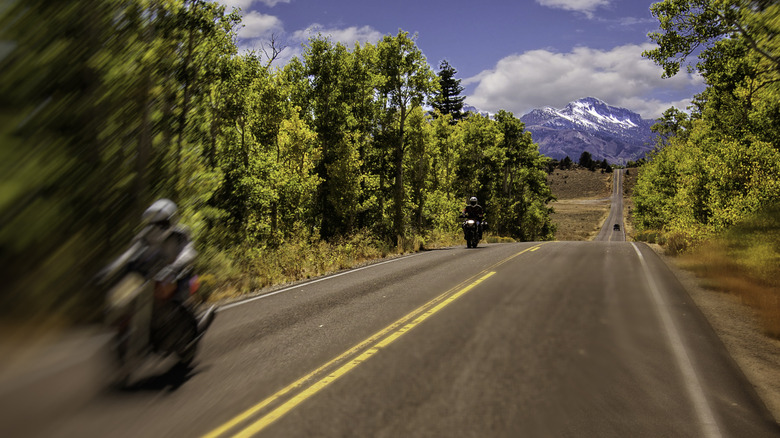
One last bit of British motorcycle vocabulary before we bring this home. "Doing the ton" is old-school slang for reaching 100 mph, and the phrase is tied closely to Britain's café-racer scene and the so-called Ton-up Boys. Back then, cracking triple digits on a motorcycle carried real bragging rights, not something you accidentally discover your modern sportbike is capable of doing while competing for a merging lane.
That 100-mph mark carried enough status that being able to hit it was treated as a point of pride among café racers. Today, the phrase is more historical flavor than essential American rider slang, but that was the point of saving these last two for the end. Now if somebody from Britain starts talking about riding pillion before doing the ton, you can at least nod knowingly. Besides, we're not saying that you should be a hip cat and buy a 1950s superbike before looking for a clean stretch of highway for triple-digit speeds, but if you did, at least you'd know an appropriately old-timey thing to call it.