

7 Rare Engine Issues And The Signs One Of Them Is Happening To You

Did you know that a car's engine typically has around 200 parts, depending on its size and how complex it is? Theoretically, that means there are over 200 things that can go wrong with your engine. Most people aren't aware of everything that can malfunction, partly because some issues happen more than others. For example, those of us who drive mostly used cars have probably had to replace an alternator or radiator at some point. We've had to replace power steering pumps, too, along with water pumps, fuel pumps, and, of course, multiple belts and hoses.
Those are things you expect to happen. But how often have you dealt with hydrolocked pistons? What about crank walk? Have you ever heard knocking caused by a loose wrist pin? How about damage caused by a valve seat drop, a PCV valve freezing up, a flexplate cracking, or excessive engine porosity?
Those of you with a lot of experience under the hood no doubt have some familiarity with these issues. But even professional mechanics have misdiagnosed some of them as other, more common problems. For example, there are multiple causes of engine knocking that a mechanic would think of before arriving at a loose wrist pin. That doesn't mean these things don't happen, though, so it's good to be aware of them.
Hydrolocked pistons

You know how pistons and cylinders function. A piston goes down, draws in a mixture of fuel and air, then goes back up, squeezing the air and fuel mixture. The spark plug sparks, igniting the compressed mixture. The piston pushes the burned gases out through the exhaust valve. It works pretty well, unless water comes in and crashes the party. Water can't be compressed, so if it seeps in and fills the cylinder, the piston gets stuck. This is called "hydrostatic lock" or "hydrolock," and it can be serious, causing the connecting rod to get bent or damage the crankshaft. That can wreck your engine.
How does this happen? For one thing, driving through really high water can do it, so it's good to think twice before venturing on to a flooded road or crossing a stream while off-roading, especially since driving through high water can cause other problems. Additionally, a failed head gasket or leaky fuel injector can let too much coolant or fuel in, locking up the piston.
One way to see if this has happened to your engine is to take the valve cover and head off and look at the tops of your pistons while the car is turned off. If they don't all reach the same height when in the up position, a rod may be bent. Other signs include hearing a crashing noise in your engine, followed by it stalling, as well as the engine refusing to turn over.
Crank walk
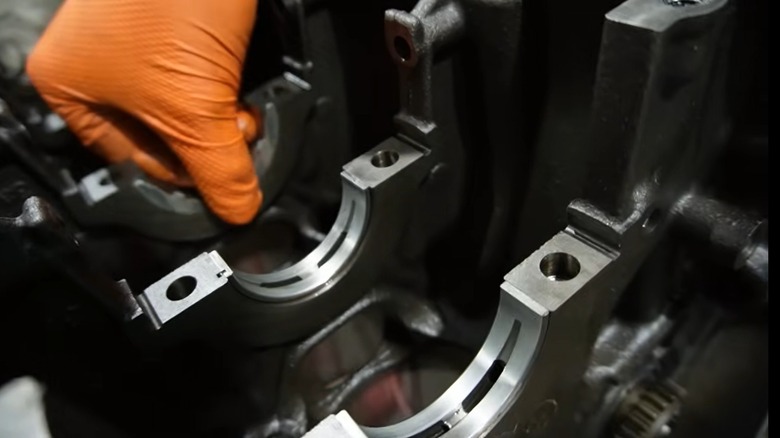
Every crank has some give, in that it moves laterally back and forth a little. Crankshafts are designed to have a little leeway. But it's very important that a crankshaft not have too much leeway. Too much axial movement by the crankshaft is called "crank walk," a funky sounding name for something that can cause an engine a world of trouble. Crank walk can cause metal parts to rub together, along with imbalanced rotation, insufficient oil pressure as the oil skips over some of the parts it's supposed to lubricate, and ultimately damage to other parts of the engine.
The part that stands between your engine and the disastrous consequences of crank walk is the thrust bearing. Thrust bearings make sure that the cranks have just the right amount of give. If one fails, those metal parts we mentioned start to rub together, hastening catastrophic engine damage.
There are signs that a thrust bearing is deteriorating. For example, the engine may make a distinct grinding noise, especially when you put your foot on the clutch. It might be hard to find first gear or reverse with the shifter. The clutch disc might wear out before its time. Maybe the engine shakes while idling. Oil pressure could go up and down erratically. The car might start to use more oil than it normally does. You may also find flecks of metal in your oil.
Wrist pin knock
No one likes to hear a knocking noise come from their engine. That usually means something is wrong with a piston or rod, and there's no way to fix that but to take the engine apart. Probably the most common version of this is piston slap, which happens when there's a little too much room around the piston while it is cold, so it knocks against the walls of cylinder. This often isn't all that serious, according to what experts say about piston slap, and sometimes an engine can keep going for a long time with this problem.
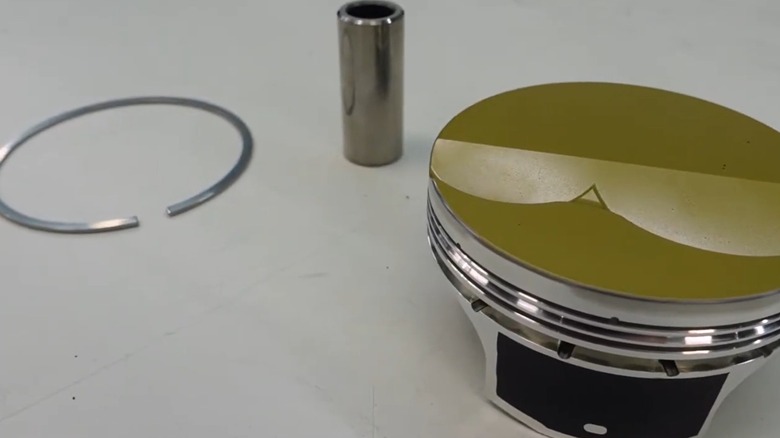
Less common, and way more serious, is wrist pin knock. The wrist pin is the part that holds the rod to the piston. Sometimes, a wrist pin can get worn, making the connection between the rod and piston loose. This can be more severe than a piston slap, as it can do serious damage to the cylinders. It's not that common among newer engines, since they often use fully floating or press-fit pins. That's why it can sometimes be misdiagnosed as piston slap.
So how can you tell whether your engine is experiencing wrist pin know or piston slap? With piston slap, the noise will sometimes, but not always, stop as the piston warms up. When the piston warms up, it expands and fills the space inside the cylinder, unless it's worn. But a wrist pin knock sounds different and will persist after the piston has warmed up.
Valve seat drop or recession
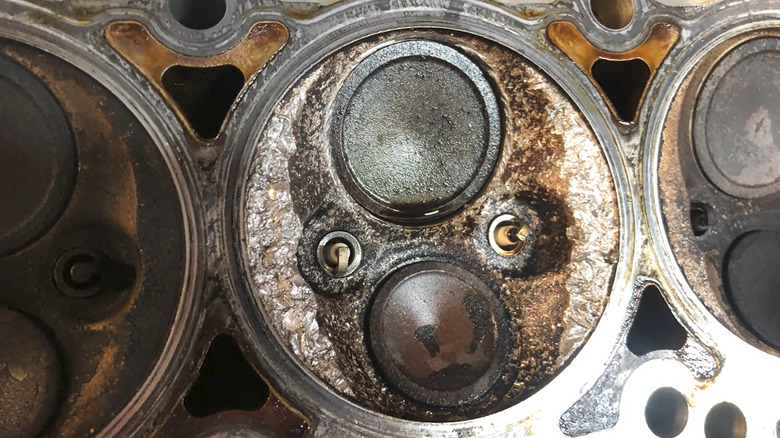
Most of us who have spent much time under the hood have dealt with a misfire at some point. Sometimes fixing it is as simple as changing the plugs. But suppose you change the plugs, the coils, and the injectors, and you're still getting the misfire? That could be a sign of a valve seat drop or recession. A valve seat is a metal ring precision-inserted into a cylinder head. Its purpose is to help provide a tight seal for an intake or exhaust valve, as well as cushion the valve when it closes at high rpm. If a valve seat is doing its job, it will help cool the valve so that the heat gets pushed into the cylinder head.
But sometimes a valve seat will break off or lose its fit. What causes this? Overheating usually is involved. The cylinder head may expand more than the valve seat while heating. This can cause the valve seat to come loose, so that it doesn't reseat back into place when everything cools. That can result in all kinds of damage. The cylinder head can get seriously jacked up. The piston and cylinder walls can get damaged, and you could end up with a bent or broken valve.
Other signs you have a dropped valve seat include a sudden loss of compression, knocking noises, or a rough idle. Of course, these things could be symptoms of other problems, but a valve seat drop could be the issue.
PCV valve freeze-up
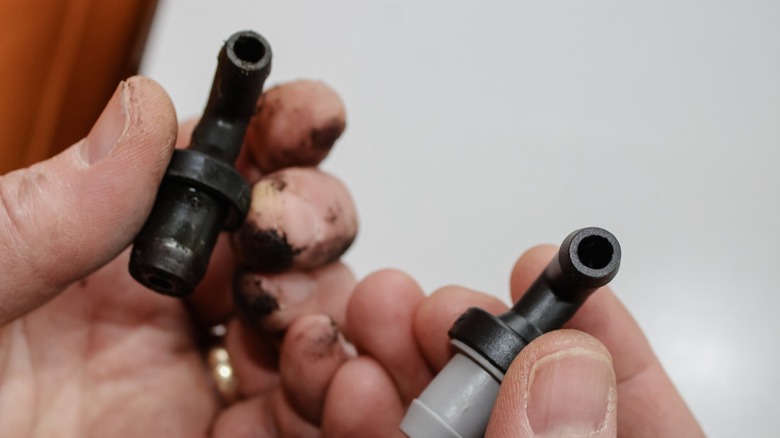
Your car's engine creates gases as it runs. A lot of those gases find their way into the crankshaft. From there, they have to go somewhere, otherwise too much air pressure builds up in the crankshaft. They can't just be released into the atmosphere because of the air pollution that would result. The answer, then, is to direct them back through the intake. But that needs to be regulated so that it doesn't throw off the air/fuel mixture in the cylinders. This is where the positive crankcase ventilation (PCV) valve comes in. It regulates how fast the gases are redirected through the intake and adjusts according to what the engine is doing at the time.
Sometimes, though, condensation around the PCV valve will freeze up in cold weather, clogging it shut, one of the ways a bad PCV valve can ruin an engine. In some models, like BMWs, Volvos, and Volkwagens, there may be a yellow frozen sludge around the valve. This is most likely to occur when you've taken a bunch of short trips in freezing temperatures. If the engine hasn't been given enough time to warm up, the condensation can't melt.
This can build up enough pressure to push oil into the cylinders or out through the gaskets. That can lead to hydrolocking, which we talked about earlier. Look for that yellow buildup if you think your PCV valve may have frozen. Other signs include a whistling or hissing noise, low gas mileage, or sudden oil leaks.
Flexplate cracking
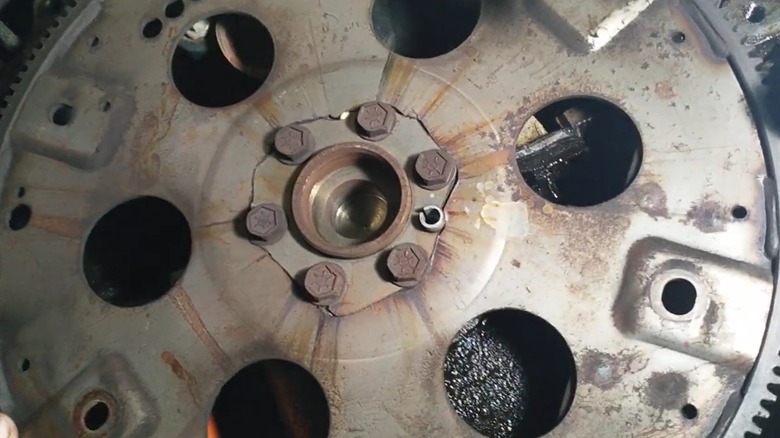
Even if you're experienced at turning a wrench, you may never have had to change a flexplate. That's because they're designed to last the life of the vehicle. Things do wrong on occasion, though, and flexplates have been known to sometimes crack or bend. That can be a problem, because flexplates have an important role to play in keeping your engine running.
You see, an engine and transmission can be aligned very close to being exact, but they can never be aligned perfectly. The flexplate, which connects the engine's crankshaft to the transmission's torque converter, compensates for this tiny gap in alignment. Flexplates are found in cars with automatic transmissions and are the counterpart to flywheels found in vehicles with manual transmissions.
On rare occasions, a flexplate can get cracked. This is often a sign of other problems, like a poorly rebuilt engine or a bent crankshaft. This can also be an indication of transmission issues, since they share some of the same causes. If an engine and transmission are misaligned too much, the flexplate will have to flex more than it's designed to, and start to bend. Sometimes the fault is at the flexplate itself, such as a bolt that's tightened too tightly or a missing dowel pin that wasn't reinstalled when servicing the transmission.
When a flexplate cracks, it typically sounds like a thrown rod knocking. You'll hear the noise during idling and coasting.
Engine porosity
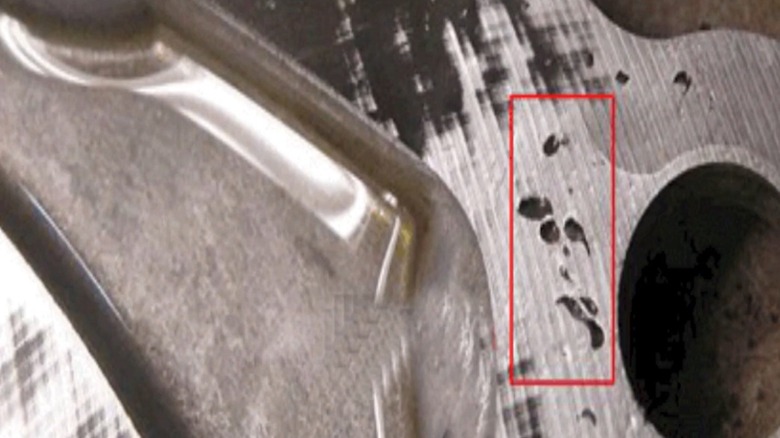
You might look at your engine block and think of it as solid metal. While that description does fit, your engine block isn't as solid as you may think. Cast metals generally have a level of what's called "porosity," which means it has tiny holes. These holes are formed during manufacturing by air bubbles or some chemical contaminants. A small amount of it can't be avoided, and is generally harmless.
There are three kinds of porosity: fully enclosed porosity, which is an air pocket that is largely undetectable since it's enclosed in the metal; blind porosity, where the pore is open at the surface but doesn't go all the way through; and through porosity, which does make it all the way through. It's that last kind, through porosity, that you have to look out for. Your engine is designed to keep its fluids separate. Oil, hydraulic fluid, water, transmission fluid, and coolant are generally not supposed to mix. Air is kept from seeping into some parts of your engine. But if there's porosity that goes all the way through from the side of one wall to another, these things can mix, and that's where things go wrong.
Parts that can be affected by porosity include cylinder heads, throttle bodies, thermostat housing, oil sumps, water pumps, and several more. One sign of engine porosity is cross-contamination of fluids that can't be explained by other means.