

The Consequences Of Low Engine Oil From Mild To Severe
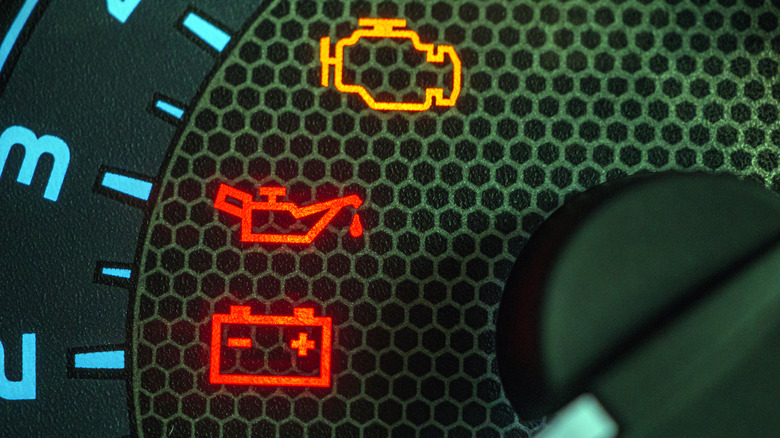
When I was a teenager just on the cusp of learning to drive, one of the first lessons my parents gave me was on how to pop the hood and check the oil. We located the dipstick, pulled it out, checked the oil level, and identified what it would look like for the oil to be problematically low. The exact path of the conversation escapes me today, but I imagine it went something like, "if the engine oil level gets too low, the car will break, and it'll be really bad," which is accurate but doesn't really paint the full picture. The impact of oil starvation is never good, but the knock-on effects can range from loss of fuel efficiency to utter destruction of the engine.
It might sound dramatic to phrase it this way, but having your engine seize up on you in the middle of the interstate because you were driving with low oil for too long is, in fact, pretty dramatic. If you see that engine oil warning light pop up on your dash, pull over as soon as it's safe to do so and turn off the engine. Even if you don't experience the most severe consequence of catastrophic failure, there are a whole lot of issues you can run into that are less dramatic but will cause similarly severe headaches and a similarly sized hole in your pocket.
This doesn't necessarily mean you need to change your oil more often than your owner's manual or mechanic suggests, but it does mean you shouldn't delay once it's time, and you should check the dipstick regularly. And if you suspect you have an oil leak, do not delay in getting it addressed.
The mild side of low engine oil
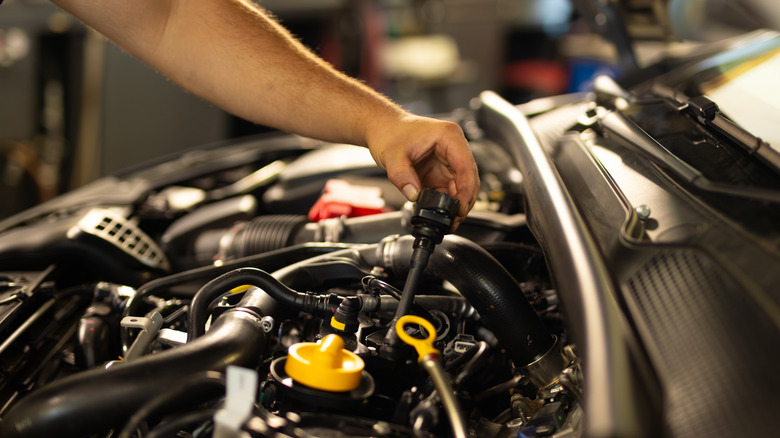
Not all signs of low engine oil manifest instantly and dramatically. There are plenty of negative consequences from low oil that will feel more like a nuisance than a life-altering event, but they still need to be taken seriously. Besides your oil warning light coming on, the first signs of oil starvation you're likely to notice are unusual engine sounds. Knocking and grinding are bad news, as they indicate that there's not enough oil to properly lubricate the engine, resulting in metal-on-metal contact that can quickly turn to permanent damage.
If your engine seems to suddenly produce less power, that's also a bad sign. This can be a result of the engine working harder due to more metal-on-metal contact and less lubrication. Alternatively, it could be the result of overheating. Your engine oil also functions to remove heat from the engine, and when there's not enough engine oil, critical components of the engine may begin overheating, causing the metal to expand, resulting in more metal-on-metal contact and less power.
The extra wear from these issues can reduce the lifespan of the car, increase your repair costs, and ultimately lead to more serious problems, so even if your car has the most infuriatingly located oil filter in the world, keep on top of your oil changes.
Other signs of oil starvation you'll notice include worse fuel economy, smoke coming from the exhaust, or a burning smell from the engine compartment. Some of these symptoms may be noticeable even before your car sends you any warnings, so you should check your oil level as soon as you notice them. Oil burning is particularly common in old engines, so check regularly if your car is more than about 10 years old.
How bad could it possibly get?
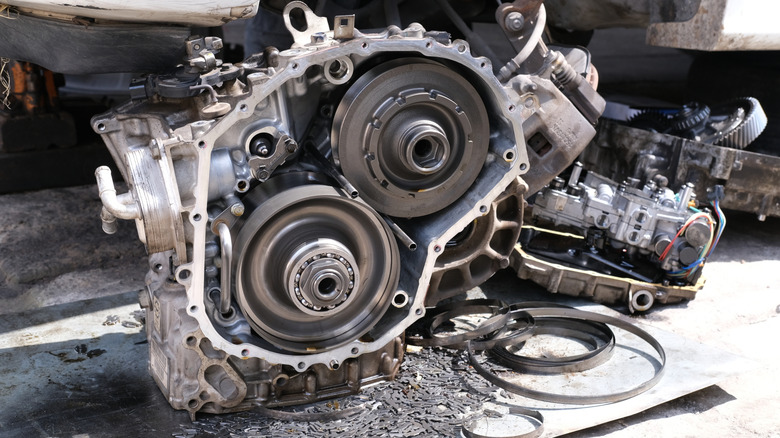
Maybe none of that sounds so bad, and you're feeling none too spooked by the threat of low engine oil, but if your oil warning light comes on and you decide not to heed its call, things can get rough real fast. We're talking within a couple of miles fast if your engine oil level is critically low or completely empty. Within three minutes of running on empty, you're already staring down scored bearings, but the real magic happens a few minutes later, when the temperature inside the engine increases so much that the bearing shells start self-welding to the harder metal of the crankshaft before being immediately torn away at several thousand RPM. YouTuber HumbleMechanic has an excellent video illustrating the type of damage you can expect under such conditions.
At this point, the engine is damaged but fixable, depending on how much money you're willing to throw at the problem. Eventually, the engine will either seize completely because the metal components have expanded so much that they can no longer operate, or a bearing will fail completely, sending its corresponding connecting rod on a mission to destroy things, potentially dealing fatal damage to the engine block. By then, as the kids say, you're cooked.
If you somehow manage to keep an engine running beyond that, you can expect to end your drive with a completely unfixable engine. You'll walk away from the ordeal the proud owner of damaged pistons, a broken head gasket, non-functional bearings, and cylinder walls full of holes. So, one last time for those in the back: if that engine oil warning light pops on, please, for the love of all things mechanical, pull over immediately and top up.