

Passenger Screens Are Causing Drivers Tech Headaches As Over A Third Of Buyers Never Bother To Use Them
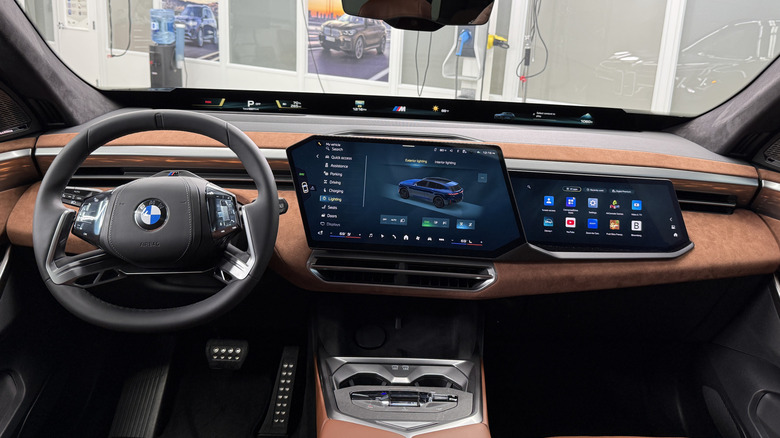
When I'm riding shotgun in a luxury car, there are few things I like more than a dedicated passenger screen. Yes, I'm aware the main infotainment screen is a few inches to the left, but they allow me (or whoever is sitting in the passenger seat) to control vehicle functions while looking straight ahead — beating my greatest nemesis: motion sickness. They also enable the center infotainment screen to be angled more toward the driver. To me, that's a win-win, but for a great many vehicle owners, the benefits do not outweigh the drawbacks.
It's not just luxury cars, either. Passenger screens are becoming increasingly common in regular-degular vehicles, as well, but even as their ubiquity rises, a new study from JD Power that surveyed 68,084 2026 model-year vehicle owners suggests that a chunk of buyers aren't finding these screens to be nearly as popular or useful as automakers were hoping for. Apparently, 35% of folks who have a vehicle with a passenger screen say they've never even tried to use it, and just 6% say they use the screen every time they drive. I suppose this plays into the idea that people are actively afraid of their cars and the features they have. This is according to the analytics company's Tech Experience Index.
Aside from that general fear, there are also functional issues buyers have had to contend with. JD Power's survey found that even when owners do use their passenger screen (I assume they're not the ones using it; their passengers are), they often run into issues. For every 100 vehicles with a passenger screen, there are 21.3 problems tied to the passenger screen, which seems less than ideal.
Screen overload
It's not that buyers don't want technology in their cars. At least according to this study, they do. Hell, they even like most of it. We just might be reaching a bit of an inflection point when it comes to screens in cars. People really dig things like keyless ignition that can turn the car on and off without pressing a button, as well as smart climate control, but the screens are just not something they're jiving with.
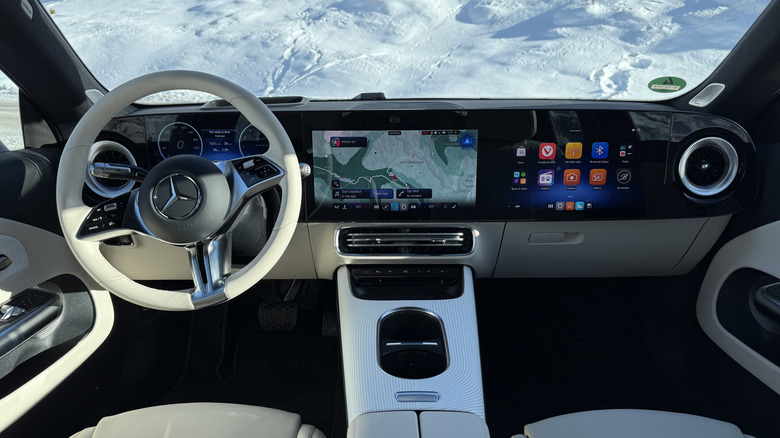
Of course, this isn't really something automakers want to hear right now — especially companies like BMW and Mercedes-Benz, which have recently introduced their Neue Klasse Panoramic iDrive and MBUX Hyperscreens, respectively. Both systems have massive screens built in. That being said, we have seen some buttons returning to vehicle interiors, working in tandem with these screens, though it might not be enough.
"The technology customers value most is often the technology they barely notice because it simply works," Doron Hikry, Director of Customer Success at JD Power, said in a statement.
Maybe I've just drunk the Kool-Aid of Big Passenger Screen, but I still think these things are great. While it would undoubtedly be nice to return to the days of hard buttons and switches, that's just not the world we live in. Cars today are far too complex and carry with them too many features to make dedicated buttons a feasible way to operate them. Screens aren't going anywhere, whether you like it or not, but I'm sure there is a way to better integrate the experience and make them just a bit less glitchy.