

Why Interstate Highway Rest Areas Have Vending Machines Instead Of Restaurants
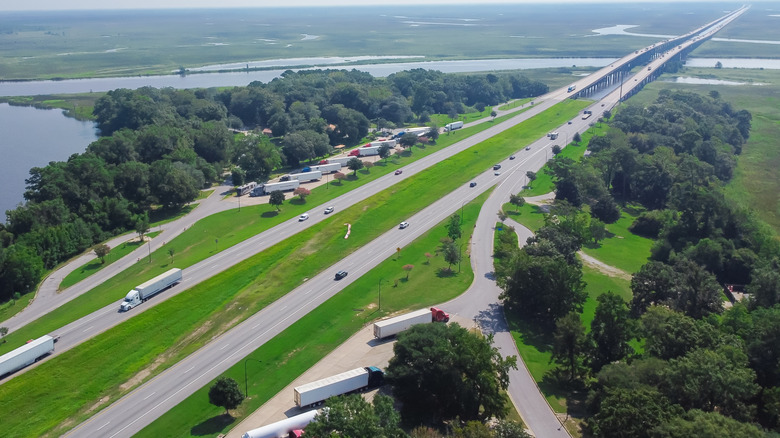
Let's be real for a second: rest stops are weird. Not just in practice, but also conceptually. Punctuating long stretches of interstate, rest areas allow you to stretch your legs, get a soda from a vending machine, use the restroom, and basically nothing else. Some have incredible views or are tucked away behind trees that mercifully dampen the incessant highway noise, while others are about six inches off the interstate and seem completely utilitarian. There seems to be no rhyme or reason.
Still, giving drivers can get a much-needed break from the open road is crucial, because studies show driving while tired is just as dangerous as drunk driving. That being so, you could be forgiven for expecting there to be more robust services at rest areas across the country, but the absence of restaurants is no coincidence; it's actually federal law. Section 111 of Title 23 (23 USC 111) of the United States Code was passed in 1956 and forbids states from commercial development along the interstate. This law was once so restrictive that not even vending machines were allowed on the premises. It wasn't until the Surface Transportation Assistance Act of 1982 that states were finally allowed to sell snacks via vending machines in these areas.
It might seem strange that services are so limited in rest areas, but the law is intended to allow motorists a safe area to rest without being coerced into spending money. Far be it from me to complain about an area free from the advertising hellscape that is the rest of the country.
Having no ads may be great, but drivers get both hungry and sleepy
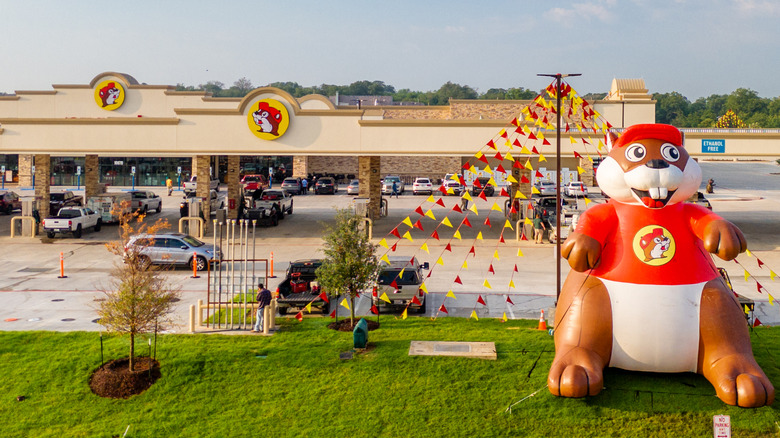
If you've ever been on a full- or multi-day drive and failed to pack sufficient supplies, you know exactly how hunger can bite on the interstate. When it's late and there are three hours to go on the last leg of a 29-hour drive, a rest area-supplied honey bun isn't going to cut it. But when only a full meal will do, state-funded rest stops are out of the question.
Because of the bans on commercialization in rest stops, you have to exit the interstate entirely to find a real meal. There are plenty of options these days, from the lovable Love's travel stops, to the fan-favorite Buc-ee's, and the charming and oh-so-strange Iowa 80 truck stop, but visiting one of these locations can mean significant detours. And on top of that, even the huge Buc-ee's gas stations don't always let you sleep overnight after a big meal. So despite having better options for food, commercial travel stops aren't necessarily a convenient option either.
That's especially true if you're looking for anything other than a fast food chain restaurant experience. Good luck finding a local or unique restaurant without taking a serious detour. If only there were another way to do this.
Wait, what about service plazas?
There's got to be a better solution to this situation, right? Well, yeah, of course there is, and it's called the service plaza. But, unfortunately, these convenient roadside paradises aren't legal everywhere. The federal law mentioned above, 23 USC 111, wasn't only introduced to reduce the pressure to purchase while driving. It was also supported by gas stations and roadside restaurants across the country in the '50s, when the country's burgeoning coast-to-coast interstate system was bypassing tons of small towns and threatening to tank local economies that thrived on passing trade stopping for food and gas. Roadside stops that predate January 1, 1960 and are owned by the state were allowed to stay open, and they form the basis of what are now known as service plazas.
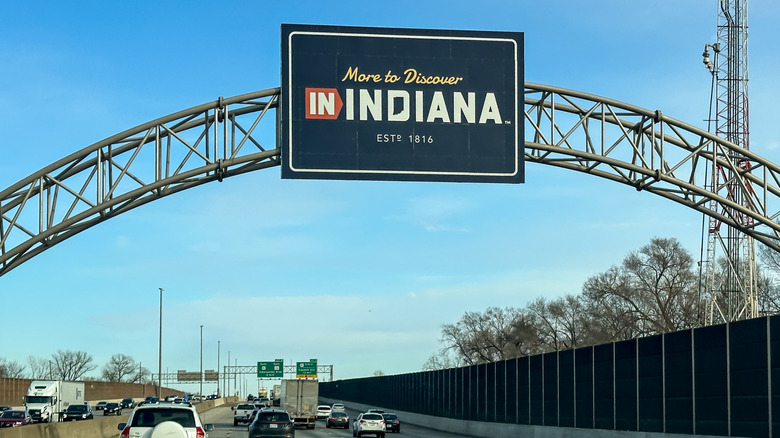
Found in areas like the Indiana Toll Road and the New York Thruway, service plazas offer public restrooms, restaurant options, 24-hour refueling stations, and sometimes even overnight parking. These plazas are typically tied to tolled roadways, and from my driving experience, are well worth the price of admission. Entry and exit from the interstate are a breeze, as the travel plazas are directly connected to the interstate and sit only a few hundred feat from traffic. They still don't offer many food options other than your typical gas station fare and fast food chains, but even that is enough to fuel the last couple hundred miles of a drive you wish was over already.