

How To Clean Out A Blocked Fuel Line
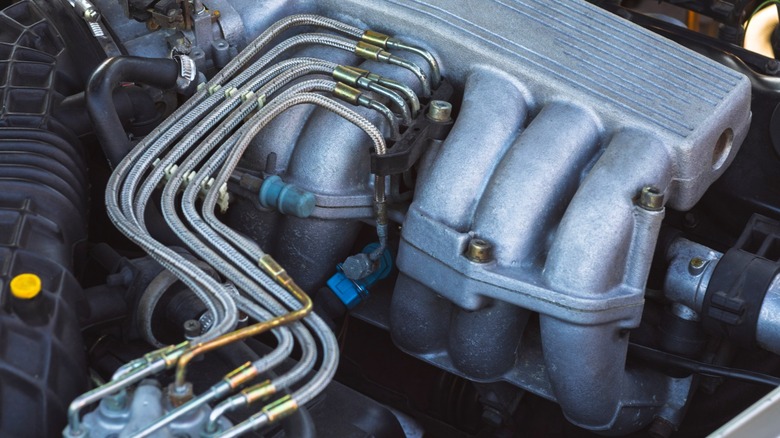
As the name suggests, a car's fuel line is the hose that gets fuel from the gas tank to the engine. Old or contaminated fuel, ethanol breaking down rubber hose material, or a combination of gunk accumulated over years on the road (or sitting off the road) can cause a fuel line to get clogged. Some symptoms of a clogged fuel line include loss of power, smoke, worse fuel economy, or even a car that refuses to start. And we already covered the best ways to tell whether you have bad gas in your tank.
But when it comes to actually cleaning out a clogged fuel line, there are two ways of going about it. Your first option is to use a fuel additive like Sea Foam Motor Treatment or Redex Petrol System Cleaner that'll give your entire fuel system a relatively light clean. Sea Foam advises adding 2 ounces of its product for every gallon of fuel to a low tank and running it to near-empty before the next refuel, while Redex recommends 0.32 ounces of its solution per gallon of fuel. Fuel treatment, by the way, is different from fuel stabilizer. If your fuel line is completely blocked or still clogged after doing this, that means it requires a manual flush with compressed air and isopropyl alcohol, which is quite a bit more complicated.
What you need to manually flush out the fuel lines
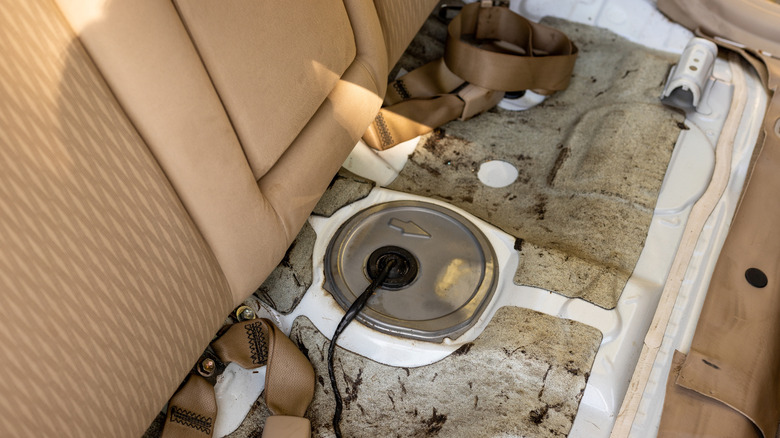
To do this, you'll need compressed air to push the gunk out, 99% isopropyl alcohol, an empty disposable tray or bottle big enough to catch all the gunk and alcohol, and a rag to catch any stray fuel — along with the tools and know-how necessary to disconnect the fuel line not just from the engine but also from the fuel tank. Gloves, safety goggles, and a mask are also recommended. If you're not comfortable messing with fuel lines or doing related jobs like flushing a gas tank, then this is a job that's definitely best left to a professional. But if you are comfortable, read on.
Ultimately, you're playing with a car's fuel system, which, if you're not careful, can indeed turn into playing with fire, so the first thing you're going to want to do is relieve the car of fuel pressure. To do this, disconnect the fuel pump relay while the car is running. After the engine shuts off, wait a bit for it to cool down. It's also not a bad idea to disconnect the battery and have a fire extinguisher on hand before you begin cleaning out the fuel lines, just to be safe.
Once all that's done, the first step is to disconnect the fuel line on both ends. The specific location of your fuel line will, of course, vary by car, but it's often a rubber or metal hose with tabs or clamps securing it in place, running from your engine to the fuel tank. Consult literature specific to your make and model to ensure you're working on the right hose and for instructions on how to access the fuel tank and remove the line from it. One universal tip here, however, would be to place a rag below each end before removal to absorb any fuel that can spill or drip out.
Cleaning out the fuel lines
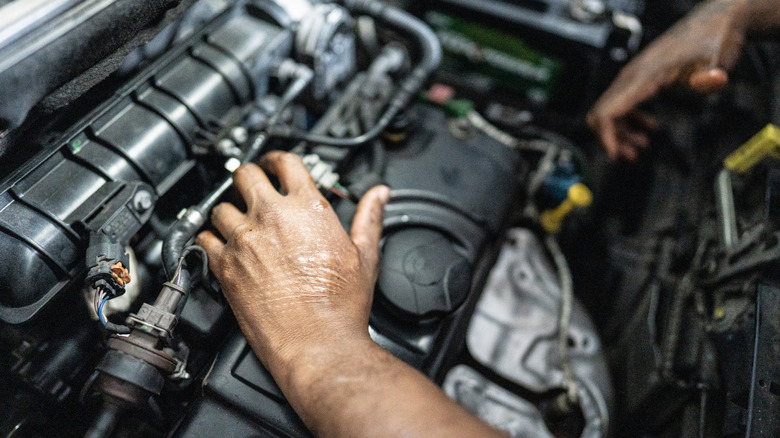
Once you have the fuel line disconnected, drain any remaining fuel inside it by placing a sufficiently large tray underneath the opening on the tank end and shooting low-pressure compressed air through the other end. Now, take your isopropyl alcohol and pour some with a funnel into one end of the fuel line until some comes out the other end — never use water here. That said, alcohol isn't the only solvent you can use here, as some alternatives include acetone, which is stronger than alcohol but could damage certain plastics, and Berryman B-12, which is a product specifically designed to clean fuel systems. Next, do the compressed air step again to get all of the solvent as well as any debris out, and keep pumping air through the line until nothing is coming out anymore.
One video I found detailing how to clean a truck's metal fuel line on YouTube used a more mechanical cleaning approach. Mechanic's wire is fed inside the line, bent at one end so it attaches to a drill, then turning on the drill loosens whatever's clogging the fuel line. Obviously, don't try this with rubber fuel lines, as the wire could cause damage. When your fuel lines are sufficiently clean — or you have determined it would be more appropriate to replace the fuel line with a new one for whatever reason — it's time to reconnect. This involves putting the line back into where you pulled it out from and redoing whatever clamp and screw mechanism that you had to undo at the beginning of the job. After you've made sure the line is secure with a little tug, it's time to reconnect the fuel pump relay, reconnect the battery, and start the car to test things out.