

How To Tell You Have Bad Gas In Your Tank
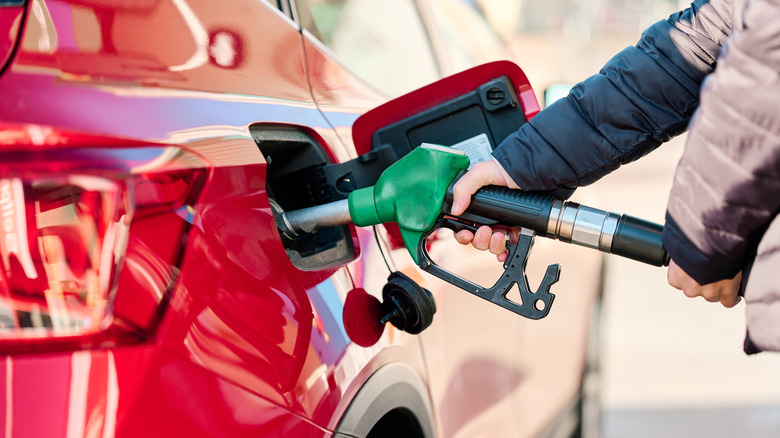
Generally, it's not good news if your car has idling issues and exhibits choppy acceleration — maybe the air filter's clogged or the injectors have failed. But before you inspect the mechanicals, there is a good chance that the reason behind your engine acting poorly could just be bad gasoline. A bad batch of gas may contain water or be contaminated with debris like rust and dirt. Having water inside your gas tank is never a good sign, and the contaminants could easily wreak havoc by clogging the injectors and fuel filter, preventing them from functioning properly. Gasoline can also degrade and lose volatility over time if stored improperly. Pumping that old fuel into your car can likely lead to combustion issues.
While it's fairly easy for someone with a trained eye to diagnose air filter issues and injector failures, determining whether your engine troubles are from bad gas is not as straightforward. As you may be able to tell, the symptoms — which include hard starts, no starts, and poor fuel economy in addition to the ones mentioned above — are eerily similar to those of a failed/failing engine component.
So, when exactly can you blame the fuel? If the symptoms appear immediately after the refill, it's fair to assume that the gas station has sold you a bad batch of gas, especially if things go away after a top-up from somewhere else. You may double down on your doubts if others (friends, relatives, and the like) have also experienced these issues after filling from the same pump. But if you have ruled these out, then things can get a bit tricky.
How to further diagnose and fix bad gas in your tank
You could start by visually inspecting the fuel's color. Gasoline that's clear or mildly gold in color is considered good, but if it's cloudy or has a dark-gold tint, then it's likely contaminated. Gas that smells unusual is also a red flag. You can confirm the presence of water by simply tilting the sample after letting it sit for a few minutes. Water separates from the mixture and settles below. For visual inspection, however, you need the fuel sample, and getting that from your gas tank can be a bit difficult.
While you could've easily siphoned off gas from older vehicles, modern cars have built-in failsafes to prevent anyone from doing so. You could buy a gas siphon kit, but it may not work on certain vehicles. To get around that, you'll have to get your hands dirty by disconnecting the fuel line and activating the fuel pump. But the process can get complicated, depending on the car, its fuel delivery system, and so on. It's something best left for experts if you're not that mechanically inclined. Once you've confirmed the fuel quality, it's a matter of draining the tank. If there's a drain plug, you're looking at a relatively simple drain and refill. Otherwise, it's back to either the siphon kit or bypassing the fuel line. If you're still experiencing issues, try checking the gas cap. Maybe the seals have gone bad, causing water to seep through.