

Flock Cameras Are Going To Get Drivers Killed
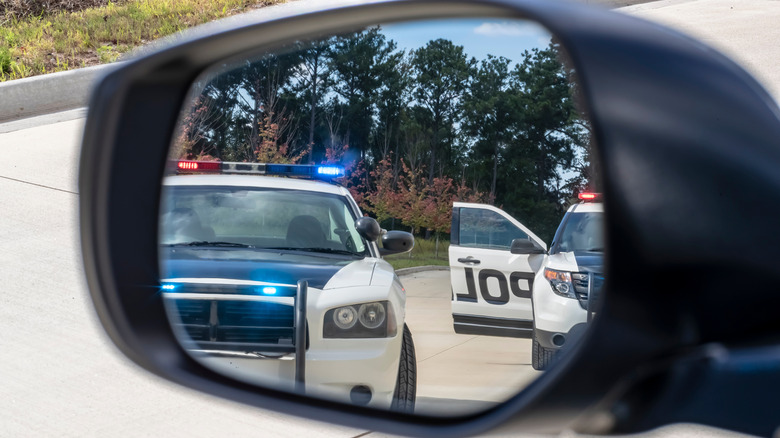
It's bad enough that Flock cameras and other license plate readers are conducting mass surveillance, not just license plates but other identifying markings as well. Even worse is how frequently errors take place, with significant effects on innocent people. Friend-of-the-site Joel Feder, Director of Content & Product at The Drive, brought a great deal of attention to this issue after his own detention in a press car Range Rover that was incorrectly identified as stolen. Though certainly a harrowing experience, Feder had it relatively easy compared to some. Police were willing to have a discussion with him rather than yanking him out of the car at gunpoint. Others have not been so lucky, even suffering injuries and serving time behind bars for crimes they didn't commit.
Flock claims that its system is anywhere from 93% to 99% accurate, depending on who you ask. Still, if it's scanning 20 billion license plates each month, an excellent 99% accuracy rate still leaves 200 million errors. And that's just the mistakes the system makes. Human error is a problem as well, on both ends of the equation. In Feder's case, the Los Angeles County Sheriff's Office incorrectly entered the missing license plate that led to his detention, as well as marking it stolen rather than simply lost as it had been reported. Additionally, the officers who detained him failed to verify that the plate on his Range Rover actually matched the plate that came up on their hit list before surrounding him in a Kohl's parking lot.
These three issues — bad data entry, scanning errors, and officers not verifying information before engaging — are causing problems at every step in the process. Combined with the vast number of license plates being routinely scanned, these technical, administrative, and procedural issues create real problems for real people, including false arrest and imprisonment. At this rate, it's only a matter of time before an itchy trigger finger leads to loss of life over a data error.
Garbage in, garbage out

If the system is given incorrect information, it's going to act on it and provide false alerts to police. Kyle Dausman keeps getting pulled over because of a data entry error wrongly connecting him to an arrest warrant in Gilpin County, reports 9NEWS. Cherry Hills Village Police Chief Jason Lyons says the warrant is for a different man, but a similar license plate as Dausman's.
Lyons believes the root cause is a data entry issue involving Colorado license plates, which use both the letter O and the numeral zero.
"In Colorado data entry, we use both zeros and O's in license plates," Lyons said. "Sometimes the data entry will be for both."
He said the warrant returned hits when Dausman's plate was searched either way.
"They entered it for both," Lyons said. "It wasn't a mistake, one or the other. They just entered it for both an O and a zero, because we've run it both ways and the warrant pops up both ways."
Lyons has suppressed Flock hits for Dausman in Cherry Hills Village to help with this, but his power to do that doesn't extend outside the village. The Gilpin County courts and the sheriff's office told Dausman that to get his plate removed from the hot list, he needs to provide the name of the suspect on the warrant. No one will give him that name, since it's still an open investigation. The Gilpin County Sheriff's Office told 9NEWS that it's a Colorado State Patrol warrant, not theirs, so they have no control over it. The Colorado State Patrol told 9NEWS that it's Gilpin County's warrant, and only they can fix it. This leaves Dausman no way to fix a problem he didn't cause for a warrant he doesn't have. From 9NEWS:
The repeated stops have taken a toll. Dausman said he cannot comfortably use his truck and worries about what could happen if he is stopped while family members are in the vehicle. Without knowing what the warrant is for, he fears how a police department may approach him the next time he's pulled over.
"I don't know if I'm going to be pulled over with my family," he said. "I don't know what this guy did to get a warrant. I don't really know what the police response is gonna be."
At this point, since law enforcement won't fix the problem, I'd be exchanging my license plate for a different one, just to get off the hit list. But this shouldn't be Dausman's problem to solve.
False hits
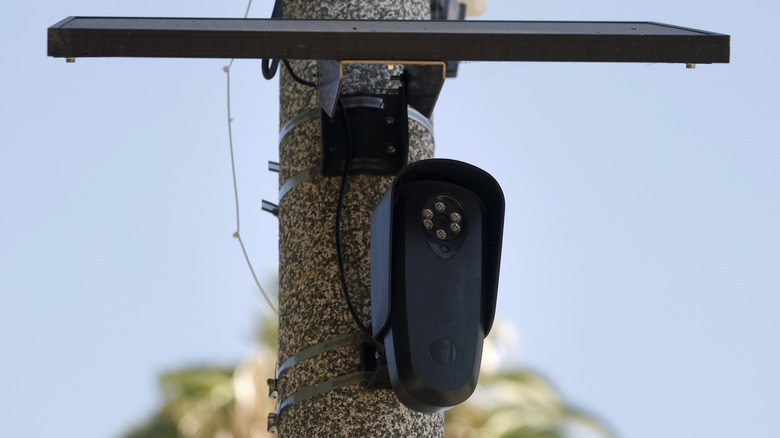
Of course, the technology itself is part of the problem as well. A rate of 200 million incorrect scans each month leads to a lot of false hits, resulting in unwarranted traffic stops. This is an inconvenience at best, and a life-changing incident at worst.
Toledo, Ohio, police arrested Brandon Upchurch in April, 2024, after stopping his red Dodge Ram for allegedly having a stolen license plate, reports Business Insider. The truck belonged to him and wasn't stolen, but police weren't having it. They ordered him out of the truck at gunpoint, then sent their dog to attack him while he was getting on the ground because they thought he was about to run. After being hospitalized for his injuries, he spent several hours in a jail cell.
Finally, police realized that what Upchurch had been trying to tell them was true all along. A Flock camera had scanned the 7 on his license plate as a 2, leading to a false hit as a stolen vehicle. Toledo police were alerted, leading to the traffic stop based on an incorrect scan.
His release and the dropped charges did not make the dog bite on his arm any better, nor his head getting bashed into the pavement. Upchurch couldn't work anymore because he couldn't lift heavy objects or operate a forklift. He sold that truck just to pay rent, got evicted anyway, and moved in with his mother. He even gave up his two dogs, who he had raised since they were puppies. He no longer felt comfortable around dogs after what that K-9 unit had put him through.
Old fashioned police not working
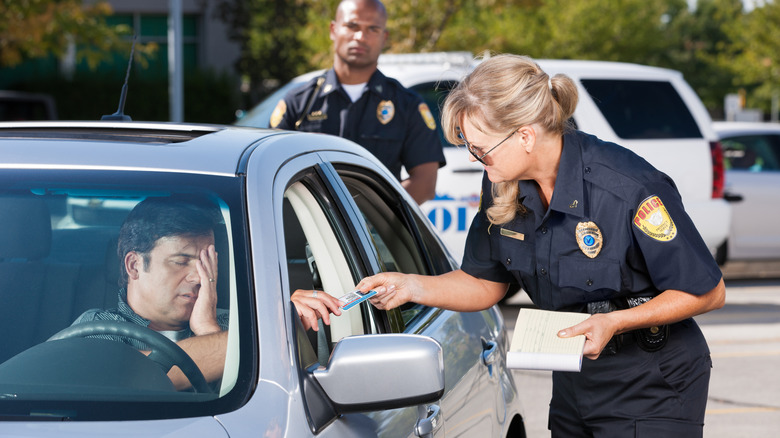
The final piece of this puzzle is how police officers in the field interpret and take action on this information. The second time Kyle Dausman got pulled over in Cherry Hills Village, the officer immediately recognized him from the first stop. He quickly sent Dausman on his way, remembering that Dausman did not have a warrant out for his arrest, even though the system said he did.
Brandon Upchurch likely would have received the same treatment if the officers who stopped him bothered to actually read the license plate on his truck, and run it to verify that it was registered to him and not stolen, just as he claimed. In too many cases, however, police are relying heavily on the system to do their police work for them. It seems Flock cameras are now trusted over cops own ability to read.
A particularly egregious case of this happened in 2020 in Aurora, Colorado, according to Denver7. Police detained a blue Dodge Journey at gunpoint because a license plate scanner had tagged the plate as being stolen. They removed a mother and several children, handcuffed them, and laid them on the ground for some time. Eventually, they figured out that the plate associated with the stolen vehicle was from a different state. It was also a motorcycle, which looks nothing like a blue Dodge Journey. Officers should have noticed this before drawing their guns on an innocent woman and her children.
It's also worth pointing out that people like Kyle Dausman and Joel Feder, who are white, were treated with respect and had polite discussions with police about what the ALPRs are saying about them. The family in the Dodge Journey, who were Black, were not given that opportunity, and ended up on the ground in handcuffs before police realized an SUV is not a motorcycle. Upchurch, who is also Black, was attacked by a police dog while complying with commands. Police make plenty of mistakes as it is, without the help of an imperfect ALPR system they put way too much trust into. With cops like these, it's only a matter of time until someone, probably a person of color, ends up suffering even worse than Upchurch has, and losing their life over a data error.