

8 Of The Cheapest Sports Cars With Alarmingly Low Resale Values
There are cheap sports cars, and then there are sports cars whose prices make you wonder what, exactly, happened. A 20-year-old car being worth less than it was when new is hardly breaking news, so simply finding something fun below $10,000 isn't enough for this list. We're looking for cars that combine genuinely entertaining hardware with resale values that seem remarkably low even after accounting for a couple of decades' depreciation.
For some perspective, the 2005 Mazda RX-8 started at $25,935 and can now be yours for well under three grand, while the 2001 BMW Z3 2.5i carried an original price tag of $34,295 and now ... doesn't. Toward the other end of our list, cars like the Solstice GXP and Porsche Boxster haven't fallen quite as spectacularly, but they're still remarkably inexpensive ways to get yourself behind the wheel of something interesting. These aren't necessarily affordable precision sports cars that deliver track-level thrills, but they are fun.
To keep the numbers reasonably consistent, the prices in our headings use Kelley Blue Book private-party values for cars in "Good" condition, using an otherwise unremarkable ZIP code. KBB values vary with location and condition, of course, and we're not suggesting that one particular model year represents every example from an entire generation. Think of these as useful snapshots of the eras where some of the best bargains live. And, naturally, a cheap purchase price doesn't mean the ownership experience will remain cheap. That's a problem for future you.
2005 Mazda RX-8: $2,575
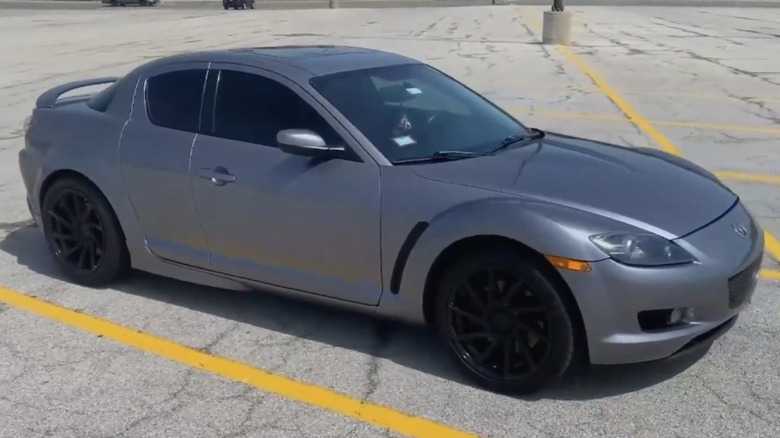
The RX-8 was an unusual proposition even when it was new. Mazda followed the two-seat, turbocharged RX-7 with a naturally aspirated Renesis-powered RX-8 that added a rear seat and rear-hinged doors. And no, the Mazda RX-8's rotary isn't as good as the RX-7's, but it was available with a six-speed manual and that scrappy rotary made something like 238 horsepower. The RX-8 combined light handling overall with surprisingly sharp steering thanks in no small part to its 50/50 weight balance front to rear. It's the sort of driving experience that hasn't gone out of fashion just because horsepower numbers have climbed considerably in the last two decades.
The depreciation story is a little less fun, from a seller's perspective, of course. A 2005 RX-8 carried a $25,935 starting price when new, while that same model year is now valued at just $2,575. Rotary ownership does come with some quirks that help explain why buyers might hesitate: the engine uses oil as part of its rotor-seal lubrication system, and one long-term test consumed a quart roughly every 3,600 miles. That's the sort of ownership wrinkle that can make a $2,575 sports car rather less cheap in practice, but it doesn't make an RX-8 any less interesting once you're behind the wheel.
2005 Chrysler Crossfire Limited coupe: $3,705
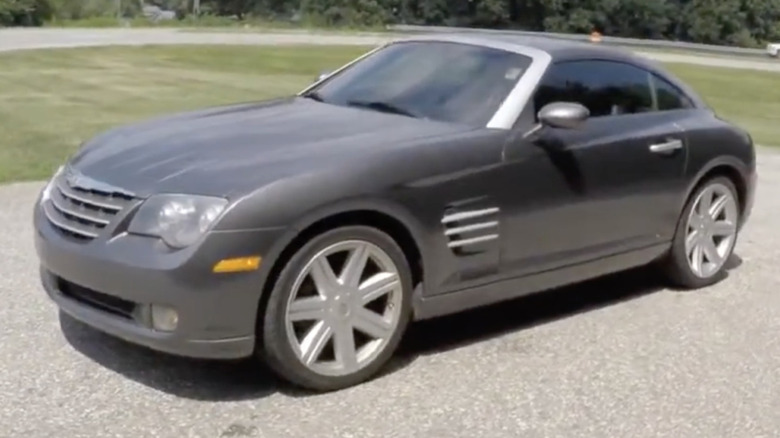
The Crossfire is one of those cars that makes more sense if you remember what was happening at Chrysler in the early 2000s — RIP DaimlerChrysler and long live Mercedes-Benz. Developed during the DaimlerChrysler era, it shared a substantial amount of hardware with the Mercedes-Benz SLK, while its 215-horsepower 3.2-liter V6 drove the rear wheels through an available six-speed manual. The styling was pure early-2000s concept-car weirdness, with a long hood, chopped roofline, and proportions that remain pretty distinctive over 20 years later. It wasn't the sharpest tool in its class, with steering that offered limited feedback, but perhaps we can leave some allowances based on the overall experience, much like SLK drivers often did.
Then there's the price. KBB lists the 2005 Crossfire Limited coupe with an original suggested price of $35,695, while our current valuation comes in at just $3,705. That means you can now get a rear-drive two-seat coupe assembled from a fairly serious pile of Mercedes hardware for roughly a tenth of what it cost new. The Crossfire's age is more obvious inside than its shape might suggest, and there are objectively better sports cars from the period, but that almost makes the value more entertaining. At $3,800, weirdness starts looking a lot like charm.
2003 Nissan 350Z Performance: $4,625
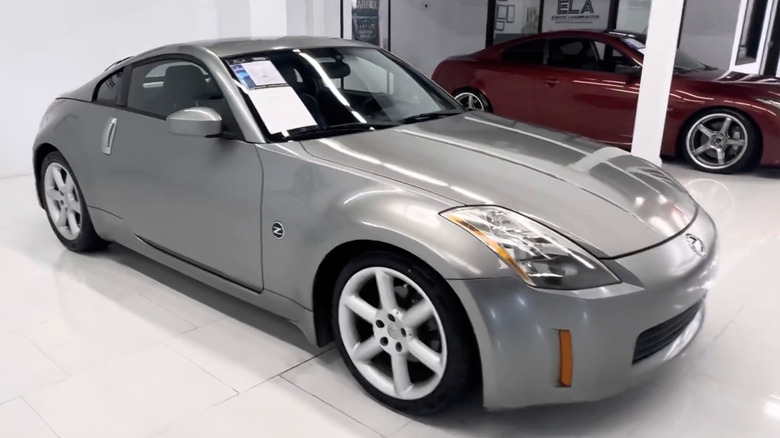
The Altima is finally dead, but that doesn't mean that your dreams of making a questionable purchase decision with a Nissan badge on the front have to be. When the 350Z arrived for sale in 2002, Nissan wasn't exactly easing its way back into the sports-car business. The Performance trim started at $30,530 and came with a 287-horsepower 3.5-liter V6, six-speed manual, rear-wheel drive, and a limited-slip differential. Better still, the underlying car was more than a collection of early-2000s performance credentials. Its steering was responsive without being nervous, while the suspension gave the Z plenty of control through corners. It might not be light and easy to throw around, but maybe Nissan was just ahead of the curve when it came to increasingly heavy and dense so-called sports cars.
Yet while you can spend big bucks today on, for example, a similarly too-heavy German M car, that $30,530 Performance model is now worth just $4,625, making this one of the more dramatic collapses on our list. You can argue that 287 horsepower doesn't carry the shock value it did in 2003, but a naturally aspirated V6 sending its power through a six-speed manual to the rear wheels hasn't somehow become boring in the intervening years. Nor has the 350Z slipped entirely out of enthusiast consciousness. If anything, its combination of simple mechanical ingredients and bargain-basement valuation makes the price harder to understand. Apparently six cylinders, three pedals, and rear-wheel drive can depreciate just fine.
2001 BMW Z3 2.5i roadster: $4,575
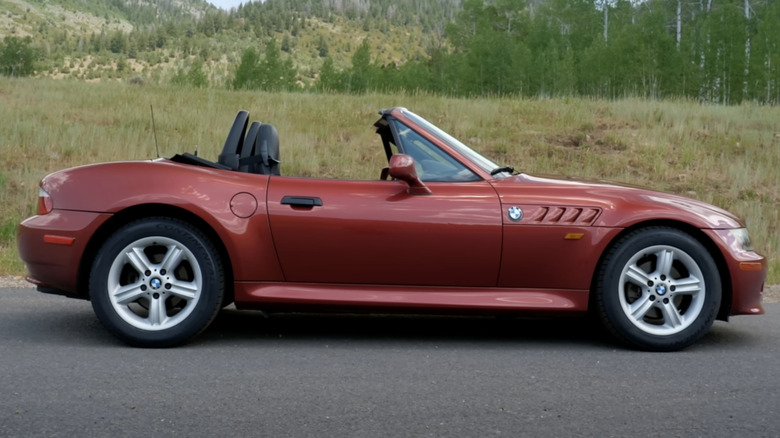
BMW wasn't asking M Roadster money for the Z3 2.5i, but it wasn't exactly cheap transportation either. KBB lists a $34,295 original price for the 2001 model, which bought you a 184-horsepower 2.5-liter inline-six, rear-wheel drive, and an available five-speed manual. The 2.5i wasn't the hammer that the contemporary M Roadster was, but at 2,899 pounds with the manual, it also didn't need modern horsepower numbers to be interesting. The steering and brakes were both strong points, and the basic six-cylinder roadster was still plenty entertaining without stepping up to the faster versions.
Two decades later, that $34,295 BMW is the one we have pegged at just $4,575. That's especially striking because this is the same recipe that attracts so much enthusiast appeal to the Miata that you'll notice it's painfully absent from this list. But as they say, if you can't afford a Miata, consider a BMW Z3. You get a naturally aspirated straight-six, a manual gearbox, two seats, rear-wheel drive, and a roof that gets out of the way when the weather allows. The 184 horsepower may look positively understated by modern standards, but the Z3 never needed to win a numbers war to justify itself. At this price, you're getting the sort of simple BMW roadster experience that the company no longer sells new, for roughly used-lawn-tractor money.
2002 Audi TT 225 Quattro coupe: $5,100
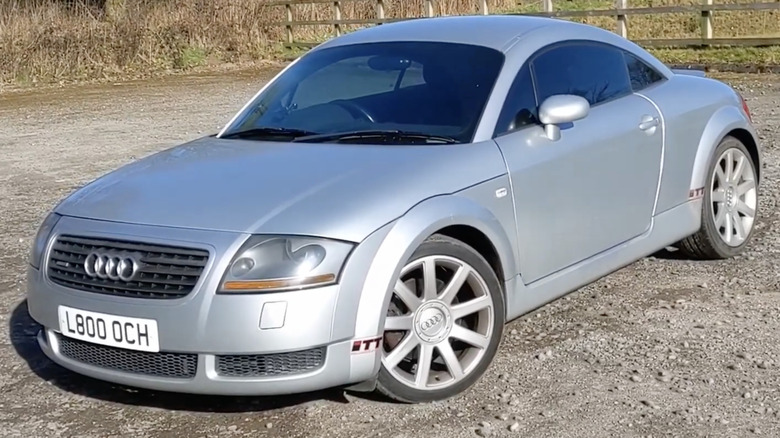
If the Crossfire looked like a concept car that escaped into production, the first-generation Audi TT basically made a career out of the same trick. The 2002 225 Quattro coupe started at $36,100 and paired a 225-horsepower turbocharged 1.8-liter four-cylinder with a six-speed manual and all-wheel drive, all coming together to deliver a low-six-second range to 60 mph, which was plenty respectable at the time. The car put the power down through a fairly tricky all-wheel-drive system that turned the TT into a proper track weapon by sheer virtue of engineering. And it did all this while wrapped in a shape that still looks more forward-thinking than most cars designed two decades later. It was a baby R8 before the R8 was even a thing.
Today, KBB puts the same 225 Quattro coupe at about $5,100, a fairly savage comedown from that original $36,100 sticker. The performance numbers no longer look especially outrageous, but the experience hasn't exactly become generic either. You still get a turbo engine, three pedals, Quattro traction, and one of the most recognizable silhouettes of the era for less than five grand on paper. That feels less like buying an old Audi and more like exploiting a temporary pricing error, except that the market has had more than 20 years to correct it.
2003 Mercedes-Benz SLK32 AMG: $5,150
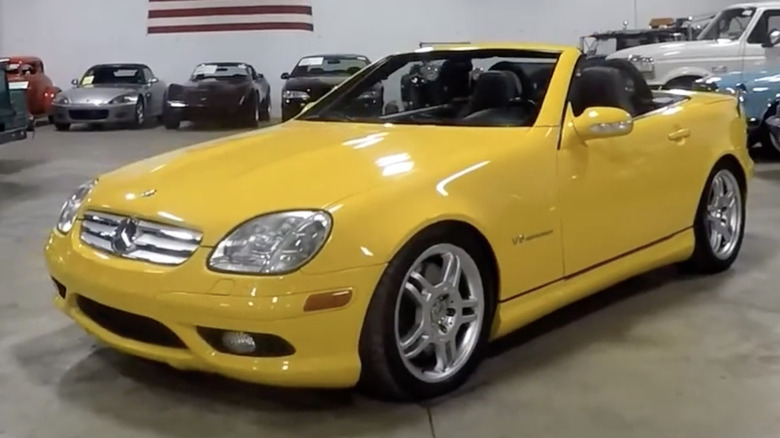
If the Crossfire caught your attention earlier but you couldn't quite get past the Crossfieriness of the whole thing, maybe it's time to wonder if buying a cheap old Mercedes-AMG is as financially unwise as it sounds. The 2003 SLK32 AMG started at $56,115 and stuffed a supercharged 3.2-liter V6 making 349 horsepower and 332 pound-feet of torque into the little rear-wheel-drive roadster. There was no manual option, only a five-speed automatic, but in-period testing recorded a 4.5-second run to 60 mph and a 13.0-second quarter-mile at 110 mph. AMG also reworked the suspension and brakes, creating something considerably more serious than the regular SLK, which would have jogged behind with its own 0 to 60 north of five seconds.
All of which makes $5,150 feel almost insulting. That's the current KBB value we found for a 2003 SLK32 AMG, or less than a tenth of its original sticker price. Two decades of depreciation haven't magically installed a manual transmission, but 349 supercharged horsepower in a small rear-drive roadster is still a pretty compelling answer to most questions involving five grand. It also has a fully automatic one-press-of-a-button top, which sounds both convenient and financially problematic if it decides to go sideways on you, literally or figuratively.
2007 Pontiac Solstice GXP: $7,565
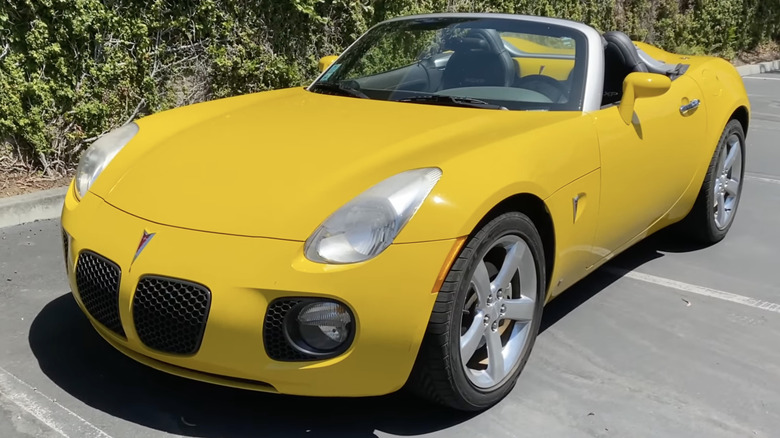
The Solstice GXP hasn't quite suffered the same financial indignities as the cars we've covered so far, but it still represents a pretty dramatic amount of sports car for the money. When new, the GXP started at $27,955 and came with a 260-horsepower, 260-pound-foot turbocharged 2.0-liter four-cylinder, a five-speed manual, rear-wheel drive, and a standard limited-slip differential. It wasn't just a styling exercise, either. In-period testing had the GXP running to 60 mph in 5.6 seconds and through the quarter-mile in 14.2 seconds at 98 mph, while the added power made the chassis considerably more entertaining once you started asking something of the rear tires. Would a 400-horsepower LS2 V8 Pontiac Solstice be cooler? Obviously. But it would also not be $7,500.
At $7,565, this GXP hasn't been financially vaporized quite as thoroughly as an RX-8 or SLK32 AMG. Even so, you're looking at a turbocharged, manual, rear-drive two-seater for a little more than a quarter of its original sticker price. And unlike some cars whose appeal was tied pretty closely to the era that produced them, the Solstice's basic formula still sounds suspiciously current. The drawbacks have aged right along with it, of course, including a tiny trunk and a top with borderline infuriating mechanicals. But it turns out that while that kind of thing can be a dealbreaker at retail, it's kind of part of the charm when you're shopping well under 10 grand.
2002 Porsche Boxster: $11,550
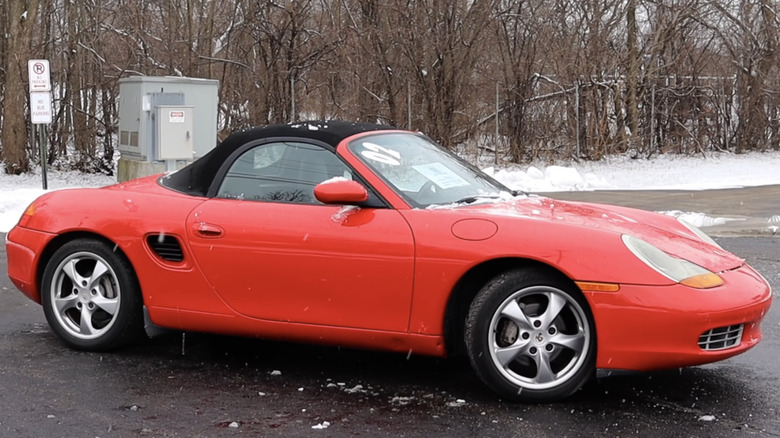
The Boxster is the odd one out here, because $11,550 isn't exactly pocket change and it has retained more of its original value than the cars at the front of this list. Still, not much is better than a Porsche Boxster, and the number starts to look different when you consider what the car actually is. The 2002 Boxster paired a 217-horsepower 2.7-liter flat-six with a five-speed manual and rear-wheel drive, all in a mid-engine two-seat roadster. The basic formula was never about brute-force acceleration. Its steering was accurate and communicative and one Car and Driver writer in-period described it as a decathlete — not the fastest among similar cars tested, but perhaps the most enjoyable all-around (including practicality).
The 2002 Boxster originally started at $43,365, while the example we're using here is now valued at $11,550. That's nowhere near the financial free fall of the RX-8 or SLK32 AMG, and pretending otherwise would be overselling the premise. But 11½ grand for a naturally aspirated, mid-engine Porsche with a manual transmission is still a remarkably low barrier to entry. It also makes a fitting place to end this list. Some of these cars are alarming because almost all of their original value disappeared. The Boxster is alarming for a different reason: Somehow, a genuine Porsche sports car wound up priced like fairly ordinary used transportation. On the other hand, looking at everything we've covered today, it's also nice to live in a world where you can have similar fun for much, much cheaper.