

The 5 Quickest Cars You Could Buy In The '70s
There are plenty of creative ways in which to rank an assortment of cars. We've looked recently at the SUVs with the most spacious third rows and at the fastest street-legal cars ever built. While every metric certainly has its value, for a gearhead, arguably the thing that gets us all most excited is quickness, meaning acceleration, rather than top speed.
Brutal acceleration can be used (within reason) in everyday life, whereas 200-mph top speeds are a bit tricky to enjoy on the commute back from work. Nowadays, everything is quick, even a VW Jetta can crack 60 mph in 5.6 seconds and go on to almost dip into the 13-second realm across the quarter mile, and that's before we get to the world of instant-torque EVs.
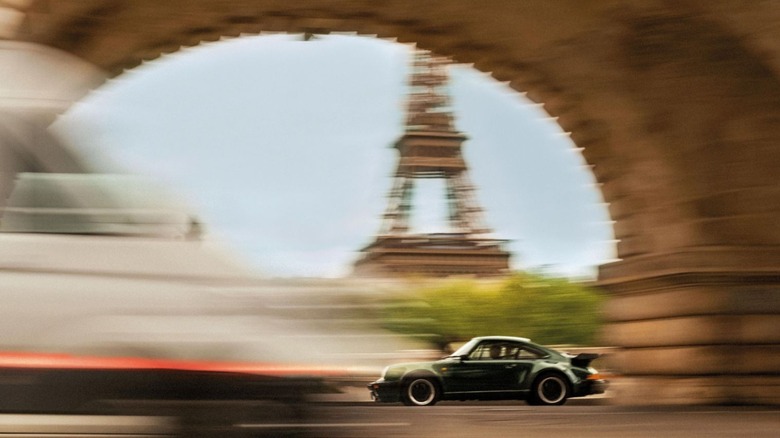
So, instead, for a little excitement, we're donning the rose-tinted specs and revisiting the quickest creations from around the world that debuted in the 1970s. From the original 911 Turbo to flat-12 Ferraris and big-block Corvettes, it's an eclectic mix, and, yes, everything featured manages to beat the aforementioned time to 60 mph.
1971 De Tomaso Pantera
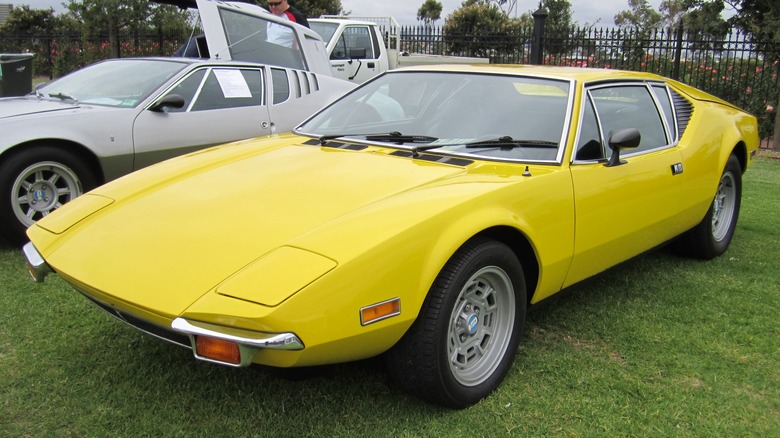
Up first is the Ford-powered 1971 De Tomaso Pantera. It's a mid-engine sports car, designed to do battle with more established brands. The De Tomaso is capable of sprinting from 0 to 60 mph in 5.5 seconds, courtesy of a 330-horsepower 351-cubic-inch small-block engine. No doubt the 3,100-pound curb weight helped it shoot off from a standstill with such speed.
While it may look quite similar to other high-performance cars of the era, such as the Maserati Merak or the Ferrari 308, the De Tomaso was quite different in its approach to performance. Most notable was the American-sourced muscle power, but De Tomaso also delivered its contender at a much more accessible price point. While a mid '70s Ferrari 308 commanded around $28,000, and the Maserati was a little cheaper at $21,700, the more powerful Pantera sold for a far more accessible $10,995. The Pantera would only be sold in the U.S. up until 1974, although later iterations sold in other markets would go on to extract 400 horsepower from Ford-derived mills.
1976 Ferrari 512 BB
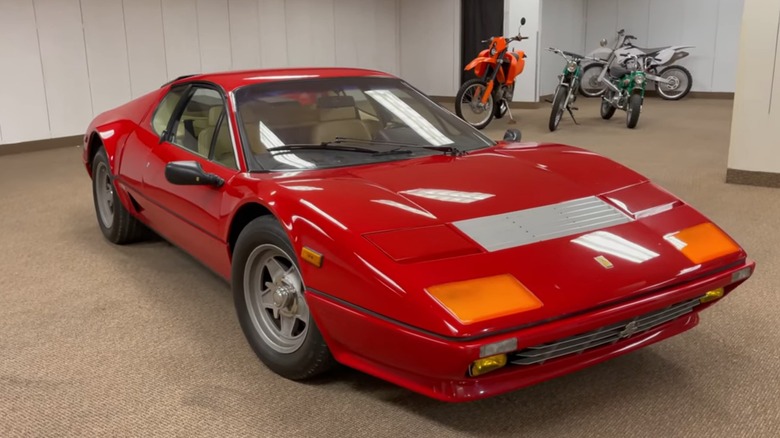
Surely, every fastest-this or quickest-that list deserves at least one Prancing Horse, and in this instance, our example is a real icon of '70s performance: the 512 Berlinetta Boxer. It arrived in 1976, following on from the BB model that preceded it, the 365 GT/4. The 512 took its rightful place as the firm's flagship supercar, powered by Ferrari's mighty 12-cylinder boxer engine. Sporting a 5.0-liter displacement, the engine produces an impressive 355 horsepower and is good for a dizzying top speed of 188 mph. That's remarkable stuff for the mid-1970s, as was its 0-to-60-mph time of just 5.4 seconds.
Now, there is no escaping the fact that Ferrari's 512 BB was indeed a very fast car, but one period road test, in particular, did quite prolifically disagree somewhat with the officially claimed figures. AutoCar reported 60 mph coming in 6.2 seconds, with a top speed of 163 mph. In fact, the outlet suggested the Ferrari's gearing simply wouldn't allow for a 188-mph top speed, despite claims made by owners and other outlets of the time.
Regardless, the 512 BB is a remarkable car, and this isn't the only time in which an automaker has been a little generous with estimated performance figures. In fact, Pontiac once sent a ringer to journalists in an effort to have somewhat exaggerated performance figures printed in the press, so we can forgive Ferrari if it was being a little performance optimistic.
1971 Chevrolet Corvette LS6
So far, you'd be forgiven for thinking Italians were having all the fun in the 1970s. America, too, had its fair share of quick cars — certainly before the Oil Crisis of 1973 took hold, anyway.
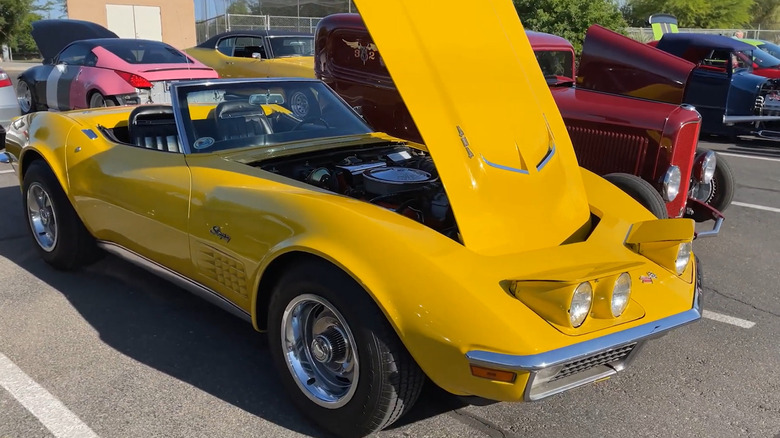
One car proves that better than most, and it's the 1971 Chevrolet Corvette LS6. This thing is a real rarity, with only 188 ever made, all all hailing from this single model year. Period testing revealed that the Corvette was capable of making it down a quarter mile in just 13.8 seconds, with a speed of 105 mph — notably 2 mph faster than that of the later and decade-dominating 911 Turbo. On its way, it would crack 60 mph in just 5.3 seconds, firmly placing it as one of the fastest cars of the decade, despite debuting right at the start of it.
Looking at the specs, it's no surprise to see how dominant this unicorn Corvette was. The LS6 was a 454-cubic-inch, 425-horsepower monster, and power was sent exclusively to the rear wheels. It sported an iron block and alloy heads, and, interestingly, it was one of the most powerful Chevy engines of its time, playing second fiddle only to the then-discontinued L88.
Picking one up in '71 was no easy feat. With a $5,496 base price and another $1,221 for the LS6 package, this hot Chevy was far from cheap. At $6,717 in total, it was virtually double what a brand-new Mach 1 Mustang cost.
1974 Porsche Carrera RS 3.0
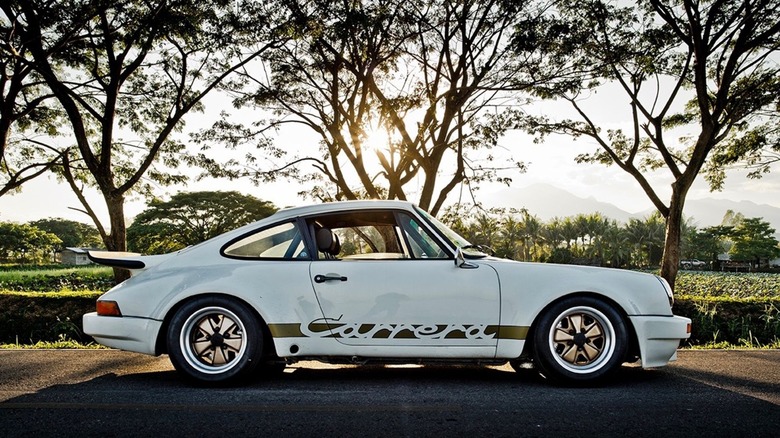
Porsche has clearly always known a thing or two about how to leave a set of traffic lights in style, as the second spot for fastest-accelerating car of the '70s goes to the Stuttgart-based automaker. The first runner-up prize specifically goes to the 1974 Porsche Carrera RS 3.0, something of an evolution of the previous year's lightweight Carrera RS.
The 3.0-liter engine providing motivation to this homologation special — of which just 109 units (55 road-legal and 54 race-spec RSRs) were destined for production, just enough to qualify the car for GT racing – has enough grunt to see it deliver 60 mph from a standstill in a blistering 5.2 seconds. It sported 230 horsepower, which was 20 up from the aforementioned 1973 car, plus much chunkier rear tires and a limited-slip rear differential, all of which no doubt helped it to leave the line in an orderly fashion.
Of the very few produced, none were sold new in the U.S., although some were exported very early on, and thanks to the 25-year import rule, all are now safely eligible for import to the States. However, for anyone hoping to enjoy some low-5-second acceleration runs in a classic '70s Porsche, be warned, this early RS is immensely collectible, commanding 7-figure sums with ease when one does occasionally surface for sale.
1978 Porsche 911 Turbo
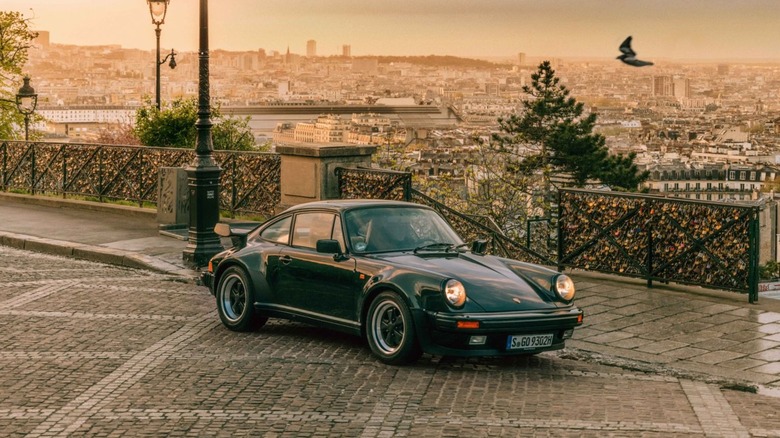
Coming in hot as the quickest car drivers could buy during the 1970s is Porsche's then-flagship 911. According to period reviews, the '78 model year was capable of darting from 0 to 60 mph in just 4.9 seconds. That's a performance comparable to a base 718 Boxster with a 6-speed equipped, so it's modest by today's standards, but back in the late 1970s, it was quite simply the quickest thing on 4 wheels at the time.
Crucially, it had to be a 1978-onward model year, as earlier cars — the model debuted as a 1976 model — miss out on some important elements. For 1978, Porsche introduced a charge-air cooler into the mix, in addition to increasing the engine's displacement by 0.3 liters. This injected a valuable dosage of 27 horses, which saw the 3.3-liter flat-six's output swell to 261 horses.
The 911 Turbo was certainly impressive from a standstill, but it was how the car drove that really gave it character. As was often the way with early turbocharging technology, the 911 Turbo didn't really understand linear power delivery, so instead, all that power came on really rather suddenly once the turbo finally spooled up around 4,000 rpm. The next 2,000 rpm would go by in a flash, then you'd change gears, and do it all again in the next gear. This chaotic power delivery made the Porsche quite a handful, especially for inexperienced drivers, and so, the 911 Turbo soon earned its nickname as a widowmaker.