

12 Cars With Rear-Mounted Spare Tires That Aren't Jeeps
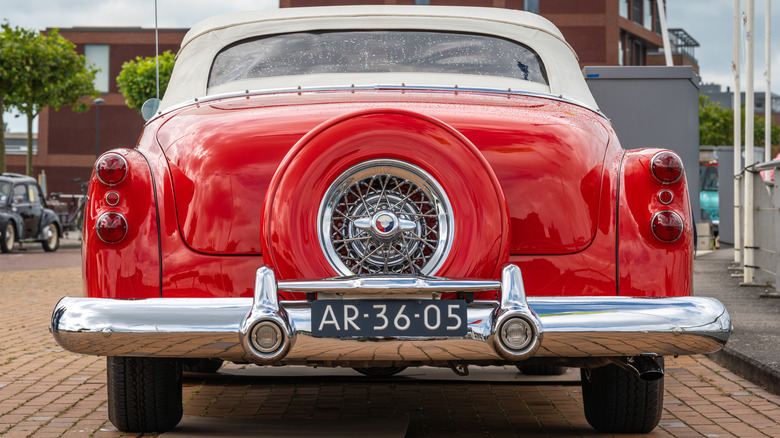
In a world where some new cars don't even include a spare tire anymore, there's something almost daring about a full-size one hanging defiantly off a rear tailgate, with all the understated dignity of a neon fanny pack full of sunscreen and Band-Aids. Whether you like the visible comfort of knowing exactly where your fifth wheel is waiting, or you've simply vowed to never again suffer the indignity of crawling under your SUV to extract your spare like John McClane in an air duct, it's understandable if you want to live that rear-mounted spare life.
You could get a Jeep. Of course, that comes with a variety of other "Jeep things" that you may or may not understand and may not be ready to put up with in pursuit of your preferred spare tire location. Forget road noise and death wobble. Just consider how much mental bandwidth you have available for rubber duckies in parking lots.
All that aside, a rear-mounted spare can add weight to the tailgate, complicate rear access, and make tight parking spaces more annoying. But it also gives a vehicle instant personality, and that's getting rarer by the year. From the Ford Bronco and the Mercedes-Benz G-Class to the Land Rover Defender and the Toyota FJ Cruiser, these are the non-Jeep cars that get you all the rear-mounted style, and none of the ducks.
Ford Bronco
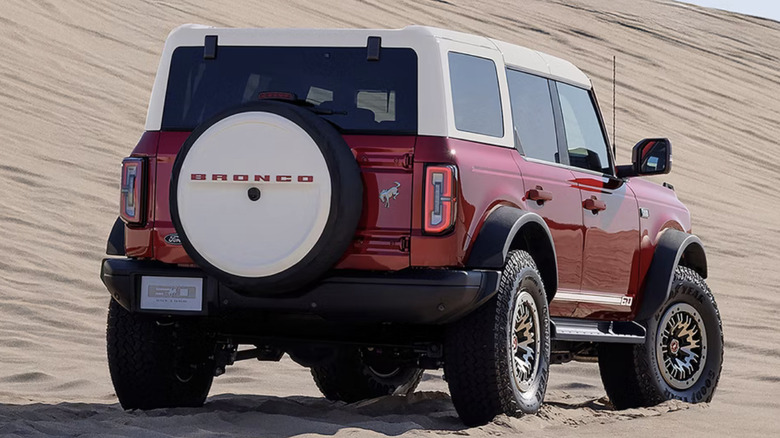
Well, you all keep buying Broncos, and maybe that unrepentant rear spare has something to do with it. Ford clearly understood exactly what people wanted to see when it brought the thing back. The modern Bronco needed a rear-mounted spare the way it needed round headlights, slabby sides, and a horsey badge that looks different than the Mustang horsey badge. Leave the tire off the back, and the whole thing starts looking less like a reborn off-roader and more like an Escape that got really into camping.
That's actually a little ironic, because the OG Bronco didn't have a spare mounted on the back. Except, it kind of did. Old Broncos also have their spare on the tailgate, they're just mounted on the other side, inside the passenger compartment. Ford literature from the time even claims that the inside rear spare leaves plenty of room for the optional third-row bench seat. There are probably comfier places to spend time, but it's a fun fact, nonetheless.
Mercedes-Benz G-Class
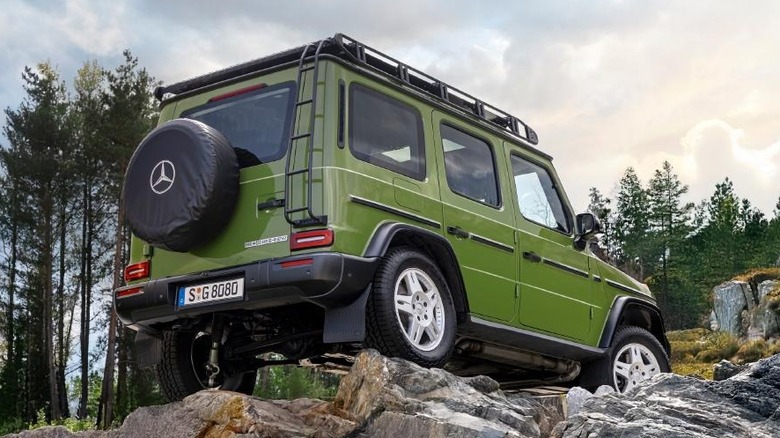
The Mercedes-Benz G-Class began life as a hard-edged military-adjacent utility vehicle and evolved into a rolling status symbol for people who own at least one watch winder. Through all of that, Mercedes has left the big spare tire hanging off the back, because at this point, it's less emergency equipment than sacred luxury geometry.
That rear-mounted spare does a lot of work. It helps the G-Class keep its old-world truck silhouette, even when the interior is slathered in leather, screens, ambient lighting, and whatever else Mercedes can charge extra for. Take it away, and the G risks becoming just another expensive box. Leave it there, and the whole thing still has a faint whiff of expedition fantasy, even if the expedition is mostly from Whole Foods to a private school pickup lane. And don't worry, if you've been biding your time until Mercedes-Benz releases the Baby G-Class, the company seems well aware that the Little G also needs to rock a full-sized spare on the back.
Land Rover Defender
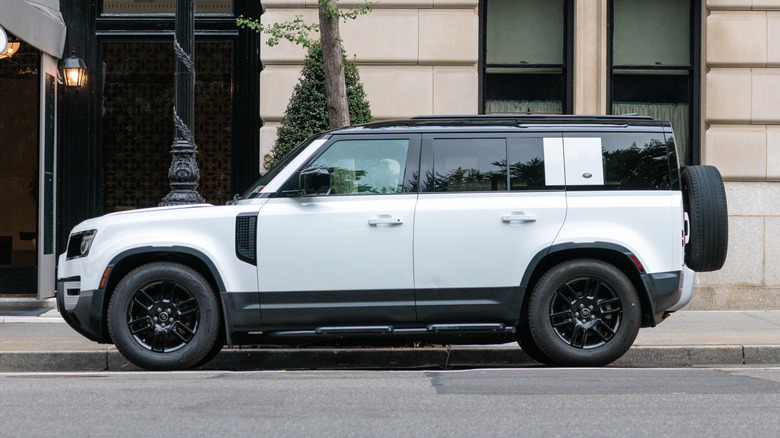
The Land Rover Defender is fantastic, actually, but it's also one of the few vehicles on this list where the rear-mounted spare feels less like an accessory and more like a load-bearing piece of brand mythology. Old Defenders had it. New Defenders have it. Even people who know more about locking wine fridges than locking differentials somehow understand that a Defender is supposed to have a big tire hanging off the back like it's about to set off across a sheep field in bad weather.
That's part of what makes the modern Defender such a careful balancing act. It is much nicer, smoother, and more expensive than the agricultural old trucks that built the name, but Land Rover knew better than to sand off every rough edge. Even as it promotes the release of the latest, most cushy iterations, Land Rover still points to the offroad practicality of the rear spare and even the short rear overhang made possible by keeping it out of the vehicle's floorboards. See? It's all about utility.
Ineos Grenadier
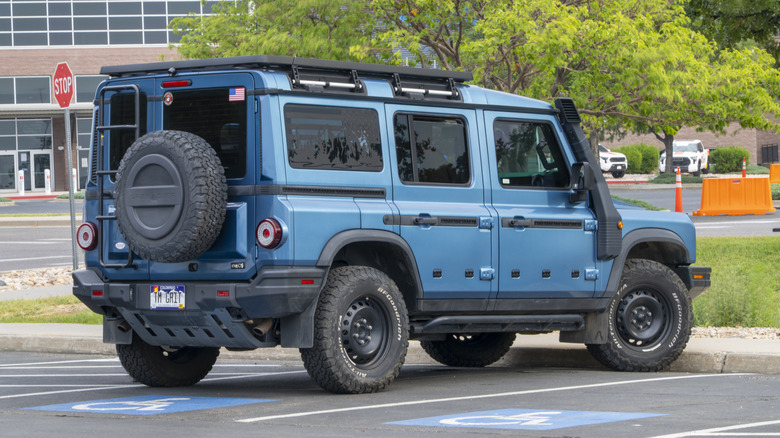
The Ineos Grenadier is not retro in the cute way, where a company rounds off a few corners, raids the archive for a badge, and sells you nostalgia with wireless CarPlay. The Grenadier feels more like someone got annoyed that modern SUVs were becoming too smooth, too quiet, too aerodynamic, and too interested in your phone, then built an entire vehicle out of that annoyance. So, no, it is not technically a Land Rover Defender, but yes, it does have a spare tire mounted on the back.
That rear spare fits the Grenadier because the whole thing is proudly utilitarian. It has exposed hinges, a ladder-frame chassis, solid axles, and the general vibe of a vehicle that would rather be power-washed than detailed. You can even option up your rear spare to include a locking storage box in the wheel well, so it's pretty much utility on top of utility. That feels about right for a modern old-school 4x4: Even the practical compromises come with options. The Grenadier is not trying to look sleek. It is trying to look like it came with a checklist, a shovel, and an appetite for adventure.
Toyota FJ Cruiser

The modern Toyota FJ Cruiser is what happens when an automaker builds a concept car, everyone yells "do it," and then they actually kind of do. It was boxy, strange, retro, chunky, full of blind spots, and somehow more charming because of all that. Of course, it had a spare tire on the back. Where else was Toyota supposed to put it, under the floor next to all the design restraint?
The FJ Cruiser's rear-mounted spare was part of the whole caricature-of-a-Land-Cruiser act, along with the distinct roof and stubby proportions. The vehicle has a relatively polarizing design, but Toyota seems committed to staying in this particular lane. The new Toyota Land Cruiser FJ is smaller and more adorable, but fans of the rear spare can still find one back there, embracing the kind of gently offbeat personality that has been ruthlessly engineered out of more mainstream modern SUVs. It's a weird car with an enthusiastic fan base. For a vehicle that sometimes seems a bit like a tribute album, the rear spare is clearly a hit that's remained on the track list.
Toyota RAV4 (first and second generations)

Considering that, today, Toyota wants dealers to push other models because it literally can't build RAV4s fast enough, it's easy to forget that when these things first showed up, they were quirky little runabouts with personality and rear spares. Early RAV4s – rear spares were limited to the first and second generations — were short, cheerful, and a little goofy. That rear-mounted spare was a big part of the charm.
On the first-generation RAV4 especially, the tire on the back made Toyota's little cute-ute look less like a tall economy car and more like something that might know where the beach access road is. The second-generation model kept the side-hinged rear door and rear-mounted spare, though by the third generation, Toyota was already moving away from the look in some markets. That feels about right. The RAV4 grew up, got smoother, and became one of the default answers to "what crossover should I buy?" But for a while there, it still had the posture of a little SUV trying to talk you into a three-day weekend where you can match wits with an old surfer in a Suzuki Jimny.
Honda CR-V (first and second generations)
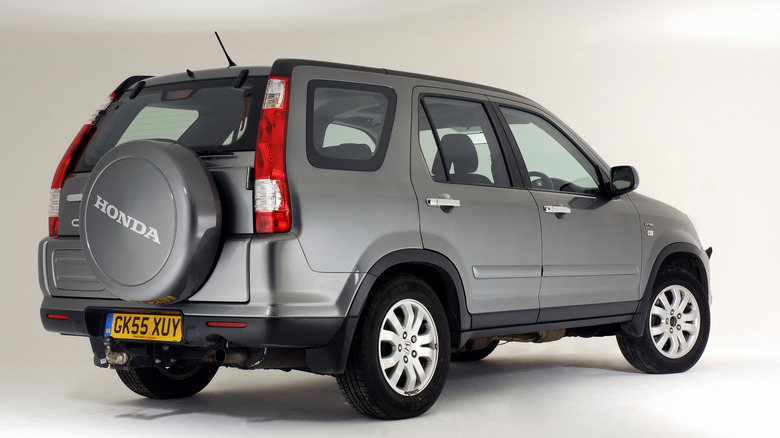
The early Honda CR-V was not trying to cosplay as an off-roader so much as it was trying to make normal life feel slightly more adventurous. That is an important distinction. Where some SUVs use a rear-mounted spare to imply mud, winches, and a carefully curated relationship with topographic maps, the first CR-V used it to say, "What if running errands also involved a picnic table?"
That was not metaphorical either. Early CR-Vs famously came with a folding picnic table tucked under the cargo floor, which remains one of the great acts of low-stakes automotive optimism. The first-generation model also mounted its full-size spare on a two-way tailgate, and the second-generation CR-V kept the rear-door spare arrangement going. It gave Honda's little crossover a friendly, practical sort of outdoorsiness — less expedition rig, more state park parking lot with a cooler and a dog that absolutely will not come when called. Eventually, the CR-V matured into a smoother, more conventional family crossover, but the early ones had a wonderfully specific personality: sensible enough for commuting, weird enough to make you believe you may use that picnic table someday.
Chevrolet Tracker/Geo Tracker
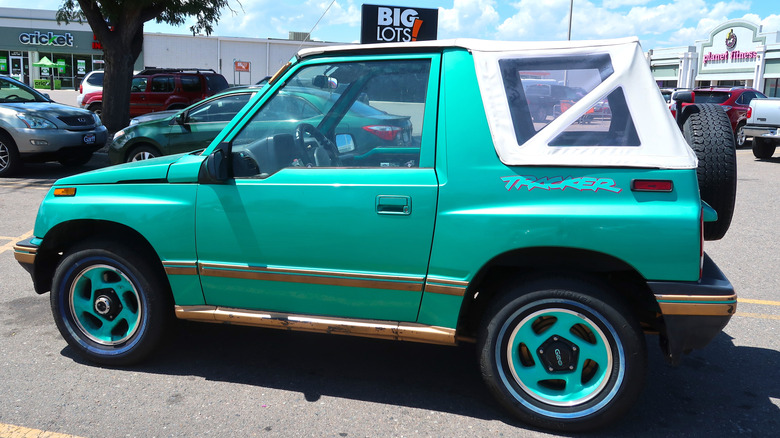
The Chevrolet Tracker, previously sold here as the Geo Tracker, is a useful reminder that a rear-mounted spare doesn't have to belong to something enormous, expensive, or even especially intimidating. Sometimes, it belongs to a little Suzuki-built runabout with friendly proportions, removable-roof energy, and the general vibe of a vehicle that would cheerfully follow a Jeep down a trail until things got genuinely concerning.
That was the Tracker's whole appeal. It looked adventurous without looking angry, which is a rarer quality than it should be. The outside-mounted spare helped sell the act, giving this small, affordable SUV a little extra trail-dog credibility without pretending it was a luxury expedition rig or a paramilitary accessory. So, you don't get much, but you do get an outside-mounted, full-size lockable spare tire and wheel, which is exactly the kind of charmingly earnest hardware this thing needed. The Tracker was not trying to dominate anything. It was just trying to be useful, cheap, and game for whatever mildly irresponsible weekend plan you had just talked yourself into.
Suzuki Samurai

The Suzuki Samurai is what happens when a vehicle is too small to be intimidating but too stubborn to be dismissed. It is narrow, upright, comically tidy, and somehow packed with more personality than SUVs that take up twice as much parking space. The rear-mounted spare is essential to the whole effect. Without it, the Samurai risks looking like a garden shed with headlights. With it, the thing suddenly has the posture of a tiny mountain goat that has already made several questionable decisions and lived to tell the tale.
This is also where the Samurai earns its keep. It's the scrappy one: the little U.S.-market off-roader with a shape that makes modern compact crossovers look like they were focus-grouped into submission. Its spare tire carrier sat right where it belonged, hanging off the rear and making the whole vehicle look ready to disappear down a dirt road at approximately bicycle speeds. It might not have been big, refined, or especially fast, but there's a reason that, all these years later, you can still make your summer stimulating with a slice of Suzuki Samurai.
Suzuki Grand Vitara
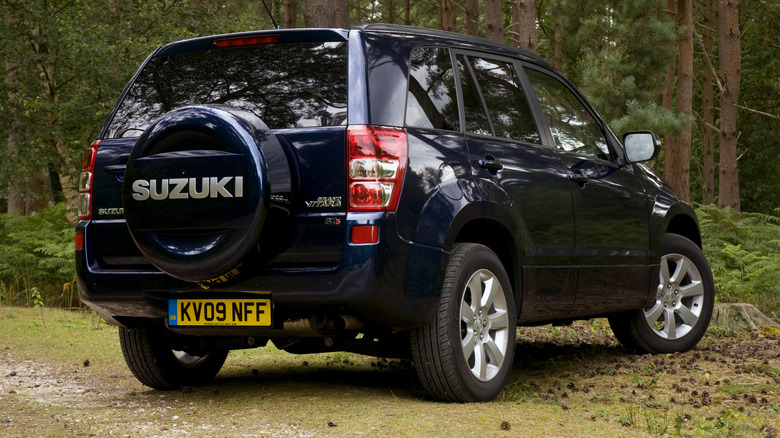
The Suzuki Grand Vitara is what happens when the Samurai's basic idea grows up, gets a proper back seat, and becomes just civilized enough to be invited places. It was still a small SUV by modern standards, but compared with the Samurai, it felt almost adult: smoother, roomier, and less likely to make passengers wonder if they had accidentally boarded a farm implement with turn signals.
The rear-mounted spare helped keep it from becoming too sensible. It made the little SUV look more adventurous, even when it was doing deeply normal things like waiting outside a hardware store or hauling groceries with one wheel hanging off the back like a tiny overlanding starter kit. That is the nice thing about Suzuki's small SUVs: They rarely looked like they were trying too hard, but they still had just enough trail-dog attitude to make ordinary driving feel a little less ordinary. We called this SUV "the other Toyota RAV4" when we were talking about cars you forgot existed, which feels about right.
The Nouveau Hummers
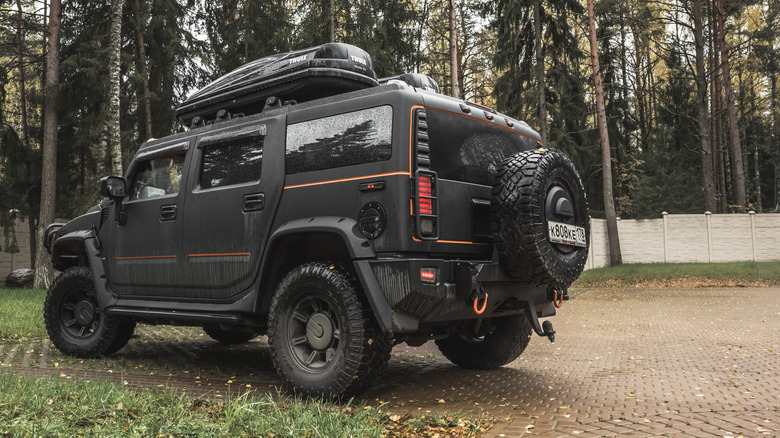
The Hummer H2 and H3 are rear-mounted-spare vehicles in the same way a rhinestone belt buckle is technically a way to hold up pants. Yes, there is a practical function in there somewhere. No, that is probably not the reason anyone noticed. These were the performative practical Hummers: smaller and more civilian than the H1, but still absolutely committed to making every grocery-store parking lot feel like it had been briefly annexed.
The H2 was the louder one, all blocky swagger and peak-2000s excess, while the H3 translated the same basic attitude into something closer to normal SUV size. Both understood the visual value of putting the spare where everyone could see it. It was part of the costume: one more round, rubbery declaration that subtlety had been tried, considered, and rejected with extreme prejudice. Oh, and as GM celebrates a quarter century of Hummers with its latest electric SUV, you can take comfort in knowing that has a rear spare, too.
Kia Sportage (first generation)
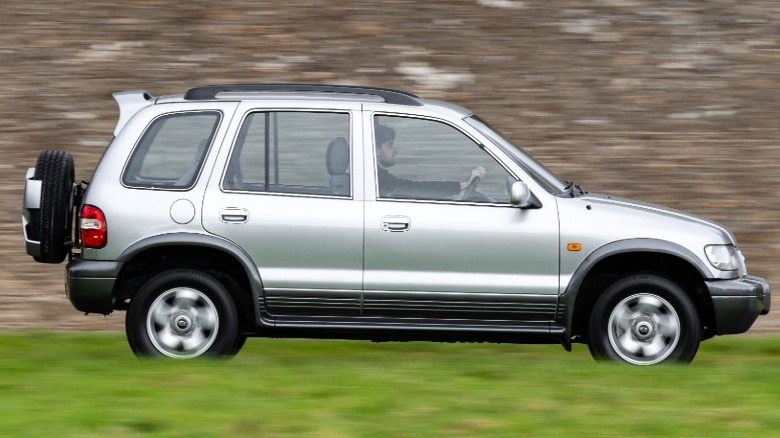
The first-generation Kia Sportage is a good place to end, because it proves the rear-mounted spare was not only for icons, legends, luxury bricks, or tiny cult off-roaders with questionable rollover reputations. Sometimes, it just showed up on a normal little SUV from a brand that was still trying to convince Americans it belonged in the conversation. Before the Sportage became a sharp-looking mainstream crossover, it was a small, earnest, body-on-frame oddity with an outside rear-tire carrier and the kind of face that seemed genuinely surprised to be here.
That is exactly what makes it useful for this list. The early Sportage did not need a rear-mounted spare to protect some sacred design heritage. It had one because, for a while, that was simply part of how small SUVs rolled. Today, even as the 2026 Kia Sportage gets a rugged refresh, it's doing so without that rad rear spare. Another one bites the dust.