

Which Of The Dead Entry-Level Cars Do You Miss The Most?
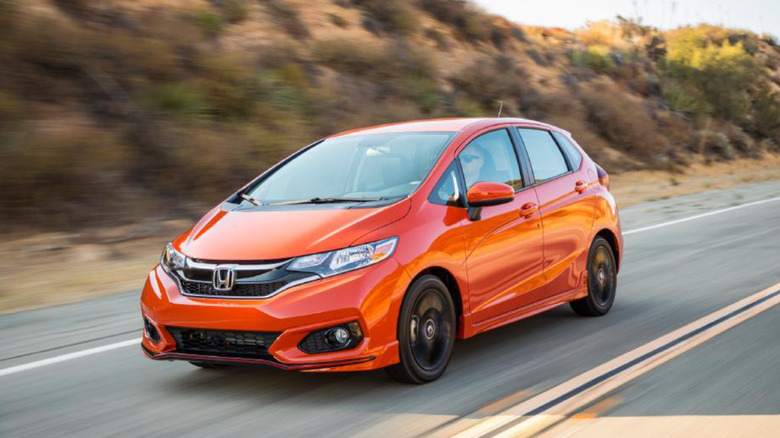
There are no longer any new cars available in the United States market for under $20,000, and it's getting increasingly difficult to find any under $30,000. It's a shame what we've witnessed in this industry across the last decade, as dealerships and automakers collude to increase per-unit profitability while reducing or completely eliminating affordable cars from their offerings. Long gone are the days when you could walk into a Nissan dealer and pick up a Versa for $9,999. I'm not really saying that I liked the Versa in particular, or that its death was worthy of lament. There were, however, some great entry-level cars that we're worse off for not having anymore. I want to know which ones you miss the most.
Think back to the 1990s and early 2000s, when the car market was absolutely packed with small entry-level automobiles that sold in the hundreds of thousands. Every automaker offered a non-enthusiast compact coupe, a small hatchback, or a tiny sedan, and they were as common as cockroaches on the road. I'm thinking of things like Chevrolet Cavaliers, Ford's Focus, or even smaller things like the Mazda 2, Toyota Paseo, and Honda Fit. From the 1980s to about 2010 the small front-wheel drive car was almost a right of passage. You couldn't graduate up into a big heavy pickup or SUV until you understood how to drive, and saved enough money to buy one.
In recent memory we've lost every sub-compact hatchback, including everything from Japan, despite the fact that many of them are still in production for other markets. I'm looking at you Honda Fit and Toyota Yaris! If it weren't for massive import tariffs and the corrupt dealership network controlling the market and dictating consumer preferences, they might still be around. Tiny cheap compacts might be nice in a market defined by an affordability crisis and giant fuel price hikes.
An ode to the Ford Aspire
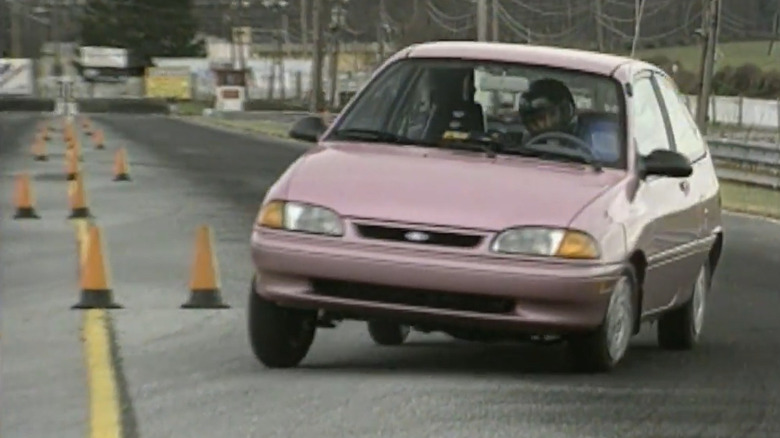
Back when I was fresh out of college, I purchased a well-worn Ford Aspire from a friend in exchange for a mini-keg of local beer and enough gift cards to Wendy's to buy two Baconator meals. The car didn't have a rear window, a rear seat, working air conditioning, or windshield wipers. The manual gearbox was also missing third gear, making merging onto the highway a death-defying affair. It was one of the greatest automobile experiences of my entire life. The Aspire was a truly horrible car, but I learned so much about driving dynamics and heads-up traffic pattern awareness.
Having driven this car for so long, it's always a good reminder that automakers used to push out kind of terrible cars for people who just needed bare bones transportation and didn't have a big budget. With just 64 horsepower and the kind of tepid acceleration that most cyclists could beat in light-to-light runs, the Ford wasn't fast. It also wasn't luxurious, or even particularly well built, but I'll be damned if it didn't do everything I needed it to for a few years.
I often lament the loss of this kind of car, because the American market, combined with car-centric infrastructure for much of the country, has more or less forced the working class into a debt slavery situation. Automakers have just about perfected the concept of making cars better to drive, and the improvement over the last thirty years is instantly noticeable. Instead of continuing to make cars better, then, maybe we should spend the next decade figuring out how to make them cheaper again.
So, which cheap small car do you miss most? Sound off in the comments below and we'll discuss it. Then I'll pick a few of my favorites to recap for everyone else.