

Does The Highway Minimum Speed Limit Make A Difference? Here's What The Research Says
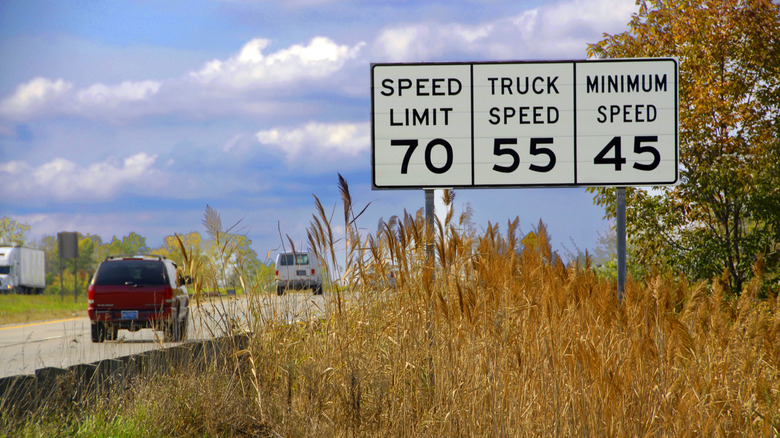
When traffic engineers set speed limits, they have many factors to consider. Sometimes, those considerations include highway speed minimums. Generally speaking, the original idea was that adding a highway minimum would help keep all traffic moving at roughly the same pace by keeping everyone within the same speed range. That's important, because it's not only the vehicles' max speeds that affect the risk of a crash, it's also the difference in their relative speeds — called the speed variance or speed differential. Because of how minimum speed limits interact with those factors, the limits do make a difference in the real world.
Speed variance has been shown to be a factor in how many crashes occur, while speeding affects both the number of incidents and their severity. With that in mind, let's consider a study looking into how highway maximum and minimum speed limits affect traffic safety. Data from "The significance of the posted minimum speed limits along interstate highways in South Carolina on traffic operation and safety," hosted on ScienceDirect, "suggests that vehicle speed variations were not affected by the posted differential speed limits," which includes minimum speed-limit signs.
On the other hand, according to separate research, it turns out that many drivers simply ignore any posted limits and drive at a speed they feel comfortable with given the conditions. The result is that some people will stay in their speed comfort zones, and some will drive closer to the minimum speed. So, the lower the minimum, the higher the variance. Considering that many studies indicate that increased speed variance can lead to more fatal accidents, minimum speed limits that are too low can make roads more dangerous. However, appropriate minimums can also prevent the variance from becoming extremely unsafe, helping avoid more accidents in the process.
What does the science say about speed differentials?
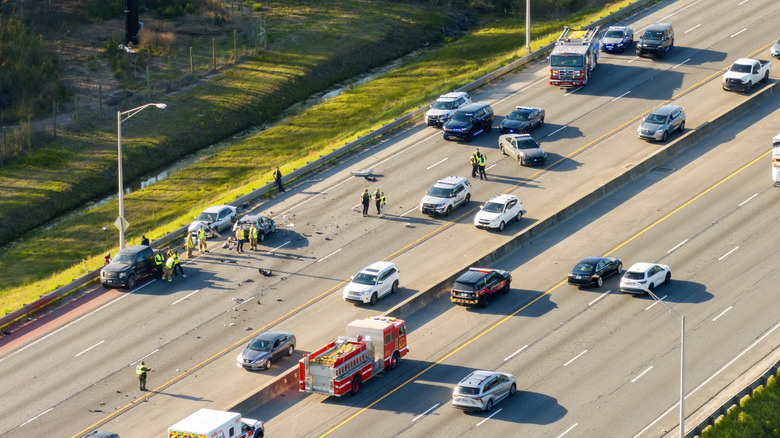
The key reason that speed differentials are so crucial to highway safety is pretty simple: The higher the difference in relative speeds when vehicles are moving along the same roadway, the more often faster cars will end up overtaking slower ones. This creates more opportunities for crashes. True, even regular folks can request to have speed limits changed to address this, but there's no certainty it will happen.
Additionally, speed itself is part of the problem. It's well accepted that speeding increases your accident risks, and this can come into play when you look at closing speeds among vehicles traveling at different rates. A higher closing speed between cars can significantly cut into how much time you have to react to the vehicle ahead of you. Let's say there's a 20-foot gap between your car and the next, and you're closing at 10 mph. That means you're closing the gap at about 14.67 feet per second. Next, the average driver reaction time is about .75 seconds. Doing the math, you won't react until you've closed the gap to about 9 feet. (You're traveling 14.67 feet per second, and .75 of that is 11 and change.) If you're closing at 20 mph — 29.34 feet per second — it will take you 22 feet to react, meaning you'll run out of room first.
Further, according to the "Statistical Analysis of the Relationship Between Speed and Stopping Distance in Transportation Movements," hosted on Zenodo, "stopping distance increases significantly with speed." So, once you do decide to hit the brakes, you'll take longer to come to a halt the faster you're going. It's really the same basic reason you should follow the 3-second buffer driving rule.