

Quarter Century Of Automotive Taste: The Best Selling Cars From 1980 To 2005

Speaking as someone who got their driver's license six months before the release of "The Fast and the Furious," the cars around during your teenage years can be deeply formative. But regardless of whether your own automotive history has left a soft spot in your heart for '90s Civics with underglow or if you're the type to scoff at the buzzy little things while polishing your Trans Am in cutoff jean shorts, a recent Car and Driver data roundup digs into the most popular cars for every graduating class since 1978.
Just to be clear, this isn't a list of cars that scream "I peaked in high school." We're talking pure sales numbers across the country in each year measured. Oh, and it's just cars. If you include trucks and SUVs, then this list becomes a three-decade tale of Ford F-Series supremacy with an eventual B-storyline about how Ford's Explorer showed up and started outselling America's favorite passenger cars (while still underselling the F-Series by kind of a lot). Still, it's a fun way to look at the data, so look at it we will. Let's get started by introducing our younger readers to Oldsmobile.
Oldsmobile Cutlass/Cutlass Supreme
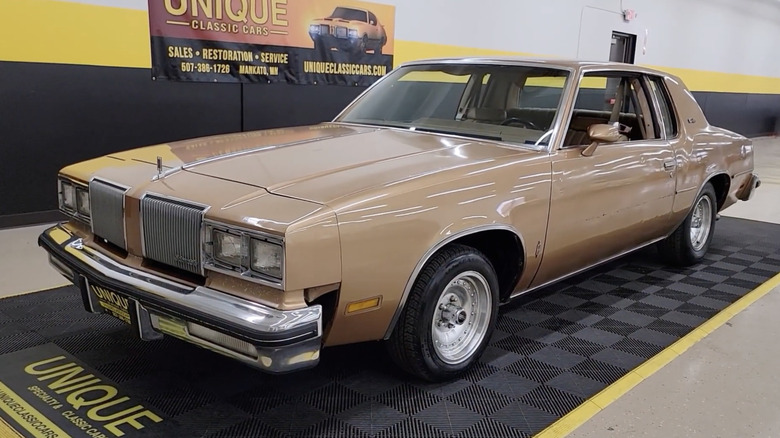
We're still not over the death of Oldsmobile around here, and anybody old enough to have been around at the time can tell you that for a while, they were absolutely everywhere. The Cutlass was America's best-selling car in 1980 and 1981, before taking a one-year back seat to the then-up-and-coming Ford Escort, then reclaiming the crown one last time for 1983. That makes this the first car on our list, and the last time Oldsmobile would sit at the top of America's passenger-car sales chart.
That early-'80s dominance landed right after GM's big late-'70s downsizing push, which is important because the Cutlass that ruled the start of the decade was not just some untouched chrome-barge relic from the old days. Oldsmobiles of the era were generally variations on the theme of a new, trimmer version of American normal: still formal, still comfortable, still wearing its middle-class respectability like a padded vinyl roof, but adjusted for a market rattled by fuel shocks and changing expectations.
The pitch wasn't radical economy-car self-denial. It was familiar Oldsmobile comfort scaled down just enough for the moment, which turned out to be exactly what a massive number of buyers still wanted. By 1983, that formula had enough pull to win one more time. Then the market started moving somewhere else. To the delight of almost no one reading this, that new direction was perhaps best embodied by the next car on our list — the humble, and maybe inevitable, Ford Escort.
Ford Escort
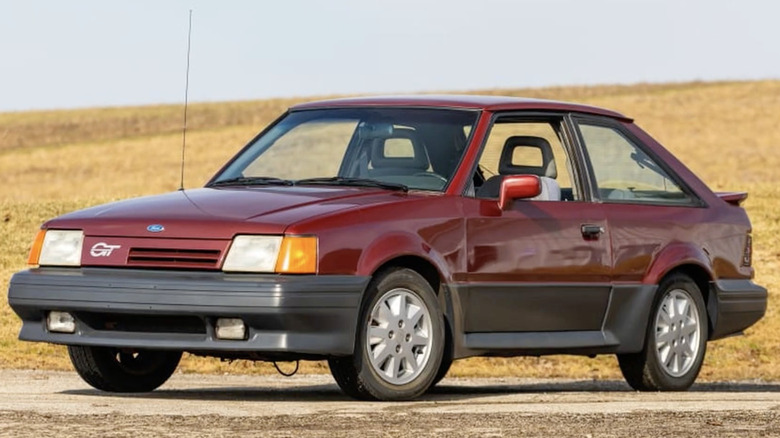
Okay, we might have overstated the universality of Escort hate a second ago, because clearly some people were bidding against each other for the almost-new Ford Escort on Bring a Trailer, but America's pivot from gently downsized Olds comfort to Ford's archetype of small car economy was certainly a sign of the times.
The Escort outsold all passenger-car comers for the first time in 1982 and then came back for a two-year run in 1987 and 1988. You'll notice a couple of similarly modest front-drive cars duking it out as we continue, so 1982 data marks a turning point when a modest little Ford interrupted Oldsmobile's hold American car shopping with something small and inexpensive, as much testing the waters of the changing automotive landscape as acknowledging a need to move on from the Pinto.
This shift played out even more transparently than you might think, with Ford leaning hard into the new-to-us Escort's European provenance in ways hard to imagine today. One ad launching the U.S. Escort felt more like a United Nations pamphlet than something from Ford. "Engineering teams from America and overseas join forces to create a new car with better ideas from around the world," it said, proving that not only could the Escort go on to sell more than anyone else, it could do so while Ford was talking like a bunch of commies. Regardless, the future of the American mainstream was getting smaller, whether anyone was genuinely excited about it or not.
Chevrolet Cavalier
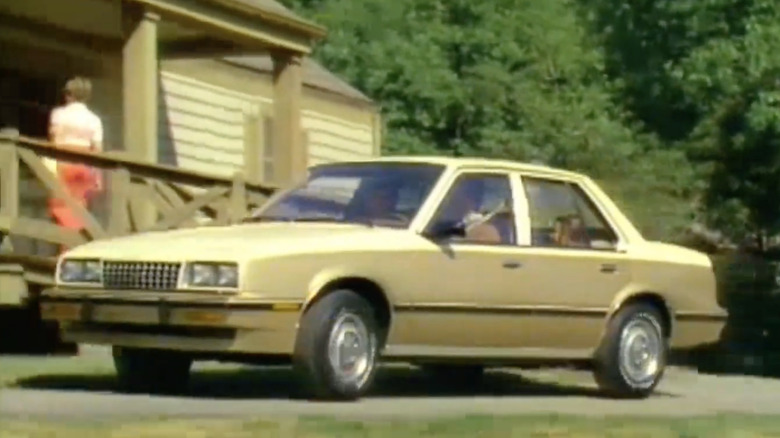
Before Chevrolet released the Cavalier Z24, creating the best version of a bad car, there was the plain ol' Cavalier, and Chevy sold an absolute ton of the things. No car enthusiast street cred hinges on anyone getting misty-eyed about the two glorious years when the Cavalier represented the center of American taste, but here it is anyway: America's best-selling passenger car in 1984 and 1985. It wasn't glamorous, and it was not trying to be. It was the kind of small Chevy that made sense on paper, made sense at the dealer, then peppered the background of automotive life like a nondescript extra for many years to come.
What made the Cavalier such a perfect mid-'80s sales object wasn't mystery or magic. It was reach. The first-generation Cavalier arrived for 1982, and Chevrolet spread the thing across coupé, hatchback, sedan, wagon and convertible body styles, which meant GM had a Cavalier-shaped answer for almost anyone trying to buy a small front-drive car. The Cavalier was there to be affordable, available and familiar. For two years, that was enough to rule the day, or at least the sales charts.
Chevrolet Celebrity
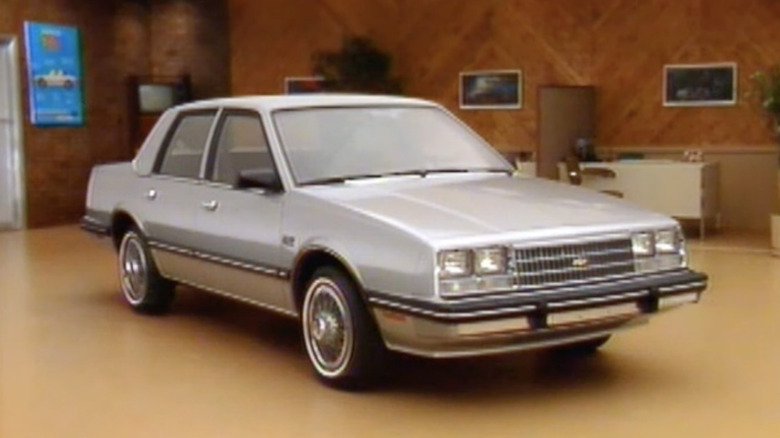
Even today it takes a lot of financial pressure for Americans to downsize from their bigger cars, so it's amusing to look back on Chevy's marketing department doing its level best to give this thing a name that'd make the proposition go down a little more easily. Adding to the slapdash vibe, the name wasn't invented from whole cloth. GM had already kicked "Celebrity" around in the Oldsmobile world decades earlier, which somehow makes it even more GM: a borrowed bit of showroom glamour pasted onto a front-drive family sedan.
In any case, "Celebrity" is a wonderfully shameless name for a midsize Chevy whose basic cultural footprint is mostly "someone's dad had one." But the value proposition had legs, and for one year in particular, it was clearly enough to move units. After two years of Cavalier dominance, America's best-selling passenger car for 1986 wasn't another compact economy play but the roomier, more grown-up Celebrity, which sat in the market almost sheepishly, including Chevrolet advertising suggesting the Celebrity was perfect for carving up back roads after your wife and kids have fallen asleep while you drive them home from somewhere. From the name to the alleged handling to the available manual transmission, Chevy did its very best to help people talk themselves into treasuring this thing.
Honda Accord
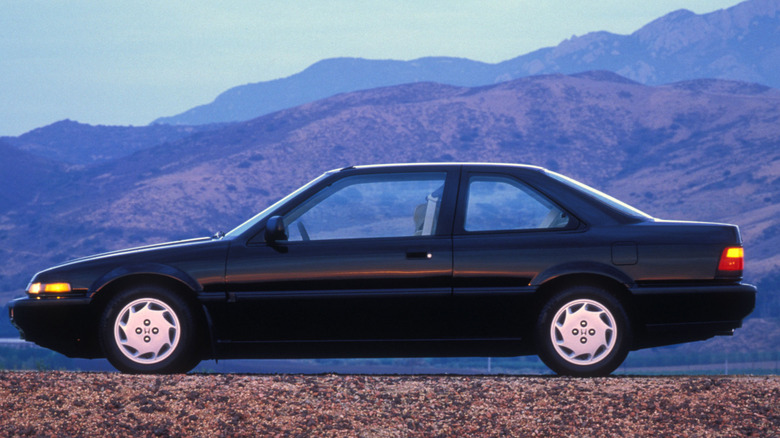
Here's where you can feel the modern family sedan era snapping into place. The Honda Accord grabbed the top passenger-car spot in 1989, held it through 1990 and 1991, and then — after the Taurus and Camry had taken turns defining the segment — came back for one more win in 2001.
That's a very different kind of dominance than the Oldsmobile or Cavalier story. The Accord wasn't just America buying something smaller because the times demanded it. It was America deciding that the sensible Japanese-brand sedan had become the benchmark, and not in some niche coastal-urban-import-enthusiast way, either. By 1989, most U.S.-market Accords were built in Ohio, paving the way for it to become not just a high-selling import, but one of the key cars on American roadways.
The 2001 encore is the part that makes the Accord feel less like an '80s disruption and more like a permanent fixture. The Accord won by making competence feel desirable: refined, roomy, reliable, and priced sensibly enough that buying one did not require a personality crisis. The Detroit cars had not disappeared yet, but the center of gravity had clearly moved. Even in modern days, Car and Driver's 10 best list includes the Honda Accord again and again. And its time of dominance certainly was an era. Perhaps one that's over (hi, Camry), but an era nonetheless.
Ford Taurus
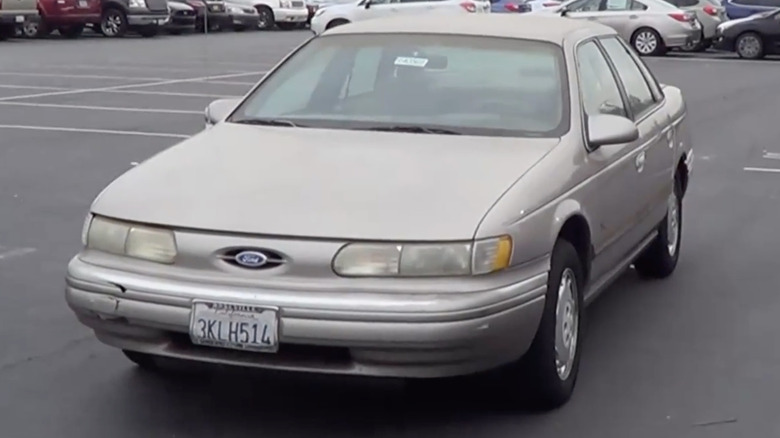
The Accord's rise makes it tempting to treat this stretch as a clean handoff from Detroit to Japan, but the Ford Taurus gets five straight years in the middle to complicate that story. After Honda's three-year run, the Taurus became America's best-selling passenger car in 1992 and stayed there through 1996, which is less a footnote than Detroit briefly remembering how to set the agenda. The original Taurus saved Ford when it arrived in the mid-'80s, all rounded edges and aero confidence in a market still full of squared-off sedans. By the early '90s, that future had become the sales-chart present.
But the Taurus' long winning streak also sets up the Camry takeover perfectly. A 1992 Car and Driver family-sedan comparison placed the Taurus right in the thick of that fight against the Accord, Camry and Chevy Lumina, which is basically the whole era gathered in one place. Ford could beat them, and for a while it did, but the segment was turning into a war over quietness, refinement, reliability and painless ownership — exactly the kind of battlefield Toyota was built to win.
The Taurus mattered because it proved the American family sedan still had real pull. Its problem was that the next default car was already standing in the room, wearing a Toyota badge and, it turns out, pretty much ready to take over the world.
Toyota Camry
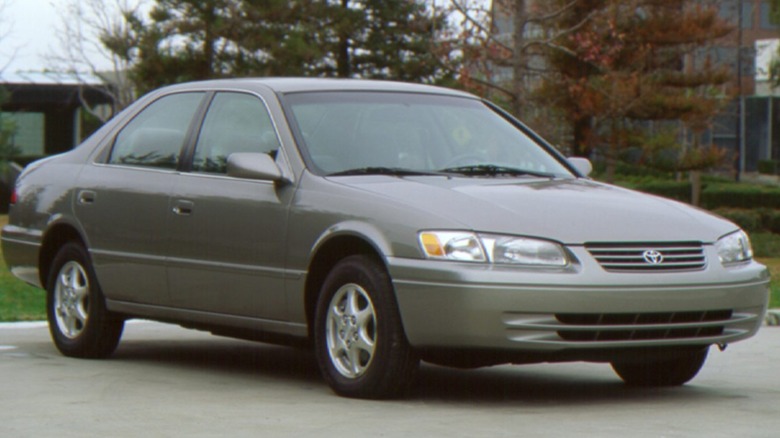
And then the Camry shows up, which is where this whole thing stops being a tug-of-war and starts looking like a permanent settlement. The Taurus had spent five years proving Detroit could still build the car everybody bought, but Toyota's answer was ruthless: Make the family sedan feel so unthreatening, so competent, and so easy to recommend that it eventually became less a car than a rite of passage into responsible adulthood, like buying grout cleaner or scheduling your own dentist appointments.
The Camry became America's best-selling passenger car in 1997, held the spot through 2000, lost one year to the Accord in 2001, then took it right back from 2002 through 2005. By the time the fourth-generation Camry arrived for 1997, Toyota understood exactly what kind of appliance America wanted, and that is not really an insult. A 1996 MotorTrend road test describes the development pressure around the new car with a Toyota executive acknowledging that the defacto mantra of the Camry program was "Don't screw it up."
That is not the language of revolution. That is the language of a company protecting a formula that was already terrifyingly good. And in a quarter-century that started with America still buying Oldsmobiles by the hundreds of thousands, ending with the Camry feels almost too neat. But hey, if you think you wouldn't want to live in a world dominated by a midsize Toyota, just remember two things: Camry was still America's top-selling traditional passenger car in 2025, and Ford pickups outsell all of the above by an almost comical margin.