

5 Compact Family SUVs Under $30,000 In 2026 (And The Used Alternatives To Consider)
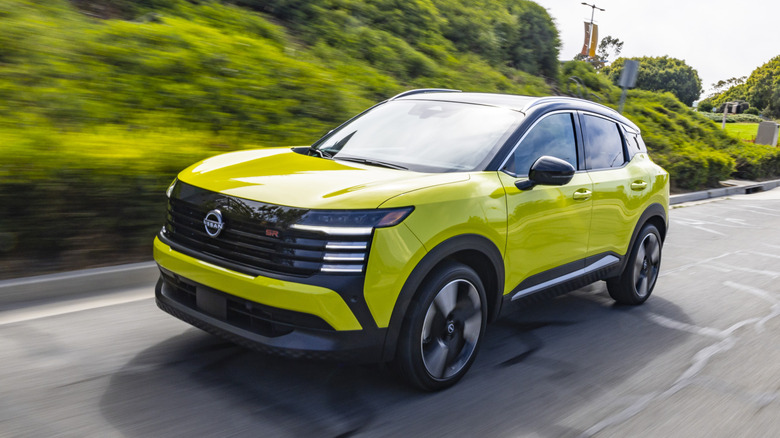
At a time when the average new car costs almost $50,000, a 40% cheaper price tag can seem like an absolute bargain. Fortunately, there are many family-friendly options that still stay under this $30,000 threshold today, with models like Chevy Trax, Nissan Kicks, Toyota Corolla Cross, Mazda CX-30, and Kia Niro Hybrid standing out from the pack. And while they may not all have all-wheel drive (AWD) or all the bells and whistles of some fancier (and pricier) models, these 2026 SUVs can certainly handle hauling people and their stuff. We've listed the least expensive trim for each. All MSRPs include factory destination charges.
Yet, there's another reality to consider: For some buyers, even a $30,000 price tag is a bridge too far. However, there are still good options available for shoppers on a budget — just not at a new car dealer. For each new model, we've suggested less-expensive alternatives from the pre-owned camp, focusing on examples well below $20,000 (based on CarGurus marketplace listings) with comparable features, performance, and good Consumer Reports (CR) ratings (average or better). Take your pick of a second-hand Mazda CX-5, Toyota C-HR, Honda HR-V, Subaru Crosstrek, or Toyota RAV4 Hybrid. As a disclaimer, we use the SUV term loosely here. Yes, these vehicles are technically crossovers, but many consumers use the terms interchangeably, so we do the same throughout this article.
2026 Chevrolet Trax ($23,495) and 2015 Mazda CX-5 ($11,000)
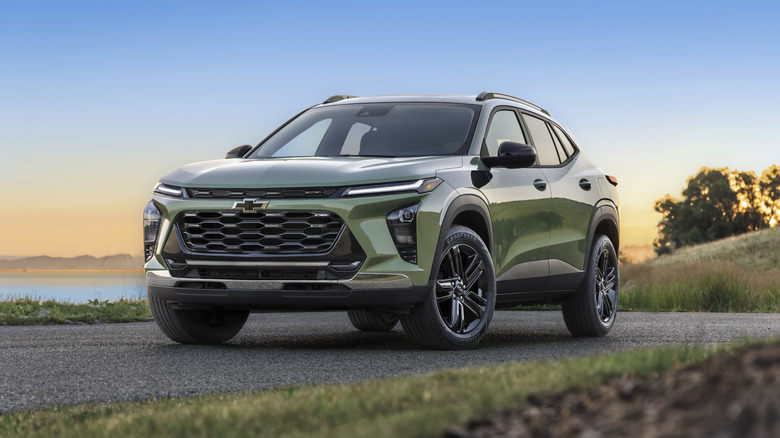
The second-generation Chevy Trax is proof that American consumers want affordable transportation wrapped in SUV packaging. In 2025, this subcompact crossover grew to be the automaker's second-best-selling non-truck vehicle, moving over 200,000 units. For reference, Ford doesn't even offer a single SUV under $30,000. Redesigned for the 2024 model year, the Trax was transformed from a stubby, awkward-looking five-door into a more stylish and practical small SUV. Most significantly, the base Trax doesn't even come close to the $30,000 mark. There's plenty of money for gas and insurance. Of course, this Chevy isn't perfect — few cars in this price range are — and expectations should be modest with a turbocharged 1.2-liter three-cylinder engine. In our review of the 2024 Chevy Trax, we found that the "engine is not exactly silky, or nice to listen to." At least the gearbox is a conventional six-speed automatic. The one potential turnoff is that front-wheel drive (FWD) is the only drivetrain — AWD isn't available.
A great used alternative is a 2015 Mazda CX-5. Think of it as a something-for-everyone option that can cost half as much as a new Trax. You'll just want to focus on the 2015 model year. That's not a bad thing, as this edition earned an above-average CR reliability score. The flexibility for buyers comes from a wide range of options under 120,000 miles — and possibly closer to 100,000 miles — available in the $11,000 to $14,000 price range. On the low end, you'll find a base Sport trim, possibly with all-wheel drive. Spending a few grand more opens the door to a Touring or Grand Touring trim with a more robust powerplant: a 184-horsepower 2.5-liter four-cylinder engine versus the base 155-horsepower 2.0-liter unit.
2026 Nissan Kicks ($24,275) and 2020 Toyota C-HR ($16,000)
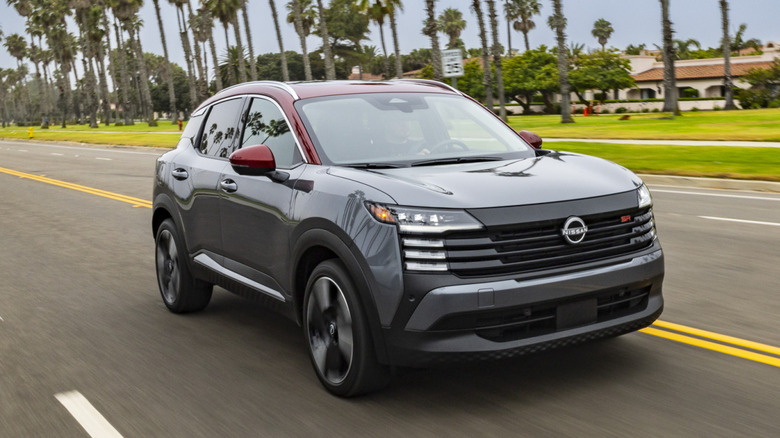
The Nissan Kicks shares a similar story to the Trax, recently redesigned (for the 2025 model year) from a lackluster crossover into a stylish competitor. The results speak for themselves: The model saw a 32.8% year-over-year increase in sales in 2025. Unlike the Chevy Trax, the Kicks is available with AWD (a change from the previous FWD-only generation), which adds another $1,500 to the window sticker. However, at $25,775, that still makes the Nissan the cheapest AWD vehicle of any type you can buy. Naturally, there are trade-offs. The naturally aspirated 2.0-liter four-cylinder engine makes a modest 141 horsepower, which translates into a 0-to-60 mph time of 9 seconds. Meanwhile, the 34.5-inch rear legroom and 60-cubic-foot maximum cargo space fall short of some of the other compact SUVs.
Every buyer has their own definition of cheap, and sometimes a $25,000 starting price isn't in the cards. But, there is that appeal of a factory warranty. While a 2020 Toyota C-HR isn't likely to be protected by the original warranty, an above-average reliability rating from Consumer Reports offers some peace of mind. It has some shortfalls, too, including the lack of AWD and second-row seats that can feel confining. The C-HR's quirky looks may not suit everyone's tastes, but for $16,000 to $19,000, you can get a five-door Toyota from the current decade with less than 80,000 miles on the clock. A basic suite of driver-assistance tech is standard, too, such as forward collision warning with brake assist, adaptive cruise control, and lane-keep assist. The 2018 and 2019 model years are generally cheaper, but they also have below-average reliability scores.
2026 Toyota Corolla Cross ($26,610) and 2017 Honda HR-V ($13,000)
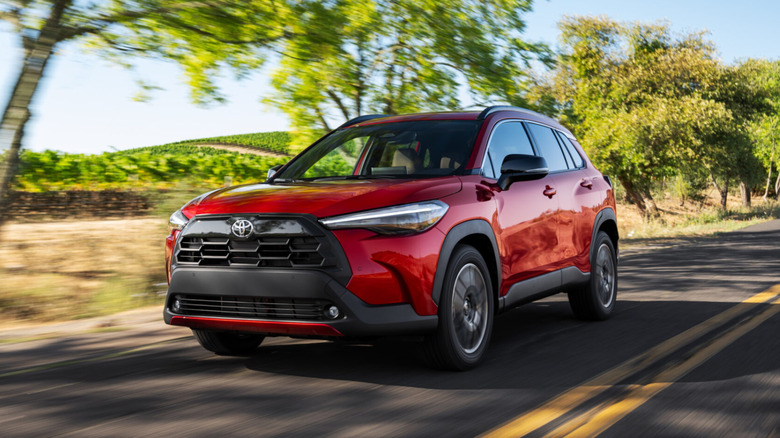
Toyota's current entry into the subcompact crossover class is the Corolla Cross, which starts in FWD form in the base trim. Adding AWD is a $1,300 upgrade, which still keeps the Corolla Cross well under $30,000. However, the same can't be said of the hybrid version, which starts at $30,445. Power comes from a 169-horsepower 2.0-liter naturally aspirated four-cylinder engine paired with a CVT. This transmission is a Toyota Direct Shift unit, which features a launch gear for smoother operation and better fuel economy. The Corolla Cross also earns kudos for a low five-year estimated depreciation rate of 30% according to CarEdge.
People buy Toyotas for many reasons, but one is the company's reputation for building reliable cars. Arguably, Honda attracts similarly minded buyers. So, if a new Corolla Cross isn't in the cards, but dependability is still a must-have, check out the 2017 Honda HR-V. Consumer Reports rated its reliability as above-average, while the 2016 edition (the second-generation HR-V's first model year) can't make the same claim. The second-generation HR-V gets credit for nimble handling, though it's modestly powered at 141 hp. What sets this Honda apart is the second-row Magic Seats, which maximize cargo space by folding flat or even flipping upward toward the front. The company axed this feature when the third-generation HR-V was launched in 2023. Shopping for something with under 100,000 miles will leave you with options ranging from $13,000 to $15,000, and you can sort by trim and drivetrain (front-wheel or all-wheel drive).
2026 Mazda CX-30 ($27,870) and 2019 Subaru Crosstrek ($15,000)
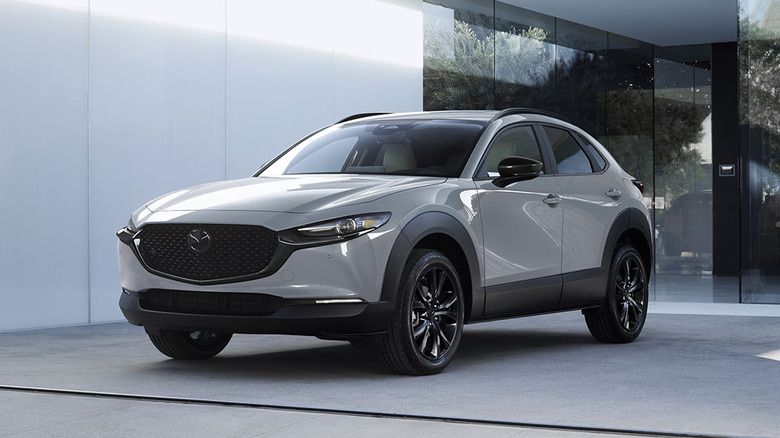
Despite coming standard with AWD, the CX-30 still doesn't max out the $30,000 SUV budget. Another bonus is the 186 horsepower generated by the CX-30's naturally aspirated 2.5-liter four-cylinder powerplant mated to a six-speed automatic gearbox. The resulting 0-to-60 mph time of 8.1 seconds won't win many stoplight races, but it's not the slowest performer among this group. The CX-30 is available with a turbocharged version of this engine — an unusual performance upgrade in this category — but that $30,000 price cap makes this change under the hood impossible. Last year, Jalopnik readers named the CX-30 one of the best bang-for-your-buck cars.
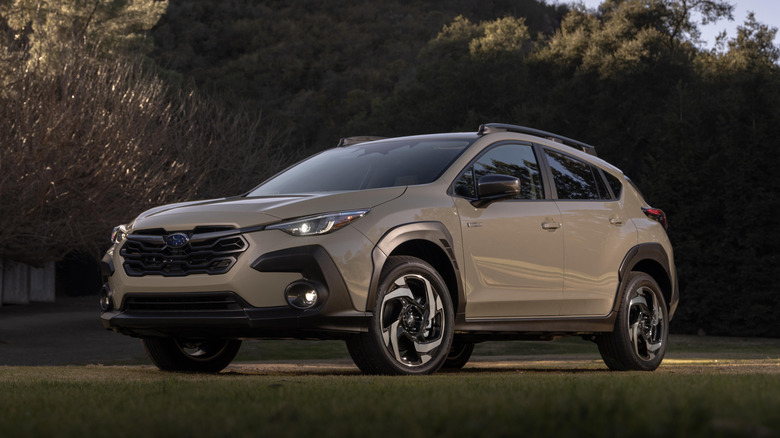
If you like the idea of standard AWD, but want something substantially cheaper than a new CX-30, consider a Subaru Crosstrek. This means dialing back to the second-gen Crosstrek (2018 to 2023). The 2019 edition has above-average reliability, according to Consumer Reports. Although a plug-in hybrid variant was introduced this year, we'll focus on the gas version with an eye on simplicity and lower prices. Pricing runs around $15,000 to $16,000 for mid-grade Premium trim examples with under 90,000 miles. Opt for the base grade to toggle between a lower price and lower mileage. With luck, you might find either of these editions with the optional EyeSight driver-assistance system, which was standard on the Crosstrek Limited.
2026 Kia Niro Hybrid ($28,885) and 2017 Toyota RAV4 Hybrid ($17,000)
The Niro Hybrid is another FWD-only SUV, but this setup helps deliver stellar combined fuel economy of up to 53 mpg. This Kia also wears another badge of honor: It's the cheapest hybrid SUV you can buy for the 2026 model year. The least-expensive Toyota Corolla Cross starts at almost $31,000, though AWD is standard, and both vehicles are among our top five picks for hybrid SUVs for well under $50,000.
At the same time, the base Niro Hybrid has a full suite of advanced driver assistance systems, including blind-spot monitoring and rear cross-traffic alert. Other equipment, like dual-zone automatic climate control and five USB ports, is a nice touch for this price range, too. Despite its subcompact status, the Niro delivers midsized space: 39.8 inches of rear legroom and 63.7 cubic feet of maximum cargo space.
If you're ready for hybrid efficiency but not an almost-$30,000 price tag, the 2017 Toyota RAV4 Hybrid is a great alternative. You'll save over $10,000, and drive away with a family-friendly crossover that's EPA-rated for 32 mpg combined. The RAV4 Hybrid launched in 2016, so bypassing the debut year avoids any first-year-gremlin worries, justified or not. The 2017 RAV4 Hybrid has a very good reliability rating from Consumer Reports, too. A mid-tier XLE trim with under 120,000 miles runs about $17,000 to $18,000. Add an extra thousand or two if you want lower miles or the higher Limited trim. One bonus: Toyota bundled all-wheel drive with the 2017 RAV4 Hybrid powertrain.