

When Does A Speeding Ticket Become A Reckless Driving Charge?

It happens. You're behind the wheel, and your mind wanders. You're distracted by the day's events and your own voice belting out Taylor Swift. Or whatever else gets you singing. The little needle on your speedometer creeps above the posted limit, or you miss that next speed limit sign. Your rearview mirror practically bursts with the flashing lights of an approaching police car.
Speeding tickets suck. Hell, even 10 mph over the limit will cost you big in some states. And that's just a ticket. Some of your lead-footedness might land you in serious trouble with the fuzz. A lot more trouble than a simple speeding ticket. Depending on where you live in this crazy country, your excessive speed could land you a reckless driving charge.
So what, right? Who cares? You should. Unlike a simple speeding ticket, the authorities consider reckless driving a criminal offense. That means a nasty black eye on your criminal record in addition to potential jail time. So you might want to mind your speed a bit. Especially if you live in a state like North Carolina, Virginia, or Florida. A few miles per hour could mean you end up with a hefty fine or jail time.
Speed doesn't always stop at a speeding ticket

Police in the U.S. issue millions of tickets every year. All told, the American motorist has a 1 in 6 chance of getting a speeding citation on an annual basis, as if rolling the dice on a ticket. Most of those tickets exceeded the posted speed limit by more than 10 miles per hour, and depending on where you live, it doesn't take much more than that to earn a record-tarnishing reckless driving charge. In North Carolina, for instance, driving 15 mph or more above the posted limit can be considered reckless driving.
In Virginia, 20 mph over the speed limit or exceeding 80 mph can bump your speeding ticket up to a criminal charge. The same goes for Arizona, although it's 85 mph or more for motorists driving around the Grand Canyon State. Other states omit the upper limit, instead focusing on a driver's amount of speed over the posted limit.
In Illinois, 27 mph over the limit changes that ticket to a nasty Class B misdemeanor charge, a mandatory court appearance, and at least $250 in bail money — or surrendering your driver's license — before you can go on your way. Of course, raw speed isn't the only way to get a reckless driving charge. Even if you're not quite hitting the excessive speed restrictions in your state, racing another motorist or participating in a street takeover is a quick way to be classified as reckless. It doesn't matter if you're in one of your dream street race locations.
Jail time and big fines for excessive speed
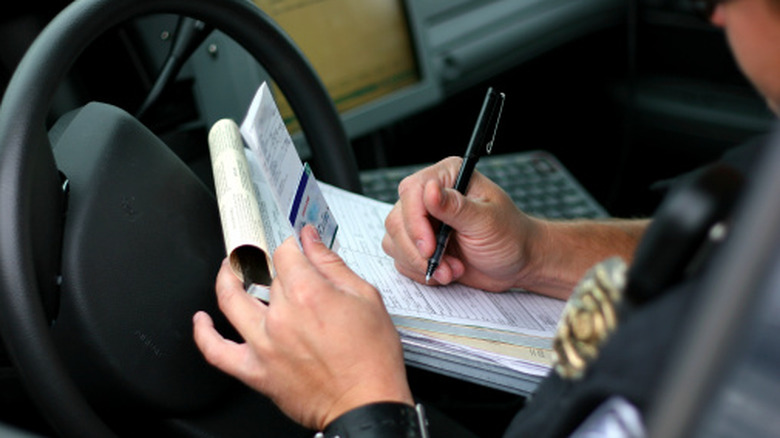
So depending on where you live, 15 mph could be the difference between a speeding ticket and a reckless driving charge. Ouch. Better mind your speed. That charge is more than just an ugly blemish on your criminal record. Step in it bad enough, and you're looking at jail time. Californians could incur a hefty fine for reckless driving or racing. Hit triple digit speeds on California's highways, and you're looking at an automatic official review. Even if you have no prior blemishes on your driving record.
Some states have flat-out had enough with excessive speed. Take the Sunshine State, for example. In an attempt to curb reckless speeding in the state, Florida instituted its "Super Speeder" law in 2025. The law targets drivers who exceed the posted speed limit by 50 mph or travel at 100 mph or more on the state's roads. A first-time violation of the law could mean 30 days in the pokey.
It didn't take long for Floridians to test the law, either. One Florida man broke the new speeding law two minutes into enforcement. Look, speed is fun. But driving much too quickly on public roads is a quick way to end up with an irritating fine, points on your license, or jail time.