

What A Do-Not-Drive Order Actually Means
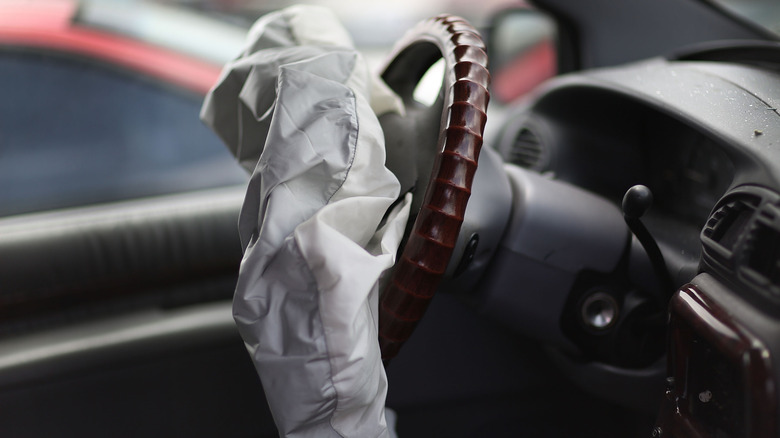
There's more to modern cars than seats, a steering wheel, an engine, and some electronics. They're tremendously complex systems, and so much of it plays a crucial role in the vehicle safely traveling down the road. Occasionally, there could be an error in the production of the vehicle, or one of its specific parts, that makes it unsafe to drive.
This is usually remedied by a recall notice, which is when the manufacturer is saying something needs fixing, it's free-of-charge to do so, and it's a good idea to get it done sooner than later.
However, there's a much more serious form of recall, known as a Do-Not-Drive Order (DNDO). This is self-explanatory; something is up with the vehicle that could pose a real life risk if it's driven any amount beyond when the issue was first discovered. It seems like most of them are rooted in airbag issues — Stellantis recently issued a DNDO for 225,000 vehicles — yet plenty of other automakers have also issued them.
A DNDO shouldn't be taken lightly. Let's discuss how they come about and how to stay in the know about any that may impact your own vehicle.
In order to survive, do not drive
Again, DNDOs are self-explanatory: As soon as you receive notice from either the automaker or National Highway Traffic Safety Administration (NHTSA), don't drive the car. Instead, coordinate with a local dealer service department to have it towed to them for remedying, and on their dime. The scope of what one could cover is expansive: brakes, chassis, steering, electronics, the ignition system, fuel pumps, and more. Even door latches, which in the case of Tesla's door malfunctions, have caused at least 15 deaths, yet oddly no do-not-drive order has been issued.
Another similar recall is a Park Outside notice, meaning, if the defect rears its ugly head, the vehicle could catch fire. Perhaps more disturbing than the Tesla situation is the fact that, according to CarFax and reported on by Capital One Auto Navigator in 2023, "more than 2.5 million vehicles with DNDO or Park Outside (PO) notices remain on the road and unrepaired in the U.S."
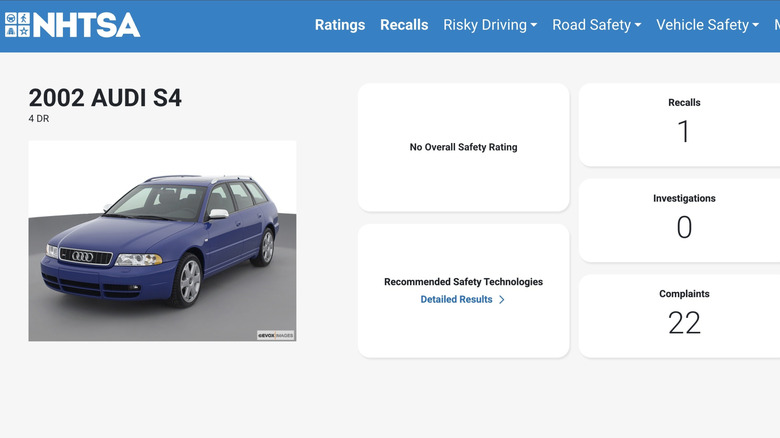
Even if you haven't received anything in the mail regarding a potentially life-threatening DNDO, or even just a standard recall, it's still a good idea to be proactive. Luckily, checking if your car has been recalled is easy as pie on NHTSA's website. A do-not-drive order means turning the key and driving down the road could be a matter of life and death. Take 'em seriously, get 'em remedied as soon as possible.