

Signs You Have A Faulty Wheel Speed Sensor (And What To Do About It)
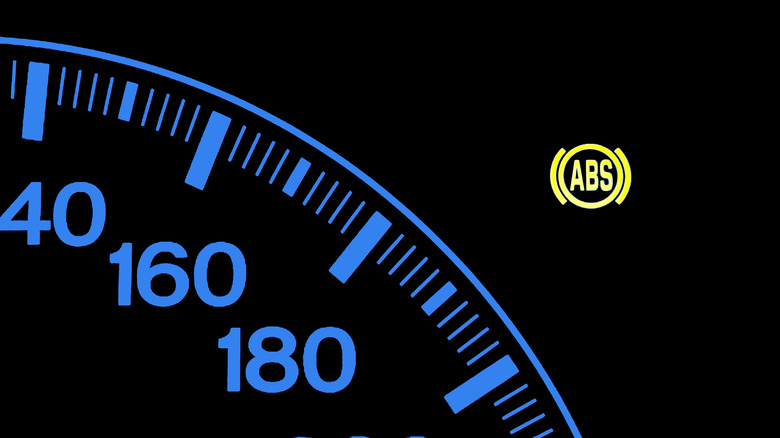
Some people call it a wheel speed sensor, while others call it the anti-lock brake (ABS) sensor. They're both right, since the wheel speed sensor mainly feeds data to the ABS module to prevent the wheels from locking when braking. It also sends wheel speed data to the vehicle ECU and traction control system. Those systems need to know how fast the wheels are spinning to monitor braking, inform the driver of the vehicle speed, and for the traction control to work and stop you from crashing.
With all those functions in mind, a faulty wheel speed sensor can manifest in many ways. The most prevalent symptoms include an illuminated ABS warning light on the instrument cluster, which also can also mean that the ABS has stopped working. At that point, the brakes are still operable and can still stop the car, albeit without ABS assistance. It's no different from the transmission speed sensor that could also trigger a warning light when there's a fault or sensor damage, although the ABS wheel speed sensor is different from the sensors that monitor the transmission speed.
Another symptom is a somewhat broken, inaccurate, or fluctuating speedometer, due to a lack of or zero sensor data. In some cases, a faulty wheel speed sensor may cause a pulsating feeling on the pedal during hard braking. Whatever the case, it's not safe to continue driving with an ABS light, and your best recourse is to minimize your speed and have the wheel speed sensors checked or replaced by a mechanic at the soonest, most convenient time.
What causes the wheel speed sensors to fail?
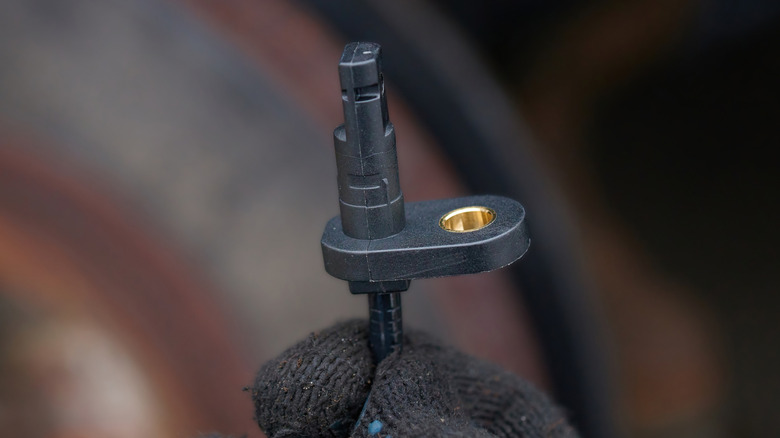
The ABS speed sensors are relatively durable and can last for the life of the vehicle in ideal conditions. Since there's no such thing in the real world as ideal, the sensors are prone to wear and tear, due to age, temperature, and exposure to moisture, dust, dirt, and debris. In most cars, the wheel speed sensors are bolted to a non-spinning portion of the front and rear wheel hub assemblies, leaving them exposed to road salt, mud, and snow.
With that said, wheel-speed ABS sensors can have a 60,000- to 150,000-mile lifespan. Frayed wiring or damaged connectors could make them fail earlier than expected, while high-mileage driving and consistent exposure to changing weather and road debris can have a similar effect. Driving with broken wheel bearings can lead to excessive play or wobble on the wheel hub, which can prematurely damage the wheel speed sensors.
Depending on the vehicle make and model, a wheel speed sensor costs $150 to $900 (including labor), and it could cost more for high-end, premium luxury cars and SUVs. Mechanics will generally test the sensor's function before removing it by using a multimeter to confirm the diagnosis. Taking the DIY approach can save cash, but a few hand tools, some knowledge, and an OBD-II scanner with ABS capabilities will come in handy. The steps include scanning the ECU, jacking up the car, supporting it with jack stands, removing the wheel, disconnecting the wiring, and unbolting the bad sensor.