

Here's How Cars Recognize Traffic Signs (And Why It Doesn't Always Work)
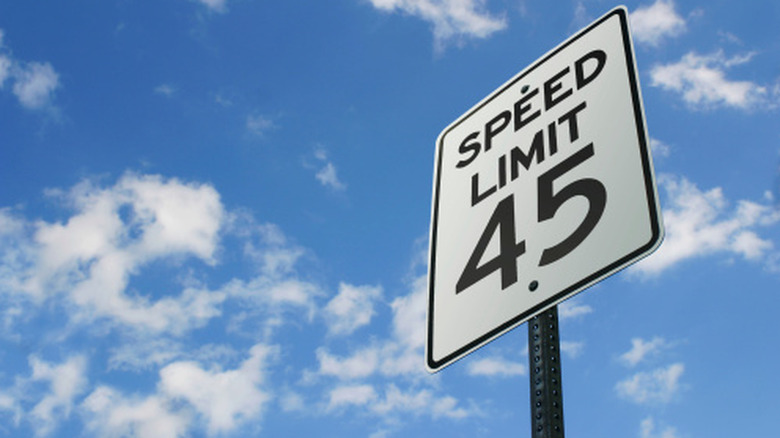
Among the many advanced driver assistance systems (ADAS) that modern cars have is what's called Traffic Sign Recognition, which some automakers abbreviate as TSR. Essentially, it reads the many road signs and relays that information to the driver via the instrument cluster, infotainment, or even the heads-up display if the vehicle is equipped with one. A windshield-mounted camera, typically found near or behind the inside rearview mirror, scans the road ahead. Once a traffic sign appears, software that's capable of shape and character recognition processes the information and displays a graphic on the screen, letting the driver know of the specific traffic sign.
While TSR systems in Mazda's I-Activsense safety suite and those offered by Honda, Toyota, and many other car brands read most kinds of road signs, the TSR software in GM's range, including Cadillac, Buick, and Chevrolet, is specifically mentioned as only detecting speed limit signs. Also worth pointing out is that GM's Traffic Sign Recognition relies on the navigation system to recognize posted speed limit signs, which is different from the camera-based approach that most of the other automakers use.
That said, another feature belonging to GM's ADAS suite — the Speed Limit Assist — does use information from both the forward-facing camera and navigation software to detect speed limit signs. Maserati uses a similar approach to GM's Speed Limit Assist, as do some Nissan models in their respective Traffic Sign Recognition systems. So, in GM's case, the distinction is largely semantic. Still, while both Maserati and Nissan's systems can detect other traffic signs, there is no such mention in any of GM's vehicle support articles.
It may not always work
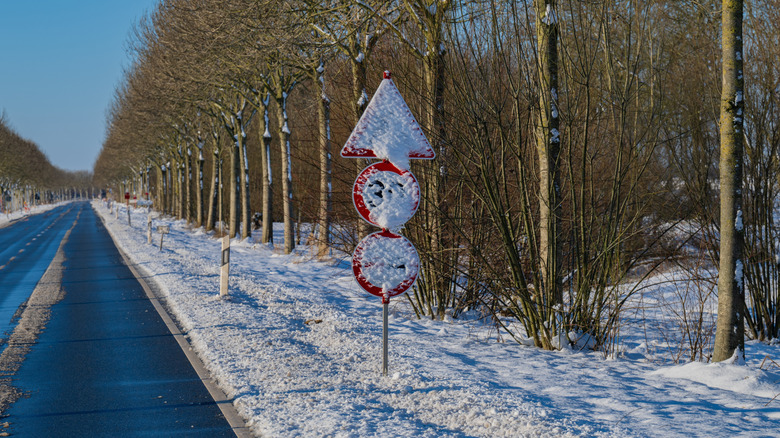
According to Mazda, the TSR system may not function properly if the weather conditions are poor. For instance, heavy rain and snow can obscure the camera, as can a dirty or foggy windshield, preventing the system from working as intended. Also, glare from sunlight or oncoming traffic can blind the camera system, especially if the approaching vehicle has powerful high-beams. Even something as unassuming as entering and exiting a tunnel can confuse the forward-facing camera. Mazda also says that loading the rear seats or trunk with heavy luggage may impact TSR performance since the vehicle squats more, pitching the nose higher.
Even if there is no snow or heavy rain causing poor visibility, the camera can still miss a road sign if the sign itself is bent, warped, or concealed by a tree. Traffic signs that are mounted too high or low may not be detected, as can signs that are faded, discolored, or covered in mud or snow. Since these issues are very much visual, relying on both the camera and navigation may prove more effective in such situations, which is exactly how Maserati says its TSR system is designed to work. That said, automakers stress not relying entirely on the system. We reckon brands don't have to worry about that too much, given many people aren't exactly fans of ADAS systems.
In any case, TSR does come with benefits; at least it'll notify you if you're speeding. Getting fined for going at 50 mph in a 40 zone could perhaps be avoided if TSR were there. But of course, how well it works depends on several factors.