

Signs Your Sunroof Is About To Become A Leaking Nightmare (And How To Prevent It)
We may receive a commission on purchases made from links.
A sunroof or moonroof can be a nice feature to have in a car. Not all car owners like them, but about 35% of new premium vehicles manufactured worldwide have sunroofs, per Spherical Insights, showing that many car owners value the aesthetic and ventilating benefits of a tilting, sliding lid. Still, whether you like using them or not, sunroofs require diligent maintenance to work without failing or leaking.
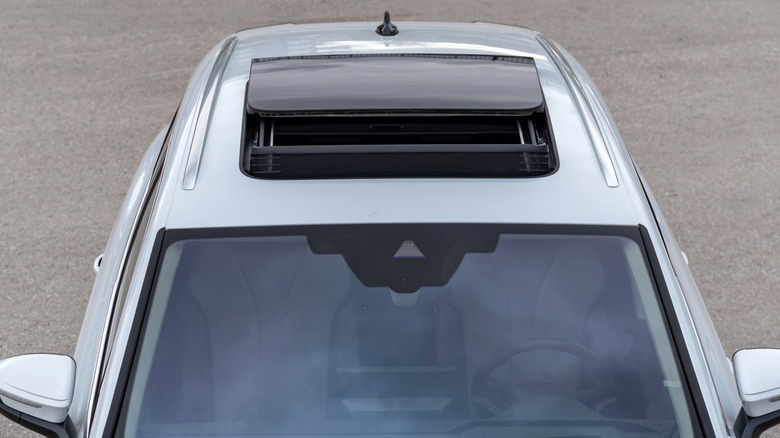
If your vehicle has a sunroof and you can't remember the last time you used it, pay attention. The sunroof is exposed to wind, sun, rain, snow, and the accompanying dirt, debris, leaves, and particles that go with the seasons. Although the glass or metal assembly sits flush with the roof when closed, it doesn't form a 100% watertight seal with the actual roof. That's why the sunroof has rubberized seals around the edges and drainage channels around the assembly. Water or moisture that gets past the first seal should route to the drainage system to ensure the interior doesn't get wet.
Although subtle and with no initial symptoms, there are a few signs that a sunroof is about to leak. A busted or burned-out motor can render the sunroof immovable, cause it to move intermittently, or cause it to not sit flush with the roof. Shattered or cracked glass can also cause leaks. Dried-out seals can overwhelm the drainage channels by letting more water seep through. And if you open the sunroof and find standing water in the front channels, you're most likely dealing with clogged drains, and ignoring the problem could empty your wallet due to the potential damage it may cause. It's why regular inspection is the key to preventing nasty sunroof leaks.
Preventing sunroof leaks is easy

Preventive maintenance will keep any part of your car performing at its best. It's why oil changes every 5,000 to 10,000 miles (depending on the vehicle) and flushing your automatic-transmission fluid every 30,000 to 60,000 miles (or earlier if the fluid has turned black) are typically recommended to keep everything humming like clockwork. And while sunroof maintenance is not usually prescribed in the owner's manual, inspecting and cleaning the drain tubes at least twice a year can prevent leaks.
Slide the sunroof fully open and take a look around its drainage channels. It will most likely be dirty and would benefit from mild cleaning. Not using it often or neglecting periodic inspections will lead to clogged drains and premature deterioration of rubber seals. Remove any dirt, leaves, or debris from the water channels by picking them up or using a vacuum cleaner. Grab a moist towel to wipe everything clean. Use a cleaner and conditioner like 303 Rubber Seal Protectant to rejuvenate and protect the sunroof weatherstripping. In addition, lubricate the sunroof tracks with WD-40 Specialist Silicone or a similar product for additional protection.
Use a soft wire or about 6 to 8 feet of weed-whacker string like this from Viabrico to unclog sunroof drains. You can test the drainage system by grabbing a cup of water and pouring the contents into the water channel. The water should drain efficiently through the holes on the left and right of the assembly. If not, the water could seep into the cabin and cause wet carpets (which can lead to mold growth if left unchecked), moist ceilings, sagging interior trim, and nasty electrical faults.
How to recalibrate a faulty sunroof
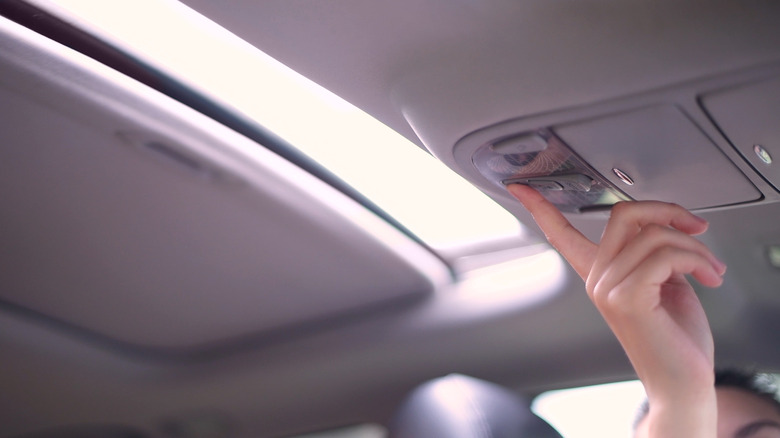
A sunroof that slides inch by inch or doesn't open or close fully with a single button press is a nightmare, especially when it suddenly rains while you're driving. There are times when the glass pane refuses to raise and close flush with the roof, which could also cause wind noise and annoying water leaks. If the sunroof moves but does not fully engage, it might need recalibration or a basic relearning of the system.
The steps for recalibrating a sunroof depend on the vehicle's make and model. To recalibrate the sunroof electronic control unit and motor on some Honda cars and SUVs, turn the ignition on, press and hold the auto open button for an additional three seconds after the roof fully opens, and repeat the steps while closing the sunroof. Likewise, the recalibration procedure for Mitsubishi sunroofs includes fully opening, closing, and tilting the sunroof, and holding the tilt button for about three seconds while the glass panel is in the tilt position. The motor will confirm the calibration with a faint clicking sound.